16, November 2020
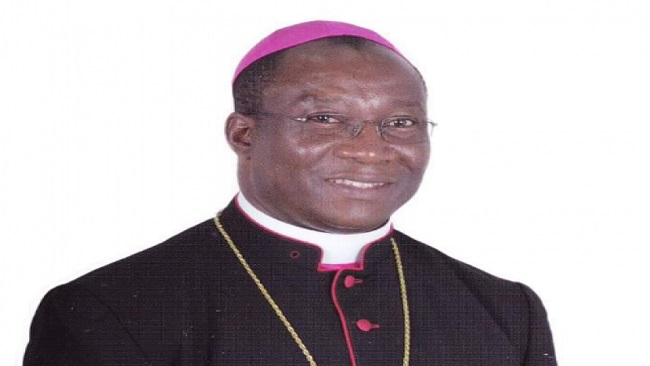
Tribute and account on Monsignor Theophilus Ibegbulam Okere of Nigeria 0
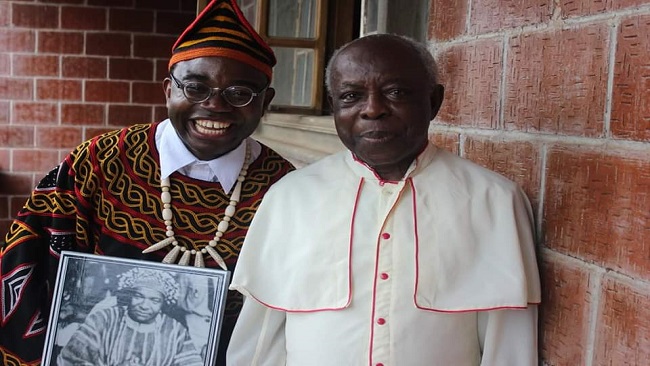
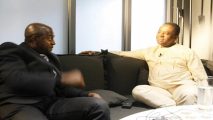
Cameroon Concord News Group’s Nchumbonga George Lekelefac is more than thrilled to write an account of his extensive experience with Msgr. Professor Theophilus Okere before his death on October 20, 2020 in Owerri, Nigeria. As young people, we have heard our own elders, teachers and priests say-“Okere Bu Agbara’’–(Okere is a deity) in clear deference to his prodigious attributes and awesome intellect. Nchummbonga had the privilege to interview Msgr. Okere on Saturday, October 10 at his residence in Owerri. He travelled from Cameroon to Nigeria to carry out a scientific research on Prof. Dr. Bernard Nsokika Fonlon and his first stop was in Owerri, where the classmate of Dr. Prof. Fonlon lived. He is Msgr. Alphonsus Aghiazu, and happens to be the oldest Monsignor in South-East Nigeria. After his conversation with Msgr. Alphonsus, he recommended we also get the opinion of Msgr. Okere who lived nearby from his parish of residence: St. Paul Parish, Owerri. Msgr. Alphonsus was so helpful and even sent his driver to take our Nchumbonga Lekelefac to Msgr. Okere’s house. When he arrived the house of Msgr. Okere that Saturday, October 10, 2020, Msgr. Okere was very strong and active. He was putting on a white shirt and white shorts, and he was sitting in his extremely large sitting room writing. He later said he was writing a book on Monsignor Martin Maduka. He remembered most of the Cameroon seminarians he had studied with like: Archbishop Paul Verdzekov, Bishop Pius Awa, Christian Cardinal Tumi, Fr. Clement Ndze.
Later he changed and dressed in his Monsignor Cassock and we began the three hour interview. We began by asking him what his secret was because he looked quite young and active. He smiled and said: “The grace of God is the secret, and of course, discipline in whatever goes into his stomach. He was very excited and strong during the interview. We were able to video the entire conversation.
After the interview, he gave us a handwritten tribute he had produced on Prof. Dr. Fonlon on Saturday, October 10, 2020, barely ten days to his death.
Msgr. Okere informed us after our conversation that he was not in the best of health. He revealed that with his age, he was on drugs.
Biography of Msgr. Okere
Msgr. Okere was born on August 2, 1935 in the bucolic village of Nnorie, Ngor-Okpala, Imo State, he has left indelible marks on the sands of time.
As was noted by one of his students, Professor Obi Oguejiofor, a Catholic priest, and lecturer at the Nnamdi Azikiwe University (NAU), Awka, Monsignor Okere “is indeed a great theologian, in any case, one of the greatest we ever had in Nigeria. He is also one of the few Nigerian philosophers repeatedly quoted in internationally published works both in discussions and in bibliographies. There is indeed hardly any comprehensive work on African philosophy, especially from the United States, which omits a mention of his name.”
Msgr. Okere had his elementary education at St. James School, Nnorie (1942-46), St. Finbarr’s School, Okpala (1947-48) and St. Desmond, Mbutu Okohia (1949). In 1950, he enrolled at the Holy Ghost College, Owerri, for his secondary education but a year later, he proceeded to the St. Peter Claver Seminary, Okpala, as one of the pioneer students. In 1956, he proceeded to Bigard Memorial Seminary, Enugu, and was ordained a priest on August 5, 1962 by the then Bishop of Port Harcourt, G.M.P. Okoye.
Msgr. Okere: The Philosophy Teacher and Seminary Founder
He returned to his alma mater, Bigard Enugu, in 1972 where he taught Philosophy for four years before crossing over to Bigard Memorial Seminary, IkotEkpene (now St. Joseph Major Seminary, Ikot-Ekpene), in 1976. He later became the Rector of the school in 1981, a position he held for two years when he founded the Seat of Wisdom Major Seminary, Owerri, where he was between 1983 and 1992. A man adept at multi-tasking, as the Rector of Seat of Wisdom Seminary. It is his long stay in the seminary system that has made him pre-eminent as the spiritual and intellectual father of more than half of the priests serving today in Igbo land. Hundreds of these men of the cloth adoringly greet him with “OkerewuAgbara” as a tribute to what they perceive as his versatility and his encyclopedic wealth of knowledge.
Msgr. Okere: The Editor
Msgr. Okere was also the founding editor of Journal of the Catholic Theological Association of Nigeria (CATHAN) and its first president.
Msgr. Okere: The Erudite International Professor of Philosophy
On leaving the seminary system after 21 years of service, in 1992, Msgr. Okere taught Philosophy at the Jesuit University in Philadelphia, United States of America.
Msgr. Okere: Man of Initiatives
Later, he returned to Nigeria in 1999, and was the initiator as well the first president of Whelan Research Academy for Religion, Culture and Society founded in memory of the first diocesan Bishop of Owerri, Joseph Brendan Whelan (CSSP). In addition, he was the first President of the Catholic Theological Association of Nigeria and has between books and articles, lecture and homilies, over 200 titles to his credit.
Msgr. Okere: Magister Magnus to Bishops and Archbishops
A measure of his greatness as a teacher can be gleaned from the fact that out of the 16 Catholic dioceses in the old Eastern Region made up of nine states, only the Archbishop of Owerri and bishops of Nnewi and Abakaliki, did not pass through his tutelage. The other bishops, including Archbishop Valerian Okeke of Onitsha, Archbishop Joseph Ekuwem of Calabar, Bishop Callistus Onaga of Enugu, Bishop Godfrey Igwebuike Onah of Nsukka and Bishop Lucius Ugorji of Umuahia were all his students.
Msgr. Okere: Internationally Recognized
Prof. Oguejiofor weighs in: “Okere’s voice has been heard in many forums and in different contexts. That voice sounds louder in philosophical studies. Internationally, he owes much of his reputation to his ground-breaking thesis, ‘Can there be an African Philosophy?’ part of which was published as ‘African philosophy: A Historico-Hermeneutical Investigation into the Condition of its Possibility’. These two works belong to the most influential writings in contemporary African philosophical discussion and became the foundation of the hermeneutical current in African philosophy, where it viewed that the philosophy of a people, and a fortiori, African philosophy should emerge from the hermeneutics of their culture, to became the rallying point for such thinkers as Tsaney Serequeberhan of Eritrea, Ntumba Tsahiamalenga and NkombeOleko of the Democratic Republic of Congo (DRC).“In his recent book, Brief History of African Philosophy, Barry Hallen gives this current and Okere himself a special place among the important philosophy movements in the African continent in our time. Hence, Okere’s prowess in philosophy has earned him a special place on the pages of the history of African Philosophy.”
Msgr. Okere: Intellectual Giant
Recognised as an intellectual giant, Monsignor Theo Okere was an enigma to our generation; to the extent that his outstanding intellectual personality, uncommon achievements made people think that a god was sent to them in form of a human being. We have been awed by his intellectual records and breakthroughs in Nigeria and in different parts of the world particularly the noble record he left at Catholic University of Louvain. Fr Okere led the way as the first PhD holder in Philosophy from the oldest and the most celebrated Catholic University in the world; thereby blazing the way for Nigeria and Africa with his seminal thesis “Can there be an African Philosophy? A historical-hermeneutical investigation into the conditions of its possibility.” It was wondered how Father Okere, a mere mortal, had won scholarships with which three other Nigerian priests studied in Louvain. His philosophical and theological prowess in Bigard Memorial Seminary Enugu, where he lectured and revolutionized philosophy from 1972 to 1976 and in Bigard Memorial Seminary Ikot-Ekpene (now St. Joseph Major Seminary) from 1976 to 1983 where he also lectured and later served as Rector before moving to establish a new Major Seminary in Ulakwo Owerri-The Seat of Wisdom Seminary as the Rector and builder from 1983 to 1992 was highly distinguished.
Msgr. Okere: Man of Publications
Ugo Jim-Nwoko wrote from Abuja noted that despite the burden of administrative and pastoral duties of running and managing senior seminaries, Msgr. Okere found time to do some notable book publications, such as, African Philosophy: A Historico Hermeneutical Investigation, Identity and Change – Nigerian Philosophical Series; Religion and Culture; Public Lectures in Washington D.C, Rome and in his alma mater Louvain Belgium. A collection of all his writings over the years was written, sponsored and published by some of his students entitled: “Theophilus Okere in his own words.” It is a fitting tribute to a man who has lived his 80 years on earth and still counting for others. After the conference, Msgr. Okere showed me these two volumes and I was very elated to see all the wonderful and exceptional work he had done over the years.
Msgr. Okere: The Priest, The Scholar, The Teacher
Martins UbaNwamadi notes in his Tribute to Monsignor Theophilus Okere, priest par excellence, literary icon that: “The anecdote of ‘the Blind men and the Elephant’ keeps popping up each time one thinks of the perception of very Reverend Monsignor TheophilusIbegbulam Okere by different people. Many see him as priest. A priest! Yes, that is what he is, first and foremost, and a very good one at that. Some see him as a teacher, a teacher indeed of the scholastic tradition with pedigree linking him to St. Thomas Aquinas. Yet, for others he is Rev. Fr Theophilus Okere, the accomplished literary man”.
Msgr. Okere: A Polyglot
Msgr. Okere was fluent in his native Umuonyike, Nnorie dialect of Igbo land, English, French, German, Latin. During my interview with him, I marveled at the way he quoted sentences in Latin.
Msgr. Okere: Perfect Gentleman
For those who have had close social contact with him, he was the fine, humble and perfect gentleman in whom all that is perfect in every culture blends. My personal experience with him testified this. Despite all he had achieved, he was very humble and outgoing with me in his house.
Msgr. Okere: Man of Music
Msgr. Okere was considered as a distinguished singer. He could sing well. His angelic voice at mass and digital dexterity with the songs and musical instruments were the first and the only way we could make meaning of the biblical and catholic assertions of the quality of voice and of songs the Angels use daily; singing praises to God in the heavenly places.
Msgr. Okere: Intellectual and Man of Letters
In order to capture the quintessential Theophilus, Martins UbaNwamadi notes that one sees him as encapsulating all of these in optimal proportions and blend. In the performance of any role, he brought in every attribute of every other role. At the pulpit, he made parishioners realize that he was also a literary icon, a philosopher, a teacher, a polyglot, and so on. In his conversation, it was clear that he was a priest, an Alter Christus (Another Christ).
Msgr. Okere: Fluent in the English Language
Msgr. Okere proceeded to Ireland in 1962 where he read English Language and Literature at the University College, Dublin, for a Bachelor of Arts Degree in English at the University College, Dublin, graduating with honours in 1965. Msgr. Okere was considered as a great orator who knew how to transmit his messages across to his audience.
Msgr. Okere: The Erudite Philosopher
Msgr. Okere studied Philosophy at the prestigious Catholic University of Louvain, obtaining a PhD in Philosophy in 1972, the first Nigerian to do so. His Doctorate dissertation, “Can there be an African philosophy”: A Hermeneutical inquiry into the condition of its possibility” was groundbreaking, for it set the stage for later researches in African philosophy, having demonstrated definitely that philosophy, any philosophy and therefore African Philosophy, can be itself, only as a hermeneutics or interpretation of its culture. And since his own culture is Igbo, the logic of his thesis has placed him as one of the foremost Igbo thinkers.
Msgr. Okere: Man of Culture
Msgr. Okere’s commitment to and familiarity with Igbo culture were all manifested in his conversations, writings, lectures and sermons to the extent that he was once dubbed as “an unrepentant native”.
Msgr. Okere: The Roman Priest
Monsignor Okere served the church in various capacities including a tenure as consultor to the Vatican Dicastery at the Pontifical Council for Dialogue with non-believers.
Msgr. Okere: Laureate of Prestigious Lectures
He is a laureate of the two prestigious lecture series in Igbo land; Odenigbo (1997) and Ahiajoku (2007) both of which he delivered in Igbo Language, which was later adapted from the “Biography of Very Rev. Monsignor Theophilus I. Okere” written by Dr Augustine Okere and Fr. George Nwachukwu.
Msgr. Okere: Man filled with Anecdotes
It was at the Seat of Wisdom that some of Msgr. Okere’s anecdotes became accessible to many. Looking at his young and new students of philosophy at the Seminary in the late 80’s; Msgr was quoted to have told the seminarians “you have got the Seat, but yet to get the Wisdom”. And perhaps, contemplating on the challenges at the rudimentary stages of the development of the seminary and its students said: “The Wisdom is not yet seated”. As a man of quality and substance, he was inclined to promote innate grit in a human being than outward shadow, when he said: “Height was not one of the characteristics of a homo sapiens”.
Msgr. Okere: His Faithfulness in Friendship
Late Geoffrey Jim-Nwoko narrated the wizardry of his classmate, the young Theophilus Okere at the elementary education in St. James Catholic School Nnorie, Ngor-Okpala between 1942 and 1946. He mentioned that Fr Okere visited Umuchie Eziama to see his old Catholic teacher and in-law, Michael Jim-Nwoko whom he credited with bringing football to Nnorie his community, for the first time in the 1940s.This gesture of his demonstrated his humility and gratitude. Many also observed the high degree of Msgr Okere’s faithfulness to friendship and brotherhood, in good and in bad times, by the way he related with his friend, schoolmate and brother priest, Msgr Clement Chigbu.
On Thursday November 12, 2020, Monsignor TheophilusOkere’s remains were laid to rest. He has just left to meet with his and our God. May Msgr. Okere rest in peace. Amen. James White Comb Riley said of death: “I cannot say, and I will not say that he is dead. He is just away. With a cheery smile, and a wave of the hand, he has wandered into an unknown land. And let us dream how very fair, it needs must be since he lingers there… I say, he is not dead; he is just away”. Monsignor Theophilus Okere’s prints will forever remain in the sands of the history of Nigeria, Africa in particular, and the entire world in general. Please. Msgr. Okere, when you get to heaven, do not forget to extend our greetings to Professor Doctor Bernard Nsokika Fonlon. He will be very happy to continue a fruitful philosophical discourse with you, and Dr. Fonlon will be happy to thank you for the wonderful tribute you wrote on him.
For your life of selflessness, industry, simplicity, humility, total selfless service, honesty, and integrity, you – Msgr. Okere- will remain as an enduring compass and example to those who strive for moral rectitude. Adieu ‘OkerewuAgbara’.
Written by Nchumbonga George Lekelefac









19, November 2020
Treatise remembering Professor Bernard Nsokika Fonlon on the occasion of his 96th birthday 0
This treatise is dedicated to Professor Bernard Nsokika Fonlon, M.A., Ph.D., (Nui) Dip. Ed. (Oxon), who was born 96 years ago, on 19 November 1924 in Nso, North West Region of Cameroon, died 26 August 1986. He was a government minister and leading intellectual of Cameroon. A man of diverse abilities, Fonlon was characterized as the Cameroonian Socrates. He was a major promoter of bilingualism, as reflected in the Journal Abbia: Cameroon Cultural Review that he founded in the early 1960s.
Dr. Prof. Bernard Nsokika Fonlon is the first English speaking Cameroonian to earn a Doctorate Degree in 1961 at the University of Ireland. The first French Cameroonian to earn a Doctorate Degree was Reverend Father Jean Zoa in 1953 in Biblical Studies at the Pontificia Universitas Urbaniana, in Rome, Italy. Prof. Dr. Fonlon did his secondary school education at Christ the King College, Onitsha Nigeria from 1942 to 1945. Later, he studied in Bigard Memorial Senior Seminary, Enugu, Nigeria from 1948 to 1953. He was among the pioneer seminarians at Bigard Memorial Senior Seminary in 1948, together with Monsignor Alphonsus Aghaizu, who happens to be the oldest living Monsignors in South-East Nigeria. He is presently 95 years old and is retired at St. Paul’s parish, Owerri. Fonlon’s one and only desire was to become a Catholic priest. Just before the sub-diaconate, Bernard experienced the greatest crisis of his life. He was informed that he would not be admitted to Major Orders, and that there was no likehood of that decision being changed in the future. This happened in November 1953 at Enugu, in Nigeria. In the midst of the darkness of that crisis, with his hopes for ordination completely shattered. Msgr. Aghaizu describes the scene on August 20, 2020 in his humble contribution to the cause for the beatification of his close friend Dr. Fonlon:“I was due for sub-diaconate ordination with Fonlon 1953 but he was dropped the morning of the ordination, but he maintained his cool, and went with me as previously arranged for a month’s holiday to Msgr. P. Meze’s parish at Maku. The authorities arranged for him to teach at C.K.C his alma mater (1942 to 1945). At my ordination at Uli 1954, Fonlon and three of his friends came from C.K.C to Uli despite the fact that there was ordination same day at Onitsha….After my month’s tour of the stations at Uli Parish, I was due to return to Bigard to obtain my faculties; and I decided to touch C.K.C enroute. I did not go to the Fathers House upstairs but to the teacher’s quarters to stay with Fonlon. Next morning, he followed me to the fathers Chapel and served my mass! The authorities were so impressed at this gesture that they gave him scholarship to study in Cork, Ireland”.
Thus, thanks to his exceptional gesture, between 1954-1961, Fonlon got a Scholarship [from a disappointment to a blessing], and studied at the National University of Ireland, Cork: studied under Professor E. Byrne Costigan, Prof. Drs O’Flaherty, Prof. Servais, Prof. Forgatton at Sorbonne, Paris; Fonlon also studied under Professor Georges Balandier Oxford University and under professor Halls. Had he become a priest, he would not have had the opportunity to serve his country as a Christian and intellectual in politicians as he did for Cameroon. God had other plans for him.
Academic Qualifications of Fonlon
Fonlon earned the following Academic Qualifications: 1939: Primary School leaving Certificate; 1945: Senior Cambridge Grade One; 1946: The Nigerian Teacher’s Higher Elementary Certificate; 1957: B.A. Honurs, NUI Cork (2.1, Latin and French); 1958: M.A., NUI Cork (First, Thesis: Flaubert Ecrivain, a study of Flaubert’s style, written in French); 1960: Diploma in Education, Oxford University; Ph.D., NUI Cork (Thesis: Bernard Nsokika. La poesie et le reveil de l’homme noir / par Bernard Fonlon, published by Presses Universitaires du Zaire), an investigation into Negro African protest literature in English and in French (inclusing North America, the Caribbean, Africa and Madagascar. This was the the first Ph. D thesis in this field and was written in French under the auspices of professor W. McCausland Stewart (Bristol), Dr. Green (Oxford) and Professor E. Byrne Costigan (NUI Cork). This Ph. D was the first doctorate awarded to a Cameroonian in Ireland; 1986: D. Litt. (Honoris Causa), University of Guelph, Canada. With this extensive study, Fonlon earned three Academic Honours: 1). Nigeria – Patron of the Philosophical Fraternity of the University of Nigeria; 2). USA: Member of the National Geographic Society; 3). USSR: Awarded the Pushkin Medal in Moscow on the 170th anniversary of the birth of the celebrated Russo-African Writer.
A Genuine and True Christian cum Intellectual in Politics
As far as his political life is concerned, Fonlon served as an interpreter to Amadou Ahidjo, the first Cameroonian President, and later was a Minister, in which he distinguished himself in politics with his moral, spiritual and intellectual life on returning to Cameroon. He held the following post in the Cameroon government: In 1961, he was assistant Secretary to the Prime Minister of the Southern Cameroons; 1961-1964: Charge de Mission (Presidential Aide) at the Presidency, Yaounde, Cameroon; 1964-1968: Deputy Minister of Foreign Affairs; 1968-1970. Minister of Transport, Posts and Telecommunications; 1970-1971: Minister of Public Health and Social Welfare; 1962-: Founder and Director of Abbia, the bilingual Cameroon Cultural Review; 1971: Associate Professor in the University of Yaounde.
Prof. Daniel Noni Lantum, “the right hand man” of Fonlon, who is said to have known Fonlon more than anybody else in Cameroon observes in his book titled: “Dr. Bernard Nsokika Fonlon: An Intellectual in Politics” that Fonlon was an indefatigable, relentless father of Cameroon Bilingualism at work, that Africanist intellectual and learned philosopher of the Presence Africaine up-bringing, that tireless professor of Negro-African Literature of the University of Yaounde from 1978 to 1984, that revolutionary Cameroonian Educationist of the 1960s, that inspiring and unquenching source of Liberty and Democracy even in the Ahidjo Regime (1958 – 1982), that Christian intellectual and politician who was physically present but spiritually absent from the materialism of the political environment of his time.
One of the circles in which Dr. Fonlon left an indelible mark was in politics. His involvement with Cameroon politics was natural as it was inevitable. He was motivated by a genuine desire to bring to the politics of his country the very best intellectual and moral qualities that he possessed, having passed through Bigard Memorial Senior Seminary, with a holistic formation: Intellectual, Spiritual, Pastoral and Human formation which equipped him for politics. It should be noted that Cameroon and indeed Africa was emerging from colonial enslavement to independence and such a critical period needed the best type of leadership that each country could provide. Dr. Fonlon who had foreseen this need and had prepared himself accordingly, believed that those who governed – and politics is to do ultimately with good government – should have the intellectual and moral preparation for such an important and sacred task. He believed with Socrates that “kings should be philosophers” or that those who govern should have the intellectual and moral qualities which true philosophy inculcates. With these principles which Fonlon learnt from Bigard, he distinguished himself in politics and earned eleven Political Honours: 1). Canada: The Canadian Medal; 2). Vatican: A Papal Medal, the Medal of the Concilium Oecumenicum Vaticanum 1 and 2; 3). France: The Medal Trois Siecles de Cartographie Francais; 4). USA: Medal of the African-American Dialogues; OAU: Medal Issued to the Participants of the First Congres of the OAU, 1963; 5). Chevalier de l’Ordre de la Valeur, Officier de l’Ordre de la Valeur; 6). Tunisia: The Order of the Tunisian Star; 7). Nigeria: The C.O.N. for Distinguished Public Service; 8). India: The Jawaharlal Nehru Medal; 9). Africa: Madale de Vermeil d’Union Africaine et Malgache des Postes et Telecommunications; 10). West Germany: Grosses Verdienstkreuz mit Stern und Schulterband; 11). Nso: Chieftaincy title, Shufai-wu-Ntu-Ndzev, conferred by the Fon of Nso, for having brought water to Kumbo, where he was born.
Nigerian Cardinal Francis Arinze states inter alia: “I hold Dr. Bernard Nsokika FONLON in very high regard. I first got to know him in Bigard Memorial Seminary, Enugu, Nigeria, in the years 1953 and 1954. He was in his second year theology when I entered that Major Seminary in September 1953. When he and his classmates were due to be ordained subdeacons in December 1954, the Seminary authorities and his Bishop decided not to admit him to major orders. As a seminarian, I saw Bernard as a learned seminarian. I still remember how with lustre he sang “Audi Benigne Conditor” during Vespers in Lent. He took no breakfast. When other seminarians were at breakfast, he was studying, we believed he was at Latin and Greek! During holidays and in the years after he had to leave Bigard Memorial Seminary, he used to visit one of the Nigerian priests, Monsignor Peter Meze-Idigo who was very kind to him, as he also was to seminarians in general. Once during those visits by Fonlon to Monsignor Meze at Dunukofia, my parish, I took Bernard to visit my parents at Eziowelle and my father, a good wine tapper, gave him good palm wine which he took gladly. I still remember that my mother tried to converse with him in Igbo and was surprised that Fonlon did not speak Igbo. I had to inform my innocent mother that Igbo is not the only language spoken in Africa!I lost track of Fonlon in the years when he worked for a Doctorate in Ireland and another Doctorate in France. The next time I met him was during the Nigeria-Biafra war, probably in 1968 or 1969. It was a quick meeting because we were both passengers in Air France flying to Paris from Douala. At that time, Dr Fonlon was Minister of Communications in the Camerun and I was Archbishop of Onitsha. After that Nigerian civil war, I visited Dr Fonlon in Yaoundé. It may have been around the year 1972. I first visited Archbishop Paul Verdzekov in Bamenda. Then I flew from Buea to Yaoundé. Fonlon met me at the airport. I stayed about two days with hm. I then learned that he was no longer Minister in the Government because President Ahidjo called him and explained: Bernard, I regret that we can no longer retain you in the cabinet because you put the rest of us ministers to shame, because you are your own driver and you drive an old car. My unforgettable memory of my stay with Fonlon in his flat was that one day his sister prepared a fou-fou lunch for both of us. During lunch, Dr. Fonlon was so absorbed in our conversation (which was more me listening to his wisdom) that I finished my lunch; he then put together his fork and knife, put his plate aside and continued his learned discourse. He forgot that he had not eaten anything yet! I have never in my life of 87 years reached that level of detachment from creatures. On 16 Sept. 1973 he wrote a 28-page booklet: “An Open Letter to the Bishops of Buea and Bamenda” on the training of future priests. Excellent piece. Dr Bernard Nsokika Fonlon was a man of high ideals. He prayed. He said the Latin Breviary daily. He loved the Church. He was not bitter that he was not ordained priest. In my view, it was an administrative mistake of his superiors that he was not ordained. It seems to me that they did not understand him enough. He was the type of professorial intellectual who may seem not the routine parish priest. As a university priest, he could have answered many needs of the Church. However, as a lay person, he also did much good. The Camerounians are the best placed to make a judgment on this. He lived a celibate life. When I visited him in 1972, I saw that he loved the Breviary. In my view, the Cause of Beatification of Dr. Bernard Nsokika Fonlon could be introduced. I am happy to be writing these lines on this anniversary of his death. May he rest in the peace of Christ”. + Francis Card. Arinze. Vatican City, 26 August, 2020.
Prof. Fonlon: Socrates in Cameroon
Fonlon is referred to as the Socrates in Cameroon. However, unlike Socrates, he wrote countless of articles. Although Professor Fonlon died in 1986 at the age of 62, he still lives on, and will do so for very many years to come in his writings, his goals, his noble deeds, and the shining example that he has left us. Dr. Fonlon was indeed a phenomenon so great that it will require many writers and many generations to fathom the depth of his profundity. His literary, intellectual and moral qualities made him a giant among Cameroonians, Nigerians and worldwide. He was a giant who was so much at ease and at home with the peasant villagers and the poor of slum “quartiers” of Yaoundé as he was among university dons of the greatest universities of Europe, North America and Canada. He was as comfortable among Archbishops, Cardinals and priests as he was among students. He knew personally and was friendly with several presidents and political figures of Post-independence Africa among whom one could cite Osagefor Kwame Nkruma of Ghana and Gamal Abdul Nasser of Egypt. Pierre E. Truddeau, Prime Minister of Canada, was a personal friend of Dr. Fonlon. In each of the many social circles or groups that Dr. Fonlon touched, he left an indelible mark and was admired, respected, and loved because he remained true to himself, sincere, generous, friendly, humble and simple.
Message of Dr. Prof. Fonlon
Philosopher Dr. Tanju Fidel Kottoh, PhD, who happened to have been born on the day Dr. Fonlon died: August 26, 1986, writes: “What was the message of Professor Fonlon? Professor Fonlon’s message – and he was the very incarnation of the message – was the supremacy of a genuine intellectual life. This is what informed his heroic detachment from material fixations. In step with the Angelic Doctor, St. Thomas Aquinas, Professor Fonlon so believed in the primacy of the intellect that he saw genuine intellectual life as the surest panacea to the moral degradation that so potently lured the contemporary African youth. He described the ideal youth, whom he called the ‘genuine intellectual’ in the following words: ‘As Truth’s votary, ever faithful, ever sure, he is committed to wage lifelong warfare against falsehood. And as goodness and beauty are inherent in truth, it follows that he must be a constant seeker of the good and right and an inexorable and implacable of evil and wrong; and a devoted worshipper at the shrine of the beautiful and the sublime”. (Bernard Fonlon, The Genuine Intellectual, Buma Kor, Yaoundé 1978, 114). The Professor’s message was: virtue, knowledge and truth. He preached it vehemently in and out of season. But most importantly, he lived it. He himself was a paradigmatic expression of the heroic virtues he incessantly preached. His writing, teachings, encounters all attest to his desire to ‘walk the talk. ’ Above all, he was thoroughly humble. He said “it is my ambition to live the life of a simple man. The Professor’s humility was overwhelmingly evident”.
Fonlon’s cool and total dependence on Divine Providence is an attitude that ex-seminarians can emulate when they are asked to withdraw from Seminary formation. Fonlon left the Seminary without bearing any grudges. His maturity and attitude when he was dismissed is distinguished and should be emulated by ex-seminarians. Cardinal Christian Tumi, a former student of Bigard also notes in a recent interview conducted on Sunday, October 25 that Fonlon is a Saint because he did good and avoided evil. He also added that the fact that seminarians are in the seminary does not necessarily mean they must become priests, because in the course of the discernment, God might be calling them to other vocations. He challenged the seminarians never to withdraw from the Seminary on their own, but to allow the formators to ask them to withdraw. In addition, Dr. Fonlon lived the Heroic Virtues: Cardinal and theological virtues which are perquisites for the introduction of a cause of beatification. He lived the virtues of Justice in government, Prudence, Temperance and distinguished himself with the virtue of fortitude, include faith, hope and charity.
Fonlon is also an example of a lay person who took part completely in the Church. One reference to the Christian principle of life that was dear to him concerned the spirit of poverty, that is, detachment from whatever is not God. Writing to the Bishops of Buea and Bamenda in his Open Letter of 16th September 1973, on the occasion of the inauguration of the St. Thomas Aquinas Major Seminary, Bambui, Fonlon said, inter alia: “In a world that is rank and rotten with materialism, where hedonism is the principle philosophy, where luxury is the summum bonum; there is the crying need for dedicated souls who would go to the other extreme and espouse the spirit of genuine religion, the spirit of poverty, the spirit of austere abstemiousness, in order to wage war against the onslaught of materialist godlessness”. Dr. Fonlon was buried as a priest. He lived a celibate life and lived the life of a priest, despite the fact that he was a lay person. He was buried very close to his friend: Fr. Aloysius Wankuy. The bishop who celebrated his funeral: Bishop Cornelius Fontem Esua stated: “Dr. Fonlon was an illustrious Christian, a man of great devotion and a priest at heart. He was a saintly man, and on account of this, regardless of who he was, I have decided to lay his mortal remains next to those of his closest friend, late Father Aloysius Wankuy…as a sign of our gratitude for his affection and deep attachment to the Church”.
Dr. Tanju Fidel Kottoh, PhD, Philosopher observes: “Professor Fonlon was a vir probatus – a man whose unflinching devotion to virtue, knowledge and truth was evident and proven by an iconic lifestyle. His death, an event that eclipsed the ‘African intelligentsia and the entire elite of the Negro World’ is a reality that we must face up to. In the words of Professor Bongasu Tanla Kishani “we need to accommodate ourselves to the fait accompli and open our minds more than ever before to their messages”; referring to two legends: Professor Fonlon and Cheikh Anta Diop of Senegal. In the same way, he adds that “the world is in desperate need and arguably enthusiastically yearning for the manifestation of the Fonlons of our time; for the citizens of the world marked by an unrepentant commitment to virtue, knowledge and truth. As you continue reading this masterpiece, remember ‘talk is cheap. ’ Only a firm decision to emulate the heroic virtues you are about to discover/rediscover make your time worth its while. Relish every moment even as it energizes you into active participation in The Bernard Fonlon Revolution.” May his soul continue to rest in peace on the occasion of his 96th birthday celebration.
Written by Nchumbonga George Lekelefac