22, April 2018
Pope Francis to new priests: Be like Jesus the Good Shepherd 0
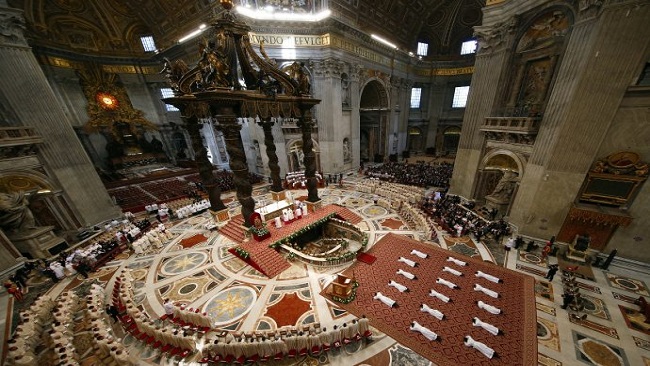
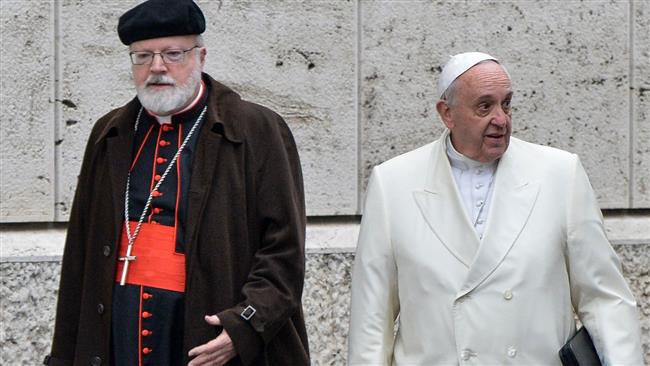
On Sunday, Pope Francis ordained 16 men to the priesthood, reminding them to be like Jesus the Good Shepherd in the way they serve the members of their spiritual flock and minister to those who are lost and searching for God.
“Always have before your eyes the example of the Good Shepherd, who did not come to be served, but to serve and to seek and save what was lost,” the pope said in a homily before the ordination of 16 priests during a Mass in St. Peter’s Basilica April 22.
“Conscious of having been chosen among men and elected in their favor to attend to the things of God, exercise in gladness and sincere charity the priestly work of Christ,” he continued, “solely intent on pleasing God and not yourselves or human beings, [or] other interests.”
The priestly ordination coincided with “Good Shepherd Sunday” and the 55th World Day of Prayer for Vocations.
The new priests, who have been studying for the priesthood at different seminaries in the diocese of Rome, come from countries around the world, including Madagascar, Vietnam, Myanmar, Colombia, and El Salvador.
As in the past, for his homily Francis used the “ritual homily” from the Italian edition of the “Pontificale Romano,” the Catholic liturgical book containing rites performed by bishops, including the ordination of priests, adding a few of his own thoughts to the text.
Reflecting on the Sacrament of Penance in particular, Francis urged the men about to be ordained to “not get tired of being merciful. Think of your sins, your miseries that Jesus forgives. Be merciful.”
It is “through your ministry the spiritual sacrifice of the faithful is made perfect,” he noted, “because it is joined to the sacrifice of Christ, which for your hands, in the name of the whole Church, is offered bloodlessly on the altar in the celebration of the Holy Mysteries.”
He pointed out to the 16 men that in their priestly ministries they will be participants “in the mission of Christ, the only Master,” and advised them to read and meditate tirelessly on the Word of God “to teach what you have learned in faith, to live what you have taught.”
“[May] your teaching, joy and support to the faithful of Christ be the fragrance of your life,” he continued, “that with word and example you can build the House of God which is the Church.”
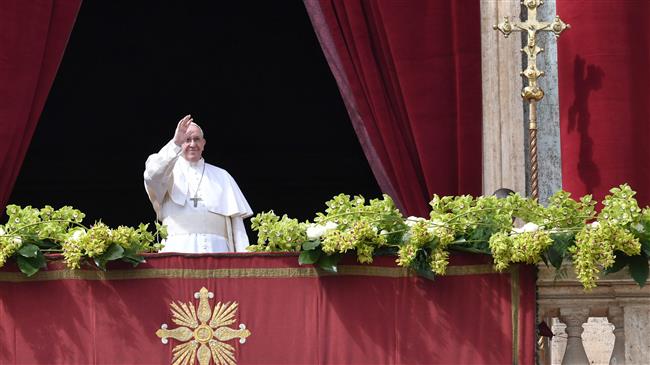
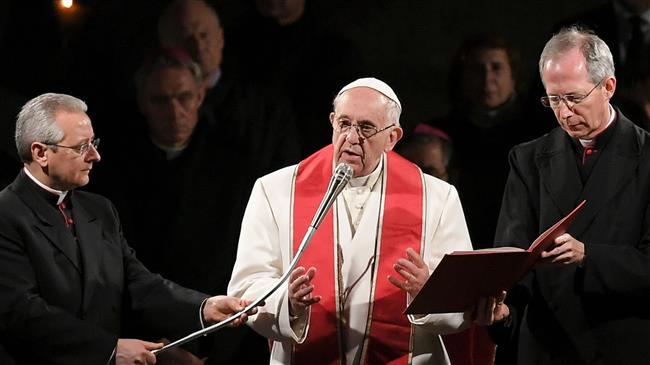
Following Mass, Pope Francis led pilgrims in St. Peter’s Square in praying the Regina Coeli, the traditional prayer for Easter.
Francis reflected briefly on the day’s Gospel, where Jesus says: “I am the good shepherd. The good shepherd gives his life for the sheep,” stating that the words of Jesus in this passage cannot be reduced to an emotional suggestion.
Noting that Jesus also says, “I am the good shepherd, I know my sheep and my sheep know me,” the pope said shows us that Jesus desires a personal relationship with each person, one which reflects “the same intimate relationship of love between Him and the Father.”
“He is attentive to each of us, knows our heart deeply: He knows our strengths and our faults, the projects we have achieved and the hopes that have been disappointed. But he accepts us as we are, he leads us with love,” he said, and in turn, “we are called to know Jesus.”
Culled from Crux










26, April 2018
Catholic church should intervene in Southern Cameroons crisis 0
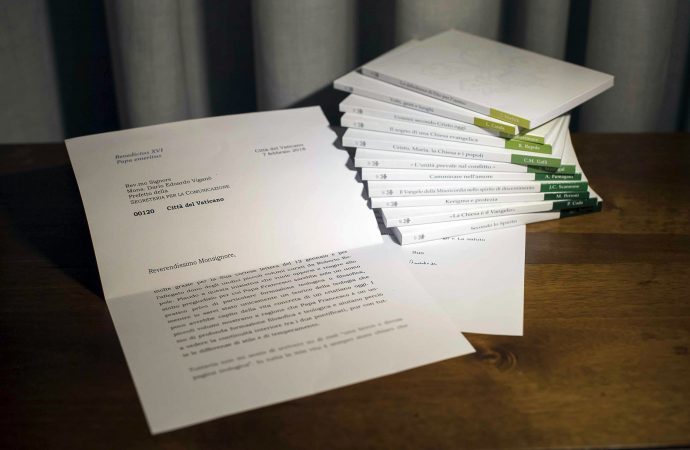
The Roman Catholic church should mediate in the crisis in the English-speaking regions of Cameroon, where separatists and security forces are embroiled in a dangerous conflict, a thinktank urged Thursday.
“The Catholic Church could help break this dangerous stalemate,” the International Crisis Group (ICG) said in a report.
“Other than the Catholic clergy, there are few prospective peacemakers,” it said. “If no-one fills that role, the separatist sentiment already voiced by many anglophones will continue to grow, fuelling further violence and exacerbating the ongoing insurgency in the anglophone regions, with elections in late 2018 a flashpoint.”
The crisis began in 2016, when activists in Cameroon’s anglophone minority stepped up a campaign for greater autonomy.
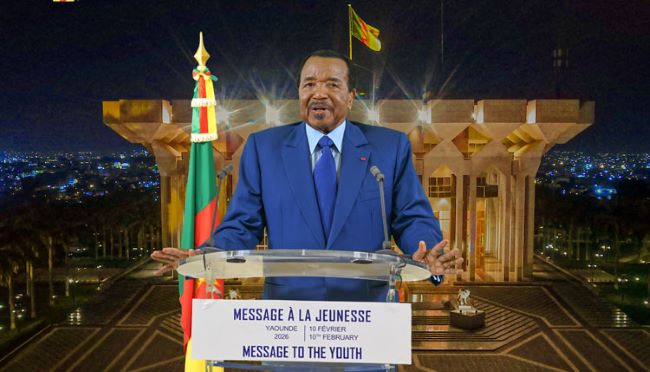
Their demands were rejected by President Paul Biya, prompting radicals to make a full-blown declaration of independence last October.
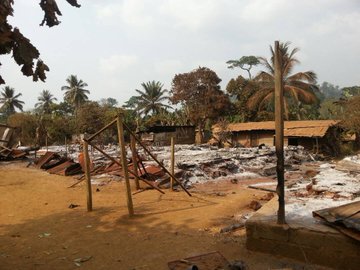
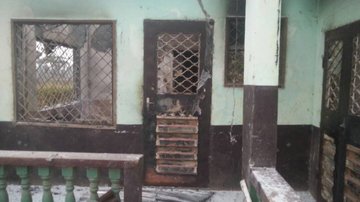
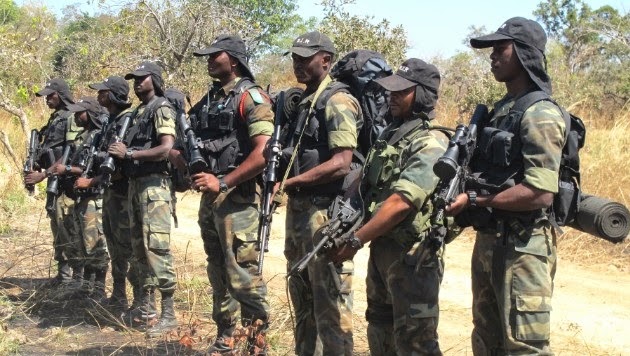
Since then, 31 members of the security forces have been killed by separatists, according to an AFP toll based on official figures. The number of armed separatists or civilians killed by police and troops is unknown.
At the same time, humanitarian needs in the anglophone regions have grown. According to UN estimates, tens of thousands of people have been displaced by the fighting.
The ICG said the church could help by stating “its impartiality” on the big question facing anglophone regions — federalism versus decentralisation.
“A clergy able to project a position of neutrality could work with other trusted actors to mediate between anglophone leaders and the state and stem a dangerous and growing crisis,” it said.
The church is one of Cameroon’s strongest institutions, as it is present in all of the country’s 10 regions and nearly a third of the population is Catholic, the report said.
It cautioned though that the church also had to overcome its own divisions between French- and English-speaking clergy.
Cameroon’s Northwest and Southwest Regions are home to most of the country’s anglophones — a minority of about 20 percent in the predominantly French-speaking country of 23.4 million.
Within the minority, a perception of injustice has grown that anglophones suffer discrimination in the economy, education and the judicial system at the hands of the francophone majority.
The anglophone presence is a legacy of the colonial period in Africa.
France and Britain divided up the former German colony under League of Nations mandates after World War I.
A year after the French-ruled territory became independent in 1961, the southern part of British Cameroons was integrated into a federal system.
Federalism was then scrapped 11 years later for a “united republic” — a centralised system that 85-year-old Biya, in power for more than 35 years, has said will not be changed.
The ICG warned last October that “murderous repression” by the authorities would only feed secessionism — a warning that the government lashed as an attempt to destabilise the country.
Source: Dailymail.co.uk