30, May 2018
Zimbabwe to elect new president, MPs on July 30 0
Zimbabwe announced on Wednesday it would choose a new president and parliament on July 30, in the country’s first electoral test since the removal of its autocratic former leader Robert Mugabe.
His successor, President Emmerson Mnangagwa, unveiled the date in the official Zimbabwe Government Gazette.
“Monday, the 30th day of July, 2018 (is) the day of the election to the office of President, the election of members of the National Assembly and election of councilors,” Mnangagwa said in a proclamation.
Once a right-hand man to the 94-year-old Mugabe, Mnangagwa dramatically succeeded the veteran leader in November after nearly four-decades in charge when troops swarmed the streets and briefly seized key sites.
Mnangagwa, 75, will square off against the main opposition Movement for Democratic Change (MDC) party, now led by 40-year-old Nelson Chamisa following the death of Morgan Tsvangirai in February.
If no candidate receives a simple majority in the first round of the presidential election, a run-off will be held on September 8.
Elections under Mugabe were marred by corruption, intimidation and violence, but Mnangagwa has vowed to hold a free and fair vote.
The election will be the first to be monitored by Western observers in many years.
On Monday Harare and the European Union announced that observers from the bloc would monitor polls in the southern African country for the first time in 16 years.

The head of the last EU observer mission, Pierre Schori, was thrown out of Zimbabwe in 2002 on the eve of presidential elections that were condemned as flawed.
Following the high-profile spat, Zimbabwe barred the EU and other Western observers from sending further missions to monitor polls in the country as Mugabe grew more and more defiant of foreign criticism up until his downfall.
And in a further sign of Zimbabwe’s growing efforts to mend fences with former foes following Mugabe’s resignation, the country has applied to re-join the Commonwealth, the bloc of former British colonies said Monday.
Harare’s membership was suspended in 2003 over the violent and graft-ridden elections the previous year.
Zimbabwe left the Commonwealth at the height of violent land seizures, when white farmers were evicted in favor of landless black people — a policy that wrecked agriculture and triggered economic collapse.
Commonwealth Secretary-General Patricia Scotland confirmed that the organization would also send observers to the elections.
Mugabe sent shockwaves through the ruling ZANU-PF, the party he dominated for decades, when he recently posed with a retired general who will take on the government in this year’s election.
Despite a slew of reformist pledges and announcements it is unclear whether Mnangagwa, who was a vital cog in the ZANU-PF party and helped Mugabe to hold onto power for 37 years, has won the support of ordinary Zimbabweans.
(Source: AFP)


30, May 2018
‘This is a genocide’: villages burn as war rages in blood-soaked Cameroon 0
As rebel groups combat the clampdown on anglophone activists, civilians are being caught in the crossfire, with reports of many killed and tens of thousands forced from their homes
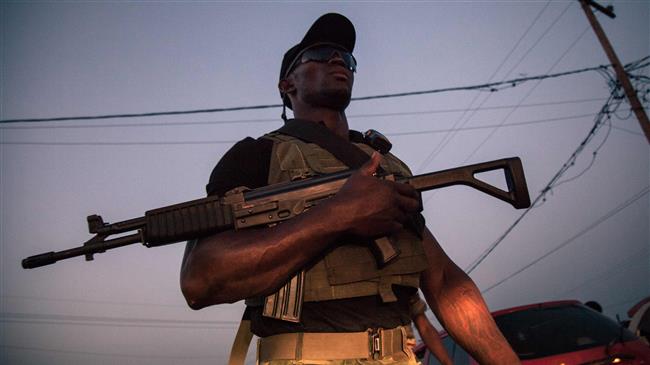
An hour and a half’s drive from Bamenda, in Cameroon’s north-west, is Belo, a village largely abandoned except for a military checkpoint manned by drunken soldiers.
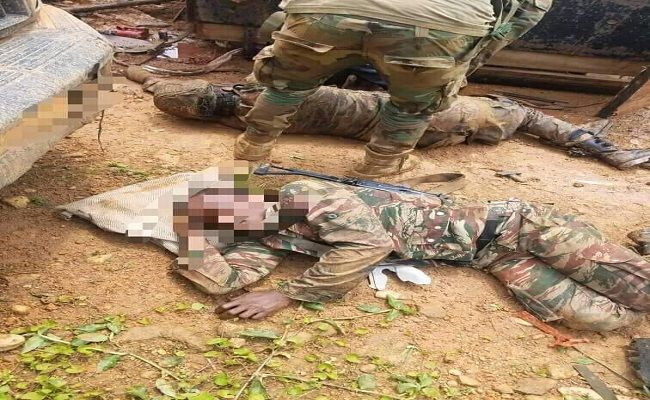
In the middle of the road is a burnt motorcycle. A little further on, a corpse is sprawled – someone has tried to cover it with a few handfuls of grass.
Two girls pass by with bags on their heads filled with dried fish. “We barely have any food. That’s why we came back to collect the fish,” they say.
They explain that the corpse belongs to a villager. “There are many more bodies,” they add. “The soldiers burned part of the village.”
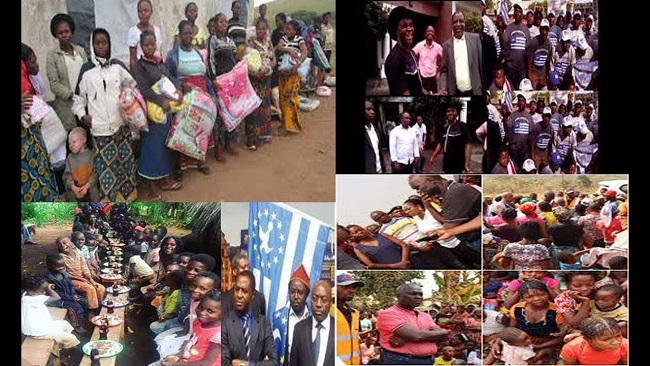
Belo is on the frontline of Cameroon’s simmering conflict between anglophone and francophone, an increasingly secessionist struggle that has pitted the French-speaking government in Yaoundé against the recently emerged Anglophone Ambazonia Defence Forces (ADF) and other rebel groups. According to the UN, the fighting has forced an estimated 20,000 Cameroonians to flee to Nigeria.
Many more people forced from their homes remain in the country. On the main road outside Belo, groups of people are moving, laden with possessions, whole families leaving with everything they can carry.
“We are on our way to Bamenda,” a woman says. Like all the others, she asks not to be named for fear of reprisal.
“There was a fight between the ADF and the army. Beginning in the early morning, I heard heavy gunfire. The army attacked the rebels in the village. The rebels blew up a bridge. So the army got stuck, and the rebels succeeded in killing the soldiers.
“The army sent reinforcements later in the day, and then they started taking their revenge on the villagers. They burned the houses, raped women and executed people at random. Those who had the chance to flee are hiding in the jungle,” she says. She could not tell how many were killed. “Many. This is a genocide.”
The matron at the nearby Mbingo Baptist hospital confirms that on the evening of 5 April “many soldiers” were brought in. About civilian casualties, however, she says she is unaware.
Although French and English are both official languages in the central African country, English speakers complain of policies they say discriminate against them, particularly in the education and judicial systems.
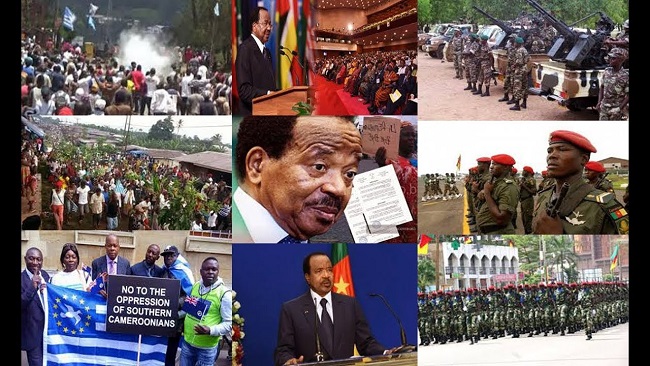
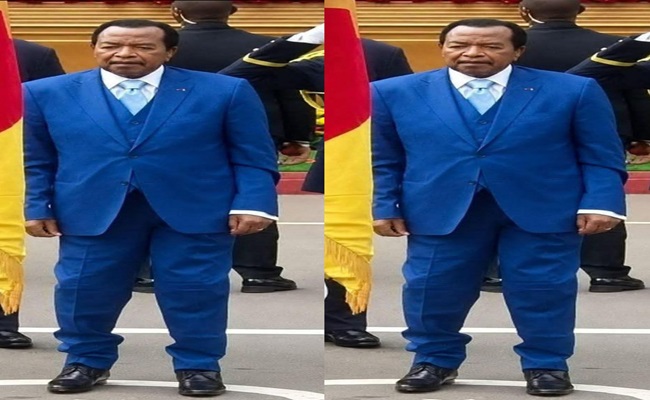
Beginning as an anglophone demand for more say in the government of President Paul Biya, that movement evolved at the end of 2016 into strikes, demonstrations and an uprising.
Then in 2017 the Cameroon Anglophone Civil Society Consortium began Operation Ghost Town, a call for the shutdown of schools in the English-speaking south-west and north-west provinces.
In response, the government arrested anglophone leaders, blocked the internet for three months and installed a curfew in a series of repressive measures that became deadly when, in September of last year, at least 40 were reportedly killed during massive demonstrations.
That in turn provoked rebellion when in December separatists of the Ambazonian Defence Forces began attacks on state targets, with Biya declaring war on the separatists in places like Belo in retaliation.
In the village of Ambo the scene is similar to Belo. Small groups of soldiers occupy the village centre. The walls of several houses are marked by bullet holes and arson attacks.
An old man is standing in his door. “I could not flee, because my leg is crippled. My grandchild had to stay with me – both her parents are dead. For weeks now, we have survived on bananas.”
He points to a nearby house. “An old woman was shot there. The soldiers killed her in her own house. I also saw two girls hit by bullets in their shoulder.”
And while the fighting in Belo occurred last month, the violence is continuing.
Near the village of Widikum, machine guns rattle. A roadblock – one of the many that are situated every 10km or so – has been attacked by rebels. When travellers are finally permitted to pass, a house is burning further down the road.
Lucas Cho Ayaba is commander in exile of the Ambazonia Governing Council, of which the Ambazonia Defence Forces are the military arm. He sees the government in Yaoundé as an occupying force.
“60% of the GDP of Cameroon is earned in Ambazonia. Oil and wood are exploited by foreign companies, but the profits go to Yaoundé. On the other hand there is allegedly no money to provide for English-speaking teachers,” Ayaba says in an interview by phone.
“Our first aim is to make Ambazonia ungovernable. We must try to raise the cost of the occupation to higher than the profits they get here.”
“We cannot stand idly by,” Ayaba adds. “Peaceful protests and civil disobedience in the ghost towns simply do not have any effect against the repression of Yaoundé.”
Despite this, say locals in Bamenda, support for the Amba-boys, as the ADF are locally known, is not always voluntary.
“Those who don’t support the guerrillas with food, petrol or weapons is put away as a traitor,” says the man attacked by the machete.
Culled from The Guardian