14, September 2022
General Bouba Dobékréo has no good military options to use in Southern Cameroons 0
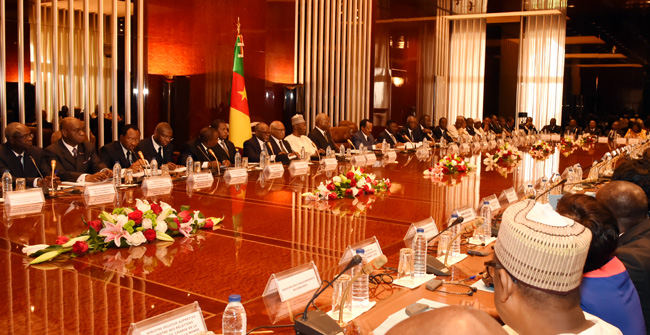
According to supporters of the ill-considered war on Southern Cameroons, General Dobékréo is a battle-hardened soldier recently dispatched to crush the Ambazonia uprising.
Frankly speaking, General Bouba Dobékréo was on the frontline of almost every conflict Cameroon has faced in recent decades, and has battled highway bandits, pirates, and radical Islamists. Now he has been dispatched to lead the fight against Ambazonia Restoration Forces, and some reports have suggested that he plans to take a much less repressive approach than his predecessors.
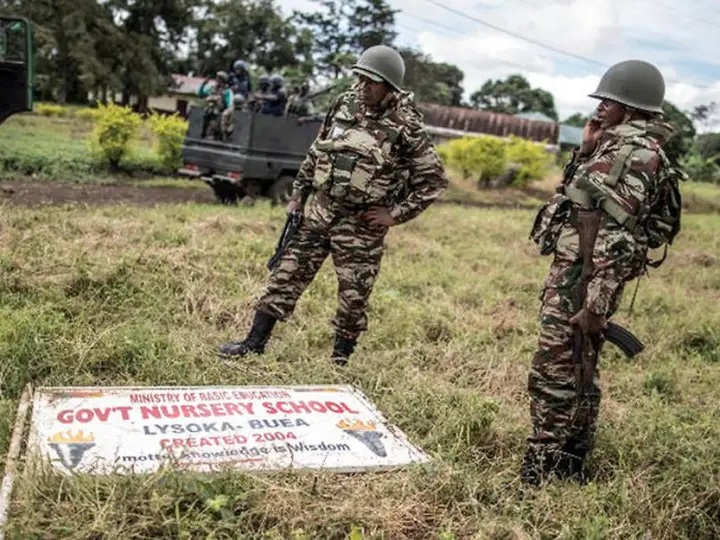
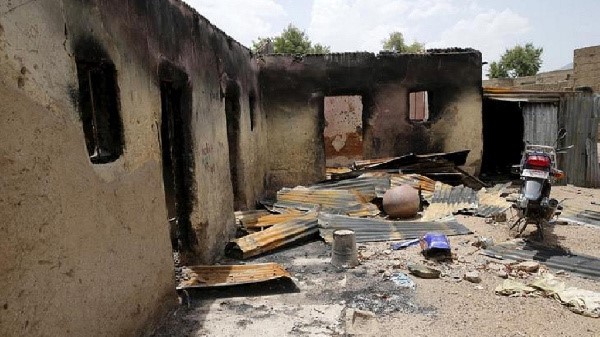
In recent weeks, Southern Cameroons fighters have carried out a series of deadly ambushes against the Cameroon government military which have been on a bigger scale than anything yet seen since the start of the conflict five years ago. President Biya and his so-called army high command want to change strategy but they are yet to say how they intend to proceed.
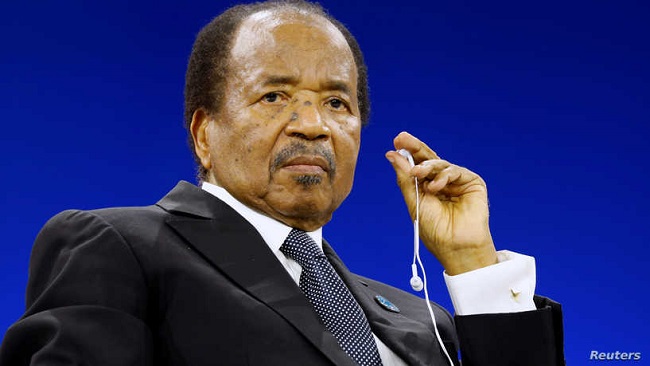
Whether reports on General Bouba Dobékréo’s soft approach to the war are true or not, we of the Cameroon Intelligence Report and the Cameroon Concord News are of the opinion that no one can win this war in Southern Cameroons on the basis of bluff and bluster, or by ignoring the sheer facts on the ground. This, however, is how the 89-year-old President Biya and his Francophone dominated supreme military council are currently approaching the five year running war in West Cameroon. To be sure, the Beti Ewondo political elites arguing for continuing the war have chosen to ignore the grim realities that are actually shaping the course of the fighting and what will happen in Yaoundé if Biya suddenly dies.
There is only one source of official reporting on the military course of the war in Southern Cameroons-it is the Cameroon government military spokesman Serge Cyrille Atongfack. Yaoundé does not allow any other official reporting by traditional rulers, DOs, SDOs including the Governors of the two English speaking regions of Southern Cameroons. This corrupt structure of informing the Cameroonian public opinion is an indication that Cameroon government army soldiers are dying like flies and that the war is at best a stalemate.
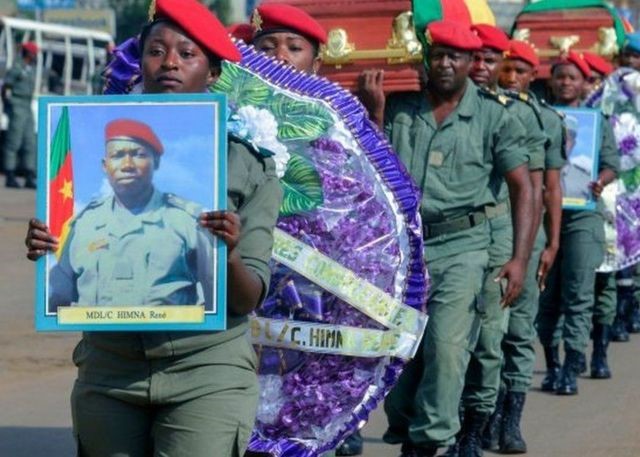
The International Crisis Group and other respectable media houses were forced by the regime in Yaoundé to stop reporting on the war and funeral rituals for fallen soldiers were also stopped abruptly, evidently because such reports and burial rites showed steady Ambazonian gains.
We of the Concord Group have raised critical issues about progress in either to secure a peace or to successfully keep fighting. We have also informed Yaoundé that the critical issue on the ground is not the total number of Francophone Special Forces, but the ability to implement appeasement policies as quick as possible. This is what General Bouba Dobékréo means when he speaks of a much less repressive approach than his predecessors and it is also a clear indication that he has no good military options to use in Southern Cameroons.
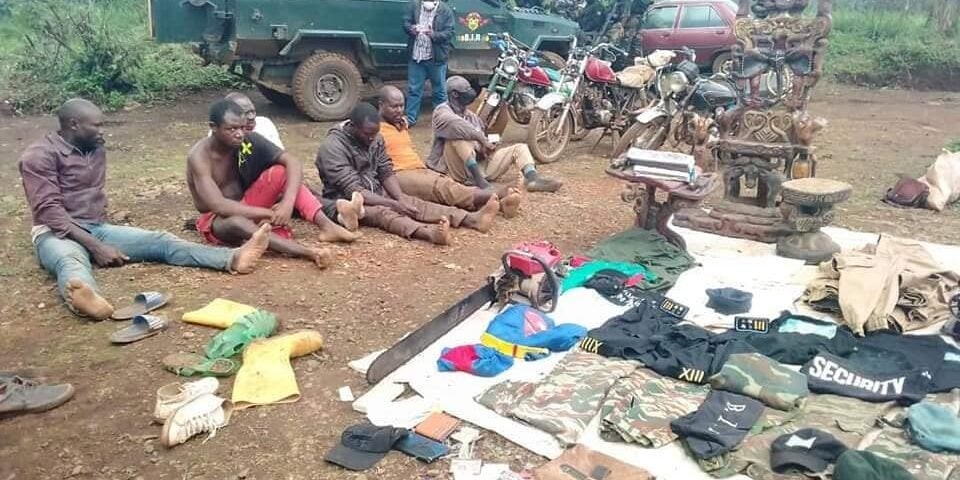
Discussion of peace talks no longer exist in the political discourse in Yaoundé. Staying in the war and providing heavy media coverage on Samuel Eto’o and FECAFOOT is now the Biya regime’s new strategy. And the government is spending hundreds of millions on a daily basis on the military, not counting support activity outside it. In short, there are no good military options in Southern Cameroons. Appointing General Bouba and signing a presidential decree deploying Special Forces after five years into a conflict simply creates a potential power vacuum in Yaoundé that the army can exploit if Biya suddenly bows out. Since there is no practical way to disarm an irregular Ambazonia Self Defense Group that does not maintain heavy weapons, it means that only dialogue can resolve the crisis in Southern Cameroons. Trusting the army to become a major player in Southern Cameroons and staying the course militarily means there is no clear path to lasting peace.
International indicators show that Biya regime is still one of the worst and most corrupt governments on the globe. Yaoundé is running the worst justice system in Africa and poverty is a huge problem.
Population issue is becoming intense in Cameroon as many people are leaving the country. Added to this difficult situation is a massive national and youth employment crisis that is further compounded by rising urbanization in cities such as Douala and Yaoundé without enough new jobs.

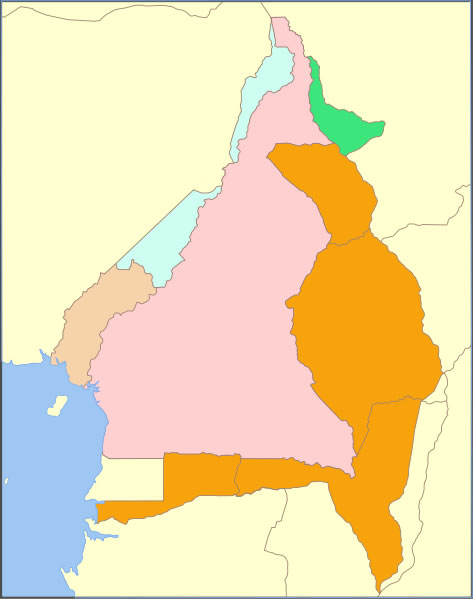
No one has projected what would happen in case President Biya suddenly leaves the political stage! Ultimately, all of the options in Yaoundé are bad. The choice, however, should be made between the best Southern Cameroons peace plan and the best plan for separation of the two Cameroons. This critical choice should be based on the grim realities on the ground, and offer the best steps forward it can. It should not be made on the basis of a hollow political gesture or on the basis of heated Biya Francophone Beti Ewondo rhetoric.
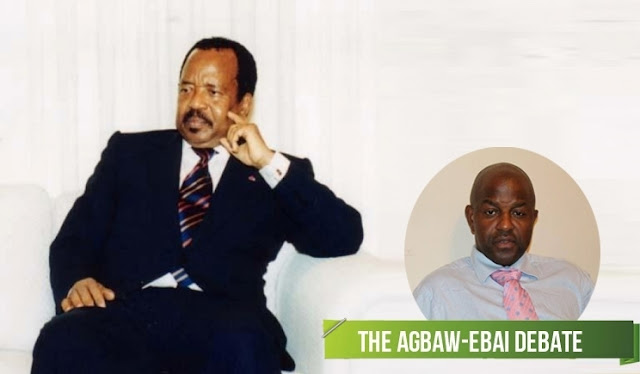
By Soter Tarh Agbaw-Ebai


14, September 2022
Queen Elizabeth II’s coffin arrives at Westminster to lie in state 0
Queen Elizabeth II’s coffin left Buckingham Palace for the last time Wednesday as it was taken amid somber pageantry on a horse-drawn gun carriage past crowds of mourners to the Houses of Parliament, where the late monarch will lie in state for four days.
Crowds began massing early along the flag-lined road outside the palace for the procession from the monarch’s official London residence to the historic Westminster Hall at Parliament. King Charles III and other members of the royal family walked behind the coffin.
Thousands of people gathered on The Mall outside Buckingham Palace and along the banks of the River Thames hours before the coffin procession began.
About a half-hour before the procession was due to start, the gun carriage passed through the palace’s wrought iron gates.
Joan Bucklehurst, a 50-year-old retail worker from Cheshire in northwestern England, said the queen “meant so much for everybody”.
“She was amazing, yeah,” she added, choking up with emotion. “So, we had to be here. We’ve been here a few times when there have been special occasions, but this one, I couldn’t miss this.”
The crowds are the latest manifestation of a nationwide outpouring of grief and respect for the only monarch most Britons have ever known, who died at her beloved Balmoral summer retreat on Thursday at age 96, ending a 70-year reign.
Outpouring of grief
“It’s a very sad day, but it’s our last opportunity to do our duty for the queen and it’s our first opportunity to do it for the king, and that makes us all very proud,” said Maj. Gen. Christopher Ghika, of the Household division, who is responsible for organising the ceremonial aspects of the queen’s funeral.
London’s Heathrow Airport halted flights that could disturbing the procession. British Airways canceled 16 flights as a result of the changes.
The airport said in a statement that the changes would “ensure silence over central London as the ceremonial procession moves from Buckingham Palace to Westminster Hall”.
Troops involved in the procession have been preparing since the queen died. So have the horses of the King’s Troop Royal Horse Artillery.
Sgt. Tom Jenks, from the King’s Troop Royal Horse Artillery, said that the horses have undergone special training, including how to handle weeping mourners, as well as flowers and flags being thrown onto streets as the procession passes by.
People stood behind metal barriers or sat on folding chairs, umbrellas at the ready, takeout coffees in hand under gray skies hours before the coffin was scheduled to leave the landmark palace at 2:22pm (13:22 GMT).
Crowds have lined the route of the queen’s coffin whenever it has been moved in its long journey from Scotland back to London.
On Tuesday night, thousands braved a typical London drizzle as the state hearse, with interior lights illuminating the sovereign’s flag-draped casket, drove slowly from a military air base into the heart of London.
Geoff Colgan, a taxi driver who took the day off to witness the moment, stood stunned in the moments after the queen’s coffin passed.
“It’s one of those things you know would happen, but when it does you can’t believe it,” he said, holding his toddler.
Crowds line the banks of the River Thames
Earlier, in Edinburgh, some 33,000 people filed in silent respect past her coffin as it lay for 24 hours at St. Giles’ Cathedral.
Hundreds of thousands are expected to do the same in London when the queen lies in state at the 900-year-old Westminster Hall, the oldest building in Parliament, for four days before her state funeral on Monday.
The hall is where Guy Fawkes and Charles I were tried, where kings and queens hosted magnificent medieval banquets, and where ceremonial addresses were presented to Queen Elizabeth II during her silver, golden and diamond jubilees.
Chris Bond, from Truro in southwest England, was among those lining up along the banks of the River Thames. He also attended the lying in state of the queen’s mother in 2002.
“Obviously, it’s quite difficult queuing all day long, but when you walk through those doors into Westminster Hall, that marvellous, historic building, there was a great sense of hush and one was told you take as much time as you like, and it’s just amazing,” he said.
“We know the queen was a good age and she served the country a long time, but we hoped this day would never come,” he added.
Chris Imafidon, secured the sixth place in the queue.
“I have 1,001 emotions when I see her,” he said. “I want to say, God, she was an angel, because she touched many good people and did so many good things.”
Source: AP