Cameroon Concord News
You Are What You Read
  • Home
  • News
    • Cameroon
    • Nigeria
    • Africa
    • Europe
    • World
  • Politics
    • Cameroon
    • Nigeria
    • Africa
    • Europe
    • World
  • Sports
    • Cameroon
    • Africa
    • Europe
    • World
  • Business
    • Africa
    • World
  • Life
    • Education
    • Health
    • Fashion
    • Entertainment
  • Religion
    • Cameroon
    • World
  • Contact
    • Online
    • Phone
    • Email
  • About
    • Us
    • Our Services
    • Advertising with Us

Categories

Recent Posts

  • Trump marks 80th birthday with White House UFC spectacle
  • Ex-Israeli PM Ehud Barak says Netanyahu must be removed ‘with sticks and stones’
  • US denies visa to Palestine football chief for World Cup attendance
  • Yaoundé, Abu Dhabi explore new trade and investment framework
  • Southern Cameroons Crisis: 2 gov’t soldiers killed in Ambazonia ambush

Archives

  • June 2026
  • May 2026
  • April 2026
  • March 2026
  • February 2026
  • January 2026
  • December 2025
  • November 2025
  • October 2025
  • September 2025
  • August 2025
  • July 2025
  • June 2025
  • May 2025
  • April 2025
  • March 2025
  • February 2025
  • January 2025
  • December 2024
  • November 2024
  • October 2024
  • September 2024
  • August 2024
  • July 2024
  • June 2024
  • May 2024
  • April 2024
  • March 2024
  • February 2024
  • January 2024
  • December 2023
  • November 2023
  • October 2023
  • September 2023
  • August 2023
  • July 2023
  • June 2023
  • May 2023
  • April 2023
  • March 2023
  • February 2023
  • January 2023
  • December 2022
  • November 2022
  • October 2022
  • September 2022
  • August 2022
  • July 2022
  • June 2022
  • May 2022
  • April 2022
  • March 2022
  • February 2022
  • January 2022
  • December 2021
  • November 2021
  • October 2021
  • September 2021
  • August 2021
  • July 2021
  • June 2021
  • May 2021
  • April 2021
  • March 2021
  • February 2021
  • January 2021
  • December 2020
  • November 2020
  • October 2020
  • September 2020
  • August 2020
  • July 2020
  • June 2020
  • May 2020
  • April 2020
  • March 2020
  • February 2020
  • January 2020
  • December 2019
  • November 2019
  • October 2019
  • September 2019
  • August 2019
  • July 2019
  • June 2019
  • May 2019
  • April 2019
  • March 2019
  • February 2019
  • January 2019
  • December 2018
  • November 2018
  • October 2018
  • September 2018
  • August 2018
  • July 2018
  • June 2018
  • May 2018
  • April 2018
  • March 2018
  • February 2018
  • January 2018
  • December 2017
  • November 2017
  • October 2017
  • September 2017
  • August 2017
  • July 2017
  • June 2017
  • May 2017
  • April 2017
  • March 2017
  • February 2017
  • January 2017
  • December 2016
  • November 2016
  • October 2016
  • September 2016
  • August 2016
  • July 2016
  • June 2016
Kinshasa: Poverty, but also rumba and resilience: Pope Francis starts long-awaited trip

31, January 2023

Kinshasa: Poverty, but also rumba and resilience: Pope Francis starts long-awaited trip 0

Pope Francis on Tuesday is expected to land in the Democratic Republic of Congo, Africa’s largest predominantly Catholic country, for a landmark three-day visit.

Here are five things to know about this vast nation:

Mineral wealth, dire poverty

The DRC is awash with minerals and precious stones, from gold, diamonds and coltan to tin, copper and cobalt.

Harbouring the Congo River — the second-largest in Africa after the Nile — the DRC also has huge hydroelectric potential, as well as 80 million hectares (197 million acres) of arable land.

But decades of war and chronic mismanagement means that little of the country’s enormous wealth trickles down to the population of some 100 million people.

About two-thirds of the Congolese population survive on under $2.15 a day, according to the World Bank.

Ethnic mosaic

Occupying a vast area the size of continental western Europe, the DRC is about 80 times larger than its former colonial power, Belgium.

It is the second-largest state in Africa after Algeria.

Some 250 different ethnic groups live in the DRC, speaking hundreds of different languages.

French is the country’s official language, and local tongues Kikongo, Lingala, Tshiluba and Swahili are also officially recognised.

Despite its size and diversity — the former province of Katanga tried to secede in the 1960s — there is a fierce sense of national unity.

Troubled east

The DRC has been ravaged by brutal conflicts in recent decades. The first Congo war, between 1996-1997, resulted in the overthrow of dictator Mobutu Sese Seko.

The second Congo war, between 1998-2003, sucked in nine different countries, involved about 30 armed groups and caused millions of deaths according to some estimates. It also bankrupted the country.

Most of the DRC is now at peace, but its mineral-rich eastern provinces remain plagued by dozens of armed groups and civilian massacres are common.

Secular, religious

Secularism has been enshrined in the Congolese Constitution since 1974, which also recognises freedom of worship.

According to estimates, about 40 percent of the country is Catholic, 35 percent Protestants of various denominations, nine percent Muslims and 10 percent Kimbanguists — a Christian movement born in the Belgian Congo.

Official Vatican statistics put the proportion of Catholics in the DRC at 49 percent of the population.

Atheists are exceedingly rare in Congolese society, which remains deeply religious and influenced by the church. During the colonial period, education was entrusted to Catholic missionaries.

Rumba, survival

Congolese people are renowned for their sense of humour and resourcefulness in the face of trying conditions.

Many jokingly refer to “Article 15” of the constitution, which purports to instruct citizens to sort things out themselves.

Music also plays an outsize role in the country’s culture. UNESCO listed Congolese rumba as intangible cultural heritage of humanity in December 2021.

Congo is also famed for its so-called sapeurs — dandies known for their ultra-elegant clothing and sense of style.

Source: AFP

Burkina Faso: A dozen security officers killed as violence spirals

31, January 2023

Burkina Faso: A dozen security officers killed as violence spirals 0

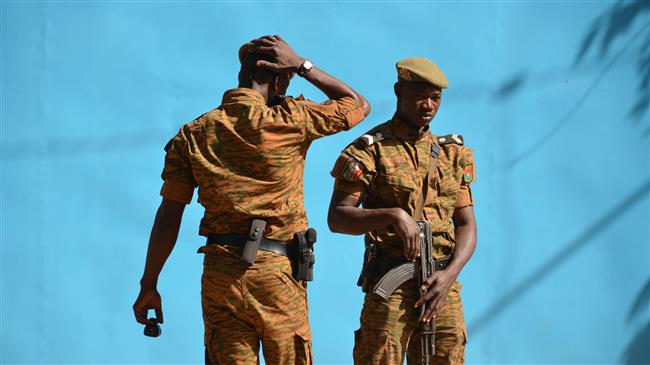
Suspected jihadists killed 13 people, most of them from the military, in the lastest such attack in Burkina Faso’s restive north, the army said Tuesday. 

Burkina Faso’s State Information Agency posted on its Facebook page that a dozen security officers and a civilian were killed Monday in Falagountou in Burkina Faso’s Sahel region during clashes between the military and jihadis.

Ten military police officers, two members of an auxiliary force supporting the army, and a civilian died as a result of a “terrorist attack on Monday” in the locality of Falangoutou, the army said in a statement.

Ten other military police officers were missing and another five wounded in the attack, the army said.

Fifteen abducted people found dead: governor

The latest attack followed a weekend of violence, when another 20 people were killed in two attacks in the country’s east-central and western regions.

Fifteen people seized by suspected jihadists in western Burkina Faso at the weekend have been found dead, the region’s governor said on Tuesday.

“Fifteen bodies were found on Monday in Linguekoro village in Comoe province,” said Colonel Jean Charles dit Yenapono Somé, governor of the Cascades region, in a statement.

Four people were executed Saturday afternoon when gunmen intercepted their van between Tenkodogo and Ouargaye villages.

On Sunday, a passenger mini-bus coming from the western city of Banfora was intercepted by armed men, said Col. Somé in a statement.

Eight women and one man were freed, the rest of the people were abducted and their lifeless bodies were found with bullet holes the following day, he said.

Armed groups, coups, fleeing civilians

Jihadi violence linked to al-Qaida and the Islamic State Group has ravaged the West African country for years killing thousands and displacing nearly 2 million people. Nearly 5,000 civilians have been killed since 2015, according to the Armed Conflict Location & Event Data Project (ACLED).

The violence has sowed frustration and distrust among the population and led to two coups last year. The new junta leader, Ibrahim Traoré, seized power in September promising to stem the violence but attacks are increasing.

Traoré has mobilised tens of thousands of civilian fighters to combat the jihadis alongside the army. But analysts says the civilian fighters are accused of targeting other civilians perceived to be working with the jihadis, which is fueling retaliatory attacks.

“The types of mass-atrocities that are occurring were expected, as the conflict was expected to escalate in the coming months due to the increased mobilization of the population through the (volunteer) program and the increasing trend of extrajudicial killings by defence and security forces observed in recent months,” said Héni Nsaibia, senior researcher at ACLED.

“With the increase in state violence and state-sanctioned violence, it is not surprising that militant violence is escalating and further fueling cycles of attacks and retaliation,” he said.

Source: AP
French FA chief Le Graet ‘no longer has legitimacy’ to stay in post

30, January 2023

French FA chief Le Graet ‘no longer has legitimacy’ to stay in post 0

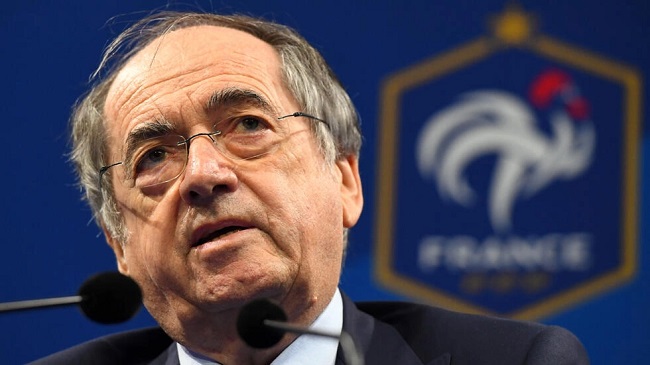
Noel Le Graet, the scandal-hit president of the French Football Federation under investigation for sexual harassment, “no longer has the necessary legitimacy to run and represent French football”, according to a report into governance failings at the body seen by AFP on Monday.

The report follows an audit of the FFF ordered by France’s Sports Ministry after allegations made against the 81-year-old Le Graet, who was forced to step down earlier this month pending its outcome.

“Considering his conduct towards women, his public comments and the governance failings of the FFF, Mr Le Graet no longer has the necessary legitimacy to run and represent French football,” the report said, adding that the body’s handling of cases of sexist and sexual violence was “neither effective nor efficient”.

Le Graet is currently under investigation by Paris prosecutors for sexual and psychological harassment following accusations against him made by football agent Sonia Souid.

The report stated that his attitude towards women “can be described at the very least as sexist”, and said that there was evidence his behaviour was “likely to be considered as criminal”.

He denies any wrongdoing.

Despite already stepping down and being replaced on an interim basis by vice-president Philippe Diallo, Le Graet is still officially recognised as president by world governing body FIFA.

The report also targeted the “brutal” management practices of the body’s director general Florence Hardouin, who has also been suspended from her role.

The FFF’s directors have been given until February 13 to respond to the conclusions of the report.

Le Graet’s mandate runs until 2024 but the organisation’s executive committee can decide to hold an extraordinary general assembly where it could vote to depose the standing president.

The affair has cast a cloud over French football barely a month after they reached the World Cup final in Qatar, losing on penalties to Argentina to just fall short of retaining the title they won in 2018.

Le Graet, who has been president of the FFF since 2011, had already faced calls to resign, including from Sports Minister Amelie Oudea-Castera, after dismissive remarks in a recent radio interview about France legend Zinedine Zidane’s potential interest in coaching the national team.

Didier Deschamps recently extended his contract to stay as coach through to 2026, having been in charge since 2012.

Source: AFP

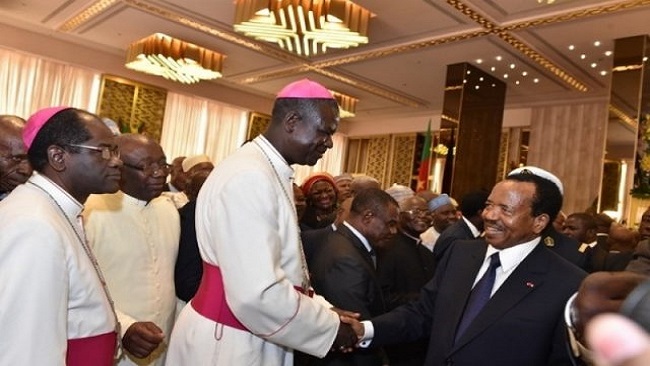
Douala: Archbishop Kleda links journalist Zogo’s death to 2017 slaying of the Bishop of Bafia

30, January 2023

Douala: Archbishop Kleda links journalist Zogo’s death to 2017 slaying of the Bishop of Bafia 0

Catholic leaders in Cameroon have condemned the Jan. 22 murder of a local journalist, comparing the slaying to the 2017 assassination of Bishop Jean-Marie Benoît Balla of Bafia.

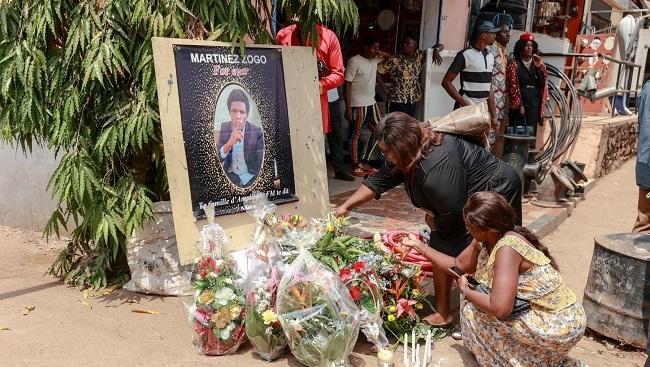
The lifeless body of Martinez Zogo, 51, was found along the road to Soa, nine miles from the capital city. His remains were in an advanced state of decomposition, but preliminary investigations reportedly showed signs the journalist, who was also the director general of the urban radio station Amplitude FM, had been tortured, sodomized, and mutilated.

Zogo went missing on January 17. Reports say that he was running toward a local police station to evade a threat when he was grabbed by unidentified men and carted off in a black, unmarked car.

His death has generated national and global condemnation.

“The assassination of this journalist has shocked everyone,” said the Archbishop of Douala, Samuel Kleda, in a Jan. 26 statement.

“A journalist isn’t a thief,” Kleda said. “A journalist who is only doing his job is kidnapped. He is tortured, and he is killed and then dumped in the bush near a village, as if he were a highway robber.”

“It shouldn’t be so in a country worth its salt, in a country of laws where human rights are respected,” he said. “We strongly condemn the assassination of this journalist.”

Kleda then drew parallels between the assassination of Martinez Zogo and that Balla six years ago.

“It’s almost the same scenario. When I look at the way this journalist was killed, I think about the disappearance and the assassination of the Bishop of Bafia, Jean-Marie Benoit Balla.”

“He too, like Martinez Zogo went missing [and] was tortured before being killed,” Kleda said.

Balla disappeared on the night of May 30-31, 2017, and his corpse was discovered floating on the Nyong River on June 2. The country’s bishops indicated that he had undergone significant torture before being murdered.

“Who is killing Cameroonians?”, Kleda asked.

“They tell us that investigations will be conducted, but the results of such investigations are never made public,” he said.

Kleda said he was at a loss to understand why a journalist who ran for safety to a police station could be taken away and the security personnel wouldn’t pursue the kidnappers.

“It’s horrible! It’s inadmissible! There is a serious problem if a citizen can’t be protected by Gendarmes,” he said.

“Why did the police not seek to find the journalist after learning about his disappearance? The police and the gendarmerie could have done everything possible to find the journalist alive. They didn’t do that,” Kleda charged.

He said it was incomprehensible that nobody has been suspected or arrested in connection with the murder.

“It’s curious,” Kleda said. “There is a need to find the killers of this journalist. Those who committed this odious act must be found and punished in accordance with the law.”

He said he couldn’t understand why the President of the Republic, Paul Biya, won’t make at least a statement concerning the assassination the of the journalist, and wondered if the lives of Cameroonians really matter to him.

“When Bishop Balla was brutally assassinated, I said it was one more death too many. I have to make the same statement today after the brutal assassination of the journalist. Cameroonians aren’t protected. Cameroonians don’t feel secure. We can’t understand why the President of the Republic has remained silent in the face of such a grave issue,” Kleda said.

The National Union of Journalists of Cameroon said they were dismayed by the “heinous assassination” of their colleague.

The International Press Institute, a Vienna-based press freedom organization, has urged Cameroonian authorities to “promptly investigate the horrific murder of journalist Martinez Zogo and ensure that those responsible are brought to justice.”

Jean-Michel Nintcheu, a lawmaker from the opposition Social Democratic Front, said in a press statement that it was “a crime’ that should never go unpunished.

The Director-General of UNESCO, Audrey Azoulay ,has also condemned the killing and called on the government “ not to let this crime go unpunished. Journalists play an essential part in nurturing and upholding democratic governance. They deserve every necessary protection.”

The head of Reporters Without Borders’ Sub Saharan Africa Desk, Sadibou Marong, said there are “many gray areas regarding the circumstances of his brutal abduction.”

“The authorities must launch a rigorous, thorough and independent investigation to establish the full chain of responsibility and the circumstances that led to this sad event,” he said.

Cameroonian novelist Calixthe Beyala said she was “dejected, saddened. I knew he was dead as soon as it was announced he had been kidnapped. One can ask the question: Whose turn it is? Each of us can find ourselves in this situation for something that we might have said.”

Zogo’s brutal murder casts a long shadow on freedom of the press in Cameroon, and adds to the growing number of attacks on journalists in Cameroon.

In August 2019, journalist Samuel Wazizi was arrested by security forces in Buea in Cameroon’s South West region. After ten months without access to his lawyers or family, authorities finally announced he had died in detention. An investigation carried out by the military police has never been made public.

According to statistics from the Committee to Protect Journalists,17 journalists have either been killed or imprisoned in Cameroon over the last ten years. The largest number of journalists being jailed took place in 2020 when 9 journalists were imprisoned.

Some local observers believe Zogo might have been murdered for investigating and reporting on corruption scandals, some involving senior figures in the country’s political life.

Culled from Crux

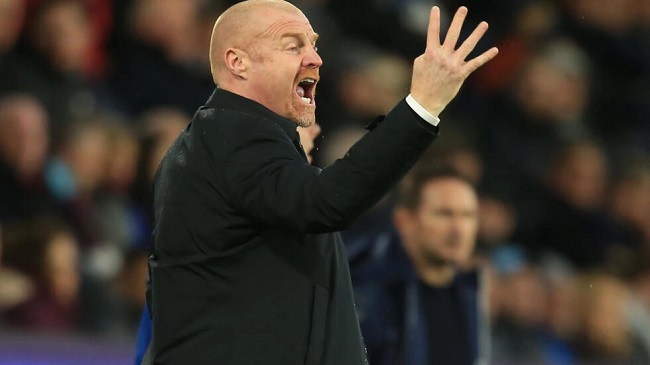
Football: Everton appoint Sean Dyche as new manager

30, January 2023

Football: Everton appoint Sean Dyche as new manager 0

Relegation-threatened Everton announced on Monday they had appointed former Burnley boss Sean Dyche as their new manager to replace the sacked Frank Lampard.

Dyche has agreed a two-and-a-half-year contract and will take charge for the first time for the Premier League club’s clash against leaders Arsenal at Goodison Park on Saturday.

“I know about Everton’s passionate fan base and how precious this club is to them,” Dyche said in a club statement.

“We’re ready to work and ready to give them what they want. That starts with sweat on the shirt, effort and getting back to some of the basic principles of what Everton Football Club has stood for for a long time.

“We want to bring back a good feeling. We need the fans, we need unity and we need everyone aligned. That starts with us as staff and players.”

Everton chairman Bill Kenwright said: “He quickly convinced me that he has exactly the right attributes to make himself a great Everton manager — and a man who could inspire our fanbase.”

Lampard was sacked last week after a run of nine defeats in 12 Premier League matches.

Everton are 19th in the Premier League after 20 matches — level on points with bottom club Southampton.

Source: AFP

Southern Cameroon: War and No Peace

28, January 2023

Southern Cameroon: War and No Peace 0

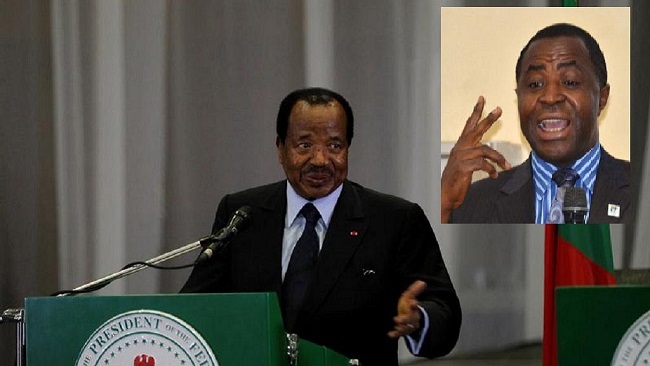
In power since 1982, Cameroon President Paul Biya has ruled autocratically for more than four decades. While Cameroon is officially bilingual, one manifestation of such authoritarian governance is the persistent marginalization of the minority English-speaking population in the Northwest and Southwest regions, the former British Southern Cameroons.

Since 2016, in the face of state violence, peaceful protests by Anglophone groups have morphed into armed conflict in which separatist groups are fighting for an independent Republic of Ambazonia. In its sixth year, this hidden and neglected war has killed thousands and forcibly displaced more than  one million people.

 Biya’s autocratic regime remains intent on a military solution to a political problem, uninterested in peace negotiations, and with little or no external pressure. The colonial and post-colonial roots of this contemporary conflict are well-known to English-speaking Cameroonians. Originally a German colony (1884-1916) called Kamerun, after World War I, it was divided between France (80 percent) and Britain (20 percent), under League of Nations and then United Nations mandates. Britain subdivided its territory into Northern and Southern Cameroons and governed them as part of Nigeria. A botched reunification process occurred at independence in 1960 and 1961. French Cameroun and Nigeria gained their independence in January and October 1960 respectively.

 In February 1961, an UN-organized plebiscite was held to decide the future of Northern and Southern Cameroons, with the choice of joining either independent French Cameroun or Nigeria, but not independence as a separate state. Northern Cameroons voted to join Nigeria, while Southern Cameroons voted to join Cameroon. The terms of reunification between Southern Cameroons and French Cameroun were then agreed upon at the Foumban constitutional conference in July 1961, resulting in the Federal Republic of Cameroon, consisting of two federated states: West Cameroon (former Southern Cameroons) and East Cameroon (former French Cameroun).

 The Federal Constitution came into effect in October 1961, with the federal system perceived to uphold the bi-cultural and bi-lingual nature of Cameroon within which the state of West Cameroon retained some autonomy, inclusive of separate governance structures and distinctive legal and educational institutions. However, federalism was short-lived, despite article 47 of the Constitution stating it to be “indissoluble.” In May 1972, President Ahmadou Ahidjo held a controversial national referendum that led to the abolition of the federal constitution and the creation of a unitary state called the United Republic of Cameroon.

 The 1972 referendum removed West Cameroon’s autonomous governance structures, most notably the West Cameroon House of Assembly. In 1984 President Biya re-named the country, in French, as La Republique du Cameroun, returning to the name before reunification with Southern Cameroons. Writing in 1985, the barrister Fon Gorji Dinka described the 1972 referendum as a “constitutional coup” and the 1984 decree as an “act of secession” of La Republique du Cameroun from the 1961 union with Southern Cameroons. Current Anglophone separatist groups call themselves “restorationists,” fighting for the “restoration” of the state of Southern Cameroons or Ambazonia, and perceive this as an anti-colonial struggle given that British colonization was replaced by colonization by La Republique du Cameroun in 1961. Although the current violence in Southern Cameroons is unprecedented, today’s conflict is a consequence of longstanding Anglophone grievances coupled with a strategy of “denial and repression” by the Francophone-dominated state towards Cameroon’s so-called Anglophone problem. Being Anglophone in Cameroon goes beyond language to encompass a cultural identity that has a history linked to Britain and a set of distinctive institutions.

For decades, many Anglophones have felt that the Francophone-dominated state’s policy of assimilation has attempted to erode that identity, and feel treated as second-class citizens within Cameroon, with marginalization experienced in the socio-cultural, political, economic, and linguistic fields. Anglophone opposition has risen at different times. In the early 1990s, political liberalization enabled Anglophone-specific trade unions, interest groups as well as political groups to emerge, advocating for Southern Cameroonian interests, notably the Southern Cameroons National Council (SCNC).

Of particular note were the All-Anglophone Conferences (AACI and AACII) held in 1993 and 1994 and attended by more than 5,000 delegates from Anglophone organizations and associations.  AACI’s Buea Declaration I called for a return to two-state federalism, but total disregard of such demands by Biya’s regime led to secession being placed on the agenda in the declaration from AACII. The aim was stated as “the restoration of the autonomy of the former Southern Cameroons which has been annexed by La République du Cameroun.” SCNC in particular advocated for secession, but notably by non-violent means through the “force of argument rather than the argument of force.” These long-standing grievances re-emerged in late 2016 with peaceful protests by lawyers and teachers against the francophonization of the legal and educational systems in the English-speaking regions. Lawyers were unhappy about the appointment of French-speaking magistrates educated in civil law and unfamiliar with common law, as practiced in the Anglophone regions, while teachers were concerned about the influx of French-speaking teachers. Separately, they undertook strike action and demonstrated in October and November 2016 respectively. These peaceful protests were violently dispersed by the security forces using tear gas and bullets, with some fatalities and many arrests.

 Following this violence, the Cameroon Anglophone Civil Society Consortium (CACSC) was established, advocating a return to pre-1972 two-state federalism. CACSC initiated “Operation Ghost Towns Resistance,” with closures of schools and businesses in the Northwest and Southwest regions on selected days as a tactic of non-violent resistance. The government’s response in January 2017 was to ban the Consortium, along with SCNC, and arrest their leaders on treason and terrorism charges, as well as a three-month internet blackout. Writing in April 2017, sociologist Piet Konings and anthropologist Francis Nyamnjoh likened the Francophone-dominated state’s approach to Anglophone grievances to that “of a workman whose only tool is a hammer and to whom every problem is a nail.”  One consequence was that separatist voices became stronger. State repression of, first, legitimate expression of grievances and, second, peaceful advocacy of federalism, led to increasing calls for secession of Southern Cameroons. Following the banning orders, existing separatist organizations, largely active in the diaspora, came together to form the Southern Cameroons Ambazonia Consortium United Front (SCACUF), with Sisiku Julius Ayuk Tabe, previously involved in CACSC, appointed as chairperson. While advocating secession, his strategy remained non-violent, echoing SCNC’s position in the  1990s. Divisions shortly became apparent, however, with Ayaba Cho Lucas, leader of the Ambazonia Governing Council (AGC), one of SCACUF’s constituent organizations, advocating armed struggle. While SCACUF’s leadership remained largely outside of Cameroon, notably in Nigeria, civil disobedience continued in the Northwest and Southwest during 2017 with widespread support for the weekly “Ghost Town” days. The state’s response was military occupation, with arbitrary arrests and detention of young men on the pretext of supporting secessionism. In response, the AGC announced the deployment of their armed wing, the Ambazonia Defence Forces (ADF), with the first attack on September 9, 2017 in which three soldiers were killed. On October 1, 2017, the anniversary of Southern Cameroons’ independence from Britain, the independent Republic of Ambazonia was declared by SCACUF, alongside mass demonstrations in which 17 people were killed by state security forces. The SCACUF transformed itself into the Interim Government of Ambazonia (IG) on October 31, with Ayuk Tabe as President. The state intensified its militarization of the Anglophone regions, and on November 30, 2017 President Biya declared war on the secessionists, described as “terrorists.” Armed conflict continues to date. War causes misery.

Over five years later, the impact on the four million population has been severe. While figures are approximate and underestimated, at least 6,000 people have been killed and hundreds of villages razed, with 1.1 million people displaced by 2020, including 70,000 registered refugees in Nigeria, and 2.2 million in need of humanitarian assistance. School closures have caused education disruption to hundreds of thousands of children for years. Gross human rights violations committed by both warring parties have been widely documented, including by the Cameroon-based Centre for Human Rights and Democracy in Africa. The military is accused of extrajudicial killings, arbitrary arrests, disappearances, unlawful imprisonment, torture, as well as the burning and destruction of homes, schools, and health centers. Armed separatist groups are accused of kidnappings and extortion of civilians, killings of alleged informants (so-called “blacklegs”), and beatings of teachers and students for non-compliance with the school boycott. Evidence indicates that the security forces are responsible for a greater proportion of the various atrocities, with the World Bank stating that government forces have caused 10 times as many civilian deaths as separatist armed groups. Rape and other forms of sexual violence have increased dramatically, described as “pervasive” and “rampant” in a UN report, and perpetuated with impunity by the military and non-state armed groups.

 As in other conflicts, rape has been used as a weapon of war, terrorizing local communities into submission and grossly violating women and girls. The Cameroon government’s approach to the war was described recently as one of “hammer and lies,” in other words, military force alongside a disinformation campaign. The government continues to fight a counter-insurgency war, while simultaneously denying that a conflict exists, preferring to refer to a “security crisis” in the English-speaking regions, one which is largely resolved with a Presidential Plan of Reconstruction and Development in place from 2020. The lie to this is evident by Biya’s deployment of a new military commander and special elite forces to the two regions in September 2022. Essentially Biya seeks a military victory by crushing the separatists. But how strong is the Ambazonian movement and what threat does it entail to the Cameroonian state? Like similar movements, the Ambazonian movement has political and military wings. Leaders of the political wing are mainly based in the diaspora or imprisoned in Cameroon, with significant divisions between them. The military forces, known locally as the “Amba Boys,” comprise up to 30 armed groups across the two regions. Initially, the main political split was between the Interim Government (IG) led by Ayuk Tabe and the Ambazonia Governing Council (AGC) led by Cho Lucas.

 However, in January 2018 Ayuk Tabe and nine other IG leaders were arrested in Nigeria and extradited to Cameroon. They were detained without trial, then all sentenced to life imprisonment by a military tribunal in August 2019.  With Ayuk Tabe detained, US-based Samuel Ikome Sako was elected as interim IG president. However, infighting ensued with a split in early 2019 between “IG Sisiku” and “IG Sako.” Despite its initial rivalry with the Interim Government, the AGC supported the IG Sisiku faction and formalized cooperation ties in August 2019.  In 2021, the AGC also formed an alliance with Biafran separatists in Nigeria, the Indigenous People of Biafra. Cho Lucas has also encouraged Francophone Cameroonian groups to take up arms against Biya’s regime.

Militarily, while the Ambazonia Defence Forces (ADF) remains the largest group, there is a proliferation of smaller armed groups, for instance, the Southern Cameroons Defence Forces (SOCADEF), Ambazonia Restoration Forces, Red Dragons, Tigers of Ambazonia, and Vipers, comprising around 4,000 fighters in total. Allegiance with the political factions varies, with Red Dragons and SOCADEF believed to be aligned with IG Sako, for instance, while other armed groups operate quite independently. Initially, equipment was rudimentary, including hunting rifles and machetes. But the armed groups’ combat strength has increased through the acquisition of more sophisticated weaponry, including improvised explosive devices (IEDs) and rocket launchers, with a greater intensity of operations. Precise figures are unknown, but both sides have lost considerable numbers of combatants.

The fragmentation of political leadership has led to disagreements and multiple policy directions. In response to the Swiss peace initiative, IG Sako formed the Ambazonia Coalition Team (ACT) in September 2019 to present a joint platform for negotiation. However, IG Sisiku refused to participate. Opposing policies over “lockdowns” (or “Ghost Towns”) and the so-called “liberation war tax” on civilians also indicate a lack of unity. The multiplicity of voices over policy directions is symptomatic of the disconnect between the diasporic leadership and their militias in Cameroon, with the absence of political authority on the ground. While the war is unremitting and the government was forced to deploy special elite forces in September 2022 to bolster its counterinsurgency efforts, fragmentation and division amongst Ambazonian groups have weakened the movement. As recently stated, the international response to the Cameroon Anglophone conflict has been “feeble.” with little or no pressure from Western governments and no political intervention from the AU or UN. Why is this? The Cameroon government’s “lies and disinformation” strategy has been relatively successful in hiding the reality of the war, and Western governments have prioritized economic and geo-strategic interests that require friendly relations with Biya’s regime. For the UK, for example, this included an off-shore natural gas deal in June 2018, and a UK-Cameroon Economic Partnership Agreement in April 2021. For France, its longstanding Françafrique policy prohibited criticism of the Cameroon government, evident in July 2022 when President Emmanuel Macron’s visit made no public reference to the Anglophone conflict. Stronger statements have come from the US Congress. House of Representatives’ Resolution 358 (July 2019) and Senate Resolution 684 (January 2021) which called for both warring parties to end all violence and pursue broad-based dialogue to resolve the conflict. However, neither congressional resolution has led to any significant action by the US government. The African Union’s lack of response contrasts with the AU-led peace process in the Tigray conflict in Ethiopia, for instance. Cameroon’s membership of the AU’s Peace and Security Council has ensured its internal conflict has not been discussed. Similarly, successful lobbying by Cameroon’s diplomats has kept the conflict off the agenda of the UN Security Council. More than forty years of autocratic and centralized rule under Paul Biya means that the Francophone-dominated state is intent on maintaining its control over Southern Cameroons, with little or no concession to Anglophone grievances, and currently unwavering from pursuing a military solution to a political problem, whatever the cost to the English-speaking population. The lack of international pressure has contributed to enabling the regime’s hard-line stance. However, the outlook of the Anglophone population would seem to have changed irrevocably. The unprecedented military occupation, repression, and violence from the Francophone-dominated state have given rise to a shift in consciousness. Although the desire for peace is profound, the political status quo is no longer tolerable. Any peace settlement will necessitate that the Anglophone population determines its future, for instance by means of an internationally-supervised referendum on constitutional arrangements, with options including federalism and independence. If the decolonization process of the Southern Cameroons in 1960 and 1961 was botched and contravened the original UN Trusteeship Agreement, then decision-making on Southern Cameroons constitutional future has to be fully democratic some 60-plus years later. –

Culled from The Elephant

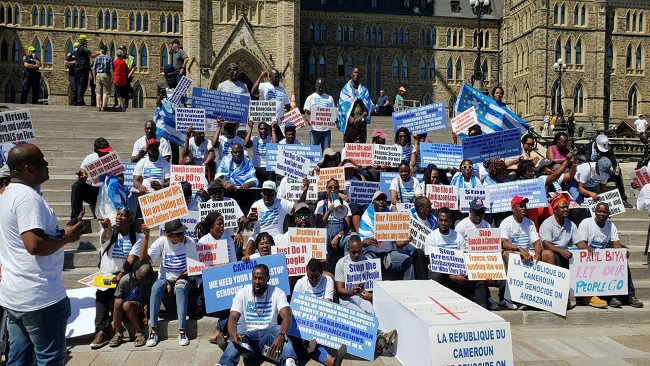
Biya regime told to accept Canada’s peace mediation offer

28, January 2023

Biya regime told to accept Canada’s peace mediation offer 0

The Global Campaign for Peace and Justice in Cameroon has called on the African country’s government to accept the offer of mediation made last week by Canadian authorities with a view to a possible agreement with Anglophone separatists that would end a conflict that has left more than 6,000 people dead since 2017.

The current situation of the process is confusing, because the Canadian government presented itself as a mediator last Friday but days later the Cameroonian authorities rejected any involvement of Ottawa in negotiations with the separatists.

In this scenario, the NGO calls on the Government of Cameroon “to renew its commitment to the Canadian process” since “the killings, lawlessness, destruction and impunity prevailing in the conflict zones have only generated more violence and insecurity”.

“In this regard, the solidarity of the government of Cameroon with the Canadian process is vital,” the group added in a statement posted on its website.

Canadian Foreign Minister Mélanie Joly did not exactly comment on the Cameroonian government’s refusal but assured that the warring parties have already held three meetings in Ontario and Quebec. “The Cameroonian government approached us and we also invited a UN representative present during the mediation,” the minister assured on Tuesday.

Cameroon’s Anglophone regions–Northwest and Southwest–have been rocked by conflict following the crackdown on separatist movements after Ambazonia’s self-proclamation of independence on October 1, 2017.

The previous year, this area–once part of British colonies in Africa but which decided to join French Cameroon–was the scene of peaceful protests to demand greater autonomy or independence arguing discrimination by central authorities, also on language issues.

Since then, armed groups have proliferated and support for the separatists, hitherto rather marginal, has increased. The government has responded with a harsh crackdown, during which human rights organizations have accused the security forces of committing atrocities.

Source: EUROPA PRESS

Yaoundé: Human Rights Watch urges probe over Martinez Zogo’s death

28, January 2023

Yaoundé: Human Rights Watch urges probe over Martinez Zogo’s death 0

Human Rights Watch on Friday called on Cameroon to launch an independent inquiry into the killing of a popular radio journalist who had spoken out against graft.

Martinez Zogo, 50, who regularly attacked financial sleaze and cronyism in the central African nation, was abducted on January 17 outside a police station in the suburbs of the capital Yaounde.

His heavily-mutilated corpse was found on Sunday, the authorities say.

Zogo “was a journalist who took great risks to expose the truth about corruption,” Lewis Mudge, Central Africa director at HRW, said in a statement.

“His heinous killing sends a chilling message to all other journalists in Cameroon,” he said, urging “a prompt and impartial investigation so that Zogo’s killers can be brought to justice”.

Cameroon has been ruled with an iron fist by President Paul Biya for 40 years and ranks poorly among international indices on graft and press freedom.

Zogo was manager of the privately-owned radio station Amplitude FM and host of a daily show in which, just days before he was killed, he had told listeners about threats he faced.

“He went to the police station, he shouted, but no one did anything,’ said Chantal Roger Tuile, editor of La Tribune de l’Est newspaper.

Reporters Without Borders (RSF) on Monday said the killing was “a serious blow for democracy and freedom of the press” in Cameroon.

 RSF’s Press Freedom Index ranks Cameroon a lowly 118th out of 180 countries.

Source: Channelstv

The killing of Martinez Zogo highlights a concerning trend of how far Amougou Belinga and his gang  are willing to go

27, January 2023

The killing of Martinez Zogo highlights a concerning trend of how far Amougou Belinga and his gang  are willing to go 0

The body of one of the most prominent journalists in Cameroon was found near the capital of Yaoundé with signs of torture in what appears to be a brutal murder linked to his work.

Martinez Zogo’s body was on Sunday found allegedly badly mutilated and his clothes were scattered in the radius of around 100 meters, said Reporters Without Borders.

Zogo, who hosted one of the most popular radio shows in the country, was abducted at the beginning of last week not long after he talked on air about suspicious leaks of tens of millions of dollars from the Cameroonian Treasury.

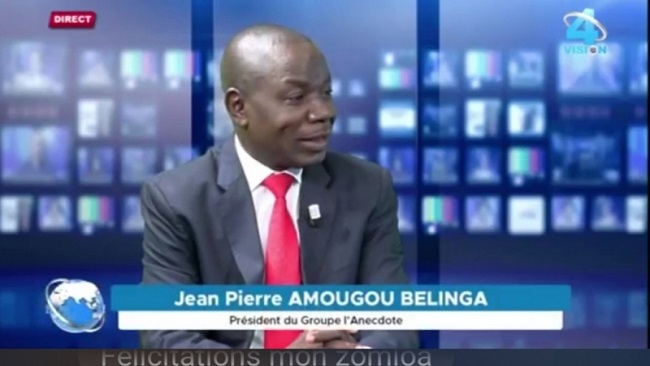
He claimed to have evidence showing that Jean Pierre Amougou Belinga, a media mogul known to have close ties with several government ministers, was the main beneficiary of the scheme.

This is not the first time Belinga’s name figures in connection with attacks on journalists.

In March last year, a local reporter Paul Chouta was nearly beaten to death by unknown assailants after he criticized Belinga on social media.

According to R. Maxwell Bone, an expert on Cameroon’s political economy, attacks on Chouta and Zogo were intended as a message from kleptocratic networks abusing the Cameroonian state that no criticism of their activities will be tolerated.

“The killing of Zogo highlights a very concerning trend of how far these networks are willing to go to protect their interests and how risky it is to be a journalist in Cameroon,” he told OCCRP on Wednesday.

Cameroon, which has since 1982 been run by strongman Paul Biya who will be celebrating his 90th birthday in February, is one of the most authoritarian countries in Africa.

On Sunday evening, the government announced an inquiry into Zogo’s death.

However, Bone was skeptical that they would ever try to identify who ordered the gruesome murder.

“At most, they will find a random individual who may have been contracted to do the killing. I would be extremely surprised if they went after Belinga and others,” he concluded.

Source: OCCRP.org

Setback in Southern Cameroons shows challenges of Canada’s new Africa strategy

27, January 2023

Setback in Southern Cameroons shows challenges of Canada’s new Africa strategy 0

An embarrassing setback in a Canadian peace initiative in Cameroon has demonstrated the challenges that could hamper Ottawa’s planned new Africa strategy this year, but federal officials are optimistic the peace talks will still proceed.

The federal government is planning to release its Africa strategy in the early months of this year, aiming to boost Canada’s engagement with African countries. The unexpected reversal in Cameroon, however, is an example of the complexities that can trip up Canadian efforts on the continent.

On Friday, Foreign Affairs Minister Mélanie Joly announced that Canada had accepted a “mandate” to facilitate peace talks in an armed conflict that has killed more than 6,000 people in Cameroon in the past six years. She said the Canadian role reflected its “engagement to work with our African partners” – a reference to the government’s broader goals on the continent.

Ms. Joly’s announcement specifically listed Cameroon’s government as a participant in the Canadian-mediated peace process. Just three days later, however, the Cameroonian government issued a strong denial, insisting it had not accepted any foreign country to become the mediator or facilitator of peace negotiations.

Ms. Joly, speaking at a federal cabinet retreat in Hamilton on Tuesday, was asked about Cameroon’s denial. “Our goal is to be patient and take a deep breath,” she told journalists. “Peace talks are complicated and messy, but we stand ready to help.”

Ms. Joly said it was the Cameroonian government that had originally approached Canada for help in the peace process.

The government’s rejection of a Canadian mediation role dominated the front-page headlines in Cameroon’s newspapers on Tuesday. Local media commentators said there were pro-war hawks in the government who wanted the conflict to continue and were deliberately sabotaging the Canadian peace initiative. They noted that the government had walked out of a similar Swiss-led peace process last September after three years of talks.

“Analysts say there are some government bigwigs behind the scenes who have been throwing spanners in the works to frustrate the initiatives for peace talks,” a leading Cameroonian newspaper, The Guardian Post, reported on Tuesday.

It cited a “jealous rivalry and egocentric spirit” in some government factions as the reason for the official denial of the Canadian announcement.

Despite the government’s statement, the other participants in the peace talks – regional leaders in English-speaking regions who are seeking to secede from Cameroon – continue to support the peace process.

Ms. Joly’s press secretary, Adrien Blanchard, said the Foreign Affairs Minister’s announcement last Friday still stands. “We remain in contact with the parties,” he said on Tuesday.

Asked about Canada’s planned new Africa strategy, he said the work on the strategy is continuing. “Our objective is to broaden our coalition of states to tackle the most pressing issues,” he said.

Conservative foreign affairs critic Michael Chong said Ms. Joly should have exercised more caution before making an announcement about Canada’s role in Cameroon.

He pointed to the collapse of the Swiss-mediated talks last year and the problems the international community has had encouraging Cameroon’s President to engage in a dialogue with the anglophone minority in Cameroon.

“To this point the Cameroon government has not shown through its action any real desire to sit down with the opposition to talk about how to settle this conflict,” Mr. Chong told The Globe and Mail.

He said this episode is another example of the Trudeau government “focusing too much on communication without doing sufficient legwork on the ground to ensure this is what all parties had agreed to.”

NDP foreign affairs critic Heather McPherson said she doesn’t believe the Canadian government was lying when it said it would be a mediator in Cameroon peace talks.

“It’s not like Canada was making this up. It’s not unusual for there to be bumps in the road during a peace process,” she said. “It looked like the Cameroon government backed out under internal pressure. I’m not 100 per cent sure it was Canada’s fault.”

Ms. McPherson, who has worked for decades in international development, said she feels like Canada can play an important role in Cameroon’s future.

“We certainly hope that’s the case – that they are able to assist with the peace-building. We are a bilingual country like Cameroon. This is a long-standing conflict in a country that needs some support from countries like Canada.”

The worsening conflict between Cameroon’s security forces and separatist groups in the primarily English-speaking regions of Northwest and Southwest Cameroon has forced more than a million to flee their homes since the conflict erupted in 2016.

The English-speaking regions have felt excluded by the French-speaking majority for decades. Their grievances date back to the early 1960s when British-controlled and French-speaking regions were merged to form a single country.

Culled from The globeandmail.com

«< 285 286 287 288 289 >»

Featured

  • Exam leaks in CPDM Cameroon: A symptom of a deeper corruption crisisExam leaks in CPDM Cameroon: A symptom of a deeper corruption crisis
  • Biya is already in Hell as Yaoundé unravelsBiya is already in Hell as Yaoundé unravels
  • What does President Biya really want? Money, women or cigarettes?What does President Biya really want? Money, women or cigarettes?
  • Biya, how long must the nation wait for the government it was promised?Biya, how long must the nation wait for the government it was promised?
  • Cameroonians in Leicester: funeral contributions must never become a marketplace for corruptionCameroonians in Leicester: funeral contributions must never become a marketplace for corruption

Most Commented Posts

  • 4 Anglophone detainees killed in Yaounde4 Anglophone detainees killed in Yaounde
    18 comments
  • Chantal Biya says she will return to Cameroon if General Ivo Yenwo, Martin Belinga Eboutou and Ferdinand Ngoh Ngoh are sackedChantal Biya says she will return to Cameroon if General Ivo Yenwo, Martin Belinga Eboutou and Ferdinand Ngoh Ngoh are sacked
    13 comments
  • The Anglophone Problem – When Facts don’t LieThe Anglophone Problem – When Facts don’t Lie
    12 comments
  • Anglophone Nationalism: Barrister Eyambe says “hidden plans are at work”Anglophone Nationalism: Barrister Eyambe says “hidden plans are at work”
    12 comments
  • Largest wave of arrest by BIR in BamendaLargest wave of arrest by BIR in Bamenda
    10 comments

Latest Tweets

Error: access keys missing in Themify > Settings > Twitter Settings

Featured

  • Trump marks 80th birthday with White House UFC spectacle

    Trump marks 80th birthday with White House UFC spectacle

  • Ex-Israeli PM Ehud Barak says Netanyahu must be removed ‘with sticks and stones’

    Ex-Israeli PM Ehud Barak says Netanyahu must be removed ‘with sticks and stones’

  • US denies visa to Palestine football chief for World Cup attendance

    US denies visa to Palestine football chief for World Cup attendance

  • Yaoundé, Abu Dhabi explore new trade and investment framework

    Yaoundé, Abu Dhabi explore new trade and investment framework

  • Southern Cameroons Crisis: 2 gov’t soldiers killed in Ambazonia ambush

    Southern Cameroons Crisis: 2 gov’t soldiers killed in Ambazonia ambush

  • Indomitable Lions: Hervé Renard set to replace David Pagou

    Indomitable Lions: Hervé Renard set to replace David Pagou

  • Biya regime seeks closer ties between universities and employers

    Biya regime seeks closer ties between universities and employers

Log In

  • Register
  • Log in
  • Entries feed
  • Comments feed
  • WordPress.org
© Cameroon Concord News 2026

We are using cookies to give you the best experience on our website.

You can find out more about which cookies we are using or switch them off in .

Powered by  GDPR Cookie Compliance
Privacy Overview

This website uses cookies so that we can provide you with the best user experience possible. Cookie information is stored in your browser and performs functions such as recognising you when you return to our website and helping our team to understand which sections of the website you find most interesting and useful.

Strictly Necessary Cookies

Strictly Necessary Cookie should be enabled at all times so that we can save your preferences for cookie settings.

3rd Party Cookies

This website uses Google Analytics to collect anonymous information such as the number of visitors to the site, and the most popular pages.

Keeping this cookie enabled helps us to improve our website.

Cookie Policy

More information about our Cookie Policy