18, May 2022
Biya regime reopens border with Central African Republic 0
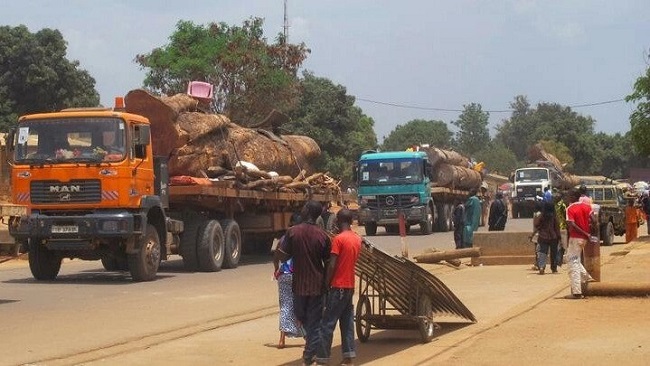
The government of Cameroon has agreed to reopen its border with the Central African Republic for humanitarian reasons.
This measure, facilitated by the International Committee of the Red Cross (ICRC), is to enable the resumption of the exportation of high consumption basic products from Cameroon to the war-torn country.
The decision to stop the exportation of basic products from Cameroon to its neighbours, the Central African Republic and Congo (Brazzaville), was taken by Cameroon’s Minister of Trade, Luc Magloire Mbarga Atanga, because of the Ukrainian war and its consequences on certain products of high consumption in Africa.
According to Cameroonian authorities, the measures were taken with a view to protecting the Cameroonian people from the consequences of the Ukrainian war which has provoked “enormous inflationist shocks in Africa”.
The Central African Republic, had on its part, attributed the measure to pressure from France and the European Union with a view to asphyxiating the Bangui regime, which is supported by Russian mercenaries.
“Instead of opting for a diplomatic solution to the situation by contacting the Cameroonian authorities for negotiations, the Touadera regime in Bangui resorted to accusations that Cameroon closed its frontier to satisfy European demands,” a political analyst in Bangui who opted for anonymity said.
However, sensing the catastrophic consequences linked to the border closure, the International Committee of the Red Cross (ICRC) resorted to humanitarian diplomacy and took the initiative to contact and discuss with the Cameroonian authorities on the possibility of reopening the border.
Discussions between the two sides led to the current temporary suspension of the decision to close the border between the Central African Republic and Cameroon.
Source: HumAngle

















19, May 2022
Weak, crumbling and falling apart-FECAFOOT Secretary General resigns 0
The secretary general has confirmed in a letter addressed to his boss that he is leaving his post
The Cameroon Football Federation (Fecafoot) has suffered a huge blow after secretary-general Benjamin Didier Banlock resigned from his post on Wednesday.
In a correspondence sent to his boss, Samuel Eto’o, on Wednesday, Banlock announced he was leaving his post because “Cameroonian football is not on the right direction and refused among other things to be reduced to the “dancer of the President.”
“I have reasons to believe Cameroonian football will only regain its greatness if great me, who carry great ideas, act with greatness in an environment that allows for elevation and progress, in other words, the achievement of great designs,” Banlock explained in his letter seen by GOAL.
“For my part and very humbly, an administration of progress at Fecafoot cannot be reduced to the “president’s dancer “which seems to be your only will,” Banlock continued in his message directed at Eto’o.
“The texts, the good managerial and governance practices, the objectives of federal projects and the results must motivate the decisions, justify the postures, the choices and the commitments.
“Thanks to the Executive Committee of Fecafoot for the trust placed in me but regrets for not being able to work in an environment conducive to achieving performance.”
On December 11, 2021, Eto’o, who played for a host of clubs across Europe, most notably Barcelona, Real Madrid and Inter Milan, was elected as president of the Cameroon federation.
Almost two weeks after Eto’o took charge of the federation, the former Cameroon captain chaired an emergency committee meeting on Monday, December 27, 2021, via a video conference and he re-appointed Banlock to the post after resolutions were passed.
He came in as an interim in the new Eto’o era having served in the same position in the previous Federation which was under Njoya. Banlock was first confirmed as the federation’s secretary on January 2, 2019, before he was fired by Njoya, on August 2021.
Eto’o was in charge during the 33rd edition of the Africa Cup of Nations which the country hosted. However, the Indomitable Lions could not make it to the final as they suffered a penalty shoot-out defeat in the semi-finals against Egypt.
Source: Goal.com