16, March 2022
Biya regime says it will rebuild hospitals destroyed by Boko Haram 0
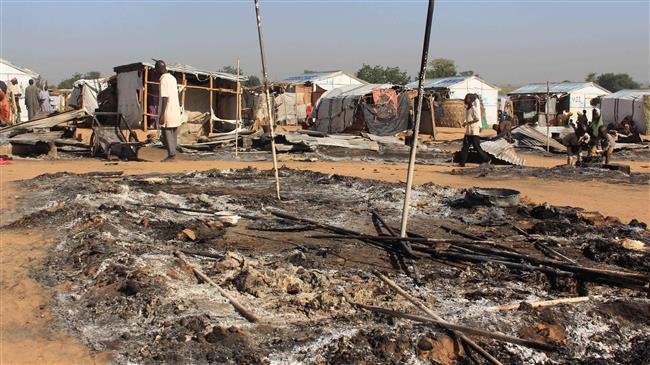
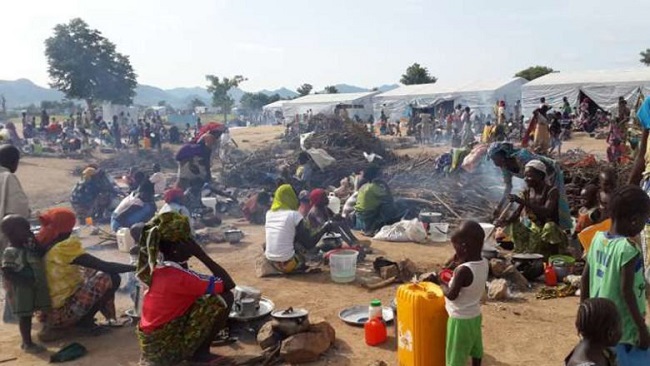
Cameroon’s government says it will rebuild hospitals and clinics destroyed by Boko Haram terrorists along the border with Nigeria. In a visit to the area this week, officials said the facilities were needed for villagers who have suffered from the conflict as well as for former Boko Haram members who have been rehabilitated.
Cameroon’s Ministry of Public Health says at least 35 hospitals along the country’s border with Nigeria have either been abandoned by medical staff or destroyed by Boko Haram terrorists.
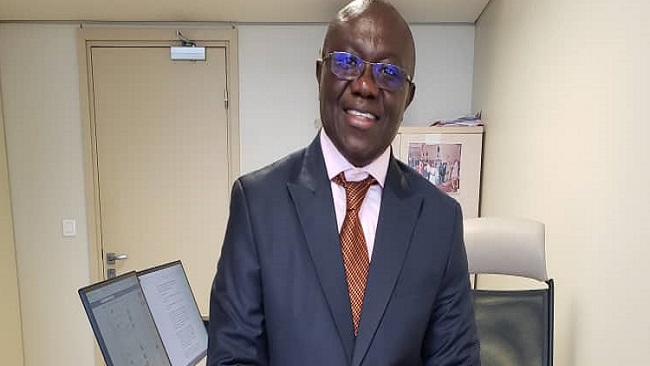
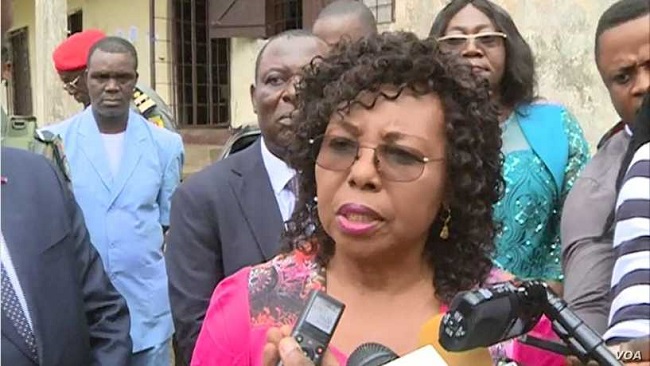
Minister of Public Health Manaouda Malachie this week visited some of the remaining hospitals along the border.
He says although working and living conditions are very difficult, the few medical staff members in former Boko Haram prone towns and villages are doing their best to save lives. Malachie says Cameroon’s President Paul Biya has ordered his government to build and equip destroyed hospitals and recruit more health workers. He also says he asked several hundred hospital workers who fled Boko Haram terrorism to return to Cameroon’s border with Nigeria.
Malachie did not say when the hospitals would be re-built.
But Cameroon’s government says it will spend $300 million this year to reconstruct what Boko Haram destroyed, including hospitals and medical equipment.
Government troops have been fighting Boko Haram along the northern border with Nigeria since 2014.
Cameroon’s military says there have been about 25 cases of abductions and kidnappings for ransom this year, but no large scale attacks by the terrorist group.
The military says the return to peace has allowed several thousand internally displaced persons and former Boko Haram members to return to their villages.
But health care in the region is sorely lacking, say social workers like Jean Pierre Ndlend in Kolofata district via a messaging application.
Ndlend says youths of between 15 and 35 years old are a majority of the 150 people suffering from mental health disorders that the Kolofata hospital has received since January. He says trauma from seeing people dying or forcefully separated from loved ones, poverty, and risky living conditions are the highest causes of mental health disorders in Cameroon’s northern border with Nigeria.
Ndlend says the Kolofata hospital receives hundreds of patients every day but has only seven health care workers.
Speaking to Cameroon state radio (CRTV) this week, Far North Region Governor Midjiyawa Bakari said the military has been helping civilians while they wait for the government to re-build hospitals.
Bakari says most Cameroon’s troops deployed to fight Boko Haram have been sent to border villages to provide health care and education to both returnees and militants who surrender and leave the terrorist group. He says Cameroon’s military health unit visits border villages to provide humanitarian assistance and treat sick returnees, former fighters, and the host community.
Bakari said thousands of Boko Haram fighters and supporters have defected from the terrorist group since last May, when the leader of the Nigerian militants Abubakar Shekau was declared killed.
The United Nations says the Boko Haram conflict, which started 13 years ago in northeast Nigeria, has killed more than 350,000 people and displaced 2 million across Nigeria, Cameroon, Chad and Niger.
Source: VOA














16, March 2022
China says it is ‘not a party’ to Ukraine Crisis 0
China says it does not want to get caught up in the diplomatic and economic blowback Russia is facing from Western nations over its invasion of Ukraine.
State media said Chinese Foreign Minister Wang Yi expressed his government’s wishes during a lengthy phone conversation Monday with Spanish Foreign Minister Jose Manuel Albares.
According to a transcript of the phone call published Monday by the Chinese foreign ministry, Wang told Albares that Beijing is “not a party to the crisis” and does not want to be “affected” by the mounting economic sanctions imposed on Moscow over the nearly 3-week-old invasion.
The conversation took place as U.S. National Security Adviser Jake Sullivan and officials from the National Security Council and State Department met in Rome with China’s top foreign policy adviser, Yang Jiechi. The Biden administration has warned that Beijing would face severe “consequences” if it helps Moscow avoid sanctions.
Media reports emerged Sunday that Moscow has requested military and economic assistance from China for its war in Ukraine.
Foreign Ministry spokesman Zhao Lijian Tuesday repeated an accusation leveled by Beijing that the United States is spreading “disinformation” over reports that China has responded positively to Moscow’s request.
Zhao calls the reports “not only unprofessional, but also immoral and irresponsible.”
He told reporters China’s position is “completely objective, impartial and constructive.”
State Department spokesman Ned Price told reporters Monday that the United States is watching very closely the extent to which China, or any other country, provides any form of support to Russia.
“We have communicated very clearly to Beijing that we won’t stand by, we will not allow any country to compensate Russia for its losses,” he said.
CNN reported late Monday that the United States told European and Asian allies in a diplomatic cable that China had indicated a willingness to help Russia in the war against Ukraine. CNN said the cable did not state definitively that assistance had been provided and that it warned that China would likely deny any such offer.
Chinese arms sales to Russia would have “a devastating impact on the U.S.-China relationship, because it would clearly align the Chinese with the Russians, against the United States, Europe in a war,” Robert Ross, a political science professor at Boston College, told VOA.
China is in a unique position because of its partnership agreement with Russia, according to Stephen Roach, a senior fellow at Yale University’s Jackson Institute for Global Affairs. He told VOA that China has “considerably greater” leverage over Russia than even Western countries that have implemented “unprecedented sanctions” on Russia.
“China has something that the West does not have, and that is the partnership,” with Russia, he said.
Source: VOA