Cameroon Concord News
You Are What You Read
  • Home
  • News
    • Cameroon
    • Nigeria
    • Africa
    • Europe
    • World
  • Politics
    • Cameroon
    • Nigeria
    • Africa
    • Europe
    • World
  • Sports
    • Cameroon
    • Africa
    • Europe
    • World
  • Business
    • Africa
    • World
  • Life
    • Education
    • Health
    • Fashion
    • Entertainment
  • Religion
    • Cameroon
    • World
  • Contact
    • Online
    • Phone
    • Email
  • About
    • Us
    • Our Services
    • Advertising with Us

Categories

Recent Posts

  • Owona Nguini’s attacks on Samuel Eto’o are becoming increasingly unconvincing
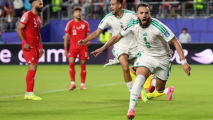
  • Football: Algeria beats Jordan 2-1 to clinch its first World Cup win since 2014
  • Iran says no visit scheduled for UN nuclear inspectors
  • French Cameroun: 9 detained including traditional ruler in Penka-Michel lynching investigation
  • British Prime Minister Keir Starmer announces resignation

Archives

  • June 2026
  • May 2026
  • April 2026
  • March 2026
  • February 2026
  • January 2026
  • December 2025
  • November 2025
  • October 2025
  • September 2025
  • August 2025
  • July 2025
  • June 2025
  • May 2025
  • April 2025
  • March 2025
  • February 2025
  • January 2025
  • December 2024
  • November 2024
  • October 2024
  • September 2024
  • August 2024
  • July 2024
  • June 2024
  • May 2024
  • April 2024
  • March 2024
  • February 2024
  • January 2024
  • December 2023
  • November 2023
  • October 2023
  • September 2023
  • August 2023
  • July 2023
  • June 2023
  • May 2023
  • April 2023
  • March 2023
  • February 2023
  • January 2023
  • December 2022
  • November 2022
  • October 2022
  • September 2022
  • August 2022
  • July 2022
  • June 2022
  • May 2022
  • April 2022
  • March 2022
  • February 2022
  • January 2022
  • December 2021
  • November 2021
  • October 2021
  • September 2021
  • August 2021
  • July 2021
  • June 2021
  • May 2021
  • April 2021
  • March 2021
  • February 2021
  • January 2021
  • December 2020
  • November 2020
  • October 2020
  • September 2020
  • August 2020
  • July 2020
  • June 2020
  • May 2020
  • April 2020
  • March 2020
  • February 2020
  • January 2020
  • December 2019
  • November 2019
  • October 2019
  • September 2019
  • August 2019
  • July 2019
  • June 2019
  • May 2019
  • April 2019
  • March 2019
  • February 2019
  • January 2019
  • December 2018
  • November 2018
  • October 2018
  • September 2018
  • August 2018
  • July 2018
  • June 2018
  • May 2018
  • April 2018
  • March 2018
  • February 2018
  • January 2018
  • December 2017
  • November 2017
  • October 2017
  • September 2017
  • August 2017
  • July 2017
  • June 2017
  • May 2017
  • April 2017
  • March 2017
  • February 2017
  • January 2017
  • December 2016
  • November 2016
  • October 2016
  • September 2016
  • August 2016
  • July 2016
  • June 2016
Yaounde: Long-awaited Africa Cup of Nations to kick off under strict Covid rules

7, January 2022

Yaounde: Long-awaited Africa Cup of Nations to kick off under strict Covid rules 0

Workers are applying final touches to the fan zones in Yaounde ahead of the long-awaited launch this weekend of Africa’s biggest sporting event.

Beset by months of problems and uncertainty, the month-long Africa Cup of Nations (AFCON) gets under way on Sunday when host nation Cameroon play Burkina Faso.

Preparations to get the giant screens, shops, restaurants and fan space ready for thousands of supporters in the nation’s capital are definitely in last-minute mode.

“We Cameroonians love to leave everything to the last gasp,” laughs Simon Atangana, a former national player who is part of an organisation setting up the fan zones.

“Everything will of course be ready. AFCON is going to be a huge party, and the pictures will be spread around the world.”

But a familiar foe – coronavirus – is a potential fly in the ointment.

The global pandemic forced the postponement of AFCON from last year, and fears of another delay were eased only last month.

The Confederation of African Football (CAF) has set down tough rules in a bid to prevent AFCON becoming a super-spreader event.

Those wanting to enter the stadium must be completely vaccinated – in a country where just six percent of the adult population has been jabbed – and show a negative PCR test for the virus that is less than 72 hours old.

Venues have been limited to 60 percent of capacity, although this is being raised to 80 percent when Cameroon’s “Indomitable Lions” take the field.

The rampant spread of the Omicron variant is casting a pall over team lineups.

Gabon’s Arsenal star Pierre-Emerick Aubameyang is the latest player to test positive and may miss his country’s Group C open match against Comoros on January 10.

“We asked CAF whether we can replace some of our players who got infected with Covid-19 but the answer is no,” said The Gambia’s coach, Tom Saintfiet.

“If this still remains to be the case, it could be a catastrophe… but according to the current rules, we are not allowed to replace anybody in the final list of 28-men squad.”

Waiting for the party

In Yaounde’s Warda Square, hawkers of flags, shirts and vuvuzela horns say they have had a slow start in trade.

“Business hasn’t taken off yet as much as I would like, but I’m optimistic,” said Arnaud Medja, 29, dressed from head to toe in Cameroon’s national colours of green, yellow and red.

“It’s just taking more time than scheduled. It’s just the Covid rules which have come along and put a dampener on things.”

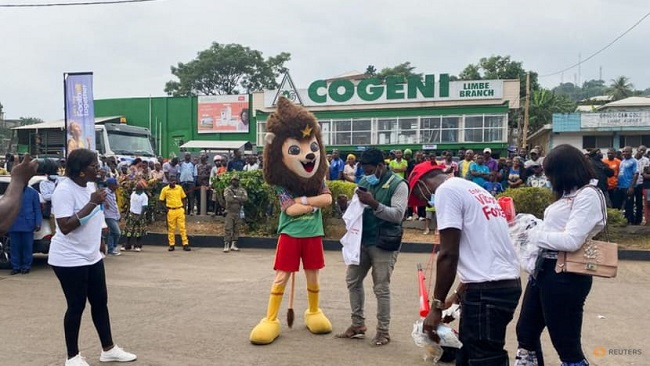
The cup and the tournament’s lion mascot Mola have been going around the streets of Yaounde, backed by dancers and musicians and escorted by motorbike riders bedecked with the flags of all the competing nations.

“AFCON is going to be fun – a party,” said Laurentine, a 33-year-old cosmetics saleswoman.

“It’s going to be great to see the town move and watch everyone get out again.”

Desperate for tickets

On Wednesday, dozens of people lined up outside ticket outlets after AFCON said seats were being put on sale, although they waited in vain.

“I spent all day yesterday queuing. I went to the city hall, to the Ahidjo stadium, and now it’s the Palais des Sports,” said Karine Sunshine, 23.

“But there’s still nothing on sale. I am desperate to see the opening match.

“We’ve been waiting 50 years for this moment – that was the last time AFCON was staged in Cameroon. So I got my vaccinations, and now I am waiting a bit longer, because the Cameroonians are going to win the cup. Just look at the atmosphere there’s going to be this weekend.”

But not everyone seemed to be aware of the tournament’s anti-Covid restrictions – or even to be particularly worried about the virus.

In Yaounde’s central market, hundreds of people, none of them masked, thronged the stalls as Cameroonian and international music blasted from loudspeakers.

“Yes, of course, I will be going to the stadium,” said Abdoulay, a water seller. “You have to get vaccinated (to get in)? Oh, in that case, I won’t go.”

“There’s no corona in Cameroon, and we don’t want the vaccine here. You don’t know what it contains and vaccinated people catch the disease anyway,” he said.

Source: AFP

Indomitable Lions: Coach Conceicao feels weight of expectation

7, January 2022

Indomitable Lions: Coach Conceicao feels weight of expectation 0

Cameroon coach Toni Conceicao admits the weight of public pressure is on him as his side hosts the Africa Cup of Nations, adding that the local fans “don’t forgive failure”.

The Portuguese is looking to lead the Indomitable Lions, who last lifted the trophy in 2017, to their sixth continental crown when the tournament begins on Sunday.

“We know that Cameroonians have high hopes because the competition is taking place here,” he told BBC Sport Africa.

“Since the moment it was decided that Afcon would be hosted in Cameroon, every Cameroonian has felt that this will give them the advantage to win the trophy. But for us football professionals we know it doesn’t work that way.

  • Attendances capped at 60-80% for Afcon

“We feel that people are more demanding of the Indomitable Lions because of their history and what they’ve accomplished in the past: five African titles and the seven times they’ve been present in the World Cup.

“I hope to win because if we don’t reach the objective of at least reaching the final, it’s going to be a difficult journey. We have to be mentally strong so we can at least reach the final.

“If we don’t, it will be difficult for us, the technical staff, to deal with the criticism, because people here don’t forgive failure.”

‘On alert’
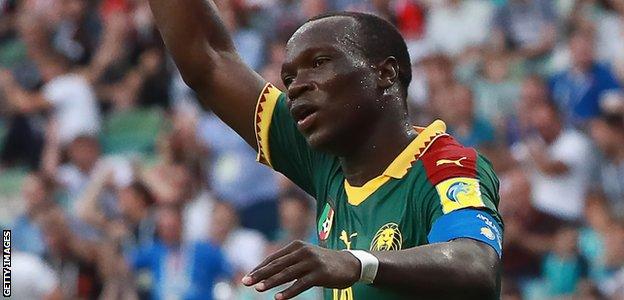
Vincent Aboubakar in action for Cameroon
Vincent Aboubakar scored the winner against Egypt when Cameroon last won the Nations Cup, in 2017

Cameroon face Burkina Faso, Ethiopia and Cape Verde in Group A and take on the Burkinabe in the tournament’s opening game in Yaoundé on Sunday (16:00 GMT).

Conceicao describes the group as “well-balanced”, but is undertandably wary of the challenges his side will face as they look to reach the knock-out stage.

“We’ve been watching a few of Burkina Faso’s games and they have a good team,” the 60-year-old added.

“Cape Verde have improved greatly and are ever-growing in experience and maturity.

“The opening game, whether it be at the World Cup, a championship in Cameroon or a European Championship, is always difficult.

“From a historic point of view, people think Burkina Faso and Cameroon will get through, but I don’t think like that. I will put my players on alert.”

The 33rd edition of the Africa Cup of Nations is set to end on Sunday 6 February, when Yaoundé hosts a final which many Cameroonians are hoping their team will be part of.

Source: BBC
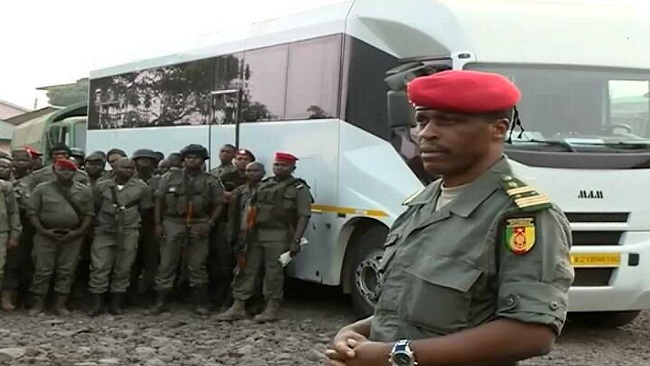
Biya regime deploys more troops to Southern Cameroons for Africa Cup of Nations

7, January 2022

Biya regime deploys more troops to Southern Cameroons for Africa Cup of Nations 0

Cameroon has deployed troops and armored cars to towns that will be hosting matches of the Africa Football Cup of Nations (AFCON) tournament in its troubled Southwest region. Cameroon is hosting the continent’s top soccer tournament beginning Sunday, but the region’s anglophone separatists have threatened to disrupt the games.

Residents of Cameroon’s Southwest region towns of Buea and Limbe say in the past two weeks there has been a noticeable increase in troops and military trucks on the streets.

The troubled Southwest region is one area of Cameroon that will be hosting Africa’s top soccer championship, the Africa Football Cup of Nations (AFCON).

21-year-old University of Bueau student Fabrice Tobi says security in the city is becoming watertight.

He spoke to VOA Wednesday via a messaging application.

“I was surprised with the amount{number} of armored cars and the troops entering Buea with the ones that were already there,” said Tobi. “It is very difficult to leave from one area to the other in the city of Buea without meeting military or security men. In markets and even in student residential areas, they are everywhere. They do the controls. It is very difficult for you to leave your house without being checked or controlled.”

Cameroon’s military confirmed that troops have been deployed to Buea and Limbe to protect football players, officials, and fans for the tournament. A spokesman declined to comment on the number of troops and armored vehicles deployed.

The southwestern towns will host group matches for teams from Gambia, Mali, Mauritania, and Tunisia.

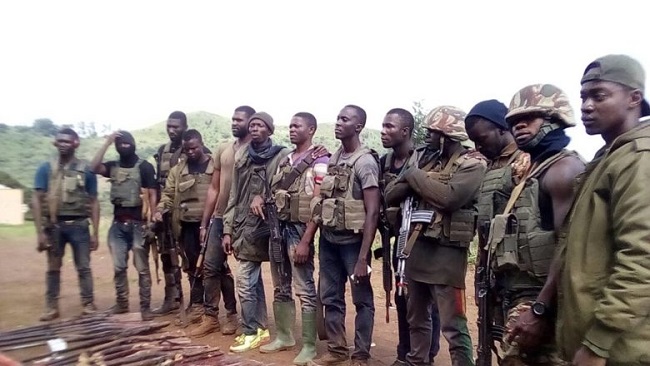
Anglophone separatists fighting in Cameroon’s west to break away from the majority French-speaking nation have vowed to disrupt the games.

Within the past two months Buea has reported at least six attacks by separatist fighters.

The rebels took responsibility for November and December bombings at the University of Buea and the town’s Great Soppo Market that wounded at least 14 people.

The governor of Cameroon’s Southwest region, Bernard Okalia Bilai, says civilians should report any rebel suspects hiding in their community.

“We will continue to sensitize the population, particularly towards vigilance. You know what happened in the Great Soppo market,” said Bilai. “It is the population themselves who seized the bag and called gendarmes to come and destroy it. That is the behavior, the action, we are expecting from the population.”

Bilai says residents and visitors should not be afraid of the separatists’ threats.

He says the separatists made similar threats when Limbe and Buea hosted matches of the African Nations Championship a year ago without incident.

Source: VOA

Ambazoniagate:  Profiles of the NERA 10

6, January 2022

Ambazoniagate:  Profiles of the NERA 10 0

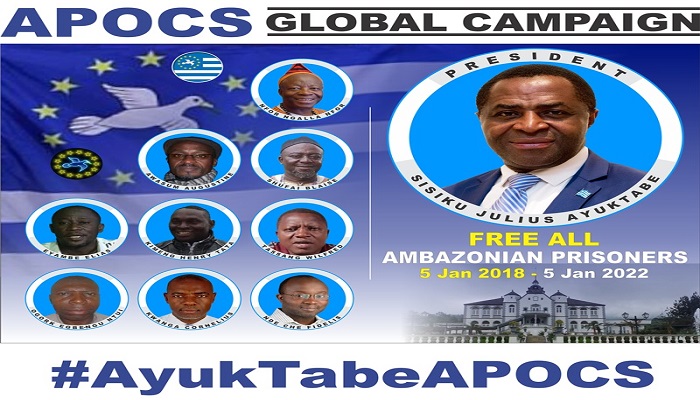
1. SISIKU JULIUS AYUKTABE

Vice President, American University of Nigeria; Information Technology Expert

Sisiku Julius AyukTabe was born on the 2nd May 1965 (55 years) in Ewelle village, Eyumojock in Manyu. He is the son of Ayuk Elias and Ojong Paulina (both deceased). He is married with 4 children.

He is the pioneer Chief Information Officer (CIO) and successively Assistant Vice President in-charge of Digital Services and Marketing & Recruitment at the American University of Nigeria (AUN), Yola, Adamawa State, Nigeria. He worked extensively with SONEL (Electricity Distribution Company) in Cameroun where he improved energy efficiency in the Adamaoua Region by 16%, as Regional Delegate. Earlier in his career as the company’s Computer Analyst/programmer, he deployed a Customer-Management application for the company. As an IT expert he voluntarily designed, developed and deployed an application, for the Cameroon GCE Board, for the automation of operations of the General and Commercial Examinations at both the Ordinary and Advanced levels. He also worked with Cisco Systems as the Academy Manager for the 23 countries of West &Central Africa, until he joined the American University of Nigeria. Sisiku Ayuk Tabe is a Motivational Speaker and has spoken at many conferences across the globe. He and his wife Lilian Ayuk Tabe founded the AyukTabeAgborBakia (ATAB) Foundation that empowers the poor in his community in Eyumojock, Manyu County in the Southern Cameroons (Ambazonia). They have developed a 60-hectare farm known as ATAB Farms along the Eyumojock – Ekok road employing 28 workers. On the 29th of September 2017, the workers were driven out of the farm by Cameroun troops. The farm has since been abandoned because those troops still ensure that no one goes anywhere close to it.

Sisiku Julius AyukTabe is also a member of the Adamawa Peacemakers Initiative (API) that supports IDPs in Northern Nigeria. His brainchild Cisco networking Academy at the Budumbura refugee camp in Ghana won the International Academy Awards “Against all Odds”in Europe. He was the Chairman of the Governing Council of the Southern Cameroons Consortium United Front (SCACUF) and was later entrusted with the heavy responsibilities of President of the exiled Interim Government of the Southern Cameroons/Ambazonia. He and 11 other leaders of the Southern Cameroons (Ambazonian) were kidnapped in NERA Hotel, Abuja, Nigeria, on the 5th January 2018 by a combined Nigeria/Cameroun military squad. On the 25th January 2018 he and with nine of those leaders were forcibly repatriated under armed military terror to Yaoundé, Cameroun. They were held at SED for 11 months, six of those months incommunicado and later at the Kondengui Maximum Security Prison, Yaoundé, where they are still languishing. On the 10th January 2019, they were arraigned before the Yaoundé Military Tribunal on trumped up charges of so-called secession, terrorism, treason, non-possession of the Cameroun identity card, etc. On the night of the 19th breaking 20th August 2019, Sisiku alongside his nine compatriots were put through the motion of a ‘trial’and nonsensically sentenced to life imprisonment and a fined of $525 million each.

2. Mr NFOR NGALA NFOR

Political scientist and author

Mr Nfor Ngala Nfor was born on December 31, 1952 (68 years) in Kup, Nkambe in Donga Mantung County in what was then the UN Trust Territory of the British Southern Cameroons. He was born into the family of His Royal Highness Ta Nfor Ngala Tarndap (late) and Ma Winto Mbebu.He obtained a Master’s Degree in Political Science from Ahmadu Bello University Zaria, Nigeria in 1980. He was employed in the Registry of the University and rose to the rank of Senior Assistant Registrar. In 1986 he resigned and returned to Cameroon. He worked in the Ministry of Territorial Administration until 1992. In 1998 he served as Secretary at the UN Habitat Afrique Conference hosted by A.B.U Zaria.The late Prof Shuetfegua was the Conference Chairman and General Mohammed Buhari (rtd) was Patron.

He was at the launching of the opposition party,the Social Democratic Front (SDF), in Bamenda, Cameroons, on May 26, 1990. He served the party in various capacities including being Chairman of the Constitutional and Political Affairs Committee up to 1999. Thereafter he has dedicated his entire life and service to the pursuit of the restoration of his country, the Southern Cameroons from annexation by the foreign state of French Cameroun. His engagements in this regard have been within the Southern Cameroons National Council (SCNC) of which he was the National Vice Chairman from 2000 to 2014 and then Chairman from 2014 to date. He was the SCNC Representative in the Unrepresented Peoples’ Organisation (UNPO)and served two mandates on the Presidency of the Organisation.

He is author of many educative pamphlets and books on the Southern Cameroons, prominent among which are‘In Chains for my Country’,‘Died not Dead’,‘The two Cameroons: Southern Cameroons for Southern Cameroonians’, and ‘The Southern Cameroons: The Truth of the Matter’. In his service to liberate the Southern Cameroons from annexation and subjugation, he has been arbitrarily arrested, tortured, detained and tried on several occasions. Following the banning of the SCNC in January 2017 alongside the Consortium, he fled to Nigeria where he sought and obtained UNHCR protection as a refugee. He and 11 others were abducted in Abuja Nigeria in January 5, 2018 and 10 of them repatriated to Yaoundé in French Cameroon. After eleven months of solitary confinement at SED, he was transferred to Kondengui Prison. He was arraigned before the Cameroun’s Military Tribunal on 10 January 2019, on charges of ‘terrorism’, ‘secession’, ‘treason’, etc. After a summary pretended ‘trial’ on 20 August 2019, he alongside his nine compatriots were given the pre-determined sentence of life imprisonment and a fine of $525 million. Mr Nfor Ngala Nfor is married and has children.

3. Professor CHEH AUGUSTINE AWASUM

Professor of Surgery, Consultant Surgeon, and Fellow of the Nigerian College of Veterinary Surgeons

Professor Cheh Augustine Awasum was born on 4th May 1968 (52 years) in Bamenda, Mezam County in the Southern Cameroons, into the family of Camillus NdanjiAwasum (late) and Anastasia Ngwe Awasum. In addition to holding a PhD in Surgery on defective kidney ureteral reconstruction by Monti mathematical model (ileoureterplasty), he also holds a Masters in Surgery and, additionally, a Master’s degree in: International Affairs, Diplomacy, Criminal Justice, Law Enforcement, and a Postgraduate Diploma in Education (Curriculum Foundation and Psychology). He holds a Doctorate in Veterinary Medicine (DVM). He has taught and graduated over a thousand Doctorates of Veterinary Medicine (DVM), taught and supervised several Masters and PH.Ds in Surgery. He has conducted extensive research in surgery and imaging. Some innovations included the composition of 4 crystallord solutions used in washing harvested organs intended for transplant.

Professor Awasum is a scholar, researcher, and Professor of Surgery in the Department of Veterinary Surgery and Diagnostic Imaging at the Ahmadu Bello University (ABU) Zaria, Nigeria. He is Head of Surgery Unit of the Department at the Veterinary Teaching Hospital of the University. He is the Postgraduate Coordinator of the Department and Member of the University Senate. He is a Fellow of the Nigerian College of Surgeons. In professional practice he rose through the ranks from registrar, Consultant, Senior Consultant to Principal Consultant Surgeon in 2012. He is visiting scholar and chief external examiner to several universities national and international. He is also an instructor in the College of Veterinary Surgeons, Nigeria. He is a member of several departmental, faculty, university and national Research Committees including the World Bank-sponsored research on neglected tropical diseases. He is also member of ABU Animal Use and Care – Ethics, ABU Kidney Transplant Group, HIV/AIDS awareness, Clinical Library Implementation, University Freshmen Orientation, ABU and Veterinary Council of Nigeria Examination Monitoring, African Liaison to the USA based African (Nduaka) Education Initiative (AEI) and Principal Consultant Surgeon to Nigerian Police Security Dogs and, ABU Guard Dogs, Justice.

He has contributed over 110 articles in peer-reviewed journals, conferences proceedings and seminars at both national and international levels. He has co-authored several chapters in books/manuals in surgery. For his achievements in kidney transplants, he received commendations from President Buhari the then Executive Chairman of the Nigerian Petroleum Trust Funds (PTF); General Yakubu Gowon,former Head of State of the Federal Republic of Nigeria. Also, he was cited in 2002 in WHO-IS-WHO in Veterinary Surgery from across the continents. He is making research breakthroughs in the areas to elucidate animals as the forgotten victims of Boko Haram insurgency. He is a recipient of several awards from Civil Societies, NGOs, and Governments. He is also a community servant especially in the aspects of environmental health, public health, and Philanthropy, Justice, Development and Peace Commission Nigeria, and St Vincent De Paul Society.

 As an activist right from the age of 17, he has been involved in party politics and the struggle for the emancipation of the Southern Cameroons. He has been President and leader of several socio-political and human rights advocacy groups, student unions and civil societies. Alongside 11 others, he was abducted and detained at the Defence Intelligence Agency (DIA) in Nigeria, 10 of who were forcibly repatriated to French Cameroun and held in solitary confinement at the infamous gendarme torture known as‘SED’ and on November 22nd, 2018 moved to the equally notorious Kondengui maximum security prison, Yaoundé. On January 10th, he was arraigned before Cameroun’s military tribunal and on 20 August 2021 he, together with the other NERA abductees, were put through the motion of a ‘trial’ and given the pre-determined absurd sentence of life imprisonmentand a fine of$525 million.

Professor Augustine Awasum is a registered asylum seeker with UNHCR in Nigeria. He is married, father of two, and head of the Ndanji Awasum family, a notable of the Nda Community of the Mbatu Kingdom of Mezam County.

4. Dr CORNELIUS NJIKIMBI KWANGA

Economist, banker, and University Senior Lecturer

Dr Cornelius Njikimbi Kwanga is from Bum in Boyo County, of Southern Cameroons/ Ambazonia. He was born on March 22, 1970 (50 years) the 3rd of 10 children of Kwanga Samuel Nkan and Kwanga Priscilla Mbong.

Dr Kwanga is a Researcher and Senior Lecturer of the Department of Economics, Umaru Musa Yar’adua University (UMYU) Katsina. He joined UMYU from Yobe State University (YSU), Damaturu, Yobe State Nigeria. In YSU, he was one-time Acting Head of Department of Economics and later on appointed Coordinator of Research and Innovation (R&I) Unit of the University. He has taught various courses in Economics at undergraduate and postgraduate levels. Before engaging in full time lecturing, he was one of the pioneer staff of United Bank for Africa (UBA) Cameroon and served the bank in various capacities. He served Polyclinic Bonanjo as the Human Resources Officer for three years. He is the Founder and Promoter of Global Association for Sustainable Development (GASD), a rural based CSO that fights rural poverty.

Cornelius is an effective coordinator and organizer. He is also an advocate for the restoration of the independence of the former UN Trust Territory of British Southern Cameroons. Apart from being a legal resident in Nigeria, he is also UNHCR registered asylum seeker in Nigeria. On January 5, 2018 Cornelius and 11 others were abducted at gun point from NERA Hotel, Alex Ekwueme Way, Abuja, Nigeria for no crime committed and subsequently 10 of them were forcibly repatriated to French Cameroun on January 25, 2018. On August 20 2019, Cornelius and his nine compatriots were given a pre-determined sentence of imprisonment for life and fined $525 million. Currently, Cornelius and 9 of his compatriots are detained in the Kondenguimaximum security prison in Yaoundé. Dr Kwangais married with 3 children.

5. Dr EGBE OGORK

Civil Engineer, Associate Professor of Structural Engineering

Dr Egbe Ogork was born on March 3, 1964 (56 years) to the family of Pa Samuel Ntui Ogork and Mrs Lucy Ntoh Ogork (both deceased) at Ewelle village, Eyumojock LGA, in Manyu County of the Southern Cameroons.

Dr. Egbe Ogork Ntui is Associate Professor of Structural Engineering in the Department of Civil Engineering, Bayero University Kano Nigeria. He has trained and graduated many students at the undergraduate and post-graduate levels. He was the Departmental Postgraduate Coordinator for three years before his abduction on January 5, 2018. He has also held other positions in the department and in the Faculty of Engineering. He is a member of the Nigerian Society of Engineers (MNSE) and also a member of Materials Society of Nigeria (MMSN). He is the President and Patron of many Associations including, the Southern Cameroons Community in Nigeria Kano Chapter. He is also an adviser for Justice and Peace Committee of St. Peter Catholic Church Janguza military Barracks Kano, Nigeria. He is an Advocate for the Self- determination of the Southern Cameroons. Following a pretended trial in the night in French Cameroun’s military tribunal, on August 20 2019, Dr Ogork and his nine compatriots were given the ‘sentence’, pre-determined, oflife imprisonment and fined $525 million.Dr Ogork is married to Chinyere Ogork and they have one child.

6. Dr FIDELIS NDEH-CHE

Electrical/Electronic Engineer, Entrepreneur, Assistant Professor

Dr Ndeh-Che earned his Doctorate Degree in Electrical/Electronic Engineering from the City University, London in 1996 when he was 25 years old. In the same year he joined an IT consulting firm in California and worked there for 5 years during which time he was engaged in over 30 projects across the US, Asia and Africa in various capacities as Principal Consultant, Project Manager and Project Director. In 1999, he founded Quanteq Technology Services Ltd and grew it to a leading ICT Consulting and Systems Integration firm in Nigeria with over 150 employees and annual revenue in excess of $3m. In 2012, he joined the American University of Nigeria (AUN) where he served in various capacities, including as Assistant Professor, Program Chair, Chief of Staff to the President, Executive Director Institutional Research and Effectiveness, Executive Manager Projects and Proposals, and Vice Chair Institutional Review Board. At AUN, he taught Undergraduate, Graduate, MBA and PhD courses in computer science, software engineering, information systems and ICT for Development.

Dr.Ndeh-Che was a member of the Adamawa Peace initiative (API) supporting over 270,000 IDPs,displaced by the Boko Haram conflict between 2012 and 2016 through feeding, agriculture, sports, psychological interactions and other intervention programs. He also introduced community intervention programs that impacted the lives of over 15,000beneficiaries in vulnerable and underserved communities in Yola and Jimeta Adamawa state, Nigeria, including JAMB Tutoring, and Adult Literacy. For over 8 years between 2009 and 2018, Dr Ndeh-Che was a member of Board of the Directors of PRAWA, a leading NGO in Nigeria involved in justice sector reform, speeding up access to justice, reducing recidivism and training police and security agencies on Human Rights and torture prevention and redress.

Dr Ndeh-Che is also Chairman of the Board of Directors of Afrinvest West Africa, a leading financial services firm providing independent financial advisory, wealth management, brokerage and investment banking. He is a registered asylum seeker in Nigeria, with the UNHCR. He was abducted at the Nera Hotel, Alex Ekwueme Way, Abuja, held incommunicado for three weeks at the Nigerian Defence Intelligence Agency (DIA) and for over six months at French Cameroun’s infamous torture facility known as SED. Following a pretended ‘trial’ conducted summarily under cover of darkness on August 20 2019, he and his nine compatriots were given a predetermined lifesentence and fined $525 million.  Dr Ndeh-Che is 49 years old.

7. Mr TASSANG WILFRED FOMBANG

High School teacher and leading trade unionists in the education sector

Tassang was born on February 2, 1970 (50 years) in Bamenda in the Southern Cameroons to TASSANG Isaiah and Alice AKWI. He is a college teacher and former Executive Secretary General of the Cameroon Teachers’ Trade Union (CATTU). He was also the Programmes Director of the Cameroon Anglophone Civil Society Consortium (CACSC), aka the Consortium at the time the degeneration of the strikes declared by Common Law Lawyers and Teachers’ Trade Unions. He was the lead negotiator and spokesperson for Anglophone Universities, Secondary and Basic Education, Parents and teachers’ unions (public and private) within the framework of the Education Ad-hoc Committee set up to proffer solutions to problems plaguing the English system of education as raised by the teachers’ unions.

Tassang miraculously survived two assassination attempts on January 13 and 17, 2017. He escaped to Nigeria in February 2017 from where he firmly endorsed the movement for the restoration of the statehood of Southern Cameroons. He was unanimously elected Secretary General of the Southern Cameroons Consortium United Front (SCACUF), and later, Vice Chair of the Southern Cameroons Governing Council. Secretary for Education in the Interim Government, Deacon Tassang was abducted from the NERA Hotel gardens in Abuja Nigeria, on January 5, 2018 and handed over to the Yaoundé junta on January 25, 2018 alongside nine others. He has been charged before Yaoundé’s Military Tribunal for alleged terrorism, secession etc. Following an abusive court hearing that violated all their rights to a fair trial, on August 20 2019, Tassang and his nine compatriots were illegally sentenced to life imprisonment and fined $525 million. Tassang is a registered refugee in Nigeria. He is married with kids.

8. Barrister SHUFAI BLAISE SEVIDZEM BERINYUY

Barrister-at-law, a traditional ruler, human rights activists, and legal adviser to human rights NGOs

His Royal Highness (HRH) Barrister Shufai Blaise Sevidzem BERINYUY is the Traditional Ruler of Mbuh (Baforchu) village and Tobin-Nso Bui County in the Southern Cameroons. He was born on April 25, 1967 (53 years) at Kumbo-Nso to Sebastian LAWONG BERINYUY (deceased) and Benedicta SHIYGHAN BERINYUY.

He is Barrister-at-law,member of the Cameroon Bar Association, and a frontline human rights lawyer. He has been legal adviser to many human rights organisations, including the Justice and Peace Commission of the Catholic Dioceses of Buea and Kumbo, the Human Rights Defense Group (HRDG), Action by Christians for the Abolition of Torture (ACAT), and the Cameroon Association for Rights of the Child (CARC). He is the founder President of Advocates for Human Rights and Environmental Conservation (ADHREC) and Founder of BOD Chair of Berinyuy Women Development Cooperative Society (BERWODEVCOOPS).

Shufai Blaise is a World Basketball Federation (FIBA) Level 2 Basketball Coach and former long serving Vice President of the Buea-based Regional League of Basketballand President of Volcanic Warriors Basketball Club, Buea. In the struggle for the Restoration of Southern Cameroons Statehood,Shufai Blaise has been a household name since 1992 especially in the area of law. Shufai Blaise is a registered refugee in Nigeria. He was abducted along with 11 of his fellow compatriots at NERA Hotel, Alex Ekwueme Way, Abuja on January 5th2018. He was forcibly repatriated to French Cameroun on the 25thJanuary and held incommunicado for seven months before being transferred to the Kondengui maximum security prison in Yaoundé. He was court marshalled before French Cameroun’s Military Tribunal, charged with terrorism, secession, non-possession of French Cameroun Identity Card, treason etc. Following an abusive court hearing that violated all their rights to a fair trial, on August 20 2019, Barrister Shufai Blaise and his nine compatriots were illegally sentenced to life imprisonment and fined $525 million. Barrister ShufaiBalise is a Catholic. He is married to WiybaaNyuydine Jacqueline Banfogha and they have 4 children.

9. Barrister EYAMBE ELIAS EBAI

Barrister-at-law and human rights advocate

Barrister Eyambe Elias Ebai is a Barrister-at-law and member of the Cameroon Bar Association since 1996 with keen interest in human rights advocacy. He was born on June 19, 1969 (51 years) in Manyemen to Nzonguty Joseph (Deceased) and of Nzonguty Ann Babi.

He was the President of the Meme Lawyers Association (MELA), and the Vice Secretary of the Cameroon Anglophone Civil Society Consortium (Consortium). Persecuted by the government of French Cameroun for his political opinion in support of self-determination for the people of the Southern Cameroons (Ambazonia), he took refuge in Nigeria in 2017 where he sought and was granted Refugee status by UNHCR in Nigeria. He was the Ambassador to the African Union (AU) of Southern Cameroons Governing Council (SCACUF). He was also appointed Ambassador to the AU and Africa by the exiled Interim Government Southern Cameroons.

He was abducted from NERA Hotel Abuja alongside 11 others on January 5, 2018. Following an abusive court hearing that violated all their rights to a fair trial, on August 20, 2019, he and his nine compatriots were illegally sentenced to life imprisonment and fined $525 million. He is presently languishing in jail in the Kondengui maximum security prison in Yaoundé. He is married with 5 children.

10. Dr HENRY TATA KIMENG

Civil Engineer, Associate Professor, and philanthropist

Dr Henry Tata Kimeng is an Associate Professor of Civil Engineering, Department of Civil Engineering, Ahmadu Bello University Zaria, Nigeria.

He was born on the 12th of July 1967 (53 years) at Alabukam Mankon to Mrs Agnes GijeKimeng (late) and late Ta Fai Ngakonfor (nee Kimeng Jonas Ndi) who was a sub chief in Mbaa, Nwangri village in Donga/Mantung County inthe Southern Cameroons. He is married to Dr Florence AzieMbuh who holds a PhD in Microbiology from Ahmadu Bello University Zaria and Doctor of Medicine (MD) from Windsor University School of Medicine St. Kitts. They are blessed with a 19-year-old son Brian T. Kimeng a final year student in the Department of Architecture ABU, Zaria.

Dr.Kimeng is a scholar and teacher. He has published several papers in local and international journals and conference proceedings. He has also won several prizes and awards for his research work. In 2011, Holcim International Switzerland awarded him and his research team a prize for their research work on recycled agricultural waste for producing particle boards. In 2012, Ahmadu Bello University, Zaria recognised him as one of its outstanding researchers in the past 50 years during the Golden Jubilee celebration of the University.As a Consultant Engineer, he has consulted for several organisations and designed and built large buildings, cities and roads all over Nigeria. He has also consulted for National Space Research and Development Agency Abuja Nigeria, Abucons Zaria, and Gamji Nigeria Ltd, among other firms.

As a philanthropist, Dr Kimeng has provided scholarships, financial assistance and help to many students from the Southern Cameroons, Nigeria, Chad, Niger, Liberia and other countries. He also led the campaign in 2017 to create awareness for the Southern Cameroonians who were plundered, robbed and chased from their homeland into exile in neighbouring Nigeria by the brutal French Cameroun regime. He provided financial assistance, accommodation, and food to those he visited in the refugee camps. In 2017 he was nominated the Coordinator of Southern Cameroons Refugees in Nigeria. Together with the Health and Social Services team, he carried out the assignment diligently and faithfully.

He was abducted together with 11 other compatriots from the Southern Cameroonian on January 5th 2018 by a group of armed men at Nera Hotel Abuja Nigeria and detained in a bunker at Defence Information Agency (D.I.A) Abuja. Dr Kimeng and nine others were later forcibly repatriatedFrench Cameroun by night in a military cargo plane and held incommunicado for 6 months without access to sunlight. Following an abusive so-called trial in the night on August 20 2019 in French Cameroun’s Military Tribunal, a ‘trial’ that violated all their rights to a fair trial, Dr Kimeng and his nine compatriots were illegally sentenced to life imprisonment and fined $525 million.

Written by  Professor Carlson Anyangwe

Biya regime fully ready to host Africa Cup of Nations: minister

6, January 2022

Biya regime fully ready to host Africa Cup of Nations: minister 0

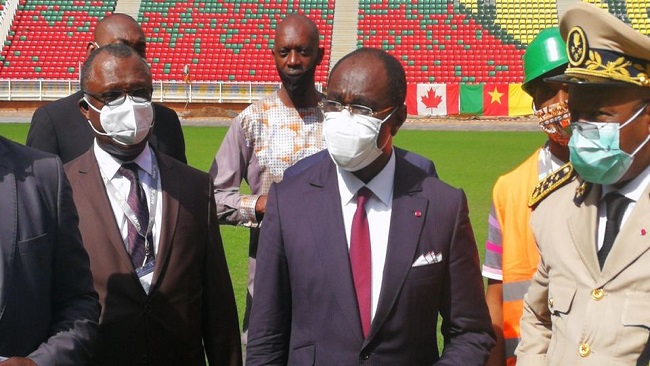
Cameroon is fully ready to host the Africa Cup of Nations (AFCON), the country’s minister of Sports and Physical Education Narcisse Mouelle Kombi said on Wednesday.

“There is no need to worry about all the preparations. Things are moving on very well. We are fully ready to host. All the commissions and the site supervisors are very committed,” Kombi, also president of the competition’s organizing committee, told reporters in the capital Yaounde after a meeting to assess last-minute preparations and address concerns about COVID-19, infrastructure and security in the host country barely three days before the tournament begins.

Cameroon has faced scrutiny and criticism in the lead-up to the tournament over the not-ready-Olembe Stadium which is scheduled to host the opening and closing match of the tournament.

Kombi said that works at the stadium were virtually done and it was set to host “a very beautiful opening ceremony of the tournament”.

Over 10 African teams have already arrived the Central African nation for Africa’s biggest sports festival.

“The teams have been well received and are very satisfied because they are in very good conditions and are busy in training stadiums,” said Kombi.

Featuring 24 teams, the tournament begins on Sunday with hosts Cameroon taking on Burkina Faso at the 60,000-seat Olembe stadium in Yaounde.

The biennial competition will end on February 6.

Source: Xinhuanet

Africa Cup of Nations: Super Eagles of Nigeria arrive Garoua

6, January 2022

Africa Cup of Nations: Super Eagles of Nigeria arrive Garoua 0

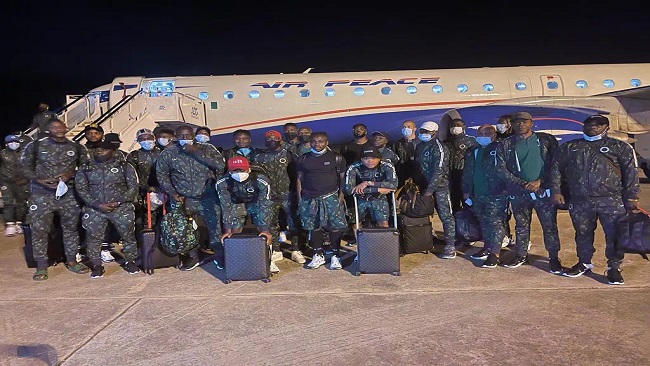
Nigerian National men football team, the Super Eagles have arrived in Cameroon ahead of the upcoming Africa Cup of Nations, AFCON, tournament.

Naija News understands that the 2021 AFCON tournament will kick off on Sunday evening, January 9 with Cameroon playing the opening match against Burkina Faso.

The Nigerian squad and officials are said to have arrived in Garoua, Cameroon, on a chartered flight in the early hours of Thursday.

Super Eagles would be playing their first match against Egypt on Tuesday, January 11 at the Roumde Adjia stadium, Garoua.

The match is scheduled to kick off at 5:00 pm.

Meanwhile, Super Eagles captain, Ahmed Musa could not travel with the Eagles to Cameroon, Naija News understands.

It was confirmed that the 29-year-old player missed the Super Eagles’ last training session on Wednesday, December 5, after receiving the sad news that his relative died.

The National Team management sympathized with the Fatih Karagumruk of Turkey striker and subsequently granted him permission to leave the team’s camp to be with family members.

Musa is, however, expected to join his teammates in Cameroon ahead of Nigeria’s first game of the competition against Egypt on January 11.

Naija News had reported earlier that the shirt number for the players were made public on Wednesday by the Confederation of African Football (CAF).

According to the disclosure, in the goalkeeping department, Maduka Okoye will wear the number one jersey, while Francis Uzoho will put on the 23, Daniel Akpeyi gets the number 16 jersey, while John Noble will wear 27.

Others are: Semi Ajayi – 6, Frank Onyeka – 8, Kelechi Nwakali – 25, Joe Aribo – 10, Odion Ighalo – 9

Chidera Ejuke – 13

Culled from Naija News

WHO official downplays new IHU COVID variant “probably” originated in Cameroon

6, January 2022

WHO official downplays new IHU COVID variant “probably” originated in Cameroon 0

The seriousness of a stagnant COVID-19 variant identified in France in November was downplayed by global health officials, who said they were still watching it closely on Tuesday.

The variant, nicknamed IHU after the research hospital it was discovered in, “probably” originated in Cameroon, scientists said last week. It was identified in 12 patients in the Southern Alps around the same time the highly transmissible Omicron variant was surging in South Africa, officials said.

The variant “has been on our radar,” Abdi Mahamud, a WHO incident manager on COVID, said at a press briefing in Geneva on Tuesday, according to Bloomberg. “That virus had a lot of chances to pick up.”

The news came as France saw its average daily caseload more than double in a week, with a record 271,686 COVID-19 cases recorded there Tuesday.

IHU’s patient zero had just returned from Africa when scientists at IHU Méditerranée Infection in Marseilles discovered he was infected with an atypical mutation of the virus. The vaccinated man “developed mild respiratory symptoms the day before diagnosis,” researchers wrote in their non-peer-reviewed article published in medRxiv.

Source: New York Post

Africa Cup of Nations: CAF limit stadium capacities to combat COVID-19

6, January 2022

Africa Cup of Nations: CAF limit stadium capacities to combat COVID-19 0

Attendances during the Africa Cup of Nations (AFCON) will be capped at 80per cent for host nation Cameroon’s fixtures and 60per cent for other games due to COVID-19, the Confederation of African Football (CAF) said.

The tournament will begin on Jan. 9 with Cameroon taking on Burkina Faso at the Olembe stadium in Yaounde, which can seat 60,000 people.

“After several consultations with the Cameroonian government … CAF and the local organising committee have agreed to cap stadium capacity between 60per cent-80per cent in the Africa Cup of Nations,” the governing body said in a statement on Tuesday.

“The 80per cent maximum capacity will only apply for matches of the host country Cameroon.”

The statement added that strict health protocols had been put into place for spectators, who must be fully vaccinated and present a negative test result to attend games.

Concerns about the readiness of stadiums and the spread of the Omicron COVID-19 variant have made headlines in recent weeks.

A number of teams preparing for the AFCON have also reported positive COVID-19 cases, including tournament favourites Algeria, Ivory Coast and Morocco.

Source: Reuters

The armed kidnapping in Abuja and smuggling out to Yaoundé of 10 prominent refugees and asylum-seekers

5, January 2022

The armed kidnapping in Abuja and smuggling out to Yaoundé of 10 prominent refugees and asylum-seekers 0

Sisiku Julius AyukTabe returns to Nigeria on 3 January 2018 from a visit to the United Kingdom and the United States of America. He invites some close friends for a meeting to discuss a humanitarian initiative initiated by him while abroad and also the crisis that erupted in September 2016 in their homeland, the Southern Cameroons/Ambazonia. That crisis involves the territory of the Southern Cameroons invaded and occupied by the military forces of the Yaoundé regime. The invasion has displaced hundreds of thousands of persons as IDPs and as refugees fleeing into Nigeria and other countries. The meeting is to explore ways and means of handling this endless flow of refugees. The invitation is sent out through Whatsapp. The meeting is scheduled for 5th January 2018. The venue is the NERA Hotel, Alex Ekweme Avenue, Abuja, Nigeria.

Twelve persons, one lady and eleven gentlemen, honour the invitation and are present at the NERA Hotel for the meeting. They are: Barrister Nalowa Bih, Barrister Shufai Blaise Berinyuy, Dr. Ojong Okongho, Dr. Cornelius Njikimbi Kwanga, Dr. Professor Egbe Ogork Ntui, Mr Nfor Ngala Nfor, Dr. Professor Kimeng Henry, Dr. Professor Augustine Awasum, Dr Fidelis Ndeh-Che, Barrister Eyambe Ebai, and Mr Tassang Wilfred.

The kidnaping

It is about 7:30 pm and the meeting has barely started when there was heard a loud shout: “LIE DOWN! LIE DOWN!” The attendees look up. They notice that the order is coming from about 20 heavily armed and hooded men with automatic guns pointing at the attendees. It is a mixed squad, some in army uniform, some in police uniform, and others in mufti. The attendees are ordered to lie face down. No resistance is offered. The attendees are confused and terrified. They comply with the order. The terror spectacle is taking place in the presence of some five hundred guests of the hotel. There are other hotel guests occupying tables next to those of the attendees. The tension and panic caused by the gunmen forces these other guests to lie down even though the command is not directed at them. The attendees hear people running away and screaming. They are shackled in pairs with their hands to the back. They are marched outside to the front of the hotel entrance. There, they are blindfolded and shoved into four waiting cars.

The four cars are accompanied by others, all driving in a convoy. They go around Abuja at breakneck speed. The kidnappers drive for over an hour and then stop at an isolated location. The drivers step out and discuss for about two hours. The kidnapped persons (hostages) remain blindfolded inside the cars, the windows of which are wound up and the air conditioning turned off. Later, the cars are driven off by a different set of drivers at the wheels. This nocturnal, apparently aimless drive around Abuja, continues for another 30 minutes or so. The hostages are taken to a building later identified as the headquarters of the Nigerian Defence Intelligence Agency (DIA). Still hooded and handcuffed the hostages are pulled out from the cars and led into a small hall. There, each of them, including the lady amongst them, is thoroughly searched and stripped naked. All their belongings are confiscated. The shackles are taken off but not the blindfold. The hostages are led down a very steep stair-case, three floors underground. Barrister Nalowa being a woman, is locked up on the ground floor.  The stairs leading down to the lower levels have heavy metal doors that open up into cell-rooms.

The heavy metal doors are un-padlocked and opened. The hostages are caged in different cell-rooms. These underground cell-rooms are cold, grave-like, and divided into two sections. Barrister Eyembe Elias, Mr Tassang Wilfred, Mr Nfor Ngala Nfor, Barrister Shufai Blaise Berinyuy and Dr Cornelius Kwanga are caged in one section. Sisiku AyukTabe, Dr Fidelis Ndeh Che, Professor Augustine Awasum, Dr Ojong Okongho, Dr Kimeng Henry and Dr Egbe Ogork are caged in the other section. Each of these cell-rooms already has detainees. It later transpires that these early detainees are members of Boko Haram and the Niger Delta militia.

Neither at the time of their kidnapping in the NERA Hotel nor throughout the detention in the DIA, is a warrant of arrest presented to the hostages. No reason whatsoever is given for their abduction and detention at the DIA. They are nevertheless held incommunicado throughout the three-week duration of their detention at the DIA. They are denied access to counsel, doctor and family. They are prevented from contact and communication with each other across the sections. Each hostage is put through the third degree by plain clothes military men, some of who eventually confess they are not aware of the reason for the captivity. Some of the questions that are asked seek to elicit information about some individuals including Lucas Cho Ayaba, Ebenezer Akwanga, and a certain Nkongho Success. On January 15, the hostages caged in the section with Barrister Eyembe go on a hunger strike. The hunger strike is called off two days later when Mr Nfor Ngala Nfor collapses from exhaustion.

News of the kidnapping and detention at DIA appears to have trickled out. This prompts the representative of the United Nations High Commissioner for Refugees (UNHCR) in Abuja to visit the hostages on 18 January 2018 after a two-day fruitless effort to locate their whereabouts. Most of the hostages are registered refugees in Nigeria. The visit takes place in the presence of an official of the DIA and a general in the Nigerian army. During the visit, those of the hostages without refugee status inform the UNHCR that they seek asylum. They are then registered as asylum seekers. Before the meeting rises, UNHCR gives the assurance that under no circumstance would the hostages be deported to French Cameroun(Cameroun Republic) given the well-wounded fear of persecution and assassination by that country were the hostages to be taken there. UNHCR advises DIA officials to move the hostages from the extremely low-temperature cell-rooms to some other cells. Days later, they are moved without mattresses to ground-level and locked up in a cell-room.

The smuggling out

To the utter consternation of the hostages, and contrary to the assurances given by the UNHCR, on the night of 25 January 2018 the hostages are again blindfolded. Some of their personal effects are returned to them. They are led into a waiting bus. The bus drives at breakneck speed in a heavily militarised military convoy. It stops at the military section of Nnamdi Azikiwe International Airport, Abuja. While there, Barrister Nalowa Bih and Dr Ojong Okongho are identified as holders of Nigerian citizenship and are taken back to DIA.  The hostages are now ten.

They are made to remain seated inside the bus for an hour. The commander of the military convoy, with two assistants, walks over to two armed soldiers in black. The group has a lengthy discussion. Some voluminous documents and several black bags are produced and signed. The kidnappers happily hand the hostages over to the soldiers in black military fatigue. The soldier-driver of the bus with the hostages is ordered to move the bus to the tail of a waiting cargo aircraft at the airport. The hostages later identify the aircraft as an old, rusty, dented and faded green-coloured military cargo plane belonging to French Cameroun. It is rickety and barely airworthy.

In preparation for the transfer or, better, being ‘loaded’ into this plane, armed soldiers are made to stand in a formation of two paralleled lines from the bus to the tail of the waiting aircraft. The door of the bus is opened. The hostages are ordered out. They step out clumsily as they are still hooded and shackled. They are led through the passage way created by the parallel lines formed by the armed soldiers. When they get to the tail of the aircraft, each one is physically manhandled. Hefty men grab the collar of each person’s shirt, lift and dump him in the rusty cargo plane. Inside the plane, another group of armed soldiers concentrate on assigning each hostage to a makeshift netted-meshed seat with no seat belts or other safety device. The loading is completed. The hostages remain hooded with their hands handcuffed to the back. As soon as the tail of the cargo plane is shut, the temperature inside immediately rises! It is hot. The hostages begin to sweat. The plane taxies along the taxiway towards the run-way in preparation for take-off. Each hostage struggles to gain balance. A white pilot is in the cockpit. A colonel supervises the operation from ‘loading’ to take-off.

When the plane takes off the soldiers on board, all of them armed with automatic guns, inform the hostages that their end is at hand and that each one should say his last prayer. Two soldiers stand over each person’s head as if ready to grab him and throw out of the cargo plane. Each hostage says his last prayer in silence resigns himself to death at any moment either by bullet in the head or by simply being thrown overboard into the Atlantic Ocean to feed the fishes. After about two hours of flight time the cargo plane lands at the Nsimalen Airport, Yaoundé. The airport lights are all promptly turned off. There is a crowd of soldiers waiting.

The tail of the cargo plane is opened. The hostages, the precious cargo, are offloaded from the cargo plane. There are white buses sandwiched between military trucks wrapped in perforated military camouflages. There are also armoured cars, machine gun carriers and other military hardware. The crowd of military men at the airport is about a hundred and fifty. The hostages are hurriedly pushed at gun point into a waiting bus. They remain hooded and shackled. A long convoy of over 20 military vehicles takes off at high speed. It first stops at the Cameroun Defence Ministry. Next, it stops at the infamous Gendarmerie headquarters known in French as the ‘Secrétariat d’Etat à la Défence’ (SED). The gendarmerie is a branch of the French Cameroun military. It is generally likened to the Gestapo in Nazi Germany or Nicolae Ceausescu’s Securitate in Socialist Romania, with their torture methods. SED, now presided over by a certain infamous Col. Emile Bankoui, has therefore for decades acquired the dubious distinction of being the torture facility of the Yaoundé regime. It operates much like Auschwitz.

SED, Cameroun’s Auschwitz

At SED, the hoods and shackles are taken off. The hostages notice that they are surrounded by sinister and fierce-looking gendarmes under the authority of a certain Lt Col Serge Kaole. The gendarmes strip the hostages naked and carry out what they call ‘total body inspection’. This includes anal inspection. Thereafter, each hostage is issued a jogging outfit. This would be their daily wear and night pajamas for the next 44 days before a second one is issued. Each person is issued a small-size dirty bed sheet, a dusty and smelling mattress, and a pillow heavily stained with blood from people either beaten and wounded or dead.  Each hostage is shoved into a small 2x3m² cell heavily infested with mosquitoes, cockroaches, spider web, ants, lizards, and rodents. The gendarmes make a show of attempting to control pests, rodents, and biting insects. They use rodenticides and insecticides solutions to spray the cells, often with the hostages forced to remain in the cells. On the few occasions that the hostages are herd out, the cells are sprayed and the hostages hurriedly brought back and locked up in the cells without allowing enough time for the spray to diffuse. 

The hostages’ first night in SED is dreadful. But they somehow manage to sleep off for a few hours out of sheer tiredness and exhaustion from the terrifying cargo-plane flight from Abuja. Their minds seemed at peace as they ask God to take control. Early the following morning, 26th January 2018, they are given a meal of sorts. A medical team is brought into assess the state of health of each hostage. The team recommends that the hostages be provided with bottled drinking water. The director of SED and his gendarmes do everything to thwart the efforts of the medical team to attend to the hostages and to provide them the medication they each need. The SED people demonise the hostages as ‘terrorists.’ They berate the doctors saying they are too humane. They declare that government does not provide medical treatment to ‘terrorists’. Each time the hostages are given medication to treat some ailment, a certain Chi Tita and his fellow gendarmes search their cells and confiscate the medication. The gendarmes even refuse calling for emergency assistance during health crises.

For most of the time, the hostages are provided a single meal as lunch and super. On weekends, each person is provided a single meal as breakfast, lunch and dinner. The food is served on plates without any cover. The hostages have no access to a refrigerator or to a safe shelf to store away part of the food for the next meal time. After swallowing part of the food, the rest is covered with a patch of polythene material to be eaten at the next meal time. The covering is flimsy but at least it denies flies, lizards, ants, mosquitoes, and cats that often enter the cells, access to the food. The hostages are provided bottled drinking water as recommended by the visiting medical team. But this is discontinued after the first three months of incarceration at SED. The hostages are thenceforth required to drink tap water. The tap water contains metallic iron It is reddish in colour. It proves dangerous to the health of the hostages, compounding the very harsh conditions of their incarceration at SED. The hostages soon contract diseases like blurred vision, pilation, dental degeneration and cavitations, persistent rhinitis, coughing, laryngitis, bronchitis, pneumonia, dermatitis, scabies, abscession, orchitis, osteopathy, rheumatism, anaemia, malaria, gastritis, persistent myalgia, and high blood pressure. Generalised high blood becomes common among the hostages who hitherto did not suffer from that ailment. The hostages raise concerns that death might ensue should they be required to continue to drink the bad tap water. Later, glass-box water filters are provided and the hostages are then able to drink filtered water.

The hostages get some medical attention. But this is adhoc, perfunctory and strictly ambulatory.  They have no access to hospital treatment. Whenever one of the hostages falls ill, the gendarmes refuse to call for a doctor or to send him to the hospital for diagnosis and treatment. For instance, there is this occasion when Mr Nfor Ngala Nfor suffers a diabetic crisis. It is only with the greatest reluctance that the detaining authority at SED accepts, after many hours; to convey him to a local infirmary. The delay could have cost his life. The gendarmes at SED verbally abuse the hostages ever so often. They call them all kinds of hate names, saying they are “worse than slaves” and deserve no mercy.

Most of the gendarmes at SED are extremely wicked and callous as if drained of anything human in them. The hate speech they use includes calling the hostages: ‘terrorists’, ‘worst then slaves’, ‘beasts’, ‘savages’, ‘Anglofools’, ‘Nigerians’, ‘Biafrans’, ‘people abandoned by the English’, ‘pest’, ‘rats’, ‘dogs’ etc. The gendarmes even prevent the hostages from praying be it individually. They train their guns on each hostage whenever he tries to pray. Searches are conducted at least twice a week. Each hostage is stripped naked on every search occasion. During a search, the hostages are abused, humiliated, insulted, and treated contemptibly and with indignity. The gendarmes walk into the cells with muddy feet, overturn the mattresses, and pull off the smelly bed sheet. Every night they play martial music. They mask themselves, bear heavy automatic weapons, and keep guard at the cell doors like ghosts. They refuse to provide the hostages with bathing soap and detergent for washing the jogging outfit and the smelly blood-stained sheets which are then ‘washed’ without soap. The hostages are constrained to sleep in the wet jogging outfit and on the wet sheet. They sleep on broken, pricking metal-spring mattresses with thick caked blood stains all over.

For the first six months, the hostages’ are caged in cells all day long, every week and every month. The cell doors are opened sparingly. The only ventilation into the cells is apertures at the large heavy metallic doors. These doors initially had fenestrated airspace of 60cm by 60cm but are now reduced to 60 cm by 30cmusing welded and painted machine-trimmed metallic sheets. This mischievous piece of work is carried while the hostages are compelled to remain in the cells. The pneumonic disturbances and the inhalation of toxic smelly paints mean nothing to the gendarmes. The outer walls of the cells are reconstructed by doubling from bottom to top with concrete 30cm thick in width. The design and purpose appear to be to induce a coffin-like or a buried-alive phobia, a satanic form of torture. Throughout the duration of that piece of work, the hostages are daily subjected to severe pneumonic disturbances from 7 a.m. till 6 p.m.

At SED, each hostage is taken out in turn for prolonged interrogation. The interrogation is always at midnight. Each person is blindfolded and dragged for over fifteen minutes through narrow, muddy and bushy paths that lead to a dirty storage facility for old military odds and ends. In the process of being dragged on the ground, the supplied jogging outfit becomes dirtier and filthier.  The dilapidated storage place is fitted with very bright floodlights, overhead studio cameras, and old dusty desktop computers. There are also smelling boots and torn clothing lying about. The hostage is ordered to sit on a broken wooden chair placed facing the floodlights and cameras. Two plain-clothes gendarmes conduct the interrogation in the presence of heavily armed, hooded gendarmes. The interrogation session usually takes two to three hours. Each hostage is subjected to at least four nocturnal interrogations per week. During the first six months the hostages are caged in their cells and denied even access to sunlight. On the very rare occasions when access to sunlight was allowed, each exposure to sunlight lasts no more than15 minutes. On each of those occasions, the hostages are accompanied by over 15 heavily armed gendarmes, each with a hood over his head and hands in black gloves.

Daily flagellation of the Taraba 37 and the Calabar 11

The gendarmes at SED are gloomy and pitiful specialists in physical, mental, and psychological torture. The director of SED oversees the torture sessions. At SED there are also other shackled hostages, citizens of the Southern Cameroons (Ambazonia). These compatriots are known as the Taraba37 and the Calabar11, making 48 in number. They were kidnapped in Taraba and Calabar in Nigeria, hence the name Taraba 37 and Calabar 11. Day in day out the 48 suffer merciless flagellation at the hands of the SED gendarmes who clearly derive sadistic pleasure and satisfaction in inflicting pain, cruelty and suffering on others. The gendarmes get in the air-tight cells of the 48, flagellate them and then pour sewage water on them. Every day the 48 are taken out for torture, cruel and inhuman and degrading treatment. They are chained, blindfolded, and further restrained using slave-type shackles. They are then led to a place the gendarmes at SED gruesomely name with satanic relish as the ‘slaughter house’ or the ‘point of no return’. They are dragged through the narrow corridors, their heads bumping against the walls.

In the ‘slaughter house’, the 48areflagellated from 9 p.m. to about 4 or 5a.m. while still shackled and blindfolded. The flagellation objects include clubs, high-tension electricity cables, and metal pipes. When each victim succumbs to these beastly beatings, he is hung on ropes fastened to their arms, waists and ankles. A 50kg cement bag or a pile of bricks is then placed on his back. The gendarmes keep him in that position until he becomes completely dehydrated. The gendarmes on the next shift of duty at SED signal their arrival by sadistically flagellating the 48 for an hour, from 5 a.m. to 6 a.m. and are then taken back to their cells, bleeding profusely. During these cruel torture sessions, they cry out continuously until they lose their voices and pass out. The SED gendarmes torture their victims in this manner for over 5 continuous months. The torture is also meant to inflict collective pain by association and to cause psychological trauma and depression in all the Southern Cameroons hostages.

15 months’ old baby detained in SED

A particularly barbarous case of torture is that of 15 months’ old baby Moses Ndokia (real name withheld). He is always restless due to the conditions at SED. He is ever hungry because he is ill-fed. He continually cries for food. This baby was abducted in Calabar together with his mother and father. He is in SED since March 2018. This is particularly traumatizing. For over four months Baby Moses is subjected to humiliating and inhuman treatment. Mercifully, mother and child (but not the father) are subsequently released when news filters out that a 15 months’ old baby is being detained and tortured at SED.

Family visits after six months of incommunicado detention

The Nera 10 hostages are held incommunicado at DIA, Abuja, Nigeria, for three weeks, from January 5th to January 25th. At SED, Yaoundé, they are also held incommunicado, this time for six months, from the 25th January 2018 to the end of June 2018. Only after this period are family visits allowed. Visiting time practically lasts only 15 minutes. Only one visitor per visiting period is permitted. Most times the gendarmes refuse to unlock the doors of the cells for hostages to meet their visitors. On several occasions family members who have travelled long distances to visit get to SED only to be turned back saying all visits are cancelled. Each visitor is required to speak only to the family member he has come to visit, to the hearing of the gendarme on duty and in no local language. Physical contact with visitors is not allowed. Often the hostages are forced to speak to their visitors behind transparent glass screens. Protest against this treatment is given short shrift.

The belongings of the hostages – cloths, belts, shoes, caps, hats, inner wears, gold necklaces, bracelets, watches, pens, purses with moneys, documents, and house keys – confiscated upon arrival in Yaoundé have until date not been returned to them. Similarly, other personal effects such briefcases, bags of shoes, laptop bags, laptops, external hard drives and other computer accessories, money, documents, students’ theses/dissertations, bank cards, telephones, and so on are still in the keeping of SED.

Kondengui, Cameroun’s Bastille

On the 22nd of November, 2018 the Nera 10 hostages are moved to the equally notorious Kondengui incarceration facility. This is a maximum security ‘prison’ located some ten km at the other side of Yaoundé. Here too, conditions are no better. They are generally horrible. The living space is a small 12 m² accommodating a minimum of 12 inmates. The rooms are poorly ventilated. The smell from the toilets is appalling, especially when there is no water which happens every week. The sleeping spaces are infested with vermin: rats, cockroaches, mosquitoes, lice, bedbugs and other noxious biting insects, most of which suck blood and leave behind deep wounds and scars. The environment itself is a playground for rodents and roaches. Nearby smelling heaps of rubbish take days to clear! The daily stench from there is horrible.

The ‘food’ is not fit for human consumption and is provided only once a day. Medical care is practically non-existent. In May 2020, there was an outbreak of Covid-19 in the prison. Over 60% of the inmates’ fall ill at the same time. There is a brief riot that compels the administration to put everyone on Covid-19 ‘treatment’ plan for 7 days. With the assistance of family, friends and others, sanitation, health and feeding situation has improved.

The hostages arrive Kondegui prison on the 22ndNovember 2018 at about 6 pm after having been taken to an official said to be the presiding officer of the tribunal militaire, Yaoundé. He records the names of each hostage and such other particulars as he is minded to request. Beddings and medication belonging to the hostages are in polythene bags.  These are ordered to be handed over to the prison warders at the warder post for security screening. The warders also do a body search on the hostages. The prison discipline officer then takes them into his office for briefing on prison rules and regulations and payment of what he calls ‘new man tax’ (a ‘tax’ payable by a new inmate). From there each hostage is allocated a cell-room in which there were already other prisoners and detainees. There, the chief of the cell-room briefs the newcomers and demands payment of ‘new man tax’. Then beds are allocated. The minimum number of inmates per cell-room is 13 persons cramped into these small-size rooms of about 4 m x 7 m x 9.  The bunk beds are 3 or 4 bed levels high and usually with someone lying directly on the floor. The toilet space is 2 m x 2 m for a shallow pit toilet and an overhead shower in the same place. The inmates in the cell rooms are forced to smell and inhale the odour from the toilet 24/7.The prison has a court yard where inmates interact with each from 7.30 am to 6.30 pm daily. It is there also that inmates have morning devotion, eat at meal times, and manage to play some games of sort and perform other exercises. Prior to the COVID-19 pandemic, that is also where visitors were received.

The story of the armed kidnapping of the Nera 10 in Abuja and armed smuggling to Yaoundé under cover of darkness; the story of their incommunicado detention at DIA and later at SED; and the story of their nocturnal ‘trial’,‘ conviction’ and ‘sentence’ to life by French Cameroun’s Tribunal Militaire – all this is shrouded in complete mystery and illegality. It is now known that the Nera 10 were kidnapped by plain clothes Nigerian military in a joint operation with members of French Cameroun’s military. It is now known that they were smuggled out to Yaoundé by members of the armed forces of French Cameroun with the complicity of Nigeria’s military. The illegality of their seizure has further compounded the illegal refoulement of all ten of them, refugees and certified asylees, back to French Cameroun, back to the regime and country from which they are escaping persecution and possible death. Upon arrival in Yaoundé and after about a year of detention at SED under atrocious conditions the Nera 10 are moved to the cramped and insalubrious life-threatening Kondengui prison, and then arraigned before the Tribunal Militaire, Yaoundé- a terror agency of the Yaoundé regime. After more than a year and a half of detention, the Nera 10 are hurriedly brought before that tribunal on a certain night and put through the motion of a ‘trial’ under cover of darkness. They are denied access to counsel. They are not given the opportunity to be heard. They are ‘convicted’, and ‘sentenced’ to life imprisonment and a fine of more than US$525 million each.

By Professor Carlson Anyangwe

[NB. This poignant narrative has been put in the historic present tense. This style puts the reader inside the situation being described and gives him the feel of being right there. It enhances the sad drama and its readability.]

Amba fighters and Boko Haram pose threat to Africa Cup of Nations

5, January 2022

Amba fighters and Boko Haram pose threat to Africa Cup of Nations 0

There are threats by armed Anglophone separatists to disrupt the 2021 African Cup of Nations which is expected to open in Cameroon on Sunday.

Some armed groups have vowed to disrupt the competition and sent threatening letters to the teams in Group F (Tunisia, Mali, Mauritania and Gambia) who will play in Limbe and train in Buea, the seaside resort and capital of the south-west region respectively.

“The threats are very serious,” said Blaise Chamango, head of the NGO Human Is Right, based in Buea. “On Wednesday, there was an explosion in Limbe in a takeaway, it is a strong message,” he said by phone to AFP.

“The government has deployed heavily armed soldiers on almost all the intersections of Buea and Limbe in particular. The defence and security forces are carrying out arrests and systematic searches in several areas,” Chamango said.

Already, there are speculations of a possible postponement of the tournament due to the Covid-19 pandemic and the new wave of the Omicron variant.

For the past four years, the regions – inhabited mainly by the Anglophone minority – of the South-West and North-West have been in the midst of a bloody conflict between armed groups demanding independence and the security forces, who have carried out a ruthless crackdown.

According to international NGOs and the United Nations, the violence has left more than 3,500 people dead and more than 700,000 displaced in the west, mainly civilians.

President Paul Biya, on Friday, mentioned “several cases of surrender” in the armed groups. But they “continue to engage in criminal activities, multiplying attacks with improvised explosive devices and murders of unarmed civilians”, warned the head of state, who is criticised by NGOs for being absolutely inflexible on the issue of the Anglophone regions.

In the face of the threat, the government repeatedly insists that “security will be ensured”.

– Arrangements” –

In the capital Yaounde, some 250 km east of the border with the English-speaking areas, the atmosphere was relaxed with few security agents observing the final preparations around the brand new stadium of Olembe, built purposely for the CAN.

“The security situation is really only a concern in the North West and South West but I think our defence forces have enough experience to deal with it,” said James Mouangue Kobila, president of the Human Rights Commission and professor of public law.

“The security arrangements are exceptional considering the stakes and we had the African Nations Championship (CHAN) in January 2021 without incident,” he argues.

Cameroon also faces another threat, in the far north, with jihadist attacks, which have however decreased in intensity since the death last May of Abubakar Shekau, the leader of Boko Haram.

Source: Africa News

«< 432 433 434 435 436 >»

Featured

  • Owona Nguini’s attacks on Samuel Eto’o are becoming increasingly unconvincingOwona Nguini’s attacks on Samuel Eto’o are becoming increasingly unconvincing
  • Dr Joachim Arrey speaks of drugs and teenage girls lured into forced sex in ManyuDr Joachim Arrey speaks of drugs and teenage girls lured into forced sex in Manyu
  • Cameroon to expire in DecemberCameroon to expire in December
  • Iran deal: the cards are now in Tehran’s favourIran deal: the cards are now in Tehran’s favour
  • Exam leaks in CPDM Cameroon: A symptom of a deeper corruption crisisExam leaks in CPDM Cameroon: A symptom of a deeper corruption crisis

Most Commented Posts

  • 4 Anglophone detainees killed in Yaounde4 Anglophone detainees killed in Yaounde
    18 comments
  • Chantal Biya says she will return to Cameroon if General Ivo Yenwo, Martin Belinga Eboutou and Ferdinand Ngoh Ngoh are sackedChantal Biya says she will return to Cameroon if General Ivo Yenwo, Martin Belinga Eboutou and Ferdinand Ngoh Ngoh are sacked
    13 comments
  • The Anglophone Problem – When Facts don’t LieThe Anglophone Problem – When Facts don’t Lie
    12 comments
  • Anglophone Nationalism: Barrister Eyambe says “hidden plans are at work”Anglophone Nationalism: Barrister Eyambe says “hidden plans are at work”
    12 comments
  • Largest wave of arrest by BIR in BamendaLargest wave of arrest by BIR in Bamenda
    10 comments

Latest Tweets

→ Follow me

Featured

  • Owona Nguini’s attacks on Samuel Eto’o are becoming increasingly unconvincing

    Owona Nguini’s attacks on Samuel Eto’o are becoming increasingly unconvincing

  • Football: Algeria beats Jordan 2-1 to clinch its first World Cup win since 2014

    Football: Algeria beats Jordan 2-1 to clinch its first World Cup win since 2014

  • Iran says no visit scheduled for UN nuclear inspectors

    Iran says no visit scheduled for UN nuclear inspectors

  • French Cameroun: 9 detained including traditional ruler in Penka-Michel lynching investigation

    French Cameroun: 9 detained including traditional ruler in Penka-Michel lynching investigation

  • British Prime Minister Keir Starmer announces resignation

    British Prime Minister Keir Starmer announces resignation

  • Prime Minister Ngute revives push for Limbe Deep Seaport

    Prime Minister Ngute revives push for Limbe Deep Seaport

  • Middle East War: top negotiator says Iran counts American threats for nothing

    Middle East War: top negotiator says Iran counts American threats for nothing

Log In

  • Register
  • Log in
  • Entries feed
  • Comments feed
  • WordPress.org
© Cameroon Concord News 2026

We are using cookies to give you the best experience on our website.

You can find out more about which cookies we are using or switch them off in .

Powered by  GDPR Cookie Compliance
Privacy Overview

This website uses cookies so that we can provide you with the best user experience possible. Cookie information is stored in your browser and performs functions such as recognising you when you return to our website and helping our team to understand which sections of the website you find most interesting and useful.

Strictly Necessary Cookies

Strictly Necessary Cookie should be enabled at all times so that we can save your preferences for cookie settings.

3rd Party Cookies

This website uses Google Analytics to collect anonymous information such as the number of visitors to the site, and the most popular pages.

Keeping this cookie enabled helps us to improve our website.

Cookie Policy

More information about our Cookie Policy