Cameroon Concord News
You Are What You Read
  • Home
  • News
    • Cameroon
    • Nigeria
    • Africa
    • Europe
    • World
  • Politics
    • Cameroon
    • Nigeria
    • Africa
    • Europe
    • World
  • Sports
    • Cameroon
    • Africa
    • Europe
    • World
  • Business
    • Africa
    • World
  • Life
    • Education
    • Health
    • Fashion
    • Entertainment
  • Religion
    • Cameroon
    • World
  • Contact
    • Online
    • Phone
    • Email
  • About
    • Us
    • Our Services
    • Advertising with Us

Categories

Recent Posts

  • Prime Minister Ngute revives push for Limbe Deep Seaport
  • Middle East War: top negotiator says Iran counts American threats for nothing
  • Indomitable Lions: Mbouh Mbouh Emile on marking Maradona
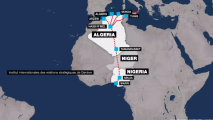
  • Trans-Saharan Gas Pipeline: an African dream that could reshape world energy markets
  • U.S. Forces return to Cameroon

Archives

  • June 2026
  • May 2026
  • April 2026
  • March 2026
  • February 2026
  • January 2026
  • December 2025
  • November 2025
  • October 2025
  • September 2025
  • August 2025
  • July 2025
  • June 2025
  • May 2025
  • April 2025
  • March 2025
  • February 2025
  • January 2025
  • December 2024
  • November 2024
  • October 2024
  • September 2024
  • August 2024
  • July 2024
  • June 2024
  • May 2024
  • April 2024
  • March 2024
  • February 2024
  • January 2024
  • December 2023
  • November 2023
  • October 2023
  • September 2023
  • August 2023
  • July 2023
  • June 2023
  • May 2023
  • April 2023
  • March 2023
  • February 2023
  • January 2023
  • December 2022
  • November 2022
  • October 2022
  • September 2022
  • August 2022
  • July 2022
  • June 2022
  • May 2022
  • April 2022
  • March 2022
  • February 2022
  • January 2022
  • December 2021
  • November 2021
  • October 2021
  • September 2021
  • August 2021
  • July 2021
  • June 2021
  • May 2021
  • April 2021
  • March 2021
  • February 2021
  • January 2021
  • December 2020
  • November 2020
  • October 2020
  • September 2020
  • August 2020
  • July 2020
  • June 2020
  • May 2020
  • April 2020
  • March 2020
  • February 2020
  • January 2020
  • December 2019
  • November 2019
  • October 2019
  • September 2019
  • August 2019
  • July 2019
  • June 2019
  • May 2019
  • April 2019
  • March 2019
  • February 2019
  • January 2019
  • December 2018
  • November 2018
  • October 2018
  • September 2018
  • August 2018
  • July 2018
  • June 2018
  • May 2018
  • April 2018
  • March 2018
  • February 2018
  • January 2018
  • December 2017
  • November 2017
  • October 2017
  • September 2017
  • August 2017
  • July 2017
  • June 2017
  • May 2017
  • April 2017
  • March 2017
  • February 2017
  • January 2017
  • December 2016
  • November 2016
  • October 2016
  • September 2016
  • August 2016
  • July 2016
  • June 2016
Ambazonia Revolutionary Guards step up action near Cross River border

22, October 2021

Ambazonia Revolutionary Guards step up action near Cross River border 0

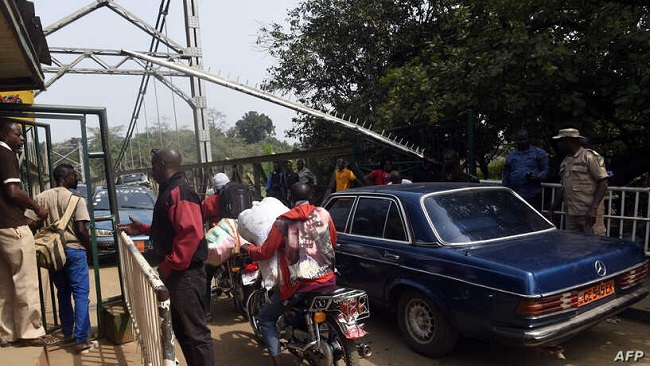
Some youths fighting for self-rule in southwest Cameroon have reportedly stepped up their agitation.

They are also reported to be screening, blocking both Cameroonians and Nigerians travelling into and out of the country as well as shooting since last week in borderline communities.

A handful of Cameroonians residing in Calabar, the Cross River State capital, who sneaked into Mamfe town and other parts of their ancestral southwest Cameroon, painted gory pictures, narrating how they were very lucky to have returned alive.

Bisong Ojong Nre, 56, who does menial jobs in Calabar and had a family reunion in his Cameroonian hometown three weeks ago said he had to meander dangerous bush paths near Boki LGA of Cross River State to escape the rampaging Ambazonian Boys who extort and clamp down on those that violate their orders.

“Towards the international border town of Mfum near the commercial town of Ikom in Nigeria, the Amba Boys thoroughly screen travellers including Nigerian traders.

“The Boys are angry that a splinter group has aligned with outlawed Biafran groups to sabotage and betray them to forces loyal to President Paul Biya of Cameroon.

“The Boys, therefore, suspect Nigerians. They have even alleged that the Nigerian government is subtly supporting Biya against them.”

Another Cameroonian, who also returned to Calabar over the weekend, said the Amba Boys now have upper hands over the Biya federal forces who are fighting them to unite the country.

“We have seen them destroy Biya’s armaments, including many armored tanks. But what is making us more fearful is that they don’t spare any suspicious characters. They have killed many of their people too, including burning down houses of anyone who attempts to betray them.”

An insurrection broke out in southwest Cameroon over five years ago when the people called for a referendum for their English-speaking region, which was hitherto part of Eastern Nigeria, to become a separate country called the Ambazonian Republic.

Source: Dailypost.ng
Biafra: Nnamdi Kanu’s trial for treason adjourned

22, October 2021

Biafra: Nnamdi Kanu’s trial for treason adjourned 0

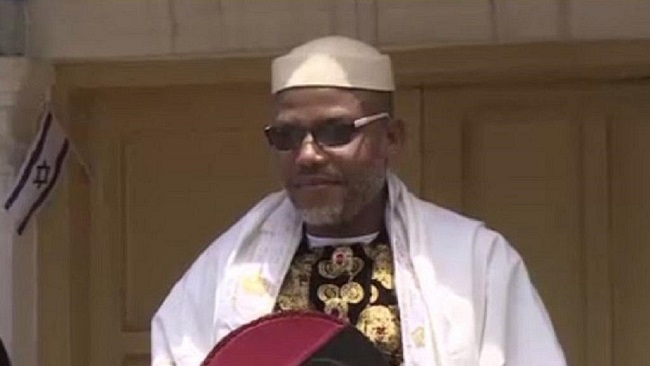
A high-profile case against Nnamdi Kanu, a Nigerian separatist accused of terrorism and treason was adjourned Thursday, lawyers said, after a court appearance under heavy security in the capital Abuja.

Kanu, 53, leader of the proscribed Indigenous People of Biafra (IPOB) group, which wants a separate state for the ethnic Igbo people in the southeast, was arrested abroad in June and brought back to Nigeria to face trial.

Leaving the courtroom Thursday, his lawyers Ifeanyi Ejiofor and Aloy Ejimakor told AFP that Kanu had pled “not guilty” to seven charges including terrorism and treason before the case was adjourned to November 10.

Dozens of heavily armed police, balaclava-wearing security operatives and Nigerian soldiers were deployed all around the federal high court.

Journalists were barred from entering the premises and threatened by police with tasers, an AFP reporter saw.

Lawyer Ejiofor said he urged the court “to dismiss the seven count charges… acquit our client and discharge him.”

Kanu’s family and lawyers say he was illegally extradited from Kenya, though Nigerian officials have not given any details.

He is a British citizen and used to work as an estate agent in London, where he also ran the outlawed Radio Biafra.

Separatist movements in Nigeria are particularly sensitive, after a unilateral declaration of independence in 1967 in Biafra sparked a brutal 30-month civil war.

More than one million people died, most of them Igbos, from the impact of conflict, hunger and disease.

Southeast Nigeria has seen a spike in violence with at least 127 police and other security personnel killed by gunmen this year, according to a local media tally.

Authorities have blamed the attacks on IPOB and its armed wing, the Eastern Security Network, a claim the groups deny.

Kanu was first arrested in October 2015 but was released on bail and fled the country in 2017.

IPOB called for a “sit-at-home” on Thursday across the southeast, to protest the arrest of their leader.

Another separatist, Sunday Igboho, who advocates for independence for the southwestern Yoruba people, was also recently arrested.

Igboho was taken into custody at the airport in neighbouring Benin, police and airport sources said.

He was on the run after a gun battle with security forces at his home, where weapons and ammunition were discovered.

Source: Africa News

Southern Cameroons resistance won’t stop after Biya

22, October 2021

Southern Cameroons resistance won’t stop after Biya 0

The Ambazonia Interim Government (IG) has condemned the continued detention of President Sisiku Ayuk Tabe and his top aides in Yaounde, stressing that all French Cameroun anti Southern Cameroons actions will not deter the quest for independence and Ambazonian outright rejection of the union with French Cameroun.

“The Southern Cameroons Interim Government is running out of patience with the French Cameroun regime in Yaounde over its continued detention of President Sisiku Ayuk Tabe and his cabinet,” Vice President Dabney Yerima said in a statement released on Thursday.

The statement added that President Sisiku Ayuk Tabe and all Southern Cameroons detainees will continue to be an important part in the fight against French Cameroun occupation and annexation of Southern Cameroons.

Vice President Dabney Yerima underscored the unity of the people of Southern Cameroons as well as Southern Cameroons territorial integrity.

“The criminal act committed in Abuja, Nigeria against President Sisiku Ayuk Tabe and his cabinet exposes the bloody mentality of the French Cameroun regime, which has its roots in murder and terrorism. The heinous crime has not and will not stop the Ambazonian resistance and steadfastness of the Southern Cameroons people  even after Biya.”

By Chi Prudence Asong

Prop gun fired by actor Alec Baldwin kills cinematographer on movie set

22, October 2021

Prop gun fired by actor Alec Baldwin kills cinematographer on movie set 0

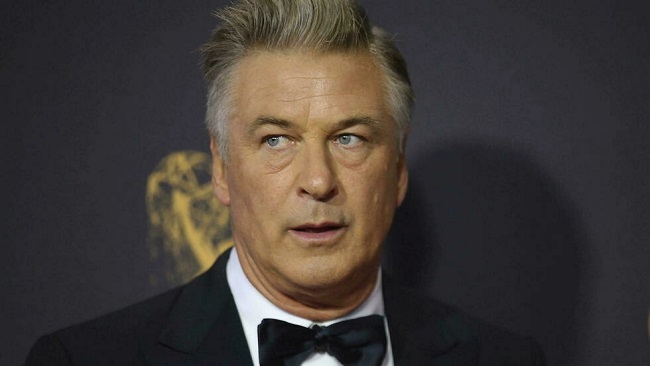
US actor Alec Baldwin fired a prop gun that killed a cinematographer and wounded the director on a film set in New Mexico, US law enforcement officers said on Thursday.

The incident happened on the set of ‘Rust’ in the southwestern US state, where Baldwin is playing the lead in a 19th-century western.

Cinematographer Halyna Hutchins and director Joel Souza “were shot when a prop firearm was discharged by Alec Baldwin,” the sheriff in Santa Fe said in a statement.

Hutchins, 42, was transported to hospital by helicopter but died of her wounds, while Souza, 48, was taken by ambulance and is receiving treatment.

“Mr. Baldwin was interviewed by detectives,” Santa Fe sheriff spokesman Juan Rios told AFP.

“He provided statements and answered their questions. He came in voluntarily and he left the building after he finished his interviews. No charges have been filed and no arrests have been made.”

The Santa Fe New Mexican published pictures of a distraught-looking Baldwin which it said were taken in the parking lot of the set after the tragedy.

The paper said its reporter had seen the actor in tears after he had been quizzed by investigators.

One photograph shows a man, presumed to be Baldwin, doubled over.

A spokesperson from the production told The Hollywood Reporter the “accident” involved the misfire of a prop gun with blanks.

The incident took place at the Bonanza Creek Ranch, a production location near Santa Fe which is popular with Hollywood filmmakers.

Movie sets usually have stringent rules over the use of prop weapons, but accidents have happened.

Most famously, Brandon Lee, the son of martial arts legend Bruce Lee, died during filming of “The Crow” after being shot by a gun that was supposed to fire blanks.

Baldwin co-produces the film and stars as Harland Rust, an outlaw whose grandson is convicted of murder, and who goes on the run with him when the boy is sentenced to hang for the crime.

The 63-year-old posted a photograph earlier Thursday on Instagram showing him apparently on set, dressed in a period costume and with fake blood on his shirt.

“Back to in-person at the office. Blimey… it’s exhausting,” he captioned the picture, which went online several hours before the incident.

A joint statement by John Lindley and Rebecca Rhine of the International Cinematographers Guild said news of Hutchins’ death was “devastating”.

“The details are unclear at this moment, but we are working to learn more, and we support a full investigation into this tragic event. This is a terrible loss, and we mourn the passing of a member of our Guild’s family,” the statement, reported by Variety, said.

Baldwin has been on television and in films since the 1980s.

He starred in a number of high profile movies, including in ‘The Hunt for Red October’ and two iterations of the “Mission: Impossible” franchise, and has also voiced animated characters in hits like “The Boss Baby”.

He garnered new fans with his long-running portrayal of Donald Trump on “Saturday Night Live”, a character that irritated the former president, but won Baldwin a Primetime Emmy.

“Rust” also stars Jensen Ackles (“Supernaturals”) and Travis Fimmel, best known for playing Ragnar Lothbrok in “Vikings”.

The Bonanza Creek Ranch where Thursday’s incident took place has hosted productions including ‘Hostiles,’ ‘Cowboys & Aliens,’ ‘3:10 to Yuma,’ ‘Appaloosa’ and ‘Longmire.’

Source: AFP

Archbishop Andrew Nkea fires back at Cameroon Concord News over editorial comments

21, October 2021

Archbishop Andrew Nkea fires back at Cameroon Concord News over editorial comments 0

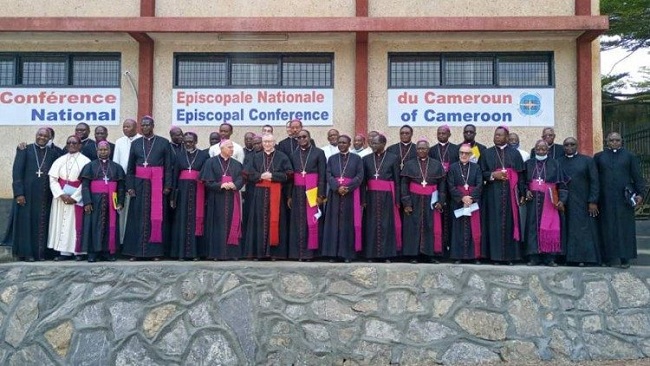
Metropolitan Archbishop Andrew Nkea has fired back at Cameroon Concord News Group over recent editorial comments on the role of the Holy Roman Catholic Church.

Archbishop Andrew Nkea reportedly read the editorial and released a document on Thursday  to Cameroon Concord News and in a short statement blamed poor media reporting for stigmatising the Cameroonian bishops.

If you keep blaming the bishops, you don’t fix the problem Archbishop Nkea wrote to Cameroon Concord News.

Below is the document sent to Concord by the Archbishop

BAMENDA PROVINCIAL EPISCOPAL CONFERENCE [BAPEC]

THE SECRETARIAT

ARCHBISHOP’S HOUSE

P.O. BOX 82, BAMENDA

NORTH WEST REGION

C A M E R O O N

BAPEC/PRES/2016/30                                                   22 December 2016

MEMORANDUM PRESENTED TO THE HEAD OF STATE, HIS EXCELLENCY PRESIDENT PAUL BIYA, BY THE BISHOPS OF THE ECCLESIASTICAL PROVINCE OF BAMENDA ON THE CURRENT SITUATION OF UNREST IN THE NORTHWEST AND SOUTHWEST REGIONS OF CAMEROON

Your Excellency,

For almost one month now there has been a series of unrests and violence in some towns of the Northwest and Southwest Regions[1] of Cameroon occasioned by the strike of the Anglophone Lawyers and of the Teachers’ Trade Unions of the English Sub-system of Education. These have led to the loss of human life andto the destruction of property of some of our citizens. There have been flagrant abuses of human rights, as demonstrated by credible eyewitness accounts and by pictures on local television channels and social media. This has led to a premature end to the first term of the school year and paralysed the court system in these regions to the detriment of school children, students, parents and the administration of justice. At the moment, it seems that the government and the striking groups have reached an impasse and it is not likely that the schools are going to open even when the second term begins for the rest of the country. These unrests are symptomatic of a deeper unease among the inhabitants of this geographical circumscription of our nation.

We, the Bishops of the Ecclesiastical Province of Bamenda, which is coterminous with the Northwest and Southwest Regions, where we hold responsibility as Shepherds, cannot remain indifferent to this situation. The Church,in this season, celebrates the birth of Jesus Christ, the Prince of Peace. She has as mandate to proclaim the message of peace (Luke 10:5; Matthew 5:9), and has always stood for justice and peace, and worked for the attainment of the common good of society.Because of her role and competence, the Church is not identified in any way with the political community nor bound to any political system[2]. This places her in a uniquely privileged position to provide a balanced perspective on the current problem between the government of Cameroon and the population of significant segments of the Northwest and Southwest Regions of Cameroon. It is for this reason that we have presumed to seize the moment and to make the following submission, with a view to assisting the government to seek a lasting solution to this problem and enable its citizens to live in peace and harmony.

Historical Background of the Problem

Most of the territory known today as the Republic of Cameroon was a German protectorate from 1884. However, German Kamerun also included British Northern Cameroons, which elected to become part of Nigeria in the plebiscite of 1961. This protectorate was divided into British and French Cameroons in 1916 and confirmed, with some slight modifications, by the Milner-Simon Agreement of 10 July 1919. British Cameroons, which was comprised of Northern and Southern Cameroons, was one fifth and French Cameroun was four-fifths of the entire territory. They were Class B Mandated Territories of the League of Nationsuntil 1946 when they became United Nations Trust Territories.

British Cameroons and French Cameroun were separate legal and political entities and historians have postulated that although this partition was said to be temporary Britain and France instituted two different administrative styles and systems which were to impact on any subsequent movement towards eradicating the provisional nature of the partition and facilitating reunification.[3] After the Second World War, the United Nations (Article 76, b) explicitly called on the British and French to administer their respective spheres of Cameroon towards self-government. It called on the Administering Authorities to “promote the political, economic, social and educational advancement of the inhabitants of the Trust Territories, and theirprogressive development towards self-government or independence as may be appropriate to the particular circumstances of each territory and its peoples…”

Before the London Constitutional Conferences of 1957 and 1958, three political options had emerged in British Southern Cameroons, namely independence as a separate political entity, independence in association with Nigeria, and independence by reuniting with French Cameroun. The Mamfe Conference of August 1959, which was called to hammer out consensus among Southern Cameroonians on one of the options, did not succeed to arrive at a consensus. The three political options persisted, with the most popular being independence as a separate political entity, the next being association with Nigeria and the least popular being reunification with French Cameroun.

Paradoxically, the UN General Assembly Resolution 1352 (xiv) on the British Cameroons’ Plebiscite of 1961, clearly ruled out the separate independence of Southern Cameroons[4], the most popular of the three options. This was thanks to the British who tactfully blocked every chance of the Southern Cameroonians voting for independence as a separate entity, convincing the United Nations that Southern Cameroon was not economically viable and could only survive by leaning on Nigeria or the Republic of Cameroon, and recklessly steering the Mamfe All Party Conference of August 1959 to ensure that the parties did not achieve consensus[5]. In fact, the British wanted Southern Cameroons to gain independence in association with Nigeria. Consequently, the two questions adopted for the plebiscite were:

1. Do you wish to achieve independence by joining the independent Federation of Nigeria?

                                               OR

2. Do you wish to achieve independence by joining the independent Republic of Cameroun?

Southern Cameroonians were apprehensive of this move and put pressure on John Ngu Foncha to lead a delegation to London in November 1960 to include the option of independence as a separate political entity. The request was rejected. Nevertheless, according to United Nations Resolution 1541(XV) Principles VII and VIII, Southern Cameroons was qualified to achieve independence either through association or integration which “should be on the basis of complete equality between the peoples of the erstwhile Non-Self-Governing Territory and those of the independent country with which it is integrated. The peoples of both territories should have equal status and rights”. It was with this understanding that on the 11th of February 1961 British Southern Cameroons voted to join French Cameroun while British Northern Cameroons voted to join the Federal Republic of Nigeria.

The Foumban Conference of 17th– 21st July 1961 agreed broadly what the “marriage” between the two Cameroons was going to look like. The Yaoundé Tripartite Conference of 2nd-7th August 1961 put this agreement in legal form. Worthy of note here is the fact that the draft 1961 Constitution was never presented to the Southern Cameroons House of Chiefs (SCHC) and the Southern Cameroons House of Assembly(SCHA) for deliberation and approval as should have been the case. Further, it was signed by President Ahidjo on the 1stof September 1961 as President of the Republic of Cameroon when the Federal Republic of Cameroon had not yet come into existence. Be it as it may, the two territories came together in this union as a Federation of East Cameroon and West Cameroon (1961 Constitution, Article 1-1)[6].

 In September 1966, all the political parties went into dissolution to form one party in the Federal Republic of Cameroon (the Cameroon National Union), giving birth to one party rule. In 1968, Honourable Solomon Tandeng Muna was appointed to replace Honourable Augustine Ngom Jua without the required Parliamentary endorsement and in contravention of the law which did not permit Muna to handle the posts of Federal Vice President and Prime Minister of the State of West Cameroon concomitantly. Southern Cameroonians saw these moves as dictatorial and undemocratic. They had come from a multi-party democratic society where free debate, alliances, consensus, and respect for the Constitution were the accepted modus operandi. 

Referendum of 20th May 1972

While West Cameroonians were still bracing themselves for life in a political dispensation which they regarded as imposed on them by circumstances beyond their control and struggling to cope with the manoeuvres of President Ahmadou Ahidjo, he proposed a Constitution that would make the Federal Republic a unitary state, the United Republic of Cameroon. As we all know, in those days it was politically unwise and even unsafe to hold and express views different from those of the President on any issue, and so there was no public debate on the constitution. This constitution was voted on in a national referendum organized and conducted by the Cameroon National Union (CNU), by now the sole political party in the Republic. The results show that the overwhelming majority of the electors in East and West Cameroon voted in favour of a unitary state. Looking back at what happened, many Anglophone Cameroonians now believe that this was the high-water mark of Ahidjo’s deceit and manipulation of West Cameroonians, and some have linked the birth of separatist movements in Anglophone Cameroon to this referendum. 

Subsequent Constitutional Amendments

Three years later, the Constitution was amended to include the post of Prime Minister, appointed by the President. Following another amendment in 1979 the Prime Minister would be the constitutional successor of the President of the Republic.In 1984, a constitutional amendment changed the country’s name from the United Republic of Cameroon to the Republic of Cameroon. In the eyes of West Cameroonians, Law No 84-1 of 4 February 1984, was incontrovertible evidence that the original intentions of our Francophone brothers and sisters were to absorb Southern Cameroon and not to treat with it as equals. After thirty-threeyears of union, we had all ended up as citizens of the Republic of Cameroon or East Cameroon.

The Anglophone Problem

It should be clear, from the brief historical sketch presented above, what the crux of the so-called Anglophone Problem is. No matter what some self-appointed elite and spokespersons for Anglophone Cameroonians as well as government Ministers say in public, the participation of various strata of the population and the growing popularity of separatist movements among young and older members of the Anglophone community demonstrates that there is an Anglophone Problem.  There is a consciousness among Anglophone Cameroonians that all is not well and something needs to be done about their plight.

What it is

The Anglophone Problem is:

  1. The failure of successive governments of Cameroon, since 1961, to respect and implement the articles of the Constitution that uphold and safeguard what British Southern Cameroons brought along to the Union in 1961.
  2. The flagrant disregard for the Constitution, demonstrated by the dissolution of political parties and the formation of one political party in 1966, the sacking of Jua and the appointment of Muna in 1968 as the Prime Minister of West Cameroon, and other such acts judged by West Cameroonians to be unconstitutional and undemocratic
  3. The cavalier management of the 1972 Referendum which took out the foundational element (Federalism) of the 1961 Constitution.
  4. The 1984 Law amending the Constitution, which gave the country the original East Cameroon name (The Republic of Cameroon) and thereby erased the identity of the West Cameroonians from the original union. West Cameroon, which had entered the union as an equal partner, effectively ceased to exist.
  5. The deliberate and systematic erosion of the West Cameroon cultural identity which the 1961 Constitution sought to preserve and protect by providing for a bi-cultural federation.

The Management of the Anglophone Problem

It is our conviction that the Anglophone Problem would have been solved, or at least mitigated, if it had been well managed by those concerned. A lack of proper management seems to be what has aggravated the problem.

The Government and Government Ministers

It is unfortunate to note that the government of Cameroon seems to have made every attempt to downplay or even deny the existence of an Anglophone Problem. Government Ministers (even those of former West Cameroon extraction) have denied the existence of any such problem in the media and in public speeches. Furthermore, it is widely believed in Anglophone Cameroon that government has consciously created divisions among the English-speaking elite, remunerating some allies with prestigious positions in the state apparatus previously reserved for Francophones only, and repressing all actions designed to improve on the status of Anglophone Cameroonians in the union. This seems to have been proven true in the recent unrests by the utterances of government Ministers in the Press Conference on CRTV, in the dispatch of an Anglophone Elite delegation to the Northwest Region, and in the brutal suppression of protests by certain professional groups and sections of the Northwest and Southwest Regions.

Secessionist Groups

In the face of this denial of the existence of an Anglophone Problem by government and the consequent deafening silence from the government to the cries and protests of Anglophone Cameroonians, certain groups have emerged in Anglophone Cameroon that call for the secession of Anglophone from Francophone Cameroon. The Southern Cameroons Youth League, the Southern Cameroons National Council, and the Ambazonia Movement are some of the most strident of these groups and are currently members of the Unrepresented Nations and Peoples Organisation (UNPO) in The Hague.

Federalists

There are different forms of federalism, and federalists in Anglophone Cameroon will differ as to the specific nature of the federal state they would want. However, they are all agreed that they do require a federation which recognises and preserves the region’s peculiarity, as did the 1961 Federal Constitution.

Unitarists

Successive amendments to the Constitution up to and including the Amendments of 1996 insist on the fact that Cameroon is one and indivisible (Article 1-2, 1996). Cameroon is described as a decentralised unitary state. Unitarists believe that everything must be done to avoid federalism or secession. However, even the decentralisation announced by the 1996 Constitution has not been implemented, and government and administration have been highly centralised.

Symptoms of Discontent

What some people mistake for the Anglophone Problem are just symptoms pointing to the fact that an overwhelming majority of Anglophone Cameroonians are not happy in the union which they entered with East Cameroon in 1961. They have complained against widespread and systematic marginalisation in various areas of public life which point to the existence of a huge problem. Some of these symptoms include the following:

Marginalisation in Human Resource Development and Deployment

  1. Anglophone Cameroonians have complained about the fact that National Entrance Examinations into Schools that develop the human resources of this country are set per the French Subsystem of Education which makes it very difficult for Anglophones and Francophones to compete on a level playing field. Majority of the membership of these Examination Boards are Francophone so that the interests of Anglophone candidates are hardly, if ever, protected.
  2. Out of the five Ministries concerned with Education, which is the means of the transmission of culture, none of the Minsters is Anglophone and none even qualifies to be a deputy or Secretary of State. This gives the impression of a calculated attempt to kill Anglophone culture.
  3. In human resource deployment, there is a gaping inequality in the distribution of posts of responsibility between Anglophones and Francophones. Of the 36 Ministers who defended the budgets for the Ministries last month, only one was Anglophone. In addition, there seem to be key ministries that have been reserved for Francophone Ministers only and Anglophones do not even qualify to be Secretaries of State under them. These include, but are not limited to, Defence, Finance, Territorial Administration, and Economy.
  4. In the 1961 Constitution, the Vice President was the second most important personality in state protocol. Today, the Prime Minister (appointed Anglophone) is the fourth most important person in State Protocol, after the President of the Senate and the President of the National Assembly. Even so, Anglophone Cameroonians believe that he wields no real authority and, like was the case with J.N. Foncha as First National Vice President of the CPDM, finds it “impossible to use [his] exalted position to help in any way shape or influence the policies of the party and nation.”[7]  There are clearly Francophone ministers who wield more power than he does. This seems to have been proven true in the last Teachers’ strike. When the Prime Minister was in Bamenda negotiating with the Teachers’ Union Leaders, a group of Francophone Ministers were giving a Press Conference in Yaoundé on the same issue, giving the impression that the negotiations of the PM in Bamenda were of no consequence.

The Treatment of the English Language

There have been widespread protests about the way the English Language has been treated in the public life of the nation.

  1. State institutions produce documents and public notices in French, with no English translation, and expect English speaking Cameroonians to read and understand them.
  2. National Entrance Examinations into some professional schools are set in French only and Anglophone candidates are expected to answer them. Sometimes this happens even in the English-speaking regions.
  3. Visitors and clients to government offices are expected to express themselves in French, even in the English-speaking regions, since most of the bosses in the offices speak French and make no effort to speak English.
  4. Most Senior Administrators and members of the Forces of Law and Order in the Northwest and Southwest Regions are French-speaking and make no effort to understand the cultures and customs of the people they are appointed to govern.
  5. Members of Inspection Teams, Missions and Facilitators for Seminars sent from the Ministries in Yaoundé to the English-speaking Regions are generally predominantly French speaking, and expect to be understood by audiences which are predominantly English speaking.
  6. The Military Tribunals in the Northwest and Southwest Regions are basically French courts.
  7. Basic Finance documents which businesses and other institutions are expected to work with are all in French. Examples include the COBAC Code, the CIMA Code and the OHADA Code.

The Flooding of Anglophone Cameroon with Francophone Administrators and Workers

Apart from the fact that Ministers, Directors General, Heads of Parastatals, Senior Divisional Officers, Heads of Law Enforcement Institutions, etc. are disproportionately Francophone, there seems to have been a conscious effort made to flood the Northwest and Southwest Regions with Francophone Heads of Service.

  1. The Magistrates in these Regions are disproportionately Francophone. So are the Senior Divisional Officers, the Divisional Officers, Commissioners, and Commandants. In the educational sectors, there are increasingly Francophone principals posted to Anglophone schools. Personnel in Hospitals, Banks and Mobile Telephone Companies (even those which originate from Anglophone countries), are predominantly Francophone. And this extends to even non-expert workers in petrol stations.
  2. The situation is aggravated by the fact that these Francophone administrators are often overbearing, very arrogant and treat people as if they were second-class citizens, and have no iota of respect for the dignity of the human person.

Mismanagement of ‘West Cameroon’ Patrimony

Apart from neglect of infrastructure in the Northwest and Southwest Regions of Cameroon and the mismanagement and ruin of buoyant companies like Cameroon Bank, West Cameroon Marketing Board, WADA in Wum, West Cameroon Cooperative Movement, etc., oil revenues are alleged to be used by those in power to feed ‘the bellies’ of their allies, and to stimulate the economy in other regions. In addition, there is also great anxiety in Anglophone Cameroon that its major agro-industrial enterprises, especially the Cameroon Development Corporation (CDC) and Plantations Pamol du Cameroun Ltd (Pamol), are sold or their headquarters moved elsewhere.

The ‘Francophonisation’ of the English Educational Subsystem and the Common-Law System

The flooding of state Anglophone educational and legal institutions with French-trained and French speaking Cameroonians who understand neither our educational subsystem nor the English Common Law undermines Anglophone education and legal heritage and subverts the original intentions of the founders of the nation to build a bi-cultural nation, respecting the specificity of each region. This is the cause of the current strikes by common law lawyers and teachers.

Admissions into State Professional Schools

The exclusion of qualified Anglophones in admissions into state professional schools (especially Schools of Administration, Medicine and Medical Sciences and Higher Teacher Training) even in the Anglophone Regions is a glaring example of marginalisation which the Teachers Unions cited.

These, and many others, have led to the unease and discomfort of the people of the Northwest and Southwest Regions. They perceived this marginalisation as institutionalised as they have been labelled “Biafrans”, “enemies in the house” and “traitors” by highly placed government officials and ministers who were never reprimanded for doing so.

Gradual Erosion of Anglophone Identity

There has been a misleading argument from some quarters where some have argued that an Anglophone is anyone who can speak English, as a way of countering Anglophone Cameroonians who protest the issues we have enumerated above. It might be helpful, for the purposes of our presentation and future discourse, to note here that ‘Anglophonism’ goes beyond the mere ability to speak or understand the English language. It speaks to a core of values, beliefs, customs, and ways of relating to the other inherited from the British who ruled this region from 1916 to 1961. ‘Anglophonism’ is a culture, a way of being which cannot be transmitted by merely learning a language. In fact, as Dr. Anthony Ndi intimates, Southern Cameroonians had “a distinctive outlook and way of life that went further than the mere fact that the educated ones among them spoke the English Language or a version of it. So, therefore, language could not even be the qualifying factor”.[8] This Anglophone identity is the reason most Southern Cameroonians who voted to join the Republic of Cameroon in 1961 did so. It was to preserve their cultural identity as a distinct people.

Anglophone Cameroonians are slowly being asphyxiated as every element of their culture is systematically targeted and absorbed into the Francophone Cameroon culture and way of doing things. These include the language, the educational system, the system of administration and governance (where appointed leaders are sent to lord it over people who cherish elected leaders), the legal system, and a transparent democratic process where elected leaders are answerable to the electorate who put them there in the first place.

Anglophone Cameroonians have seen through this and are raising their voices in protest. The two All Anglophone Conferences (AAC I and II) of the early 1990s, the rise and popularity of the SCNC and other secessionist voices are born of the frustration of Anglophone Cameroonians of being ignored and ridiculed for asking for what they deem to be theirs by right, namely the preservation of their culture. You would remember that, in his resignation letter from the post of first Vice President of the CPDM on the 9th of June 1990, J.N. Foncha cited in point 9 of the letter, as a reason for resigning, the fact that the constitution was “in many respects being ignored and manipulated”.

A Natural Reaction

The reaction of Anglophone Cameroonians to preserve their culture can only be described as ‘natural’. Is it any surprise that the first Opposition party that forced the door open for multi-partyism in Cameroon, the Social Democratic Front (SDF), came from Anglophone Cameroon? Following the formation of the party, the architect who brought Southern Cameroonians into the union with the Republic of Cameroon, John Ngu Foncha, resigned in disillusionment as the First Vice-President of the CPDM. He explained:

The Anglophone Cameroonians whom I brought into the union have been ridiculed and referred to as ‘les Biafrians’, ‘les ennemies dans la maison’, ‘les traitres’ etc., and the constitutional provisions which protected this Anglophone minority have been suppressed, their voice drowned while the rule of the gun replaced the dialogue which the Anglophones cherish very much.[9]

This is not to say that we do not see the other side of the argument. In any polity formed bytwo or more ethnic, cultural, religious, or linguistic groups, there is bound to be a majority versus minority problem. In any such situation, the wise thing to do would be to make constitutional provisions which would protect and safeguard the existence and rights of the minority, rather than trample on them. The Church teaches that “not even the majority of a social body may violate these rights, by going against the minority, by isolating, oppressing, or exploiting it, or by attempting to annihilate it.”[10]Cameroon prides itself as a state of law. In this area, she is at one with the Church which teaches that society should be organised on the principle of the “rule of law”. This is the principle “in which the law is sovereign, and not the arbitrary will of individuals”[11]So, apart from the plethora of issues which enhance Anglophone disaffection with the union, there is the additional problem that they are a minority in that union.

Proposed Way Forward

It is not for us to dictate to the Cameroonian people what form the government of this countryshould take or what solutions should be provided for the problems we have highlighted. The Church respects the legitimate autonomy of the democratic order and is not entitled to express preferences for this or that institutional or constitutional solution. Her contribution to the political order is precisely her vision of the dignity of the person revealed in all its fullness in the mystery of the Incarnate Word[12]. That notwithstanding, we feel obliged in conscience as the religious and moral leaders in this part of the country, who exercise care over a people who are hurting, to propose the following lines of action which, hopefully, should lead to peace and harmony among our people.

Honesty in the face of the Anglophone Problem

One of the most disingenuous things any enlightened Cameroonian, talk less of educated Cameroonian of Anglophone upbringing, can do is to deny that there is an Anglophone Problem. If former French President, Jacques Chirac, the Commonwealth, the European Union, and many others have recognised that there is an Anglophone Problem and advised that the government of Cameroon and the discontented Anglophones engage in dialogue, how can Cameroonians deny that there is a problem? To play the ostrich and bury our heads in the sand is to sow disaster for the future of the nation we all love. It is to give way to extremist tendencies in the Anglophone community born of frustration at not being listened to or understood. Is it possible that the government has not heard the cries of distress of the All Anglophone Conferences which represented a broad base of Anglophone Cameroonians? Is it possible that the government has not heard the Parent-Teacher Associations (PTA), the Common-Law Lawyers, the Teachers’ Trade Unions, Students, and others who are not only uncomfortable but are choking under the present dispensation?

Is it possible for us to look this beast in the eye, confront it together and overcome it for the sake of peace and unity in our country? The government’s continued denial of any Anglophone Problem, and its determination to defend the unitary state by all available means, including repression, could lead to an escalation of Anglophone demands past a point of no return, and this is not something any responsible citizen would wish for their country.

The All Anglophone Conferences (AAC) of 1993 and 1994

In May1993, the 65-member Anglophone Standing Committee established by the AAC submitted a draft constitution which would provide for major political, financial, and fiscal autonomy for the two federated states, for the provinces inside both, and for the communities inside each province. Theyproposed the usual separation of powers between the executive, legislative, and judiciary, and a senate and national assembly for each federated state, as well as a rotating presidency for the Federal Republic, whereby after at most two consecutive mandates of five years an Anglophone would succeed a Francophone (or vice versa). This proposal was even reiterated for each of the federated states to ensure alternation between the provinces. This would be for us a lasting solution to the irksome Anglophone Problem, and would be acceptable to the majority of Anglophone and Francophone Cameroonians.

The Implementation of the 1996 Constitution

We know there is never a perfect constitution and that is the reason why constitutions are amended to make them responsive to changes in time and situation. The 1996 Constitution, even though some have had issues with sections of it, is good enough as an immediate remedy for the ‘woes’ Anglophones are listing and which make life together in this nation burdensome to them. As the second-best option, we recommend an urgent and immediate implementation of the 1996 Constitution. We recommend that all the institutions created by that constitution be put in place, and that those put in place be empowered with persons charged with rendering them functional. This would include the Regions, the Senate and, by extension, the constitutional council, administrative courts, the minor courts of accounting/auditing. It is important for Cameroonians, especially those who seek protection under the ‘rule of law’ and of the Constitution, to know that the constitution has really been deployed as a means of regulating the political process in Cameroon. It is our firm belief that if this is done immediately, it would satisfy the majority of Anglophone Cameroonians and silence the calls for secession which have characterized this period of unrest.

Constructive Dialogue and the Establishment of a Roadmap

In the short term and, because the Lawyers and Teachers Strikes have paralysed our legal and school systems, it is imperative for the government to dialogue with the Lawyers and Teachers as soon as possible and agree a possible roadmap regarding their legitimate and genuine demands. We cannot solve a problem if we are unwilling to talk to each other. In the spirit of the African family, we would expect the father of the family to find out from a hurting (even if errant) child what the problem is and what they can do to alleviate their pain and suffering. There are a good number of the problems raised by our lawyers and teachers which can be solved now and there are others which can be solved later, but we need to agree a roadmap and respect it. This will enable the Teachers’ Unions to call off the strike and permit our children, who have already lost four weeks of schooling, to return to school. Indeed, openness to dialogue and to cooperation is required of all people of good will, and in particular of individuals and groups with specific responsibilities in the areas of politics, economics and social life, at both the national and international levels[13].

Respect for Human Rights

While it is the duty of administrative and law enforcement officers to maintain peace and order in their areas of jurisdiction, many of them have been unnecessarily overbearing and arrogant. Issuing orders and threats for teachers to return to school, for instance, is not the way to solve their problem. Further, the current unrests have shown up a very ugly and embarrassing side of our administrators and the forces of law and order. Without any provocation from the lawyers or students at the University of Buea (who carried placards saying ‘No to Violence’ and raised their hands in the air), the forces of law and order brutalized some of them so badly and so inhumanely that seeing the pictures one would have thought they came from the Stone Age. It was shameful to see law enforcement officers drag female students in the mud, spray students’ rooms with tear-gas and contaminated water, and then lock some up for days just for exercising a basic human right to make their voices heard in a peaceful manner.

The Church teaches that

“A just society can become a reality only when it is based on the respect of the transcendent dignity of the human person… Every political, economic, social, scientific, and cultural programme must be inspired by the awareness of the primacy of each human being over society… For this reason, neither his life nor the development of his thought, nor his good, nor those who are part of his personal and social activities can be subjected to unjust restrictions in the exercise of their rights and freedom.”[14]

Our administrators and the forces of law and order need to be called to order. In the exercise of their duties for the common good of all citizens, they must never trample on the rights of those citizens and deal out subhuman treatment to them. Such behaviour contravenes the law and provides a seedbed for deep resentment which later manifests itself in very ugly ways.

It is in light of this that we propose that the government should immediately withdraw the forces of law and order from the streets of the Anglophone towns to which they have been deployed, open proper investigations into any abuses of human rights by the forces of law and order, and release or charge those who have been locked up as a result of the recent unrests. In this way, we would have a better climate for the negotiations which have been proposed between the government and the teachers and lawyers.

Justice for All

Every Anglophone group that has raised its voice in protest has chronicled a number of perceived injustices which either the group or the Anglophone community in general suffers. Again, if the government gives them a listening ear, it would become clear to all whether these perceived injustices are founded or just imaginary. As long as these people, rightly or wrongly, continue to feel that they are the victims of injustice, we cannot build ‘the Island of Peace’ in Central and West Africa we have been proclaiming that we are, and we cannot develop our country without this peace either. We do not believe, in conscience, that locking up people who speak up against injustice (real or imagined) will kill dissent and bring peace. Maybe some examples will help clarify the point we are making.

On the 14th of December 1967, Martin Luther King, Jr. made a statement outside a California prison where Vietnam war protesters were being held. He said: There can be no justice without peace and there can be no peace without justice.On the World Day for Peace, 1st January 1972, Pope Paul VI had as theme for his Message: if you want peace, work for justice. These great crusaders for social justice teach us that without justice, peace will be an elusive goal.

Of course, you would remember the Apostolic Visit of Pope St. John Paul II to Cameroon in August 1985. In his Address to the President, Constituted Bodies, and the Members of the Diplomatic Corps, he said:

« Devant les conflits qui demeurent ou renaissent, tout le monde doit se poser honnêtement la question de leurs causes. Les injustices commises par certains régimes, concernant les droits de l’homme en général ou les revendications légitimes d’une partie de la population qui se voit refuser la participation aux responsabilités communes, déclenchent des soulèvements d’une violence regrettable, mais qui ne pourront être apaisés qu’avec le rétablissement de la justice. »

These examples show that we need to examine, in a dispassionate manner, the root causes of the unease and unrest in the Anglophone Region of Cameroon and, if these causes are connected to injustice in any form, do all we can to root out those injustices.

Conclusion

Your Excellency,

We stated at the beginning of this Memorandum that it is our bounden duty as Shepherds of the people in the Northwest and Southwest Regions of Cameroon where there are unrests and dissatisfaction, to make a contribution to the solution of the problems that have been posed. We hope that you will find our contribution helpful as you try to navigate this very sensitive and delicate period in our nation’s history. We are aware of the gravity of your responsibility before the people of Cameroon and before History, and that is why we tried to do all we could to help. In addition, we commend you and the people of Cameroon to God in prayer, in the belief that He will give you the wisdom you need to carry out this task. We can only add that in this case, time is of the essence as some of our children have already missed school for a month.

A certain religious leader is credited to have said: There really can be no peace without justice. There can be no justice without truth. And there can be no truth, unless someone rises up to tell you the truth.What we have set forth here is what we believe to be the truth, told as part of our prophetic mission, in the hope that it will bring justice, peace, and harmony to this country which we all hold dear to our hearts.

May Mary, Queen of Peace, and Patroness of Cameroon, intercede for us and for our country.

+George Nkuo                                                                         +Cornelius Fontem Esua

Bishop of Kumbo and                                                               Archbishop of Bamenda

President of BAPEC                                                                                                                                                                                                                            

+Immanuel Bushu                                                                     +Andrew Nkea

Bishop of Buea                                                             Bishop of Mamfe

+Agapitus Nfon                                                                       

Bishop of Kumba                                                                    


[1] The territory which covers the Northwest and Southwest Regions has been called various names in the History of Cameroon: British Southern Cameroons, West Cameroon, Anglophone (English-speaking) Cameroon. These names will be used in this document as appropriate to the historical period in question.

[2] Gaudium et Spes, No. 76

[3]  Ngoh, J. V., (2011:4), The Untold Story of Cameroon Reunification: 1955-1961, Limbe, Presprint Plc.

[4] Mukete, V. E., 2013:419, My Odyssey: The Story of Cameroon Reunification With Authentic Letters of Key Players, Yaounde, Sopecam.

[5] Ndi, A., (2013:6) Southern West Cameroon Revisited (1950-1972): Unveiling Inescapable Traps, Volume 1, Bamenda, Paul’s Press.

[6]  Constitution reproduced in: Ndi, A. (2013), Southern West Cameroon Revisited (1950-1972): Unveiling Inescapable Traps, Volume 1, Bamenda, Paul’s Press. See Appendix IV

[7] J.N. Foncha, 9th June 1990: Letter of Resignation from the CPDM

[8] Ndi, A., (2005:249-50), Mill Hill Missionaries in Southern West Cameroon (1922-1972): Prime Partners in Nation Building, Paulines Publications Africa, Nairobi.

[9] J.N.  Foncha, 9th June 1990: Letter of Resignation from the CPDM

[10] John Paul II, Centissimus Annus, No. 45.

[11] John Paul II, Centissimus Annus, No. 44.

[12] John Paul II, Centissimus Annus, No. 47.

[13] John Paul II, Centissimus Annus, No. 60

[14] Pontifical Council for Justice and Peace, Compendium of the Social Teaching of the Church, Nos 128, 133

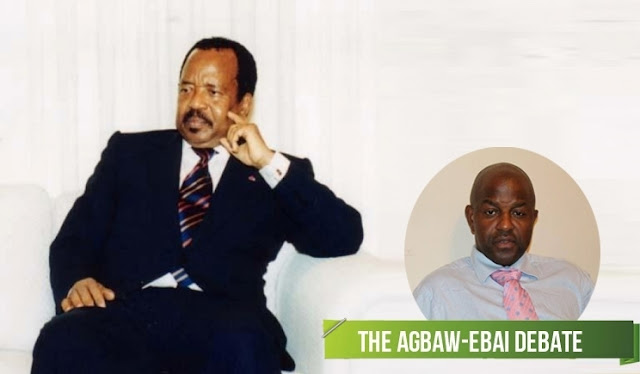
When will Cameroonian Bishops get serious about Biya and the ruling CPDM crime syndicate?

21, October 2021

When will Cameroonian Bishops get serious about Biya and the ruling CPDM crime syndicate? 0

The remains of His Lordship Bishop Balla of the Bafia Diocese were discovered by a Malian fisherman at a place known as Tsang in Monatele in the Lekie Division.  Under the supervision of a Biya appointee passing for an Attorney-General, an investigation was opened in the Mbam-et-Inoubou and Monatélé in the Lékié Divisions where the body of the bishop was recovered. Mbam-et-Inoubou and Lékié are two of the ten divisions of the Center region.

The late Bishop disappeared on the night of May 30, 2017 and his body was found lifeless on June 2nd off the Sanaga River after a traditional ceremony led by the patriarch of Mbam who pleaded to his ancestors for the Bishop’s body to be made available to the living. For almost 72 hours, efforts made by sea divers from the Cameroonian Navy and local fishing community proved futile.

This is just one of the many shocked crimes against the Roman Catholic Church in Cameroon under the watchful eyes of a Roman Catholic head of state who is quietly destroying everything Christianity stands for and President Biya is possibly the greatest tragedy to befall the Cameroonian Catholic church in the period of the Second Vatican Council.

Most tragically for Roman Catholic Christians in Cameroon, the responses from the Cameroonian bishops have been hopeless mindful of the stipulations of Vatican II.

Cameroon government army soldiers kill revered fathers, they kill bishops, they even killed revered sisters who had special relationship with the late first lady Jeanne Irene Biya but the Episcopal Conference continues to uphold the policy of secrecy and silence on every scandal revealed in Cameroon under President Biya-a man with a conscience nurtured in the Cameroonian Catholic family, school and Jesuit seminary.

Each time a true Christian raises a finger, the Cameroonian bishops will remind the said believer that he/she had forgotten their place in the chain of command and that the laity should allow issues concerning the CPDM government to a higher authority that is ruling the church. It is therefore left to the Cameroonian bishops to identify the root cause of both the Southern Cameroons crisis and the French Cameroun political problem.

The Cameroonian bishops have the same modus operandi like the ruling CPDM regime and it is hard to say if the Roman Catholic Church in Cameroon is badly in need of the principle of ‘synodality’ and if Cameroonian bishops are truly committed to that principle. They issue press releases for everything including murder, rape, gun crimes and ghost town operations. Cameroonian bishops   have never clarified their position on the proper role of plain speaking – of conscience – in the church itself – or on the atrocities of the Biya Francophone regime. We of the Cameroon Concord News and the Cameroon Intelligence Report are of the opinion that our much respected bishops have denied to Cameroonian lay Catholics all means of raising a voice of conscience within the church itself, as promised by Vatican II. As Chairman and Editor-In-Chief of the Cameroon Concord News Group, I hold this opinion mindful of my strong commitment to the Diocese of Mamfe and to the Bamenda Ecclesiastic Province.

If Cameroonian Catholics – lay people and clergy – are ever to walk together in mutual confidence Cameroonian bishops must finally say where they stand on the role of conscience and the case of this evil man in Etoudi known popularly as His Excellency President Paul Biya. If there is room for all CPDM criminals and killers to receive Holy Communion in the church, then there is no room for conscience either – and the Holy Spirit of truth must remain stifled.

To say that the 86-year-old Biya should continue as head of state because the Church does not trust any other young political figure in Cameroon – is to be utterly naive.  The reluctance of too many revered fathers to facilitate open discussion on the issue of Cameroon as a nation after Biya is in itself a nurturing of the secrecy that is perpetuating the war in Southern Cameroons and killings currently going on in French Cameroun – which will in turn inevitably lead to the complete collapse of Cameroon as a nation.

And, as the ruling CPDM government directly controls the financing of nearly all Roman Catholic Diocese in French Cameroun, no Francophone Bishop can be called truly independent either. The situation in Southern Cameroons is even more intractable!  No diocese can be audited without the giving of notice to the bishop, and no audit diocesan report can be published without the bishop concerned having first sight of it.  In all of this there is far too much room for the maintenance of the culture of whatever you say, say nothing.

Until Cameroonian bishops show respect for the principle of the primacy of conscience – and the freedom of the Holy Spirit – they can never stop the multiplicity of Pentecostal churches.

By Soter Tarh Agbaw-Ebai

FIFA drive for biennial World Cup stalls amid fierce resistance from European football

21, October 2021

FIFA drive for biennial World Cup stalls amid fierce resistance from European football 0

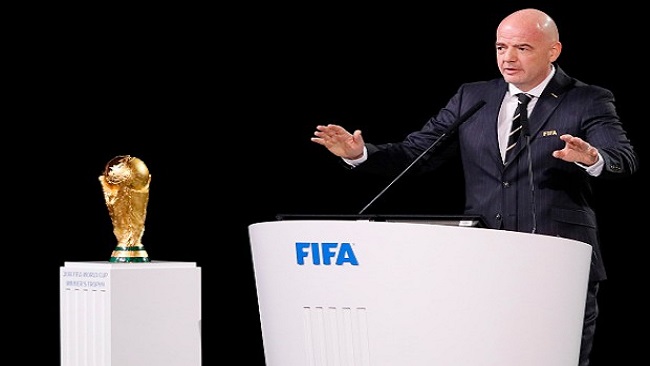
FIFA’s drive to get approval in December for holding World Cups every two years stalled Wednesday, one day after its president met with fierce resistance from European soccer leaders.

Gianni Infantino instead announced FIFA would host a remote “global summit” on Dec. 20 to discuss the future of international soccer and “try to reach a consensus.”

That fell short of staging an extra congress of 211 member federations which could formally vote on the planned biennial World Cups for men and women in which Infantino has invested his and FIFA’s political capital.

“It is really important to listen to all the legitimate questions … and to see how we can adjust the proposals that have been made,” Infantino said at a news conference after chairing a meeting of FIFA’s ruling Council.

Infantino’s comment about exploring “what other kinds of events we can create” was a further hint that staging extra World Cups has not reached the broad agreement he aims for.

Sustained opposition from European soccer body UEFA — including threats to boycott future World Cups and veiled warnings by some of its members to leave FIFA — was joined last weekend by a rare IOC statement explicitly criticizing an Olympic sport.

The International Olympic Committee said FIFA was chasing extra revenue while crowding other sports from the sports calendar, promoting men’s soccer that would overshadow the women’s game and putting extra strain on athlete welfare.

“We have received some legitimate criticism,” Infantino acknowledged. “When you are in the middle of all of that it’s a little bit like a referee in a riot going on in a match.

“I’m just calling everyone to be calm and rational about it,” he said.

Infantino has said FIFA organizing a men’s or women’s World Cup every year is important to attract young fans, give more countries the chance to qualify and fund development globally to close the gap on European and South American dominance.

UEFA and South American soccer body CONMEBOL have resisted the plans. They cited the risk of overloading players and disrupting the balance of soccer’s global schedule, including domestic leagues and their own successful international competitions for national and club teams.

“Everyone has taken note of the position of Europe,” said Infantino, who had a heated online meeting Tuesday with leaders of UEFA and its 55 member federations.

The Europeans made clear biennial World Cups were unacceptable, and one day later Infantino seemed to relent by insisting FIFA must try to reach consensus.

“How this consensus will look like, we will see,” he said. “For me, everything is open. Maybe we make one step forward and one back.”

Source: AP

Taking the last kicks of a dying horse: Trump announces new social media network called ‘TRUTH Social’

21, October 2021

Taking the last kicks of a dying horse: Trump announces new social media network called ‘TRUTH Social’ 0

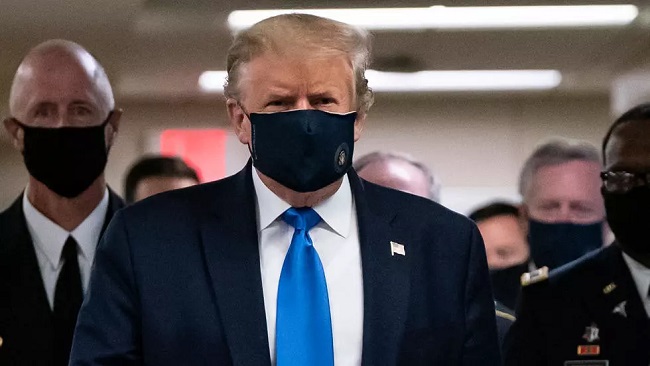
Former US president Donald Trump announced plans Wednesday to launch his own social networking platform called “TRUTH Social,” which is expected to begin its beta launch for “invited guests” next month.

The long-awaited platform will be owned by Trump Media & Technology Group (TMTG), which also intends to launch a subscription video on-demand service that will feature “non-woke” entertainment programming, the group said in a statement.

“I created TRUTH Social and TMTG to stand up to the tyranny of Big Tech,” Trump, who was banned from Twitter and Facebook in the wake of the Capitol insurrection carried out by his supporters on January 6 this year, was quoted as saying in the statement. 

“We live in a world where the Taliban has a huge presence on Twitter, yet your favorite American President has been silenced. This is unacceptable,” he continued.

The Trump Media & Technology Group will merge with blank check company Digital Acquisition Corp to make TMTG a publicly-listed company, the statement said.

“The transaction values Trump Media & Technology Group at an initial enterprise value of $875 Million, with a potential additional earnout of $825 Million in additional shares (at the valuation they are granted) for a cumulative valuation of up to $1.7 Billion depending on the performance of the stock price post-business combination,” it stated.

Ever since he was banned from the world’s dominant social networks as punishment for stirring up the mob that ransacked Congress on January 6, Trump has been looking for ways to reclaim his internet platform.

In May he launched a blog called “From the Desk of Donald J. Trump,” which was touted as a a major new outlet.

But Trump, who was also banned from Instagram, YouTube and Snapchat in the wake of the Capitol mayhem, canceled the blog just a month later.

Former Trump aide Jason Miller launched a social network called Gettr earlier this year, but the former president has not yet joined it.

(AFP)

Southern Cameroons Crisis: Ambazonia Restoration groups should forge strong unity, stay away from discord

21, October 2021

Southern Cameroons Crisis: Ambazonia Restoration groups should forge strong unity, stay away from discord 0

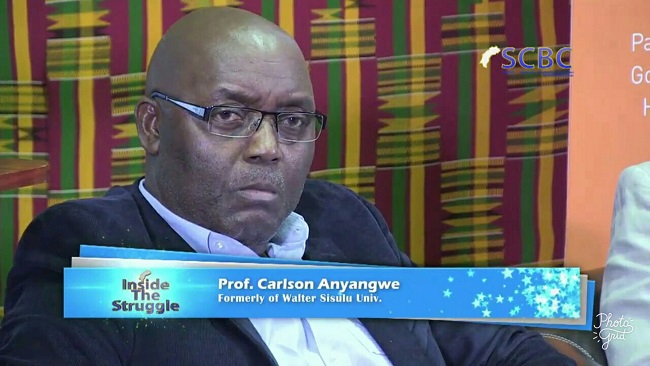
Professor Calson Anyangwe has called on all Southern Cameroons groups to strengthen their unity and establish stronger relations, saying they should avoid any statement or measure that may create rifts within their ranks.

In a telephone conversation with Cameroon Concord News London Bureau Chief on Tuesday, the Southern Cameroons front line leader paid homage to all Ambazonians who have been killed ever since the 86-year-old French Cameroun dictator declared war against the people of Southern Cameroons.

Carlson Anyangwe said Southern Cameroonians are resisting and taken positive steps to erase any doubts and deviations deep within the international community, and effectively fostering unity and cohesion among the peoples in both the Northern and Southern zones of the Federal Republic of Ambazonia.

Professor Calson Anyangwe opined that the Southern Cameroons Interim Government remains the most essentially strategic tool for the entire Ambazonian community to rally around, describing Vice President Dabney Yerima as the pivot of unity among Southern Cameroonians.

Anyangwe also urged all Southern Cameroons restoration groups to stay away from discord and division and to avoid any divisive remarks and statements.

The renowned Southern Cameroons academic also urged Ambazonians to exert efforts to liberate themselves from the yoke of the French backed French Cameroun arrogance, slamming Yaoundé for attempting to sow the seeds of discord among Southern Cameroonians.

By Isong Asu in London

Biya French Cameroun war on Southern Cameroons failed, CPDM crime syndicate on back foot in Ambazonia

21, October 2021

Biya French Cameroun war on Southern Cameroons failed, CPDM crime syndicate on back foot in Ambazonia 0

A senior aide to the exiled Southern Cameroons leader says President Biya and his Francophone Beti Ewondo political elites are presently on the back foot in Southern Cameroons after suffering several defeats there.

Dr Patrick Ayuk made the comments on Tuesday during a zoom presentation on the state of the revolution to a Southern Cameroons think tank in Ireland.

The South Africa based academic enumerated Biya French Cameroun policy failures in British Southern Cameroons, among them its recent humiliating defeat in Bui and Ndian.

“Today, we are witnessing that French Cameroun is retreating and possibly spending its last months in the Federal Republic of Ambazonia. We are witnessing Biya’s failures in the dangerous Atanga Nji Boys project” Dr Patrick Ayuk said.

The Vice President Dabney Yerima aide furthered that the people of Southern Cameroons are exercising revolutionary patience in the face of a genocidal campaign and are standing firm against troops loyal to the French Cameroun regime in Yaounde.

“The enemy is encircling Southern Cameroonians with poorly train army soldiers to make Ambazonians surrender, but our people are standing firm,” he said.

Dr Patrick Ayuk said the Biya Beti Ewondo gang would not be able to reverse the trend of its defeats in Southern Cameroons even if the Francophone regime stays in power for another 40 years.

“Today, the signs of Ambazonia independence and victory are more evident than before, and in French Cameroun, we are clearly witnessing…the signs of the enemy’s retreat and defeat,” Dr Patrick Ayuk concluded.

By Soter Tarh Agbaw-Ebai in Dublin

«< 461 462 463 464 465 >»

Featured

  • Dr Joachim Arrey speaks of drugs and teenage girls lured into forced sex in ManyuDr Joachim Arrey speaks of drugs and teenage girls lured into forced sex in Manyu
  • Cameroon to expire in DecemberCameroon to expire in December
  • Iran deal: the cards are now in Tehran’s favourIran deal: the cards are now in Tehran’s favour
  • Exam leaks in CPDM Cameroon: A symptom of a deeper corruption crisisExam leaks in CPDM Cameroon: A symptom of a deeper corruption crisis
  • Biya is already in Hell as Yaoundé unravelsBiya is already in Hell as Yaoundé unravels

Most Commented Posts

  • 4 Anglophone detainees killed in Yaounde4 Anglophone detainees killed in Yaounde
    18 comments
  • Chantal Biya says she will return to Cameroon if General Ivo Yenwo, Martin Belinga Eboutou and Ferdinand Ngoh Ngoh are sackedChantal Biya says she will return to Cameroon if General Ivo Yenwo, Martin Belinga Eboutou and Ferdinand Ngoh Ngoh are sacked
    13 comments
  • The Anglophone Problem – When Facts don’t LieThe Anglophone Problem – When Facts don’t Lie
    12 comments
  • Anglophone Nationalism: Barrister Eyambe says “hidden plans are at work”Anglophone Nationalism: Barrister Eyambe says “hidden plans are at work”
    12 comments
  • Largest wave of arrest by BIR in BamendaLargest wave of arrest by BIR in Bamenda
    10 comments

Latest Tweets

→ Follow me

Featured

  • Prime Minister Ngute revives push for Limbe Deep Seaport

    Prime Minister Ngute revives push for Limbe Deep Seaport

  • Middle East War: top negotiator says Iran counts American threats for nothing

    Middle East War: top negotiator says Iran counts American threats for nothing

  • Indomitable Lions: Mbouh Mbouh Emile on marking Maradona

    Indomitable Lions: Mbouh Mbouh Emile on marking Maradona

  • Trans-Saharan Gas Pipeline: an African dream that could reshape world energy markets

    Trans-Saharan Gas Pipeline: an African dream that could reshape world energy markets

  • U.S. Forces return to Cameroon

    U.S. Forces return to Cameroon

  • Dr Joachim Arrey speaks of drugs and teenage girls lured into forced sex in Manyu

    Dr Joachim Arrey speaks of drugs and teenage girls lured into forced sex in Manyu

  • World Cup: Iran to lodge complaint with FIFA over travel restrictions

    World Cup: Iran to lodge complaint with FIFA over travel restrictions

Log In

  • Register
  • Log in
  • Entries feed
  • Comments feed
  • WordPress.org
© Cameroon Concord News 2026

We are using cookies to give you the best experience on our website.

You can find out more about which cookies we are using or switch them off in .

Powered by  GDPR Cookie Compliance
Privacy Overview

This website uses cookies so that we can provide you with the best user experience possible. Cookie information is stored in your browser and performs functions such as recognising you when you return to our website and helping our team to understand which sections of the website you find most interesting and useful.

Strictly Necessary Cookies

Strictly Necessary Cookie should be enabled at all times so that we can save your preferences for cookie settings.

3rd Party Cookies

This website uses Google Analytics to collect anonymous information such as the number of visitors to the site, and the most popular pages.

Keeping this cookie enabled helps us to improve our website.

Cookie Policy

More information about our Cookie Policy