8, August 2025
Cameroon’s Constitutional Council: a government that crushes ballots will eventually meet bullets 0
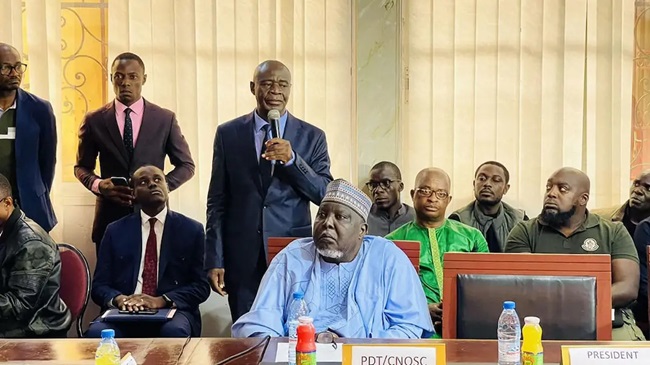
In the long, bloodstained ledger of Africa’s democratic betrayals, few chapters are as pungently shameful, or spectacularly tragic, as the travesty recently staged by Cameroon’s Constitutional Council; a body that now stands as a consecrated altar and mausoleum of cowardice and injustice, where the will of the people is ritually sacrificed. The unconstitutional and cowardly exclusion of Maurice Kamto, the most credible opposition leader and MANIDEM’s rightful candidate for the 2025 presidential election, is not only naked provocation and an insult to voters; it is state-sponsored electoral banditry – a daylight mugging of democracy itself. Let’s be clear: this Council is not a legal institution – it is a shriveled coven of Beti tribal jingoists and partisan cronies, comprising one menopausal matriarch and a cabal of tired old men tottering between senility and servility. Lacking spine, vision, or honor, these Judas-hearted charlatans, traded principle for privilege, betraying their solemn oaths with the audacity of sycophants groveling for scraps and crumbs of power. These soulless merchants of betrayal are not judges; they are scribes of a dying regime, dressing Paul Biya’s dictatorship in the robes of law and stamping tyranny with the seal of legitimacy. Their loyalty lies not with the constitution they swore to uphold, but with the decrepit throne of an aging autocrat. Drunken on greed and self-centered pedestrianism, they bent over backwards to crawl where conviction and character demanded they stand tall. The arbitrary rejection of Kamto is shameful, pathetic, disgraceful and devoid of any perfunctory exaggeration. History will brand those traitors as footnotes in the annals of treason and judicial brigandage.
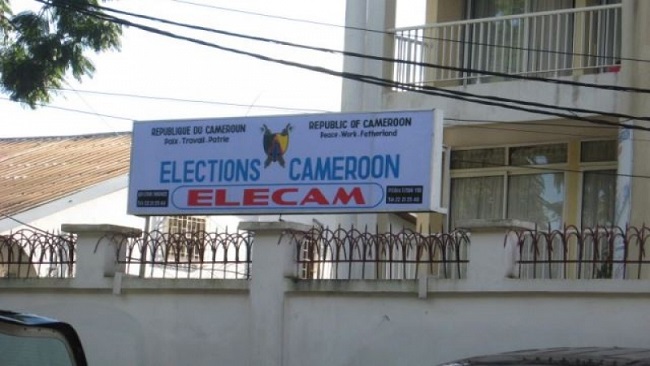
In rejecting Kamto’s candidacy amid the overwhelming evidence of conspiracy and fraud by ELECAM and MINAT, the Council did not just err in law – its members defecated on democracy; trading jurisprudence for sycophancy, and law for lèse-majesté; while reinforcing its image as an uncircumcised appendage and spineless puppet of the ruling CPDM party. What manner of justice crawls on its belly to serve the whims of power? What kind of court builds its rulings not on precedent, but on illegality and political expediency? The Council has now become what every dictatorship requires: a rubber-stamp chorus of cowards, cloaked in legality, but reeking of fear. With counterfeit authority, they mutilated the voters’ right to choose. These court-jesters are not guardians of the republic; they are the undertakers of the republic’s dying breath. This decision will be remembered as a national curse; a scar gouged into the face of Cameroonian democracy.
History Will Name Them
History has never been kind to those who mortgage the future of nations for the fleeting comfort of a tyrant’s approval. The names of these traitors- Clément Atangana, Florence Rita Arrey, Émile Essombe,
Paul Nchoji Nkwi, Jean Baptiste Baskouda, Sanda Bah Oumarou, Charles Étienne Lekene Donfack, Ahmadou Tidjani, Adolphe Minkoa She, Aaron Logmo Beleck, Monique Ouli Ndongo – shall be recorded, not with honor, but with the indelible ink of shame. Their legacy will not be that of learned jurists, but of accomplices to repression, the assassins of a people’s dream. Let them know: robes rot, titles fade, power expires, but betrayal is immortal. No amount of legal contortion will erase the truth. The Council did not interpret the law; they strangled it. They did not deliver judgment; they delivered complacency. They did not uphold the constitution; they cremated it, and then danced around its ashes like jesters in a haunted palace.
The ossified Biya regime is terrified – not of Kamto’s politics, but of his popularity -his ability to mobilize the nation, articulate the frustrations of a destitute people, and to present a vision of a new Cameroon. Instead of defeating him at the ballot box, they have chosen the path of the despot: eliminate the challenger, muzzle dissent, and rig the race before it begins. This is the logic of tyrants. Cameroon today is ruled not by law, but by fear dressed in constitutional disguise. Let us be absolutely clear: Kamto did not lose the 2018 presidential election – he was robbed like Fru Ndi in 1992. And now, the regime is ensuring that he does not even get a chance to contest. This is not just an electoral hold-up. This is a premeditated assassination of Cameroon’s already battered democratic system.
With Kamto removed from the ballot, October 12 is not an election – it is an anointing. A theatrical coronation of an already-entrenched regime, cloaked in the illusion of popular choice. This insult to democracy will not go unnoticed. Cameroonians are not blind. They see the charade and know what is happening. They smell the rot. They feel the betrayal. From Maroua to Bamenda, from Yaoundé to the Diaspora, they know that without a credible challenger like Kamto, the upcoming election is a pageant, not a poll – a coronation masquerading as choice. The message is clear: there is no ballot in Biya’s Cameroon; only bullets, bans, and betrayal.
In a country already buckling under multiple crises, from armed conflict in the Anglophone regions, to spiraling poverty, to corruption so rampant it is practically government policy; this decision is a match tossed onto a powder keg. Already, tensions are rising. Protests are breaking out. People are boiling with rage. The authorities are pushing the country dangerously close to the edge of chaos, and when the violence comes, let no one feign surprise. A government that crushes ballots will eventually meet bullets. Kamto has long stood for peaceful resistance and dialogue. But even his patience cannot pacify a generation that sees no future under a regime that treats their dreams with scorn and arrogance.
Where is the international community that claims to defend democracy and human rights? To remain silent in the face of such blatant democratic sabotage is to be complicit. To accept this travesty is to betray every Cameroonian who still believes in a better tomorrow. Sanctions must be considered. Visa bans on members of ELECAM and the Constitutional Council should follow. And international election observers must not lend legitimacy to a charade they know is rigged.
This Is Not Over
There is a river swelling in the hearts of Cameroonians. It is fed by anger, suffering, and stolen choices. When that river bursts its banks, it will wash away not only the symbols of oppression but those who enabled them with gavel and gown. The Constitutional Council may think itself safe within the marble chambers of privilege. But marble cracks, and chambers echo. When the people rise – and rise they will – no robe will be thick enough to shield them from the storm they helped sow. Kamto may be off the ballot, but he remains the face of the resistance, the voice of a silenced majority, and the nightmare of a regime on life support.
To the Constitutional Council: You have traded truth for tyranny, justice for a bowl of stale porridge, and history will not forgive you. You may silence one man. but you cannot silence a nation that has awakened to its own power. To Biya and his clique: you may block Kamto from the race, but you cannot block the tide of history. The hour is late. The mask has fallen. Every tyrant believes they can cheat time. But every regime that silences its people will, eventually, be silenced by them. The fight for Cameroon’s democracy is not over – it has just begun.
By Ekinneh Agbaw-Ebai


8, August 2025
Yaoundé: Is the world’s oldest leader set for an eighth term? 0
Cameroon’s constitutional council has upheld the decision by the country’s electoral body to exclude opposition leader Maurice Kamto from the 12 October presidential election.
While the firebrand political figure was sidelined, 92-year-old President Paul Biya whose candidacy also faced opposition, was cleared to run for what would be his eighth term in the oil-rich Central African nation.
If he were elected for another seven-year term, he could remain in power until he was almost 100.
Kamto was ruled out because a rival faction of the Manidem party which endorsed him presented another individual as a candidate, highlighting an internal squabble.
His exclusion sparked outrage, with his lawyers describing the rejection of his petition as more of a political than a legal move.
Who are the main candidates?
Of the 83 candidates who submitted their applications to the electoral body, only 12 have been approved.
The reasons given by Elections Cameroon (Elecam) for the disqualification of the 71 range from incomplete files, non-payment of the required deposit, to multiple candidacies from the same party.
Of all the contestants, six are seen as the main contenders:
1. Paul Biya
At 92, Paul Biya is the world’s oldest serving head of state. He has been in power for nearly 43 years since 1982. Biya leads the ruling CPDM party which dominates the political scene. He is widely considered the favourite, now that his main rival, Kamto, is out of the way.
The veteran politician has never lost an election since the return of multi-party politics in 1990. However, his victories have been marred by allegations of vote rigging – claims which his party and the government have continuously denied.
Announcing his intention to run, Biya said his eighth mandate would focus on the wellbeing of women and young people.
2. Bello Bouba Maigari
Bello Bouba Maigari, 78, is an experienced politician who hails from Cameroon’s vote-rich northern region.
He is the president of the National Union for Democracy and Progress (NUDP) party founded in 1990. He served in the governments of both of Cameroon’s presidents -Ahmadou Ahidjo and Paul Biya.
In fact, he was Biya’s first prime minister between 1982 and 1983. Since 1997, Maigari has forged an alliance with Biya’s CPDM party that helped the latter clinch significant votes from the north.
However, this political marriage ended in June following pressure from within his party to run independently.
While serving as Minister of State for Tourism and Leisure, Maigari announced his resignation and declared himself a candidate against Biya, who he also faced in the 1992 presidential election.
3. Issa Tchiroma Bakary
Another former Biya ally whose candidacy came as a surprise is 75-year-old Issa Tchiroma Bakary. Like Maigari, he is from the country’s north and has been influential in helping Biya secure the region’s votes.
After a 20-year stint in different government roles, Tchiroma finally pulled the plug on his time with the 92-year-old leader, resigning from his role as Minister of Employment and Vocational Training to announce his candidacy.
Tchiroma, who heads the Cameroon National Salvation Front (CNSF) party, criticised Biya’s governance style and hinged his presidential bid on a promise to overhaul the system, which he described as “suffocating”.
4. Cabral Libii
Cabral Libii, president of the Cameroon Party for National Reconciliation (PCRN), is a vibrant member of parliament who is making his second attempt at getting the country’s top job.
In 2018, he was the youngest of the nine presidential candidates, aged just 38, coming third with 6% of the vote.
Libii’s candidature in this year’s election was challenged by PCRN founder Robert Kona, who disputed the lawmaker’s legitimacy to lead the party.
However, the Constitutional Council rejected Kona’s petition and upheld the electoral body’s decision to allow Libii to stand.
5. Akere Muna
Akere Muna was a candidate in the 2018 presidential election but pulled out at the last minute and threw his weight behind Kamto. This time around, Muna, a staunch international anti-corruption lawyer, says he wants to challenge Biya himself.
The 72-year-old is from a family of politicians – his late father Solomon Tandeng Muna served as Prime Minister of West Cameroon after independence, Vice-President of the then Federal Republic of Cameroon and Speaker of the National Assembly.
As Speaker, Solomon Muna swore in Biya when he took over as president after Ahmadou Ahidjo resigned.
Muna is promising to rid the bilingual country of the corruption and bad governance that he says have soiled its image at the international scene.
6. Joshua Osih
JoshuaOsih is jumping into the presidential race for the second time after his first attempt in 2018 proved futile.
He heads the Social Democratic Front (SDF) party, succeeding the iconic late opposition leader John Fru Ndi. The SDF used to be the country’s main opposition outfit, but its influence later dwindled, exacerbated by infighting and the expulsion of several party members in 2023.
Osih, 56, came fourth in the 2018 polls with 3%, but is hoping to defeat Biya through a promise of social and institutional reforms.
Who poses the strongest challenge to Biya?
For many decades, President Biya has succeeded in maintaining a firm grip on power, making it difficult for him to lose elections.
The decision of political heavyweights Bello Bouba Maigari and Issa Tchiroma Bakary to challenge him appeared to make life more difficult, but some analysts believe they do not pose a significant threat to Biya.
Dr Pippie Hugues, a policy analyst with Cameroonian think-tank Nkafu Policy Institute, argues that their alliance with the current regime lessens their credibility with opposition voters.
“Cameroonians need more than just a resignation to trust them,” he told the BBC. “Both have been with the system and watched the nation suffer.”
Dr Hugues further suggested that the two northern candidates might be part of a political plot staged by the regime.
However, ruling party officials have portrayed the rupture as genuine, acknowledging that the CPDM could struggle to obtain as many votes from the north as before.
Given Kamto’s exclusion, Biya’s strongest challenger in 2018, third-placed Libii could arguably claim to be his main threat this year.
Although he got just 6% of the vote, Libii’s political evolution since then has been praised.
He led his party to win five seats in parliament and seven local councils during the 2020 legislative and municipal elections. Since becoming a member of parliament in the process, he has challenged the government on key policy issues, promising sweeping changes if he takes over the reins of power.
However, Dr Hugues says Libii’s vision is opaque, citing Akere Muna as a more convincing candidate with a much clearer project for the nation of nearly 30 million people.
“Muna has a wealth of international experience and diplomatic character, and that is what the nation needs now,” he said, while praising the renowned lawyer’s five-year transition plan to “put the nation back on track”.
Could the opposition unite?
Historically, Cameroon’s opposition has been fragmented especially during elections, with analysts saying this has disadvantaged them.
Ahead of this year’s presidential election, there has been much talk about the need for the opposition to unite and harmonise strategies to take on Biya. But with each candidate prioritising their own interests, it remains unclear if most – let alone all – of them would work together, despite the risk this could help the president.
“It might be the end of their political careers, or their parties, if they don’t come together,” said civil society leader Felix Agbor Balla.
“Kamto and the others must look for someone in the opposition who can carry the baton – and they must put the nation first, rise above their personal ego to look for a consensual candidate that can give the CPDM a run on the 12th of October,” he told the BBC.
Dr Hugues agrees that Kamto should use his influence to drum up support for an opposition coalition since he is now out of the race.
He insists “change must not [only] come with him [Kamto], but change can come through him”.
He added that an opposition coalition is possible and made reference to a meeting attended by opposition figures on 2 August in Foumban town in the West region.
Prince Michael Ekosso, president of the United Socialist Democratic Party (USDP), who took part in the meeting, told the BBC the aim was to lay the groundwork for a “consensual candidate”.
While no specific candidate has been designated yet, the criteria for consideration were laid down.
“We want a figure who is going to be responding to the aspirations of Cameroonians, someone who is flexible to work with others, someone who is bilingual and able to mobilise other candidates and political actors,” Ekosso said.
In the 1992 presidential election, firebrand opposition leader John Fru Ndi was backed by the Union for Change, a coalition of political parties and civil society organisations.
Although he was not the only opposition candidate, analysts say the coalition helped him get 36% of the vote – just shy of Biya’s 40%.
That was the closest anyone has ever got to beating Biya. Fru Ndi even claimed victory, but the authorities rejected allegations of vote rigging and confirmed Biya as the winner.
Many believe if the opposition doesn’t band together as it did in 1992, Biya might have an easy ride to the presidency.
“He has the experience, the human resources and the system to his advantage,” says Dr Hugues.
Source: BBC