
18, December 2019
Rwanda’s Kagame ‘most likely’ to step down in 2024 0
Rwanda’s President Paul Kagame says it is possible that he will not be a candidate when next citizens go to the polls in 2024.
The 62-year-old was attending a summit in Doha when he was asked about whether he will run for office again, Bloomberg quotes him as saying he personally wanted to give way to others.
“Most likely no. I want to have some breathing space but given how things are and how they have been in the past, I have made up my mind where I am personally concerned, that it is not going to happen next time.”
Kagame has been been president of the tiny East African nation since 2000. He won his current mandate (his third term) in 2017 elections in which he scored 99% of the vote.
A controversial referendum in 2015 allowed the two-term constitutional limit to be lifted allowing him to contest in 2017. When the current seven-year term ends he could seek two more five-year terms according to the constitution.
In an interview with Jeune Afrique news website in 2017, Kagame stressed that Rwanda could thrive even in his absence, in response to whether or not he will contest beyond the 2017 elections.
‘I think so, yes. And it is likely that I will clarify this point soon when I enter the election campaign. There is a sort of contract between me, on the one hand, the RPF party and the Rwandan people, on the other.
“The fear you express would be justified if the Rwandan society was static, frozen. But it’s just the opposite. Like our economy, our institutions and our skills, our society evolves and enters into a virtuous dynamic.
“They wanted me, through the constitutional referendum of December 2015, to continue my work, which I accepted. But the time has come to tell them that they must start thinking, beyond my person,” Kagame said in response to stepping down.
But in 2012, Kagame expressly ruled out running for a third term. He told the World Policy Journal he was ready to respect constitutional limits and give way when the time came.
“We have the constitution in place. We have term limits. I’m serving my second and last term. I’m just hoping that another suitable person will come and continue with the work we are doing and not reverse it or break it up.”
Kagame, who won a third term in 2017, has faced mounting criticism for what human rights groups say are widespread abuses, a muzzling of independent media, and suppression of political opposition. He denies wrongdoing. He first came to power in 2000.
Paul Kagame, 62 years
Profession: Soldier
Became President: 2000 – till date
Predecessor: Pasteur Bizimungu
Presidential reign: 19 years
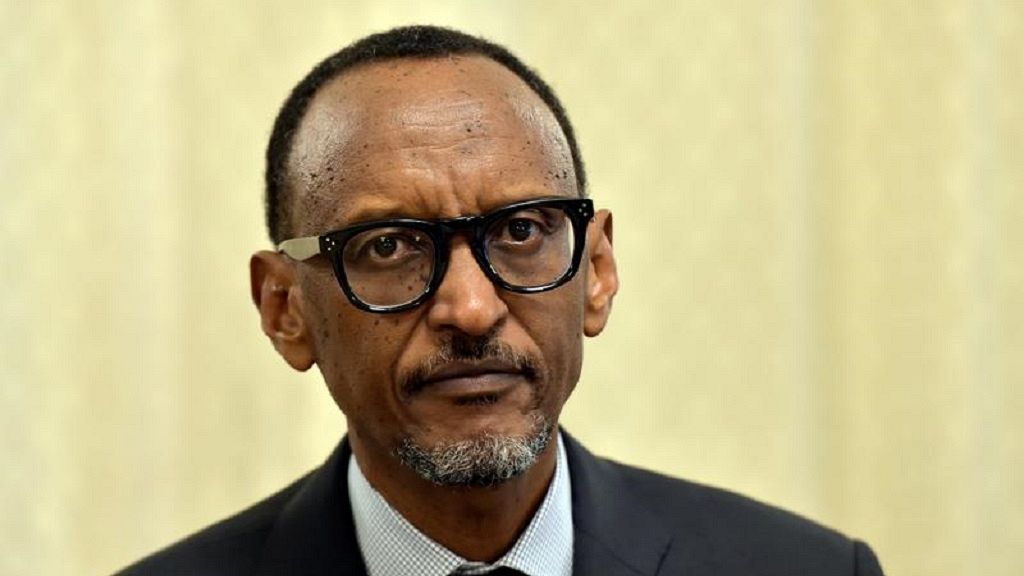
he man Paul Kagame – A brief profile
Paul Kagame was born in October 1957 in Rwanda’s Southern Province. His family fled pre-independence ethnic persecution and violence in 1960, crossing into Uganda where Kagame spent thirty years as a refugee.
Kagame joined current Ugandan President Yoweri Museveni and his group of guerrilla fighters to launch a war to free Uganda from dictatorship. Under the new government, he served as a senior military officer.
In 1990, he returned to Rwanda to lead the Rwandan Patriotic Front’s (RPF) four-year struggle to liberate the country from the autocratic and divisive order established since independence.
Led by Kagame, the Rwanda Patriotic Army defeated the government in July 1994 and the RPF subsequently set Rwanda on its current course towards reconciliation, nation building and socio-economic development.
Paul Kagame was appointed Vice-President and Minister for Defense in the Government of National Unity on July 19, 1994, and four years later was elected Chairman of the RPF, a partner in the Government of National Unity.
On 22 April 2000, Paul Kagame took the oath of office as President of the Republic of Rwanda after being elected by the Transitional National Assembly. He won the first ever democratic elections held in Rwanda in August 2003 and was re-elected to a second seven-year mandate in August 2010.
In 2015, two years to this years’ polls which he was not eligible to stand in, he proposed a constitutional referendum which was largely endorsed allowing him to contest in the upcoming elections.
Source: Africa News















18, December 2019
Biya, money, morality and State-owned enterprises in French Cameroun 0
Ernest Ela Evina holds the record as the longest serving general manager of a public company in French Cameroun. To be sure, Evina was appointed in 1974 by the late President Ahmadou Ahidjo as general manager of the National Center for Studies and Experimentation in Agricultural Machinery (Ceneema). Mr Ernest Ela Evina was only replaced last Friday by the French Cameroun head of state Paul Biya after 45 years as General Manager. No one knows the current bill of health of CENEEMA.
According to the Paul Biya decree signed last Friday, December 06, 2019, Evina got replaced by Mrs. Mebande Bate née Ekotto
A failed State
The French Cameroonian law of July 12, 2017 and certain provisions of laws 2017/10 and 2017/11 relating to the status of public enterprises and public establishments limit the duration of a general manager at the head of the company to 9 years (three terms of 3 years). This had nothing to do with the Biya-Evina relationship.
On June 19, 2019, President Biya signed another decree specifying the terms of application of certain provisions of the laws of 2017, on the general status of public establishments and public enterprises as well as the remuneration, allowances and benefits of their leaders.
Last July, Jean-Pierre Kédi, general manager of the Electricity Sector Regulatory Agency (Arsel) announced his intention to step down after 9 years at the head of the public company to remain in compliance with the law. But his announcement was perceived as a thunderbolt in a country where resignation is not in the habits of barons of the ruling CPDM crime syndicate.
Mindful of the numerous cases of Biya loyalists who have gone far beyond their mandates as general managers, it is evidently clear that French Cameroun is a one man show.
The local French Cameroun press recently cited extensively the cases of many other general managers and Board Chairs who are still in office. They include:
Camille Mouthe Bidias, CEO of the National Employment Fund (FNE) since 1991, 28 years old
Adolphe Moudiki, General Manager of the National Hydrocarbons Company (SNH) since 1993, 26 years
Yao Aissatou, General Manager of the National Investment Company (SNI) since 2003, 16 years
Marie Claire Nnana has been 12 years at the head of the Cameroon Press and Publishing Society (SOPECam)
Christol Georges Manon has also been 12 years at the head of the Mission for the Development and Management of Industrial Zones (MAGZI).
While Olivier Mekulu Mvondo Akame is the General Manager of the National Social Insurance Fund (CNPS), since 2008, 11 years ago.
It is vital to include in this report that the Board Chairs have served several decades in their respective public companies.
By Soter Tarh Agbaw-Ebai with files