28, July 2026
Cameroon’s hydrocarbon imports rise to CFA274.3 billion 0
Cameroon spent CFA274.3 billion on hydrocarbon imports in the first quarter of 2026, a 2.5% increase from a year earlier, even as revenue from crude oil exports fell sharply, according to the National Economic and Financial Committee’s (CNEF) latest economic report.
Between January and March, crude oil exports generated CFA152.4 billion, down 14.4% from CFA178 billion during the same period in 2025. The figures underscore Cameroon’s energy paradox: although the country produces oil and natural gas, it remains heavily dependent on imported refined petroleum products to meet domestic demand.
Fuel imports totaled CFA267.7 billion in the first quarter of 2025. The additional CFA6.6 billion spent this year kept petroleum products as Cameroon’s largest import category, ahead of machinery and mechanical equipment worth CFA115 billion and vehicles valued at CFA82.8 billion.
Export Revenue Falls Despite Higher Oil Prices
The decline in crude oil export earnings came even as global energy prices strengthened. According to the World Bank, Brent crude averaged $103.7 per barrel in March 2026, up 42.8% from $72.6 a year earlier. European benchmark natural gas prices also rose 35.3% over the same period to $17.91 per million BTU.
The drop in Cameroon’s export revenue despite higher prices suggests lower export volumes or changes in the country’s export mix. However, the CNEF report does not provide enough data to determine the exact cause.
The first-quarter figures extend a longer-term decline. Crude oil export revenue, which peaked at CFA1.51 trillion in 2022, fell to CFA705.6 billion in 2025, a drop of more than 50% in three years. Liquefied natural gas exports have followed a similar trend, declining from CFA631.5 billion in 2022 to CFA363.3 billion in 2025, a 42.5% decrease.
Import Bill Remains High
Meanwhile, Cameroon’s spending on imported petroleum products remains structurally high. After reaching a record CFA1.15 trillion in 2022, hydrocarbon imports totaled CFA891.1 billion in 2025. The increase recorded during the first quarter suggests the country’s energy import bill will remain substantial this year. Petroleum imports alone were worth more than twice the value of machinery imports during the period.
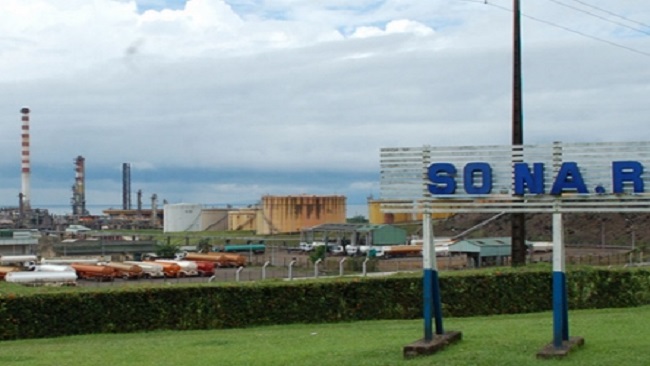
The country’s dependence on imported fuels largely stems from the shutdown of the National Refining Company’s (Sonara) refinery following the fire that damaged part of its facilities. As a result, Cameroon exports crude oil while importing gasoline, diesel, kerosene and other refined petroleum products needed by households, businesses and public institutions.
That structure exposes the country to swings in global oil prices, shipping costs and exchange rate movements. It also puts pressure on foreign exchange reserves, the trade balance and public finances, particularly when the government subsidizes fuel prices to shield consumers from international market fluctuations.
BEAC Urges Faster Refinery Projects
The Bank of Central African States (BEAC) is urging Cameroon to accelerate the reconstruction of Sonara and move forward with the planned C-Star refinery in Kribi.
In its report on inflation trends in the CEMAC region through March 2026, the central bank said both projects are essential to reducing the country’s exposure to global oil price volatility and limiting its impact on domestic fuel prices. The government is no longer planning a simple repair of the Sonara refinery. Instead, it intends to completely rebuild and modernize the facility at an estimated cost of about CFA700 billion.
The project includes replacing facilities destroyed in the fire, which damaged four of the refinery’s 13 processing units and a crude oil storage tank. It also calls for adding new processing capacity, including a hydrocracker. The new equipment is expected to improve the refinery’s ability to process domestic crude and increase production of fuels for the local market.
Whether those investments move forward will play a key role in reducing Cameroon’s dependence on imported fuels. Without restoring domestic refining capacity, the country is likely to continue spending heavily on petroleum imports even as revenue from its own hydrocarbon exports continues to decline.
Source: Sbbc



















29, July 2026
Bishop Emeritus Lysinge: May he enter with joy, into the house of the Father 0
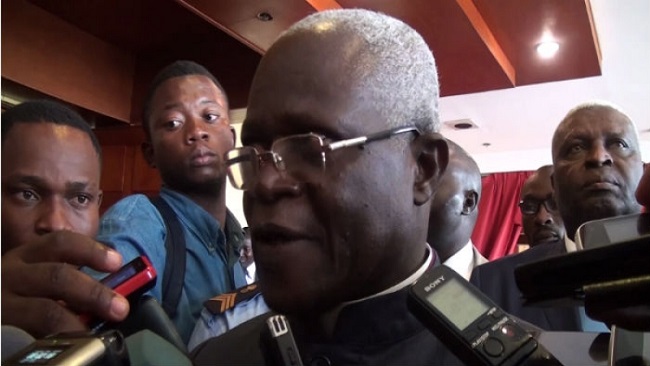
With profound sorrow but unwavering faith in the promise of the Resurrection, we join the Catholic faithful, the people of Mamfe Diocese, and the entire Christian community in mourning the passing into eternal glory of His Lordship Bishop Emeritus Francis Teke Lysinge, the pioneer Bishop of the Roman Catholic Diocese of Mamfe.
Bishop Francis Teke Lysinge was more than a shepherd of souls; he was a visionary, a builder of faith, and a father to generations of priests, religious and lay faithful. Appointed by Pope Saint John Paul II as the first Bishop of the newly erected Diocese of Mamfe in 1999, he accepted the enormous responsibility of laying the foundations of a young diocese with remarkable courage, wisdom and unwavering trust in God.
During his episcopal ministry from 1999 to 2014, Bishop Lysinge dedicated himself tirelessly to evangelization, the formation of clergy, the promotion of Catholic education and the strengthening of healthcare and pastoral structures across the diocese. Under his fatherly leadership, the Diocese of Mamfe experienced remarkable growth in parishes, vocations and Catholic institutions, leaving behind a vibrant local Church that continues to flourish today.
A humble servant of Christ, Bishop Lysinge lived by his episcopal motto, “Fiat Voluntas Tua” — “Thy Will Be Done.” His life reflected deep humility, simplicity, compassion, and steadfast fidelity to the Gospel. Whether celebrating the Eucharist in remote communities, encouraging catechists, mentoring young priests or comforting the suffering, he embodied the loving presence of the Good Shepherd.
His legacy extends far beyond buildings and institutions. He inspired hope where there was despair, nurtured unity among God’s people, and planted seeds of faith that continue to bear fruit throughout the Diocese of Mamfe and beyond. His pioneering work laid the firm foundation upon which his successors have continued to build.
Today, as Bishop Aloysius Fondong Abangalo announces his passing into eternity, the Church gives thanks for a life generously offered in the service of God and humanity. Though our hearts are heavy with grief, we rejoice in the certainty that Bishop Francis Teke Lysinge has gone to meet the Lord whom he faithfully served for decades as priest, bishop, teacher, and shepherd.
May the angels lead him into paradise. May the saints welcome him into the heavenly kingdom. May Christ, the Eternal High Priest, reward His faithful servant with the crown of everlasting life.
Farewell, Bishop Francis Teke Lysinge.
Your faith inspired us.
Your leadership strengthened us.
Your humility touched us.
Your legacy will endure for generations.
May you enter with joy, into the house of the Father Amen.
By Soter Tarh Agbaw-Ebai