23, July 2026
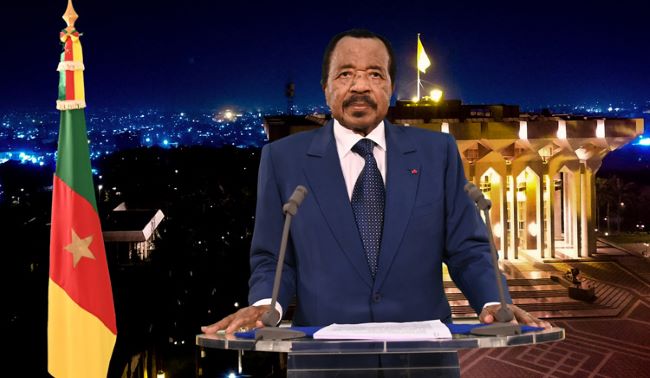
Where is Paul Biya, the world’s oldest head of state? 0
For a nation that prides itself on stability, the Republic of Cameroon finds itself trapped in an increasingly familiar cycle: the head of state disappears, rumors flourish and his government responds not with transparency but with silence.
At 93 years old, President Paul Biya is the world’s oldest serving head of state. He has ruled Cameroon since 1982 longer than many of the country’s citizens have been alive. Yet once again, his prolonged absence has become the story. The ruling CPDM party faces mounting criticism as Cameroonians ask a simple, legitimate question: Where is their president?
This is not idle curiosity. In any functioning or “advanced” democracy, the whereabouts and health of a sitting president are matters of public interest. They are questions of governance, national security and accountability.
Cameroon has been here before. In 2024, Biya vanished from public view for 42 days while abroad, prompting widespread speculation that he had died. Rather than addressing public concerns with openness, authorities reportedly banned public discussion of the president’s health. That response did little to reassure citizens. Instead, it reinforced perceptions of a government that sees transparency as a threat rather than a duty.
The current episode risks repeating the same mistakes. Every day without credible information creates a vacuum. In that vacuum, rumors become headlines, conspiracy theories gain traction and confidence in state institutions erodes further.
Biya’s supporters who are looting the treasury argue that a president, like any citizen, deserves medical privacy. That is true—to a point. But public office comes with obligations that transcend personal preference. When one individual occupies the highest office in the land, especially after more than four decades in power, questions about their ability to govern are not an invasion of privacy. They are part of democratic accountability.
Cameroon’s political system has become so closely identified with one man that every unexplained absence raises unsettling questions about who is actually making decisions. If Biya is governing effectively, the government should demonstrate that. If Biya is temporarily unable to perform his duties, constitutional mechanisms exist to ensure continuity. What cannot be defended is prolonged official silence.
The issue extends beyond Paul Biya himself. It speaks to a broader challenge confronting nations led by aging leaders who have remained in office for decades. Institutions should be strong enough to function regardless of one person’s health or presence. When they are not, uncertainty becomes inevitable.
The question confronting Cameroon is no longer simply “Where is President Biya?” It is why the government continues to believe that withholding basic information serves the public interest.
Citizens deserve answers, not censorship. They deserve transparency, not speculation. And they deserve confidence that their country is being governed by institutions—not by mystery.
Until those answers are provided, one question will continue to echo both within Cameroon and beyond its borders:
Where is the world’s oldest head of state?
By Soter Tarh Agbaw-Ebai
















23, July 2026
Minister Nalova shuts 105 private schools 0
Weeks before the start of the 2026-2027 school year, Cameroon has ordered the closure of 105 private schools across seven of the country’s 10 regions for failing to comply with education regulations. While the move is part of a years-long effort to clean up the private education sector, it also highlights the limits of an oversight system that continues to struggle to stop unauthorized schools from operating.
In a statement issued on July 20, the Ministry of Secondary Education said Minister Nalova Lyonga had signed three ministerial orders shutting down the schools for the upcoming academic year. The institutions were found to have violated legal requirements governing their creation, operation, or expansion.
According to official documents, the decisions follow inspections carried out in June by the National Brigade for the Inspection of Private Schools. Most of the violations involved schools operating without official authorization or accreditation, in breach of Cameroon’s 2004 law regulating private education.
The latest closures are far from unusual. Every year, in the weeks leading up to the new school year, the Ministries of Secondary Education and Basic Education publish lists of private schools ordered to close while urging parents to enroll their children only in approved institutions.
The recurring pattern underscores the difficulty of regulating a fast-growing private education sector. Despite repeated inspection campaigns, new schools continue to open before completing the administrative procedures required by law. This year’s closures, including 52 schools in the Littoral region alone, suggest that while enforcement actions punish violations, they have done little to prevent new cases from emerging.
The spread of unauthorized private schools is partly driven by growing pressure on Cameroon’s education system. Population growth, rapid urbanization, and limited capacity in many public schools have increased demand for private education, particularly in urban areas. Some school operators respond by opening before obtaining all required permits, hoping to regularize their status later. Others expand existing schools or open new branches without prior approval.
The timing of inspections also contributes to the problem. They typically take place only weeks before the school year begins, even though many of the schools have already been operating for months or even years. As a result, the closures often function as corrective measures rather than preventive ones.
Although the sanctions target school operators, families bear much of the immediate impact. Parents may learn only days before classes begin that the school where they enrolled their child will not open, forcing them to secure another place after already paying registration or tuition fees. The closures also disrupt students’ education and leave teachers employed by the affected schools without work just before the new academic year starts.
The ministry stressed that operating authorization is more than an administrative formality. It is intended to ensure that schools meet minimum standards for infrastructure, safety, teaching quality, staff qualifications, and curriculum compliance.
As the 2026-2027 school year approaches, the latest wave of closures serves as both a reminder of regulatory requirements and a sign of a deeper challenge: balancing rising demand for education with effective oversight of the private school sector. Until that balance is achieved, school closure lists are likely to remain a recurring feature of back-to-school preparations in Cameroon.
Source: Business in Cameroon