17, July 2026
Ngoh Ngoh-Nathalie Moudiki: Cameroon cannot afford governance by rival fiefdoms 0
The spectacle unfolding around two competing refinery and oil depot projects is more than a bureaucratic disagreement. It is a disturbing illustration of a governance culture in which competing centers of power appear to be pursuing parallel agendas, with little regard for coherence, transparency or the national interest.
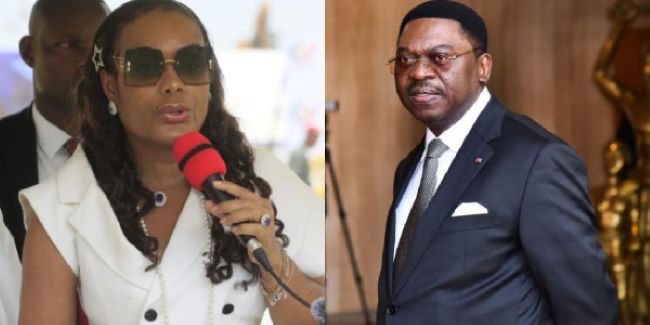
When infrastructure projects worth millions of dollars become associated primarily with the influence of powerful individuals rather than with a clearly articulated national energy strategy, the real loser is Cameroon. Whether one project is perceived to enjoy the backing of Nathalie Moudiki at the Société Nationale des Hydrocarbures (SNH) and the other the support of Ferdinand Ngoh Ngoh at the Presidency matters less than the broader institutional failure such perceptions reveal. Public investment should never be reduced to a contest of political patrons.
Cameroon has long spoken of strengthening its refining capacity, improving fuel security and expanding strategic petroleum storage. These are legitimate national priorities that deserve careful planning, rigorous technical evaluation and transparent procurement. Instead, the public is left watching what increasingly resembles a contest between rival power blocs. Such a situation raises uncomfortable questions. Is the country following a single energy policy or are major projects being driven by competing networks of influence? Who ultimately decides national priorities? And on what criteria?
This is not merely an issue of political optics. It is an economic one. Investors seek predictability, consistency and institutional clarity. Development partners expect governments to speak with one voice. When conflicting projects emerge simultaneously without a clear explanation of how they fit within a unified national framework, confidence is inevitably weakened. Every unnecessary duplication, every delay born of institutional rivalry and every opaque decision carries a financial cost that is ultimately borne by Cameroonian taxpayers.
The danger extends beyond wasted resources. Governance based on personalities rather than institutions undermines accountability. Decisions become difficult to scrutinize because they are perceived as reflecting political influence rather than objective analysis. Public officials should compete in delivering better policy outcomes, not in assembling competing infrastructure projects that appear to represent rival camps within the state.
Cameroon deserves better. The country’s energy future should be guided by comprehensive planning, independent technical assessments, environmental considerations, financial sustainability and measurable public benefit. If two refinery or oil depot proposals exist, the government owes citizens a transparent explanation of their respective merits, costs, financing arrangements and strategic objectives. If only one is justified by national demand and fiscal realities, then resources should be concentrated there through an open and accountable decision-making process.
Strong states are distinguished by institutions that outlast individuals. They do not allow strategic sectors such as petroleum to become theatres for elite competition. The Unity Palace, the SNH, the Ministry of Water and Energy and every relevant public institution should be working from the same blueprint, pursuing the same national objectives and communicating with the same clarity.
Cameroon’s greatest development challenge has never been a shortage of ambition. It has been the persistent gap between institutional governance and personal influence. The current confrontation over refinery and oil depot projects, whatever its underlying dynamics, should serve as a wake-up call. National development cannot be built on competing power centers. It requires unity of purpose, transparency in execution and unwavering fidelity to the public interest.
The country’s oil infrastructure is too important to become another chapter in elite rivalry. Cameroon deserves governance that inspires confidence rather than confusion, coordination rather than competition and institutions that serve the nation rather than personalities who seek to define it.
By Soter Tarh Agbaw-Ebai
















18, July 2026
CAF boss Patrice Motsepe backed to succeed Infantino as FIFA president 0
South Africa’s sports minister has publicly thrown his weight behind billionaire Patrice Motsepe to become the next president of FIFA, positioning the mining magnate as a leading candidate to succeed Gianni Infantino whenever the Swiss administrator steps down.
Gayton McKenzie, the minister of sport, arts and culture, told CityAM that Motsepe’s name would command near-universal support across the game. “I don’t know if there’s anybody that will disagree with his name” being in contention to take over, McKenzie said, framing the South African as the natural heir to world football’s top job.
The endorsement comes with a long runway. Infantino is expected to be re-elected unopposed next year for a third term, a tenure that would run to 2031 and stretch his time in charge to 15 years. McKenzie made clear that Africa would wait its turn rather than mount a challenge now. “Let Infantino serve this term,” he said. “He’s going to serve another term. We’ll make sure that is the case in Africa. As soon as the term is finished, we will all root for Patrice Motsepe to take over FIFA.”
Motsepe, 64, has led the Confederation of African Football since 2021, and his presidency has coincided with a marked rise in the competitiveness of African teams. McKenzie credited him with reshaping the continental game. “Patrice Motsepe, what he has done to African soccer, the Confederation of African Football, has never been done,” the minister said. “He has brought professionalism, big money to the table, and he rooted out corruption.”
The case rests partly on results at the expanded World Cup, which concludes on Sunday. The tournament featured 10 African teams, nine of which advanced past the group stage. Egypt reached the last 16 and Morocco the quarter-finals, outcomes McKenzie cited as evidence that teams under CAF now boast the highest qualification rate for the knockout rounds.
Motsepe would be the first African to lead FIFA if elected. He was named last month in CityAM’s Football Power List, a ranking of the 25 most influential figures in the sport, a measure of how far his standing in football administration has climbed in a short period.
His path to Zurich is complicated by a rival ambition at home. Motsepe is also said to have an eye on the South African presidency, with the next national elections due in 2029, two years before any FIFA vacancy would open. The overlapping timelines mean the two goals could work against each other, forcing a choice between the highest office in his own country and the top job in world football.
Whether Motsepe pursues either remains unstated by the man himself. He has not publicly declared for the FIFA presidency, and the backing so far has come from allies rather than from any campaign of his own. Infantino’s grip on the role also appears firm, with support reported from South America, Africa and Asia sufficient to secure a third term unopposed.
Motsepe built the fortune that underpins his football rise through mining. He founded African Rainbow Minerals in the late 1990s, becoming the first Black South African to build a major mining company in the post-apartheid era, and later expanded into financial services through African Rainbow Capital and insurer Sanlam. Forbes has estimated his net worth at around $3 billion, making him one of the wealthiest people on the continent and the first Black South African to appear on its billionaires list.
His wealth and his football platform have long been intertwined. He owns Mamelodi Sundowns, one of the most successful clubs in South African football, and has poured resources into the professional game domestically before taking the CAF role. The combination of financial muscle and administrative record forms the core of the argument his backers now make for a FIFA candidacy.
The minister delivered his endorsement while in London for an event in Trafalgar Square marking Nelson Mandela Day, a celebration that also commemorates 30 years of South Africa’s constitution. The timing placed Motsepe’s name in front of an international audience at a moment when African football’s stock, by his supporters’ account, has rarely been higher.
Any contest is years away, and much can shift before 2031. What the intervention establishes is that South Africa intends to push its most prominent businessman toward the summit of world football when the moment arrives, and that within his own government; the ambition already has a powerful voice behind it.
Source: billionaire.africa