9, July 2026
Ngute admin launches family benefit audit to curb payroll fraud 0
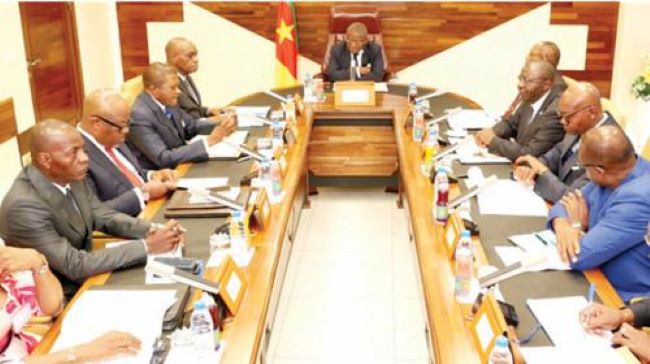
Cameroon has set July 15, 2026, as the first deadline in a nationwide audit of family allowances paid to public employees, as the government steps up efforts to tighten control over payroll spending.
Through the operation, the Ministry of Finance aims to clean up the list of beneficiaries after what it describes as an unusually sharp increase in the number of children declared in the state’s payroll system. The ministry is urging eligible public employees to complete their registration well before the deadline to avoid last-minute congestion and processing delays. The first phase of the audit, known as AALFA, marks the beginning of a broader review designed to verify the legitimacy of family benefit claims.
A Budget Review Triggered by a Surge in Beneficiaries
Behind the administrative exercise lies a broader fiscal challenge. According to the Ministry of Finance, the number of children declared by public employees rose from 594,728 in June 2024 to more than 923,000 in March 2026, an increase of about 55% in less than two years.
For the government, such a rapid rise warrants a comprehensive review. The audit is intended to distinguish legitimate claims from irregular or fraudulent declarations that may be inflating public spending.
Documents Required for Registration
Public employees receiving family allowances must submit several documents, including a collective life certificate covering children under 21 years old or children with disabilities, a copy of a promotion notice or payroll statement, legible copies of the birth certificates of all declared children, and a copy of the beneficiary’s national identity card. The Ministry of Finance has also issued guidelines explaining how to complete the data collection form in order to simplify the registration process and reduce filing errors.
Higher Benefits Have Increased Fiscal Pressure
The audit comes only months after family allowances were raised to CFA4,500 per child per month in February 2024. The increase was intended to strengthen the purchasing power of public employees’ families, but it also automatically increased the government’s financial burden, making the accuracy of beneficiary records even more critical.
In that context, the audit is not meant to challenge the benefit itself but to ensure it reaches eligible recipients. Authorities intend to preserve the rights of legitimate beneficiaries while removing fraudulent claims from the payroll and recovering any funds that were improperly paid.
Birth Certificate Verification and Fraud Detection
The review will focus primarily on verifying the authenticity of birth certificates, the validity of supporting documents, and the consistency of information across government databases. Officials also plan to identify duplicate records, false declarations, and children registered without valid documentation.
The operation builds on broader government efforts to improve control over personnel-related spending. Following physical headcounts of public employees and audits of pension beneficiaries and dependents, authorities are now targeting a less visible but potentially costly source of expenditure: family allowances.
A Long-Term Interministerial Initiative
Created by decree in July 2024, the committee overseeing the AALFA audit brings together representatives from the ministries of Finance, Public Service, Defense, Security, Territorial Administration, and civil registration services. The interministerial structure is intended to facilitate data sharing and strengthen verification procedures.
According to the Ministry of Finance, the audit will run for 24 months, beginning with a systematic review of the birth certificates of children declared by active public employees. The goal extends beyond a one-time audit to establishing a lasting mechanism for securing the family allowance database.
July 15 Marks the First Test
In the short term, the Ministry of Finance is emphasizing compliance with the July 15 deadline, describing it as a key milestone for the success of the audit. Completing this first phase on schedule should help reduce processing delays and lay the groundwork for the broader review.
Ultimately, the audit reflects a dual objective: protecting public finances at a time of mounting budgetary pressure while ensuring that government social benefits are paid only to those who are legally entitled to receive them.
Source: Business in Cameroon




















10, July 2026
Trump invested in companies profiting from war on Iran 0
Brokers representing US President Donald Trump reportedly purchased last year between $9.7 million and $24.3 million in stocks from arms manufacturers and other military contractors profiting from the illegal war of aggression against Iran.
Responsible Statecraft (RS), the online magazine of the Quincy Institute, said in an analysis on Thursday that accumulating shares in companies like Palantir, Lockheed Martin, General Dynamics, and RTX took place in 2025 before Trump’s warmongering.
Trump’s brokers purchased between $1.6 and $3.9 million in stock of Palantir, the surveillance technology company that developed Maven Smart System, the AI system used to strike 1,000 targets in Iran on the first day of the military assault, according to the analysis of a financial disclosure released recently by the president.
Trump also acquired up to $1.4 million in stock from Lockheed Martin, which manufactures F-35 and F-22 jets deployed against Iran; up to $1 million in stock from General Dynamics, which builds heavy bombs and missiles used in terrorist attacks on the Islamic Republic; and over $800,000 in stock from RTX, which manufacturers the Tomahawk missiles used in the deadly strike on a school in Iran’s southern city of Minab, and up to $3 million in stock from GE Aerospace, which manufactures parts for aircraft used by the US and Israel to target Iran.
The report also said that many of the aforesaid companies have received large contracts to rebuild stockpiles of weapons that were depleted during the war on Iran.
Some contractors in Trump’s investment portfolio also do business directly with the Israeli regime, it added, citing Boeing which sold $8.6 billion in F-15 jets to Tel Aviv less than three months before the second unlawful American-Zionist aggression against Iran, which started on February 28.
Meanwhile, the analysis said that almost all of the stocks Trump purchased rose significantly in the first year of his administration.
All of the stock purchases were part of a larger financial disclosure which revealed that Trump generated $2 billion through private ventures last year, including approximately $1.4 billion through cryptocurrency sales, it said.
The US and the Israeli regime waged their first criminal military assault against Iran, which lasted 12 days, in June 2025. Their second invasion began in late February and came to a halt in early April after 40 days.
In both wars, Iran’s brave resistance and successful retaliatory operations forced the enemies to accept a ceasefire.
Source: Press TV