
20, September 2018
October Presidential Election: Candidates avoiding Southern Cameroons 0
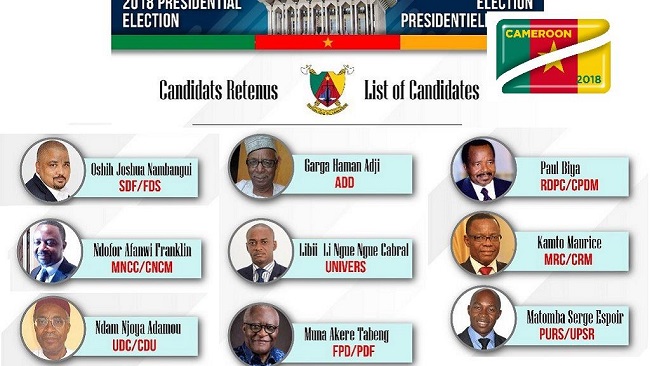
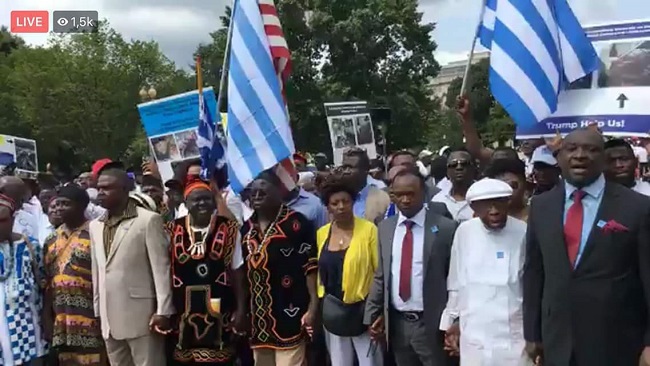
Candidates for Cameroon’s October 7th presidential election have largely avoided traveling to the restive English-speaking regions where armed separatists have vowed the vote will not take place. But all of them are proposing solutions to the problems that have crippled the English-speaking regions for two years now, leaving at least 300 dead.
The only presidential candidate in Cameroon who has visited an English-speaking town is Frankline Ndifor Afanwi, the flag-bearer of the Cameroon National Citizenship Movement. Afanwi said he mustered the courage to visit Mutengene when his supporters assured him there was calm after the military chased armed separatists from the southwestern town last week.
Afanwi said he is pleading with fighters to drop their guns.
“Let all those who are fighting stop the fighting. The insecurity is coming up because many people are acting out of grievances. Let them not be filled with grievances anymore. We are going to bring in what will satisfy the hearts of Cameroonians,” he said.
Although the eight other candidates, including incumbent Paul Biya, have not been to the restive regions, they are proposing solutions to the crisis.
Main opposition candidate Joshua Osih, of the SDF, who is from the English-speaking southwest region, wants to adopt a federal republic granting each region greater autonomy.
“The problem is not the secession. The problem is the marginalization and injustices that led to that secession. Guess what, the secession will not necessarily solve that problem. When you have a president of the republic who understands these issue, the first thing that has to happen is to solve the problem of marginalization,” said Osih.
Candidate Garga Haman Adji of the ADD party is from the French speaking far north region. He also thinks it is worth considering a more decentralized government and wants to see more English speakers appointed to ministerial positions.
“What is remaining is a joint commission to discuss the anglophone problem. They are my brothers and sisters. I want this problem to be solved,” he said.
The candidates say their security is not assured in the English-speaking regions, where kidnappings, killings and burning of public property have occurred.
President Paul Biya is running to extend his 36 years in power. He said he is ready for dialogue, but opposes any discussion on changing the form of the state.
There are doubts the election will be held in Anglophone regions, where two years ago, residents began to press for more autonomy, complaining of the dominant use of the French language in the bilingual country.
Separatists took over the movement. Last year, they declared a new English-speaking state called Ambazonia had been born in Cameroon. The government responded by declaring war on them.
The separatists have vowed on social media that no election will take place and intensified attacks on towns and villages, provoking an exodus of people.
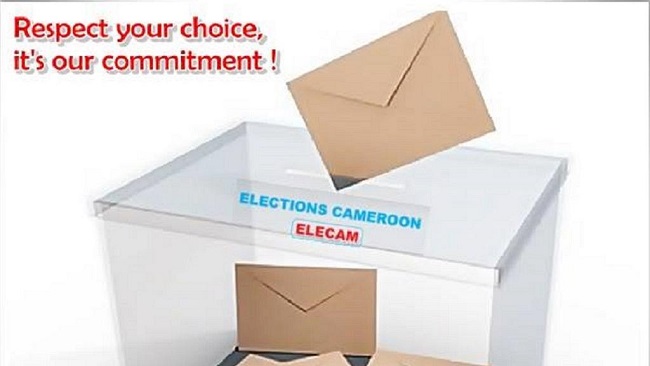
The country’s elections management body ELECAM says it has adopted security measures so the vote can take place.
The United Nations says 200,000 Cameroonians have been internally displaced and 40,000 have sought refuge in Nigeria.
Culled from the VOA












20, September 2018
Congo-Kinshasa: Kabila Candidate Faces Challenges in Election 0
Joseph Kabila’s preferred successor as president of the Democratic Republic of the Congo will face a credible election challenge in December from two opposition leaders, the final list of candidates published Wednesday
showed.
Kabila has ruled since his father’s assassination in 2001. He agreed last month not to defy term limits and stand for re-election, opening the door to the Central African nation’s first democratic transfer of power.
His announcement calmed tensions that have seen dozens of anti-Kabila demonstrators killed by security forces since he refused to step down when his constitutional mandate expired in December 2016.
Kabila is backing Emmanuel Ramazani Shadary in the long-delayed Dec. 23 election. His biggest challengers are likely to be Felix Tshisekedi, the president of Congo’s largest opposition party, and Vital Kamerhe, who placed third in the last election in 2011.
But in all, 21 candidates have been approved for the single-round contest, including several other prominent Kabila critics, which risks diluting the opposition vote and boosting Ramazani’s chances.
Fairness questions
The authorities’ exclusion from the race of other leading opposition figures, including former Vice President Jean-Pierre Bemba and ex-provincial Governor Moise Katumbi, has also raised questions about the election’s fairness.
The opposition accuses Kabila’s camp of plotting to rig the elections with untested electronic voting machines, a charge the ruling coalition rejects.
In a rare opinion poll in July, Katumbi and Tshisekedi each received 19 percent support. Bemba received 17 percent and Kamerhe got 9 percent.
Ramazani did not receive enough votes to figure in the results but is expected to now benefit from the ruling coalition’s financial and institutional muscle.
Opposition leaders have repeatedly said they intend to coalesce behind a single candidate but have traditionally struggled to present a united front. In 2011, Kabila won with 49 percent of ballots cast as the opposition vote split.
The final candidate list also includes former Prime Minister Samy Badibanga and longtime Kabila ally Tryphon Kin-Kiey.
Bemba was disqualified by the constitutional court earlier this month over a witness-tampering conviction, while Katumbi was prevented from re-entering the country last month to register his candidacy after two years in exile.
The electoral commission also validated more than 15,000 candidacies for parliamentary elections due to take place the same day.
Reuters