
21, August 2018
Battle For Southern Cameroons: Traditional rulers Flee Violence in Southern Zone 0
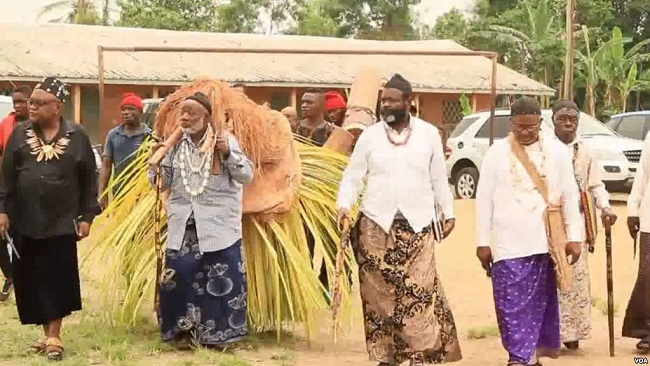
Dozens of Cameroon’s tribal rulers have fled their palaces in the English-speaking southwest region after armed men pulled the chief of the Balondo people out of church and killed him. Separatists have abducted and killed other chiefs in the region, allegedly for collaborating with the government.
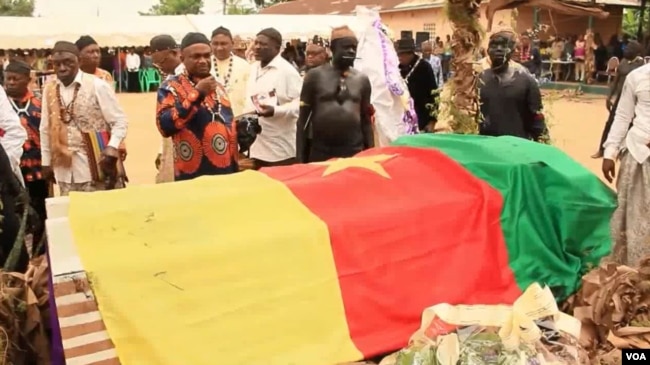
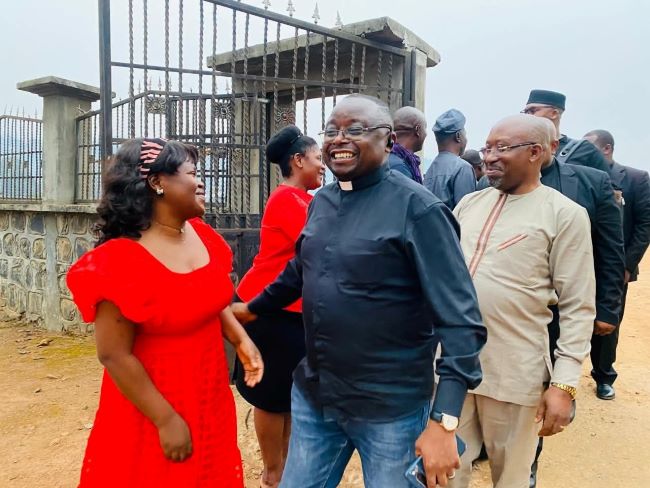
At the Catholic church in Buea, southwestern Cameroon, people gathered to pray on Sunday afternoon for the late chief Stephen Itoh Esoh.
A week ago, gunmen pulled the supreme chief of the Balondo people out of the Baptist church in Ekondo Titi village and shot him dead.
Among those praying was Peter Njumbe, a Cameroon lawmaker. He said if the chief had listened to them, he might still be alive.
The chief refused to run away from Ekondo Titi, said Njumbe. He would not abdicate from his throne because of death threats. He would only abdicate if his own people told him they no longer wanted him and that he should leave the throne, says Njumbe. The chief would not abdicate his responsibilities, he added.
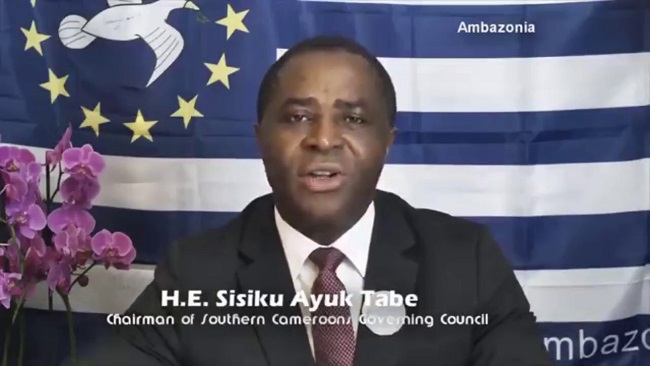
Strikes and violence erupted in the English-speaking northwest and southwest regions of Cameroon in late 2016, in response to the forced use of French in schools, courts and other public institutions. A separatist movement is pushing for independence under the name Ambazonia.
Chief Itoh is the eighth traditional ruler killed by armed men in the southwest region within the past four months.
Since July, the separatists have abducted seven other chiefs in the southwest and three in the northwest they accused of collaborating with the government. They circulated videos on social media of the chiefs pledging their allegiance to armed separatists, presumably under duress.
One of the abducted chiefs was later found dead, provoking widespread condemnation, while the others were released.
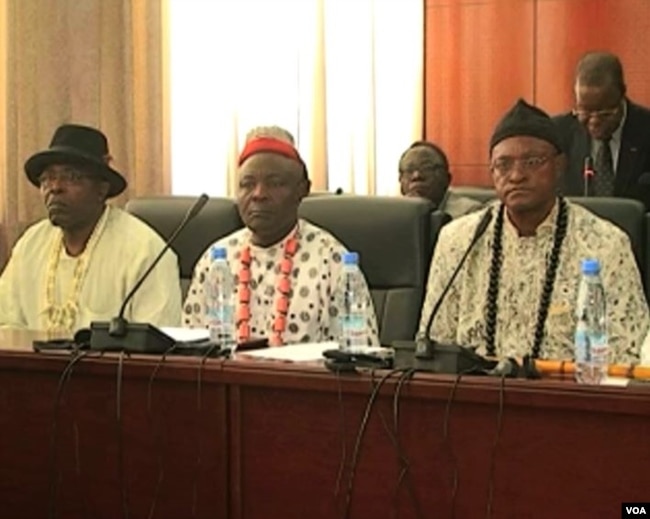
Many traditional rulers have fled the English-speaking regions to avoid becoming targets, according to the government.
Chief Joseph Ebong of Atati village escaped to Nigeria after being threatened with violence. Speaking by phone, he said he will only return to Cameroon when peace returns to English-speaking areas.
“We are appealing to both the national and international community to turn their eye on Cameroon and try to see how they can solve this problem before we shrink into a full-fledged, full-scale war,” Ebong said.
Traditional rulers say Cameroon’s military offers them little protection.
The governor of the southwest region of Cameroon, Bernard Okalia Bilai, is calling on the chiefs to return. He says the military has been deployed to defend the people, including the chiefs.
“They should come back to their homes. The forces of law and order are there to protect them against all acts of terrorism,” Bilai said. “The traditional rulers, we invite them to come back.”
The attacks on the tribal chiefs have generated widespread criticism of the separatists in Cameroon.
Ebenezer Teba is a member of the elite in the southwestern town of Lebialem. He says the assaults on traditional rulers — custodians of ancestral traditions are unacceptable.
“It is an atrocity that has reached its apex,” Teba said. “Of course, those who are attacking are known. They are those claiming to be fighting for the independence of southern Cameroons. They are attacking traditional rulers because they feel these traditional rulers are giving information to government troops to enable government troops to attack them. So they want all traditional rulers, they are forcing all traditional rulers, to support their course.”
Sociologist Bernard Arrey, however, blames the chiefs. He says they are getting involved in politics and taking sides against the wishes of their people.
“Chiefs are meddling into politics,” Arrey said. “It is not strange to see chiefs treated like common citizens. Chiefs have lost control of their population, they have lost control of their dignity. Most of them are even victims of these fighters because they think that the chiefs are some sort a liaison, they relay information. They are some sort of a sell-out to the government forces.”
The armed separatists have never denied responsibility for the abductions and killings. They have instead issued warnings on social media against any chief collaborating with the government.
Cameroon’s government says it is counting on the chiefs to help end the fighting in the English-speaking region.
The government says hundreds of people, including more than a hundred policemen and troops, have died in violent clashes since January.
Source: VOA

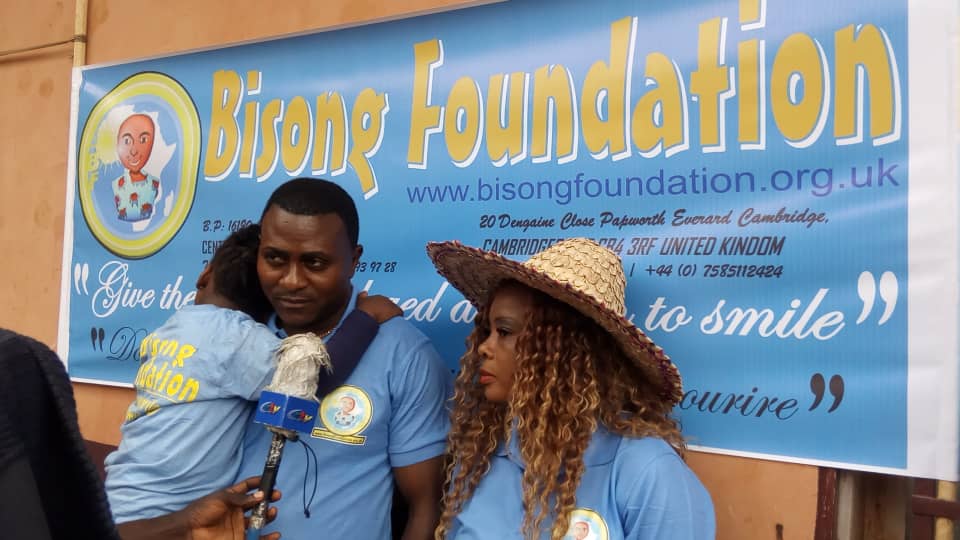
 Though visibly grateful for another day of donations from Bisong Foundation, Thursday, August 16, 2018, the Orphelinat Le Bon Samaritain (Good Samaritan Orphanage) in Babete is, like Oliver Twist, asking for more.

















21, August 2018
EU officially rules out deal on Brexit by October 0
European Union chief negotiator for Brexit Michel Barnier has officially ruled out the possibility that the bloc and the United Kingdom could reach a deal on Brexit during an October summit.
Barneir said after a meeting with Britain’s Brexit minister Dominic Raab on Tuesday that a deal on how the UK will leave the EU would not be completed by the European Council summit in October as previously hoped.
“I’m not going to say October, a few days here, the beginning of November, but not much later than that,” said Barnier during a press conference with Raab in Brussels.
The French diplomat, who has been tough with Britain on the country’s recent proposals for Brexit, said there will be works to do on key issues like the Irish border while the two sides will need time to prepare a political declaration on the future relationship.
Raab was still hopeful a deal would come through during the EU summit although he admitted there remained differences on key issues.
“If we have that ambition, that pragmatism and that energy on both sides, I’m confident we can reach that agreement by October,” said Raab after the meeting with Barnier, adding, “There are still gaps, we’ve had an honest conversation about those.”
The uncertainty about Brexit deepened in July when Barnier rejected key proposals from a plan submitted by British Prime Minister Theresa May earlier that month. May’s so-called white paper also sparked domestic controversies and caused two senior ministers in her cabinet, including Raab’s predecessor David Davis, to resign.
Fears have grown among the public that Britain could face serious shortage of foods and other basic items in case it fails to reach a withdrawal agreement with the EU.
May has said that there are still chances to avoid a no-deal Brexit but she insists that Britain would not accept a bad deal.
Culled from Presstv