
4, October 2022
Leading Roman Catholic cleric says Amba crisis – now in its sixth year – has become “about money” 0
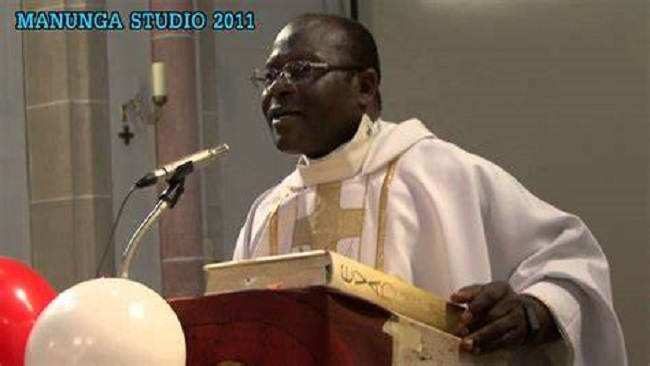
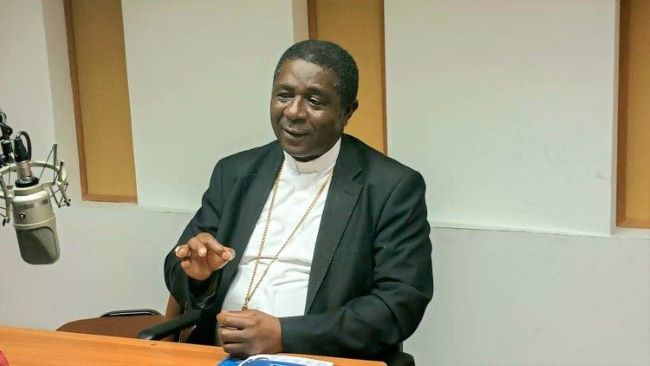
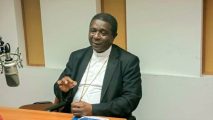
Father Humphrey Tatah Mbuy, the head of the communications department of the bishops’ conference, told a local television station on Oct. 2 that “when money is concerned, it is very difficult to detach a person from his source of income, even if that source is human blood.”
Cameroon is 80 percent French-speaking and 20 percent English-speaking, a result of the country being divided by France and Britain during the colonial era. The two English-speaking North West and South West regions continued to use the British education and common legal systems, but faced marginalization by the Francophone majority for decades.
In 2016, a series of protests by English-speaking teachers and lawyers were violently suppressed by the central government, leading to the present separatist insurgency. So far, over 4,000 people have been killed, and over 700,000 people displaced.
“The conflict…has become what the Frenchman calls ‘L’economie de la Guere.’ It is now a war economy,” Mbuy told the television station.
The priest said the war has turned into a fight for economic benefits, not only by separatists, but by those in government as well. There have been reports of government soldiers arresting people and only releasing them upon the payment of a bribe.
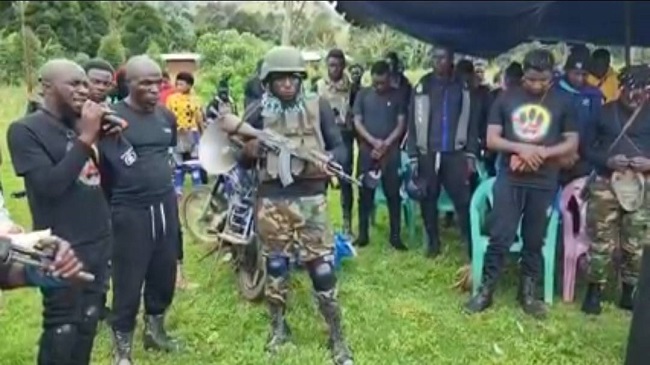
Meanwhile, kidnapping for ransom has become an important way to raise funds for the separatist forces.
On Sept. 16, 30 unidentified gunmen kidnapped five priests, a nun, and three laypeople in the village of Nchang the country’s South West Region.
“The bishop has not been able to get the priests released,” Mbuy said, noting the church has refused to pay the $50,000 ransom demanded by the kidnappers.
The priest said this “war economy” means the parties don’t want to negotiate, making it difficult for the church to work for peace.
Mbuy noted the Catholic Church has played a key role in trying to resolve the crisis from the beginning. In 2016, the bishops of the Bamenda Ecclesiastical Province, which covers the two Anglophone regions, wrote an open letter to the central government tracing the origins of the problem and how best to resolve it.
The priest then lamented the fact that clergy and religious have been targeted in the conflict by both sides, both because of the peacemaking efforts and also for their ransom value.
“This armed conflict in the North West and South West Regions – which should never have been in the first place – is taking on a very wrong approach in conflict management.” Mbuy said.
“You do not touch the person who could help you resolve your problem. If you go for the person who in the end can help you resolve your problem and who has the capacity to help you resolve your problem, then you are shooting yourself in the foot, because the church at the moment, and I can say that without any fear, has the unique moral force to help resolve the armed conflict in the North West and the South West,” he said.
“You can’t force somebody to sit down and talk. You can only discuss with somebody who is ready for a discussion,” Mbuy said.
He also expressed his regret that despite the neutrality of the church, both sides have a history of accusing the church of supporting their opponents. However, the priest reiterated the church’s impartiality in matters of conflict.
“The aggressor and the aggressed are both children of God and the role of the church is that of mother and teacher. When your children are fighting, as a mother you try to bring them together for reconciliation. You do not come as a teacher and take on one side without showing where the truth is. So the church, as a teacher, has to show the truth,” he explained.
Meanwhile, a series of peace marches has been taking place in the capital city Yaoundé to mark the anniversary of the Major National Dialogue that took place Sept. 30-Oct. 4, 2019.
The peace conference resulted in greater autonomy for the Anglophone regions, including the creation of regional assemblies, but separatist groups refused to participate in the dialogue and have not accepted the results.
Source: Crux








4, October 2022
Southern Cameroons Crisis: Marchers Call for Peace, But Warring Sides at Odds on Talks 0
In Cameroon, thousands of people are marching to call for peace in the country’s separatist conflict. The daily peace marches, which began on Friday and are slated to continue through Tuesday, come on the third anniversary of talks designed to end the fighting. Marchers say authorities need to do more to return peace to the restive western regions, where fighting has killed about 3,500 people since 2017.
The protesters, a majority of them women, say hardly a day goes by without cases of killings, abduction, rape and torching of public edifices in the Northwest and Southwest regions.
Monday’s peace march was organized by a non-governmental organization called Cameroon, Peace and National Unity. Its president, Clementine Mvogo, said the peace march marks the third anniversary of government-organized peace talks called the Major National Dialogue.
“The culture of peace is still very much absent in Cameroon since the holding in Yaounde of a Major National Dialogue from September 30 to October 4 2019. The ongoing peace march in Yaounde is to make the quest for peace a daily struggle of all Cameroonians. All civilians and civil society movements should be concerned about the return of peace to Cameroon,” Mvogo said.
After that dialogue, Cameroon’s President Paul Biya implemented recommendations to give the Northwest and Southwest regions more power, including the creation of regional assemblies and elected regional presidents.
Zacchaeus Bakuma Elango, president of the Southwest regional assembly, said outreach efforts to the armed separatist groups continue.
“We’re doing everything we can to convince them to lay down their arms and come to the negotiation table. We have families who have been displaced, children who have not gone to schools for five years, so what becomes of them? Are we coming up with a generation of semi-illiterates?” said Elango.
Elango said some people have realized that war is not the answer.
“As the years go by, more and more people are beginning to understand that we are in the same country. There were problems and those problems progressively are being addressed and the situation is improving.”
As evidence of that, he notes that tens of thousands of people who fled the fighting have returned to Southwest towns and villages in Manyu, Lebialem, Meme, Ndian, Fako and Koupe Manengouba administrative units. Elango said several hundred schools sealed by fighters in the region have been reopened.
The government says after the dialogue, powers were given to a national commission for the promotion of bilingualism to give equal status to the English and French languages, in order to reduce domination by the French-speaking majority.
David Abouem a Tchoyi, a member of the commission, said the conflict still persists because many separatist leaders refused to take part in the dialogue.
“I regret bitterly that some of our brothers and sisters, especially those who are abroad, couldn’t be part of that jamboree. When I read the recommendations, I saw some of them which could be game changers and I think it is important to note that the head of state said that the recommendations should be implemented according to the means and the capabilities of the state.”
Three years on, the prospects for peace talks remain stalled. Some separatist groups say they are not ready for any dialogue, while others say the talks should be held outside Cameroon. Separatist leaders based in Europe and the United States have expressed concern they will be arrested on charges of terrorism if they come home for peace talks.
Cameroon maintains that the 2019 dialogue was successful and no talks will be organized outside the country.
The stalemate doesn’t bode well for peace in the western regions, and suggests that Yaounde will see more marches like the ones taking place this week.
Source: VOA