
22, March 2021
Catholic charity says world ‘too silent’ on Southern Cameroons crisis 0
After five years, the international community has been “too silent” about Cameroon’s Anglophone crisis, according to a leading Catholic charity.
Cameroon’s two English-speaking regions have been ravaged by violence since the violent suppression of a series of demonstrations against the imposition of French – the majority language in Cameroon – the Anglophone regions’ common law and British-based education system.
At least 3,500 people have been killed in the conflict, and at least 700,000 more displaced. In addition, rebels have shut down the education system in the two regions, burning schools and kidnapping students and staff.
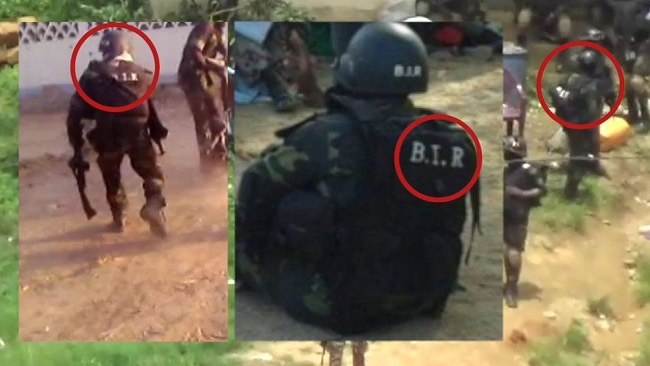
Both the insurgents and government troops have been accused of grave human rights abuses, with the civilian population caught in the middle.
“So far, the international community remains too silent considering the gravity of the crisis,” said a representative of Franciscans International, who wished to remain unnamed for security reasons.
“For political, historical and economic reasons, States remain reluctant to take the lead on an international condemnation of the ongoing violence occurring in Cameroon,” the official told Crux.
Since the crisis begun, a few countries, including the United States, have recognized and condemned atrocities committed in Cameroon, but the Franciscan International official said international actors “remain too shy as the issue has not been deeply discussed at the UN Human Rights Council.”
“Cameroon’s diplomatic force knows how to use its political links to slip below the radar of certain international institutions, which is the case with the UN Security Council. Despite pressure from civil society organizations and a few states, the issue was never discussed by members of the Council,” he told Crux.
“The [UN Security Council], beyond putting the problem on its agenda, should take concrete measures to condemn crimes and sexual violence perpetrated during a conflict. The lack of international attention to the Anglophone crisis is one of the factors which perpetuate the ‘feeling of international impunity’ on the part of the Cameroonian authorities. A stronger media exposure would increase international pressure on the country to change the situation quickly,” he said.
Recently, Human Rights Watch reported that at least 20 women were raped in the village of Ebam in the country’s South West region on March 1, 2020.
The report said the women were raped by government soldiers in an operation in which one man was killed and 35 others arrested.
“One year on, survivors of the Ebam attack are desperate for justice and reparations, and they live with the disturbing knowledge that those who abused them are walking free and have faced no consequences.” said Ida Sawyer, deputy Africa director for Human Rights Watch.
The Franciscans International official told Crux that the HRW report “sadly illustrates the gravity of the so-called Anglophone crisis in Cameroon, and I will analyze it through a human rights lens.”
“The report perfectly shows how the Cameroonian government commits a set of gross human rights violations by act and omission,” he said.
“In Ebam, the national state army was responsible for murders, physical attacks and sexual assaults against women. This constitutes direct violations of several human rights provisions included in the Cameroonian national constitution preamble such as the right to life, to physical and moral integrity; the inviolability of the home and the protection of minorities, here the Anglophone minority,” he added.
Noting that Cameroon was signatory to various international instruments that guarantee human rights, he said the country’s government was failing to live up to these expectations.
“The state can be held responsible for omissions by the lack of access to physical and psychological health for victims of sexual assault, as well as through the absence of proper investigation, prosecution, reparation and compensation for victims condemning the crimes, even though we may consider the lack of governmental action as a deliberated act from the government,” he said.
“Access to justice and effective remedies, as fundamental procedural rights, constitute a safeguard allowing reparation when the State fails to fulfill its material human rights obligations. The lack of prosecution of the authors of the crimes illustrated by HRW thus shows the gravity and depth of the human rights crisis,” the Franciscans International official said.
He said the Ebam attack once more highlighted the “gross violation of women’s rights” taking place during the Anglophone crisis.
“Women and girls are directly targeted through arsons, property destructions, and rapes. These attacks against women constitute a violation of several international human rights law instruments including the Convention on the Elimination of all forms of Discrimination Against Women (CEDAW), ratified by Cameroon,” the official added.
“This repeated sexual violence against women intends – according to the military’s logic – to weaken a so-called opposing party and to affect the whole communities. But of course, the first victims are civilian women and girls, who do not have any link with the separatist forces and are deeply wounded physically and mentally,” he said.
The Vatican’s top diplomat, Cardinal Pietro Parolin, visited Cameroon, including the Anglophone North West Region, at the end of January to call for peace and reconciliation in the country.
Culled from Crux







22, March 2021
Cameroon: The crime syndicate builds international network 0
The numerous conflicts in Cameroon have failed to draw in major global powers except the French supporting the 88-year-old President Biya and members of his ruling crime syndicate.
The Biya family has ruled Cameroon since 6 November 1982 and now the man who took over from the late President Ahmadou Ahidjo is using the network he has built as the Commander-in-Chief of the Cameroon military to get his first son, Franck Biya, to succeed him.
To maintain his position as head of state over the last 38 years, Biya has implemented the divide and rule system and personalized power to such an extent that only he alone is seen by the international community as the person who can hold the country together.
Mindful of the fact that President Paul Biya has not groomed anybody within his ruling CPDM party to take power, the political elites from his tribal extraction are now aware that his successor would inherit a weak government and weak state institutions.
Many around Biya do not want someone from outside the Biya tribe to take over.
Similarly, the ruling Francophone political elites from the Centre and South regions are working tirelessly to get Biya’s eldest son, Franck Biya, to take over power.
Cameroon Intelligence Report has been reliably informed that Franck Biya is already receiving presidential protocol lessons and getting intelligence briefing from senior officials in the military, the gendarmerie, the secret service and the police.
Our source revealed that a cream of prominent Francophone media gurus have been recruited and tasked with the responsibility of making public the plan to the Cameroonian people to appear as if it is still a rumour.
Yaoundé has hinted all its CEMAC allies who also have the same philosophy of a son succeeding a father.
President Idriss Deby, who has ruled Chad for 30 years and recently got a nomination to run for a sixth term in the April election, is in support as he too has plans for his son to take over in Ndjamena.
Denis Sassou Nguesso of Congo Brazzaville, who like Idris Deby, has his children and blood relations as army generals, has reportedly given his blessings.
Sassou Nguesso has accumulated 36 years in office — he was most recently re-elected in 2016, after which the opposition was effectively sidelined and his two main rivals sentenced to 20 years’ forced labour.
It was a big yes from President Ali Bongo of Gabon bearing in mind that President Biya personally travelled to Libreville and supervised the handing over of power to Ali following the passing to eternity of his father, Omar Bongo.
It was not a big surprise to see more than six Cameroonian ministers, including Paul Atanga Nji of Territorial Administration and Joseph Beti Assomo of Defense in Equatorial Guinea after a series of explosions at a military barracks that killed at least 20 people and wounded more than 600 others.
Equatorial Guinea already has a President-in-Waiting who is the son of President Teodoro Obiang Nguema.
We also gathered that Franck Biya has been holding secret meetings with his father’s coterie of CPDM barons, many of whom supported him when he took over from Ahmadou Ahidjo.
As we write, Cameroon’s key institutions, such as the security services and military, including key ministries and state agencies are all headed by President Biya’s trusted allies.
Although these institutions are very weak politically, they serve as important vehicles of patronage and will provide an essential link between Franck Biya and his dad’s support base.
They are presently guaranteeing Franck Biya a strong sense of loyalty among state employees and beneficiaries and, in doing so; they are sturdy pillars of the Biya family’s continued stay in power.
French multinationals with interest in Cameroon are presently and carefully cultivating a number of journalists both at home and abroad, academics and policy-makers to help Franck Biya appear accessible, sympathetic and thoughtful.
If things go according to plan, then Cameroon is really in for tough times as many groups will emerge to make the country ungovernable.
Southern Cameroonians have already made their intentions very clear. They want an independent country that will not be part of the mess known as La République du Cameroun. They also want to run their country based on Anglo-Saxon political values and principles; a country that will be bereft of French baneful influence.
For the northerners, they are sick and tired of being treated as second class citizens in a country they think is also theirs. They too are already setting up their own militias designed to challenge Yaoundé’s authority in the northern part of the country.
The days ahead are challenging and if the international community does not come out of its loud silence to condemn the chaos being orchestrated in Yaoundé, it will be left with a sticky situation on its hands once Mr. Paul Biya exits the world and the different factions and militias roll out their plans.
By Soter Tarh Agbaw-Ebai