19, August 2026
East Region: At least 33 dead in landslide at gold mine in Garoua-Boulaï 0
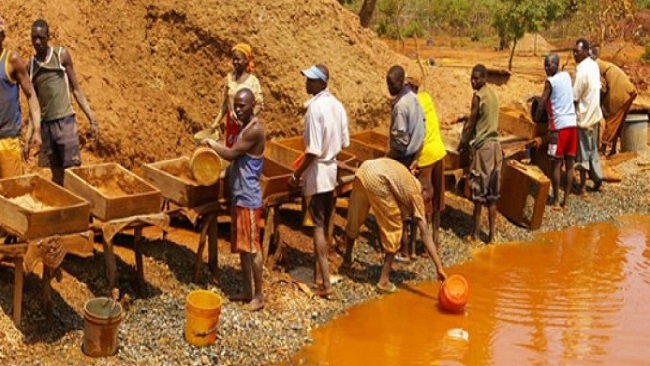
At least 33 people have died in a landslide at a gold mine on the border between Cameroon and the Central African Republic, according to local authorities.
Many more miners are believed to be buried under the debris, said Julien Martial Asse, the municipal administrator of the nearby Cameroonian border town of Garoua-Boulaï.
The landslide at the artisanal mining site occurred Tuesday midday. Rescue workers continued searching for survivors on Wednesday. Some injured miners were receiving medical treatment.
The cause of the collapse was initially unclear, as was the number of miners prospecting for gold at the time of the accident.
The border area between Cameroon and the Central African Republic is rich in gold. A lot of gold mining in the region is carried out by hand. Low safety standards mean serious accidents are a repeat occurrence.
Source: dpa














20, August 2026
So, Cameroonians, what exactly do you want from President Biya? 0
For more than three decades, one political chorus has echoed across Cameroon with the consistency of a national anthem: “Biya must go! Biya must go!”
From the 1990s through protests, elections, political debates and social-media battles, the message seemed perfectly clear. After more than four decades in power, Cameroonians who wanted political change appeared to have settled on one simple solution: Paul Biya must leave.
Fair enough. But now comes the plot twist worthy of a Cameroonian comedy. Biya has been gone from public view for about two months, and suddenly another chorus is rising: “Where is Biya? We have not seen our president!”
Excuse me? So, Cameroonians, please help the rest of the world understand. When he was there, you said, “Biya must go!” Now that he is not there, you are saying, “Biya must appear!”
This is beginning to sound less like a political demand and more like a complicated romantic relationship.
“Leave me alone!”
“Okay.”
“Why did you leave me alone?”
At this point, even President Biya might be wondering whether he is supposed to govern the country or simply maintain a daily attendance register. Perhaps Cameroonians should clarify the job description. Is the head of state required to be physically visible, or merely constitutionally present?
Must he appear on television every morning, perhaps waving from the Unity Palace just to reassure the nation?
“Good morning, Cameroonians. I am still here. The electricity is still expensive. The roads are still under construction. Emergence 2030 will begin soon!! Have a nice day.” Maybe that would solve the problem because the current situation is becoming wonderfully paradoxical.
For years, people complained that Biya was everywhere politically but nowhere physically. Now, when he disappears from public view, some of the same voices become anxious about his absence.
This raises the obvious question: What exactly do Cameroonians want from President Biya?
Do you want him to go? Or do you want him to stay? Do you want him visible? Or do you want him invisible? Do you want him to govern? Or do you simply want proof that he is alive?
And perhaps the most important question of all: If Biya finally leaves, what exactly are Cameroonians expecting to happen next? Because removing one man is not the same thing as repairing a country.
A political system is bigger than the person sitting at the top. Institutions matter. Elections matter. Parliament matters. Courts matter. Civil society matters. The economy matters. And, most importantly, citizens matter.
So perhaps this is the perfect moment for Cameroon to move beyond the wonderfully convenient political slogan of “Biya must go” and start answering the much harder question: “Biya goes—and then what?”
Because shouting “go!” for 36 years is easy. But designing the Cameroon that should come after him is considerably harder.
And if Cameroonians really want Biya gone, they should probably stop treating his disappearance like a missing-person mystery. After all, you cannot spend decades shouting “Biya must go!” and then, when he actually goes quiet, you start shouting “Biya, where are you?”
At some point, even the president deserves to ask: “My people, make wuna decide. You want me to go, or you want me to report for duty?”
Cameroonians, the microphone is yours. What exactly do you want from President Biya?
By Soter Tarh Agbaw-Ebai