23, June 2026
Owona Nguini’s attacks on Samuel Eto’o are becoming increasingly unconvincing 0
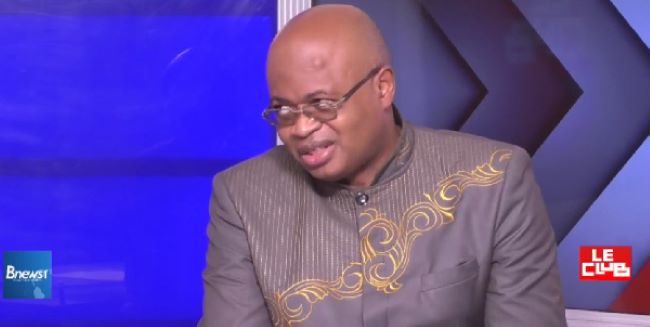
Professor Mathias Éric Owona Nguini is among the many French Cameroun political elites facing war crime charges in Southern Cameroons. The so-called professor has every right to criticize the leadership of the Cameroon Football Federation (FECAFOOT) and its president, Samuel Eto’o.
Frankly speaking, healthy debate is essential in football administration. However, Owona Nguini’s recent attacks increasingly appear driven more by personal and political motives than by a balanced assessment of the realities facing Cameroonian football.
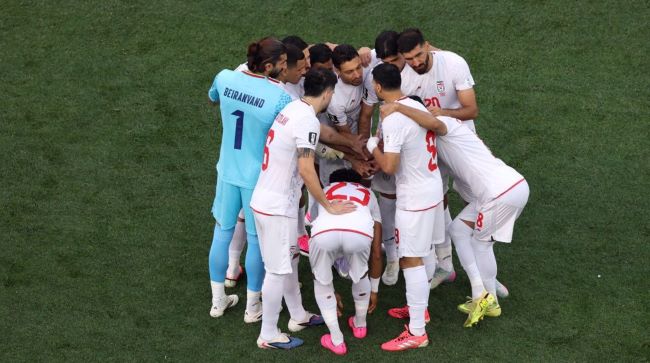
In the aftermath of the Indomitable Lions’ failure to qualify for the 2026 FIFA World Cup, Owona Nguini publicly blamed the Cameroon Football Federation and Eto’o for the disappointment. The Cameroon Football Federation responded by rejecting his accusations and defending its role during the qualification campaign.
What is very disturbing is that the so-called professor’s interventions rarely come with practical solutions. Cameroon football has suffered from administrative conflicts, CPDM government interference, poor infrastructure and institutional rivalries for decades. Reducing every problem to Samuel Eto’o is an oversimplification that ignores the broader challenges that existed long before Eto’o arrived at FECAFOOT and deliberately ignoring the destruction that was caused by Owona Nguini’s late dad Professor Joseph Owona and his gang during their time at the FIFA Normalization Committee.
Many football commentators and observers are beginning to wonder whether Owona Nguini’s constant criticism is linked to a desire to maintain the influence once exercised by his late father within Cameroonian football circles. Whether that perception is fair or not, the so-called professor’s repeated attacks risk looking like a campaign against a man rather than a constructive contribution to football governance in Cameroon.
Samuel Eto’o’s tenure has not been free of controversy. He has faced criticism and disciplinary issues during his time as FECAFOOT president, and those matters deserve scrutiny. But criticism should be accompanied by credible alternatives and concrete proposals.
For those who do not know like Owona Nguini, Cameroon football does not need endless personal battles. It needs ideas, reforms and unity. If Mister Owona Nguini wants to be taken seriously as a stakeholder in the future of the Cameroonian game, he should spend less time launching personal attacks and more time presenting solutions. So far, many of his interventions have generated headlines and controversy, but little in the way of a roadmap for improving Cameroonian football.
The future of the sport in Cameroon will not be built through nostalgia, Owona family legacies or media confrontations. It will be built through competence, accountability and results—standards that should apply equally to President Samuel Eto’o, CPDM Professor Owona Nguini and anyone else seeking influence in the Cameroonian game.
By Soter Tarh Agbaw-Ebai













24, June 2026
Cameroon, PROPAV Infrastructure Ltd sign MoU for construction of Bekoko-Limbe-Idenau road 0
Cameroon has taken a step toward the construction of the Bekoko-Limbe-Idenau road with the signing of an agreement with British firm PROPAV Infrastructure Ltd, which will now prepare financing proposals for the project.
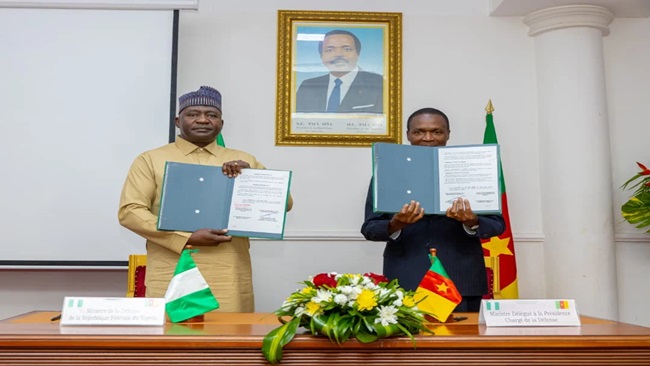
The Memorandum of Understanding (MoU) was signed in Yaounde on June 19 by Minister of Public Works Emmanuel Nganou Djoumessi and representatives of the British firm. The corridor cuts through the South-West Region and is considered strategic for trade, mobility and economic activity along Cameroon’s Atlantic coast.
The agreement establishes a framework for the next phase of project development, including site visits, technical assessments and the preparation of financial proposals required before construction can begin. Authorities say the move is intended to accelerate implementation of a project regarded as a key component of the region’s economic development plans.
According to the Ministry of Public Works, the Bekoko-Limbe-Idenau road has been identified as the priority project among three major road corridors discussed with PROPAV Infrastructure Ltd. The other routes are Loum-Tombel-Kumba-Mundemba and Mutengene-Buea. Officials said Bekoko-Limbe-Idenau was selected first because technical studies have already been completed, allowing preparations to advance more quickly toward financing and execution.
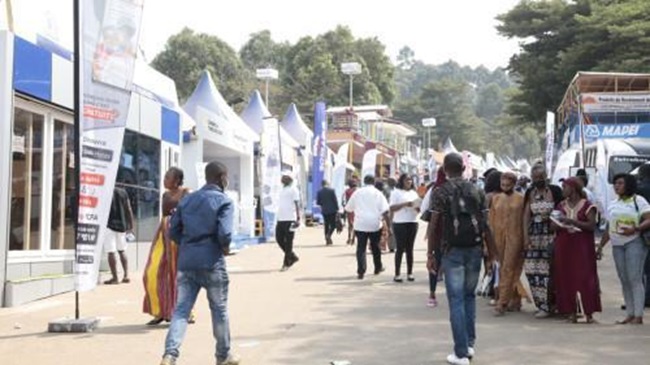
The project is expected to improve connectivity between major economic centres in the South-West Region, facilitate the movement of goods and people, and strengthen access to commercial and industrial zones. The agreement marks an important step in moving the project from the planning stage toward investment mobilisation and eventual construction. Authorities believe the road will play a significant role in supporting economic activity along Cameroon’s Atlantic coast.
Djoumessi said the MoU was intended to translate a shared commitment into concrete action. He noted that the parties had identified three strategic roads in the South-West Region, with the Bekoko-Limbe-Idenau corridor designated as the priority project.
“Based on this Memorandum of Understanding, PROPAV, which is based in London and has financial backing, will propose financing conditions for the project and we will move forward. Together, we will discuss a timetable so that work can begin very quickly and ensure that the signing of an MoU does not remain only a document,” he said.
The agreement also enables PROPAV Infrastructure Ltd to submit technical and financial offers aligned with the expectations of the contracting authority. Company officials said they are ready to undertake the technical, financial and environmental assessments required before field operations commence.
United Kingdom High Commissioner to Cameroon Matt Woods, who accompanied the PROPAV delegation, welcomed the signing and praised the cooperation between the parties. He also thanked the Ministry of Public Works for its cooperation during discussions leading to the agreement.
“I am very pleased to be here with PROPAV and its Country Manager, Paula Miguel. This is the first step of a collaboration that I believe will be very fruitful. I have seen the personal commitment of the minister and the commitment of PROPAV, and I am confident that this road will be delivered,” Woods said.
British partners also reiterated their commitment to supporting implementation of the project, noting that the required studies for the priority road have already been completed. The MoU now provides the framework for advancing technical preparations, financing discussions and planning ahead of the start of construction works.
Source: Business in Cameroon