5, May 2022
Dr Aloysius Abangalo as Bishop of Mamfe: How Manyus embrace his mission will make the difference 0
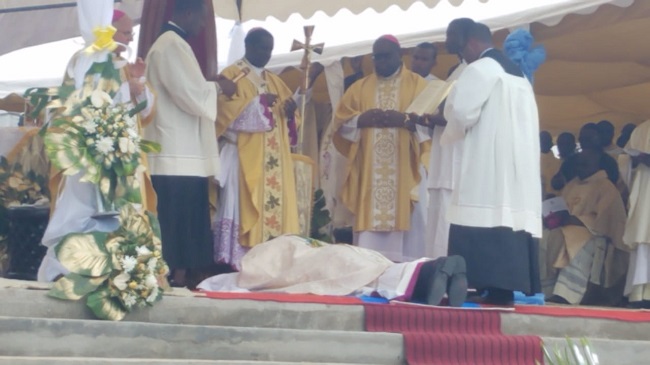
At the mass of Thanksgiving on the occasion of his installation as Bishop of Mamfe, Rev Dr Aloysius Abangalo stood before the Mamfe Christian community more than aware of his own inadequacies and watched by thousands around the world who recognized the significance of what was unfolding before their eyes.
Aloysius Abangalo Fondong embraced the ministry which has been entrusted to him by the Holy Father Pope Francis and today May 5, 2022 he assumed the role as Bishop of the diocese of Mamfe.
During the ordination rituals, Bishop Abangalo was visibly happy to embrace this new mission with hope in his heart. It is not a naive hope that everything will be better tomorrow, but a hope born of a conviction that transcends these difficult days through which Cameroonians in the English speaking regions are living.
What Bishop Abangalo will do in the coming months and years, will define who Roman Catholics really are as a people of faith. The people of the Mamfe Diocese must embrace the new Bishop as their future: after all, today and tomorrow are God’s gift to us.
The Holy Roman Catholic Church is indeed a living Church and as a living Church, it is always on the move, always going out and never withdrawn into itself.
As Bishop, Rev Dr Abangalo needs the wisdom and experience, the generosity and prayer of all in the Diocese of Mamfe and it is certain he is looking forward to everyone’s ongoing collaboration and support. Everyone in the Mamfe Diocese – laity, priests and deacons, religious, all who embraces apostolic charisms, as well as the men and women called to a more contemplative way – has something essential to contribute to the future of the faith in the entire diocese.
For us the people of Manyu, it is how we embrace the Bishop Abangalo mission that is going to make the difference in the Mamfe Diocese. We can only do this together following the example of Minister Victor Mengot who has been very instrumental in making the ordination a huge success! Walking together even as Southern Cameroonians or CPDM Manyu Cameroonians is the way of community because “Walking together is the constitutive way of the Church” (Pope Francis, Address at the Opening of the 70th General Assembly of the Italian Bishops’ Conference, May 22, 2017).
Hearing what the Spirit is saying to the churches is no easy matter. There is no infallible way. But there is a clear way, a tried and trusted way. That way is a way with each other – slí le chéile.
Cameroon Concord News Group believes that the only viable pastoral plan for the future will be the plan which comes from a genuine dialogue and discernment between the people, clergy and religious. That will involve not only working together in new ways, but getting to know each other anew.
To Archbishop Andrew Nkea, out gone Bishop of the Mamfe Diocese, we of the Cameroon Concord News Group sincerely express gratitude and congratulate you as the new leader of the National Episcopal Conference. As Metropolitan Archbishop of the Bamenda Ecclesiastic Province, you were voted Cameroon Concord Person of the Year 2021 by thousands of our readers. Cameroon Concord News Group, the Church and wider Cameroonian society owe you a profound debt of gratitude.
Like Mary, the Mother of Jesus, we have to find our place in God’s story. Cameroon Concord News Group through this editorial is entrusting Bishop Abangalo’s Episcopal ministry to the motherly care of the Blessed Virgin Mary, Mother of the Church.
To this I put my name
Soter Tarh Agbaw-Ebai
Chairman/Editor-In-Chief
Cameroon Concord News Group















12, May 2022
CPDM Crime Syndicate: Minister Nalova warns against expelling pregnant girls from school 0
Cameroon’s Minister of Secondary Education, Pauline Nalova Lyonga said on Tuesday she was appalled by the news of the dismissal of girls who get pregnant in school and warned that the practice must not continue.
“This practice is against the government policy of keeping all students in school without discrimination. It is also contrary to the government’s policy of promoting gender equality and preventing the dismissal of vulnerable students. It has caused girls to drop out of school,” Lyonga said in a statement on Tuesday.
School officials need to allow confirmed pregnant students to continue with school activities until the 26th week of pregnancy after which she may request to be placed on maternity leave. School officials should also authorize pregnant students to return to school after giving birth, she added.
It is estimated that around half of girls in Cameroon drop out of school because of pregnancy and childbirth.
Source: Xinhuanet