10, March 2021
Southern Cameroons Crisis: Ferdinand Ngoh Ngoh is now the biggest spender in the Biya regime 0
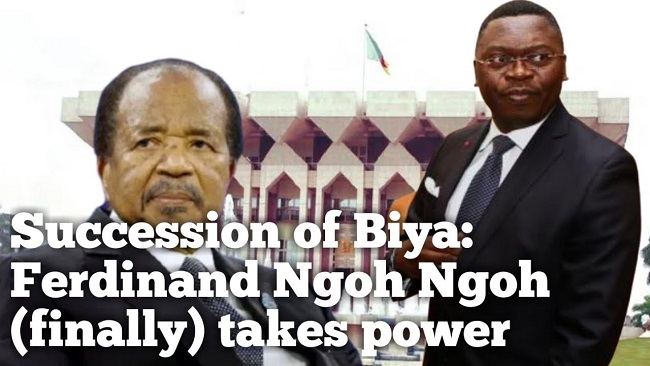
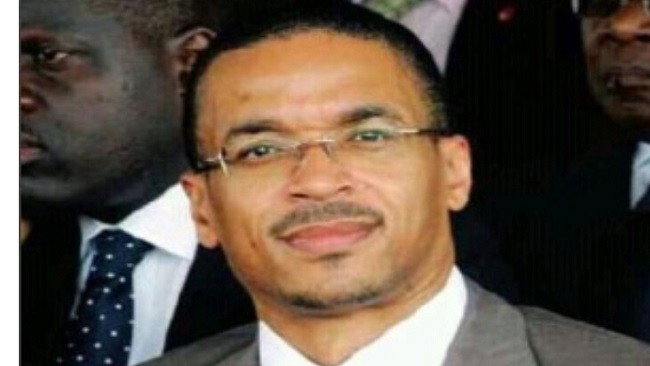
The Minister of State-Secretary General at the presidency of the Republic, Ferdinand Ngoh Ngoh is known more for his ruthless character as the de facto head of state of Cameroon. The ambitious next-of-kin is slowly but surely purging the Etoudi Palace of his critics and has thrown into the Kondengui prison many of his political opponents and is now teleguiding the bloody war on the English speaking people of Southern Cameroons, contributing to one of the worst humanitarian crises in recent African history.
Minister Ferdinand Ngoh Ngoh is not only preoccupied with taking over from President Biya and the war or bloodshed in Southern Cameroons, the so-called President-In-Waiting and his family relations are living large. To be more accurate, Minister Ngoh Ngoh is leading an inconceivable life which Cameroon’s tax payer’s money and revenue from oil and gas have provided him with.
His in-laws and blood relations are reportedly splashing out hundreds of millions of FCFA on cars and private parties. Many are stunned today in Yaoundé as several anonymous investors are purchasing government buildings and shares in state companies.
Ferdinand Ngoh Ngoh has the unflinching support of the First Lady Chantal Biya and now controls the members of the ruling Beti Ewondo gang with a huge property empire in France.
Cameroon Intelligence Report gathered that the members of the Chantal Biya family who pressed the 88 year-old Biya to publicly announced Ferdinand Ngoh Ngoh as next-of-kin are spending outrageous amounts of Cameroon tax payer’s money, typically on really quite outrageous things, including, prostitution, alcohol, gambling, very ostentatious lifestyles that include buying huge houses in France, Belgium and the USA that they never even visit!
An official at the Cameroon embassy in Brussels hinted this reporter that Francophone cabinet ministers are spending tens and tens of millions of Euros to buy properties in France and Belgium and keep them up without actually ever going to stay even one night in those properties or to use them to raise revenue.
Like President Biya, Minister Ngoh Ngoh’s spending is not easily traceable and extensive investigations might just reveal the tip of the iceberg.
A cream of top barons of the Biya regime have regularly been flying models from Ethiopia, South Africa and Madagascar and elsewhere to party in Yaoundé. They arrive and are allegedly tested for HIV/Aids.
Other senior government officials from the Northern regions have also reportedly been travelling with their sea of mistresses to Saudi Arabia for the Hajj throwing huge amounts of money on things which are even against Islamic teachings. All these are going on under the watchful eyes of Ferdinand Ngoh Ngoh.
To be sure, the system of government in Yaoundé as teleguided by Ministers Ferdinand Ngoh Ngoh and Joseph Beti Assomo is the feudal systems that dates back to the dark ages where the ruling families had the power of life and death, over all of their subjects and having the right basically to help themselves to whatever wealth the nation has. That’s La Republique du Cameroun that we know today.
Cameroon’s huge wealth comes from the country’s vast agro-industrial plants including oil, gas, gold and diamond reserves which supposedly belongs to the whole nation but in fact is the Biya family property which now has Ferdinand Ngoh Ngoh as its operations manager.
By Soter Tarh Agbaw-Ebai
















11, March 2021
French Cameroun: Beti-Ewondo-Sawa rivalry making Douala and Yaoundé 2 cities and, in a way, 2 countries 0
Between the economic and political capitals of Cameroon, misunderstanding turns into antagonism. Entrepreneurs and civil servants do not share a common vision for the country.
A stopover in Yaoundé? This will inevitably trigger a concert of “tchips” among Cameroonians leaving for abroad. And when the airline makes the opposite journey, those in the cabin also make a face.
Making a stop in Yaoundé does not make the Douala’s happy. The two metropolises cordially hate each other. Economic capital versus political capital, periphery versus centre. Two cities and, in a way, two countries, which do not tolerate their cultural, morphological and even meteorological differences.
Still no motorway!
In Douala, the bad taste of those stilted civil servants in suits and ties is mocked, their nostrils exhaling the omnipresent red dust that makes the capital so ugly… On the other hand, the inhabitants of the city of seven hills wouldn’t go to live in the sticky heat of the coastline for anything in the world.
This rivalry was not so bad when it was just about clichés. It became worse as the country sank into an existential psychodrama, due to political tensions and the Anglophone crisis.
Although separated by a distance of 218km, the two cities have never been so far apart. Since the fatal derailment of a passenger train in Eseka (Centre) in October 2016, the train linking the port to the capital has been carrying only freight.
Handicapped by colossal debt and contested management, Camair-Co, the national airline company, is no longer able to fly its planes. To ensure daily connections between the two cities, it is reduced to chartering a Ukrainian Boeing.
Moving on… Pompously baptised “a major axis”, the asphalt road that connects the two cities has been worn down by truck traffic, It also connects to Chad and the Central African Republic.
It is a silent and insatiable killer. It is a nightmare for Cameroonians, as it has resulted in the deaths of thousands of people annually.
The government has tried to replace this road with a motorway. It turned to China, which agreed to finance the project. However, of the 196km of road, only 60km have been completed. The work, which began in 2014, was supposed to be finished in two years. Seven years later, there is still no motorway.
An unbeatable path
“All these projects are at a standstill because of the corruption that reigns in Yaoundé”, said a journalist based in Douala. “These civil servants do not feel any sense of guilt when they delay our country’s development by taking public money.”
The journalist continued: “Those who have sworn an oath to protect the common good and serve the state only think of getting rich at the expense of the state. In what serious country are tax inspectors richer than business leaders?”
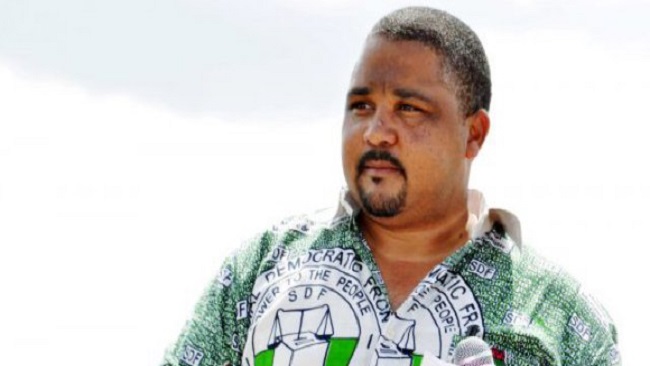
The fault lies with the École Nationale d’Administration et de Magistrature (ENAM). This elite school churns out officials who “serve the President instead of serving the people,” says Joshua Osih, a deputy from Douala. Osih, a member of the opposition Social Democratic Front, has promised to abolish this school if he is elected president.
“With 35.1% of companies based in Cameroon, Douala is the main industrial centre of the country and of the Communauté Economique et Monétaire de l’Afrique Centrale,” said economist Jean-Roger Essombe Edimo.
The early bird catches the worm. A real-estate boom is transforming the city, big hotel chains are opening establishments one after the other and malls are being built.
After studying in Europe, Gabriel Fopa returned to Douala to found an information technology services company. He developed it to the point where he was later able to buy the subsidiary of a multinational company. He loves his city more than anywhere else in the world. “In Douala, we create time. In Yaoundé, we undergo it, we consume it. There, they make young people believe that success comes through the ENAM competition and that the civil service is an unbeatable path. But we are in a capitalist economy. You have to create wealth to really succeed,” he said.
Stormy relations
In the “Doualian” sense, capitalism is a beehive that buzzes from 5am. In the offices on Boulevard de la Liberté, in the Akwa business district, and in the Bonabéri factories, people create and produce keeping the bottom line in mind. Managers bet their entire career on these people’s technical skills. They all sing the praises of technocracy, which is about action, as opposed to politics, which is about words and communication.
The “technos” of Douala have little appreciation for their compatriots in the ministerial district of Yaoundé. “They give you an appointment and then see you two hours late,” says a contractor who works with the government.
The former reproach the latter for being unable to adapt to economic upheavals, not caring about the fragility of companies and for not understanding much about the world. “To bid on a call for tenders, you need about ten signatures. Why isn’t the government doing anything to improve the business climate?” continues the contractor.
The denigration of civil servants and politicians is due to the arrogance of public officials (and vice versa). The stormy relations between business leaders and the tax authorities partly stem from this context.
“The directorate general of taxation has a punitive conception of taxation,” said Celestin Tawamba, recently re-elected president of the Groupement Interpatronal du Cameroun (GICAM) – located in Bonanjo, Douala – which represents more than 1,000 companies.
Instead of taxing based on a company’s turnover, the bosses have been asking, in vain for years, to be taxed on their profits. No one in Yaoundé is listening to them.
Hidden away in his glass and aluminium tower recently inaugurated in downtown Yaoundé, Modeste Mopa Fatoing, the director-general of taxes, “limits contacts so as not to compromise himself,” explain his family and friends. “These officials believe that entrepreneurs are all potential fraudsters,” said a small business owner.
Distrust and territorial stigmatisation have created a division between the political and economic spheres, corresponding to the one between the country’s two largest cities. During the last presidential campaign, no businessman or business leader spoke out in support of any candidate. During the same period, the directorate general of taxation implemented tax audits, a sort of sword of Damocles hanging over the heads of Douala bosses who might have ventured to finance the opposition.
Napalm raid
Ever since Chief Rudolph Douala Manga Bell was hanged for high treason in August 1914 by the Germans, Douala has had a reputation as a rebel city. In April 1960, Ahmadou Ahidjo ordered a napalm raid that reduced the Congo market to ashes and silenced his opponents. In the 1990s, President Paul Biya had his opponents beaten up there before discovering the virtues of the fiscal weapon to “control” recalcitrant bosses.
But the latter do not intend to keep quiet. The “Livre Blanc de l’Economie Camerounaise”, published in November 2020, is a “right of interference that Gicam grants itself in the public debate,” said Francis Sanzouango, an executive of the employers’ union.
The country is now embarking on a process of decentralisation. As heir to colonial Jacobinism, the capital wants to maintain control, both over opinion shapers and those who create wealth.
In March 2020 – following the election of municipal councillors – Yaoundé appointed Roger Mbassa Ndine, a crafty politician who will not make waves, the central mayor of Douala. The regional councillors, also elected in this dual election, are waiting for the transfer of powers to get to work. Given the ministries’ resistance, they will have to be patient.
Water hyacinth
The old system is likely to continue. For instance, the decision to build a bridge in Douala was made by the planning ministry in Yaoundé. This is despite the fact that the very invasive water hyacinth is dangerously drying up the bed of the Wouri, the emblematic river of the city, which is also home to the indigenous Sawa people’s deities.
The elites of the two cities disagree over the best way to conduct public affairs. Nevertheless, they find themselves in the same places: funerals sprinkled with champagne, glamorous weddings and business-class flights.
However, this cordiality does not prevent the rivalry between the two cities from degenerating into recurrent deadly riots, as was the case in 2008. Although Douala and Yaoundé might view their differences as a strength, this rivalry could pose a problem to the stability of Cameroon.
Source: Africa Report