
8, February 2020
Why the African Union must not ignore Cameroon 0
When the 33rd African Union Summit begins on Sunday, the conflict in Cameroon’s Anglophone regions should be on the agenda. Yet the violence is unlikely to be seriously discussed by African leaders.
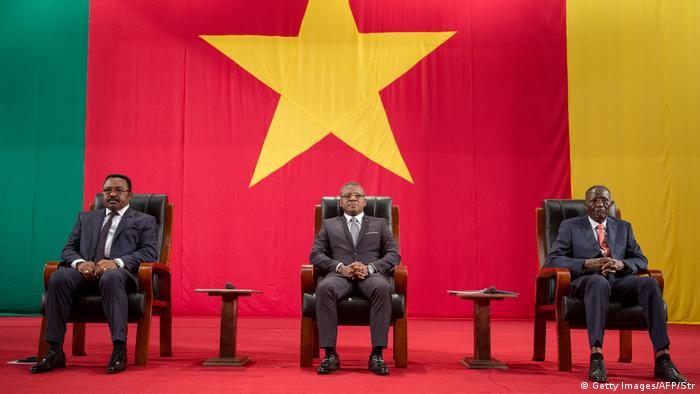
If the African Union (AU) is to live up to its founding charter’s high ideals, its members must confront the human rights abuses occurring in Cameroon, rather than sweeping them under the carpet.
Cameroon’s historically English-speaking Northwest and Southwest regions are home to 20% of the country’s population. The UN-backed referendum following independence in 1960 failed to give the Anglophones the option to form an independent country.
Although they were promised a degree of autonomy under a federal system, power shifted to the Francophone-dominated capital, Yaounde, by 1972. There has been an ‘Anglophone Problem’ of marginalization in Cameroon ever since.
Peaceful protests began in 2016, when the government imposed French-speaking teachers and judges on Anglophone schools and courts, with a systematic process of eroding the common law.
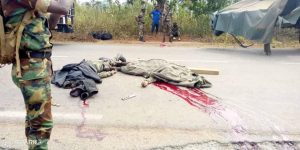
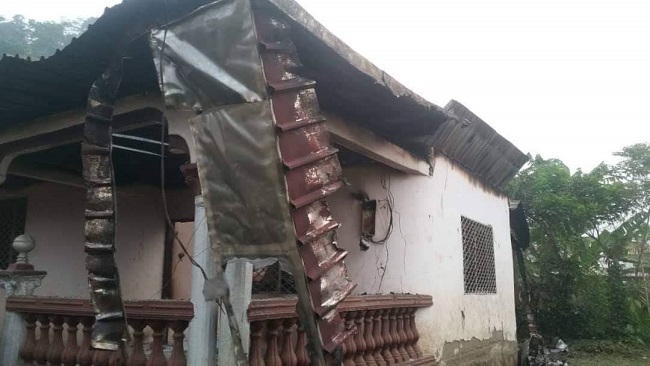
Impartial international human rights groups believe the regime responded with disproportionate force. Escalation over the past three years has seen more than 200 villages burned, opposition leaders and journalists detained and tortured, civilians randomly fired upon and terrorized, causing 656,000 people to flee their homes for the bushes, Francophone regions, or next-door Nigeria where 50,000 people are currently living in refugee camps. More than 2,000 people are thought to have been killed.
In response, some of the more extreme Anglophone secessionists formed increasingly violent militias over time, forcing schools, clinics, markets, and businesses to stay closed.
Human rights organizations report atrocities on both the government and separatist sides. The economy is at a stand-still, and normal life is impossible for many of the 5 million residents of the Northwest and Southwest.
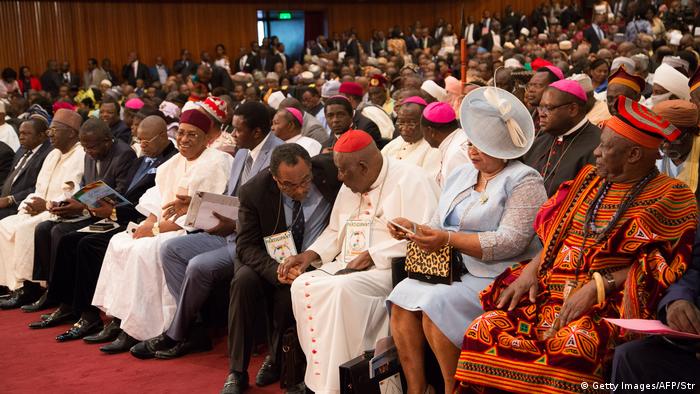
The National Dialogue was supposed to resolve the crisis but peace in the English-speaking regions is still distant
Reacting to international pressure, the Cameroonian government held a Major National Dialogue over several days in October 2019. These limited talks were boycotted by separatist groups and some members of civil society were unable to safely attend.
The government subsequently granted ‘special status’ to the two Anglophone regions. However, critics argue that the proposed level of autonomy remains loosely defined, with power remaining in the centralized Francophone administration in Yaounde.
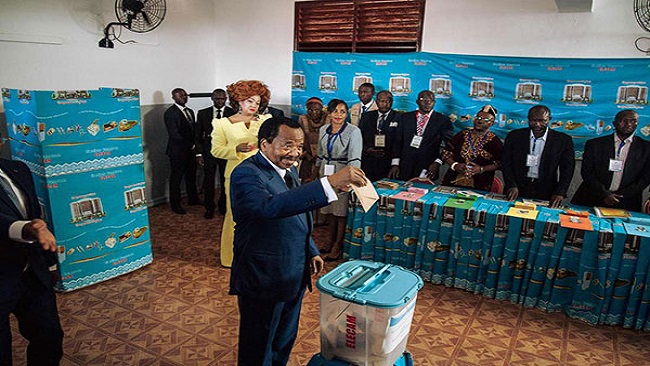
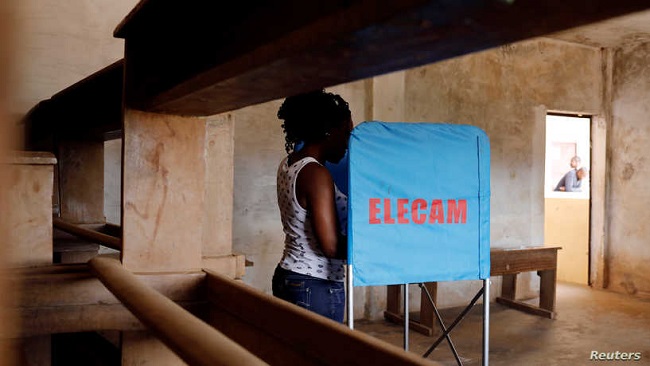
Even so, any implementation is uncertain, especially in light of the legislative and municipal elections set for Sunday February 9, in which few Anglophones are expected to participate or vote due to worsening violence and horrific threats.
The Centre for Humanitarian Dialogue in Switzerland has offered to facilitate peace talks, but the Cameroonian government has not consented to take part. Very recently, the Africa Forum announced a Symposium on Cameroon in April to support a peaceful resolution — a welcome development.
The African Union role
The AU is well aware of the violence suffered by unarmed civilians in the Anglophone regions. As recently as November 2019, a delegation including the chairperson of the AU Commission urged President Paul Biya to implement the conclusions of the Major National Dialogue, encouraging peace and stability through this nonviolent process.
Yet, in his New Year’s message, Cameroon’s leader reminded his citizens that the armed forces would carry out their duties “without weakness.” Biya persists in believing a military solution will resolve the Anglophone issues.
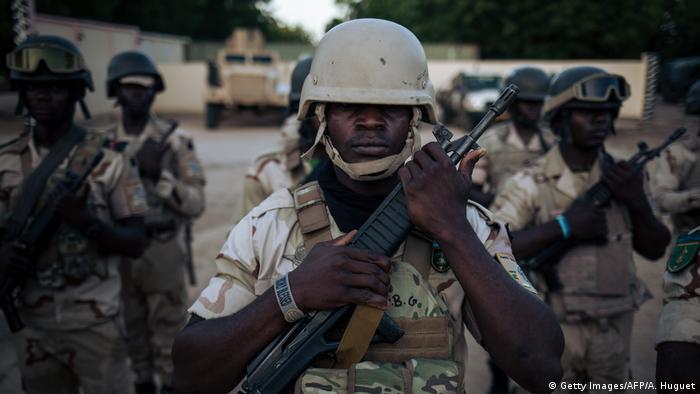
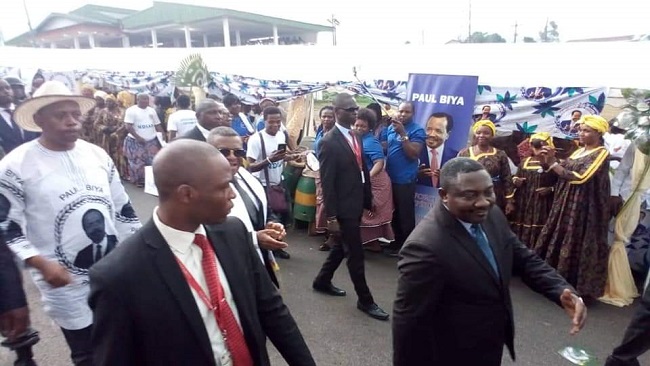
Biya has sent extra forces to the English-speaking regions ahead of the municipal and parliamentary elections
In January 2020, Cameroon delivered a 190-page report to the AU, measuring its own performance against its obligations under the African Charter on Human and Peoples’ Rights. The document, which amounts to a student marking her own essay, boasted that Cameroon had ratified sundry protocols protecting human rights.
Its description of Cameroon is at odds with the findings of watchdog groups such as Transparency International and Freedom House, both of which give Cameroon the lowest ranking.
Human Rights Watch and Amnesty International would also struggle to recognize the country as it appears in its report to the AU.
The Cameroon government congratulates itself for creating a National Commission for the Promotion of Bilingualism and Multiculturalism, aimed at “maintaining the peace,” “consolidating national unity” and “maintaining social cohesion.”
The report to the AU also justifies shutting down the internet in the Anglophone regions for four months in 2017, saying that people were using it to stir up “hatred, violence, insurrection and secession.” Freedom of speech applies only if used in a “responsible manner.”
Three months ago, 65 mainly African human rights groups wrote an open letter to the chairperson of the African Commission on Human and Peoples’ Rights, calling on the AU to urgently take specific actions to address the deteriorating security situation in Cameroon. They received no response.
Among many observers, the AU has a poor reputation. Some criticize it for spending more time seeking to guarantee its leaders’ immunity from prosecution than persuading its members not to persecute minorities or detain political opponents.
The African Commission on Human and Peoples’ Rights held its 2019 summit in Egypt under the leadership of current AU Chair and Egyptian President Abdel Fattah al-Sisi — US President Donald Trump’s “favorite dictator,” who is not known for respecting civil liberties.
If the AU is to gain legitimacy in the eyes of African citizens, it must prove it exists not for the well-padded political and business elite, but to speak the truth when one of its members violates the founding principles of the AU.
Cameroon deserves more than the slap on the wrist delivered in a 2018 AU resolution. Diplomats know there is a difference between hand-wringing resolutions urging Cameroon to respect human rights, and exerting genuine, sustained pressure on President Biya behind closed doors.
The only way forward for Cameroon is through inclusive peace negotiations between the government and both moderate and extremist Anglophone voices.
The AU summit — whose 2020 theme is “Silencing the Guns” for development —should make it clear to the Cameroonian government and the armed separatist groups that there will be consequences if they refuse to participate in the proposed Swiss-led peace talks, and the upcoming Africa Forum symposium as well.
If the AU’s African Charter on Human and Peoples’ Rights is to mean anything, it must apply to a situation like Cameroon’s.
Culled from Deutsche Welle















9, February 2020
February Twin Poll: Party that has ruled since 1985 expected to firm grip on La Republique du Cameroun 0
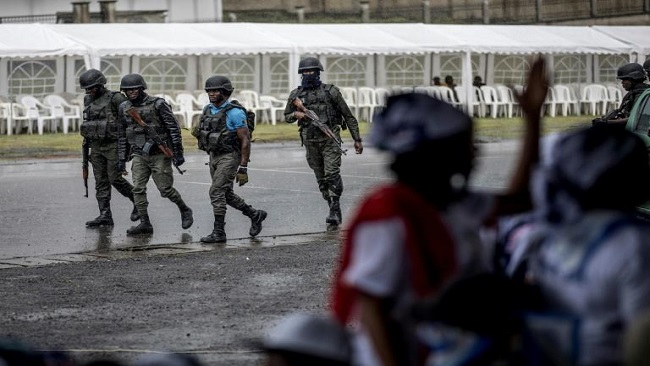
Separatist militias have stepped up attacks and abductions in Cameroon’s two English-speaking regions ahead of parliamentary and council elections likely to hand a sweeping victory to the party that has ruled the central African nation since 1985.
Anglophone armed groups last month called for a lock-down of the Southwest and Northwest regions and militants have targeted electoral staff and abducted at least 40 candidates running for parliamentary and municipal posts in polls on Sunday. Opposition leader Maurice Kamto, who was jailed for eight months last year, has withdrawn his party from the vote, saying it won’t be credible.
As many as 3,000 civilians are estimated to have died and hundreds of thousands have been forced to flee their homes since the Anglophone revolt erupted late 2016 following a heavy-handed government crackdown on protests against the dominance of the French language in schools and courts. Cameroon is divided in 10 semi-autonomous regions and the English-speaking minority accounts for about a fifth of the population.
The ruling Cameroon People’s Democratic Movement already holds 148 out of 180 seats in the National Assembly and is running unchallenged in about 20% of all races, according to the International Crisis Group. Sunday’s vote will almost certainly strengthen the grip of President Paul Biya over state institutions, ICG Central Africa Director Richard Moncrieff said by phone from Nairobi.
Special Status
Africa’s second-longest serving head of state, Biya, who turns 87 next week, has been accused of allowing the crisis to spiral out of control by ignoring it in its early stages. Last year, he initiated a national dialogue that led to a bill granting the Anglophone regions special status, which means their assemblies are to be consulted by the central government over educational policy as well as the application of common law.
Yet most separatist leaders were either in prison or abroad when the dialogue started in September, fueling widespread skepticism about its purpose.
“For the special status given to the Anglophones to come into force, elections must take place,” said Fuh Calistus Gentry, a ruling-party member.
The decision to grant greater autonomy to the Anglophone regions won’t have much of an impact if the population is too scared to vote, said Kah Walla, head of the opposition Cameroon People’s Party.
“Those to be elected in parliament and in the councils will have very little powers in the Northwest and Southwest regions because they will have very little legitimacy,” Kalla said.
Oil-dependent Cameroon is a key hub in central Africa, with roads and ports that are vital for landlocked neighbors including Chad and Central African Republic. The revolt has also slashed output of palm oil and other agricultural export crops, which are mainly grown in the Southwest and Northwest.
The government has postponed the vote twice since September 2018, citing logistical and security concerns. Voter turnout during 2018 presidential elections was as low as 5% in the Northwest region, compared to 53% in the rest of the country. To provide better security, the government this month deployed additional troops in the restive regions and grouped voting centers together.
Biya’s decision to push ahead with the elections appears to be motivated by a desire to “present some form of normality” as the U.S. and the African Union have increased pressure on his government to solve the crisis, Moncrieff said.
“Instead, the vote risks reinforcing the separatists’ argument that they’re being marginalized,” he said.
The U.S. cut $17 million in military aid to Cameroon last year and said in December it planned to terminate the government’s eligibility for trade preference benefits due to reports of “persistent human-rights violations” by security forces. About 300 U.S. troops are stationed in the country to monitor Islamist militant insurgencies in the region.
Source: Bloomberg