29, March 2020
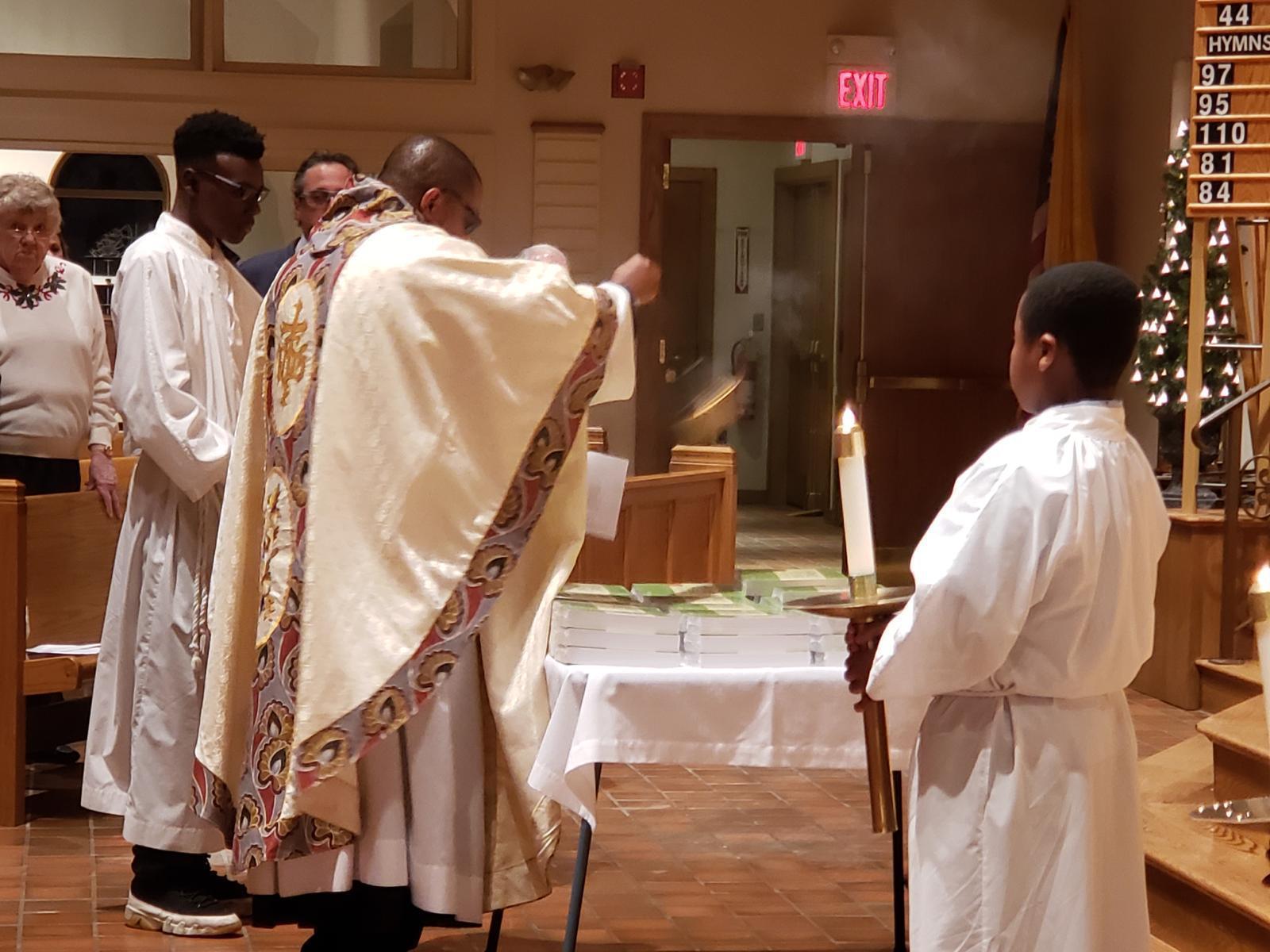
COVID 19: Father Maurice Agbaw-Ebai says Jesus will raise new life from the present time, ushering a new reality in human history 0
The Believer and Lazarus of Bethany
“Master, the one you love is ill” (John 11:3)
Dear Holy People of God of Ste Anne’s Parish Family,
Good is good, all the time, and all the time, God is good!
The Gospel of this Sunday presents us with the resuscitation of Lazarus, which is very different from the resurrection of Jesus. The former, Lazarus, dies again, as is evident from the text itself: “Meanwhile a large number of Jews heard that he (Jesus) was there and came not only on account of Jesus but also to see Lazarus whom he had raised from the dead. Then the chief priests decided to kill Lazarus as well, since it was on his account that many of the Jews were leaving them and believing in Jesus” (John 12: 9-11).
With resuscitation, Lazarus returns to biological life, subjected once more to the laws of Aristotelian Categories or Newtonian physics, that is, the operations of space and time. He could once again feel tired, hungry and thirsty. Lazarus, brought back to life by Jesus, was still subjected to all that characterizes the human condition. But with the resurrection, there is the entry into the power of God, into the being of God, a power and being that is beyond space and life, beyond the laws of physics. The resurrection is the definitive otherness. There is a new form of existence, what Paul struggles to explain, “we teach what scripture calls: the things that no eye has seen and no ear has heard, things beyond the mind of man, all that God has prepared for those who love him” (1 Corinthians 2:9).
From the perspective of the inner logic of the Hebrew Bible otherwise known as the Old Testament, the “scandal” of the resurrection of Jesus resides in the fact that history continued, after Easter Sunday. Judaism, at least in the form that developed and as witnessed to by prophets such as Ezekiel, the book of the Maccabees and the book of Daniel, gradually arrived at the understanding of a resurrection from the dead. But this was understood to mark the end of history, that is, the end of time and space, wherein history will enter into the definitive reality of God, so that God will become all in all (1 Corinthians 15:28). In other words, history was not supposed to continue after Easter Sunday. There was therefore, a sense of a definitive end-of-timeness, an eschaton, that marked the understanding of resurrection faith in Judaism. Martha gives voice to this eschatological (end-of-time) understanding of the Jewish understanding of resurrection in this Sunday’s gospel, when she says to Jesus: “I know he (Lazarus) will rise again at the resurrection on the last day” (John 11:24). And herein lies the scandal of the resuscitation of Lazarus, because, correctly understood as St John the Evangelist does, it marks the definitive pointer to the resurrection of Jesus. And yet, as it was with Lazarus and as will be seen with the resurrection, history, understood as the measurement of time, does not come to an end.
In the theology of the Gospel of John, the raising of Lazarus by Jesus is the definitive sign pointing to the Lord’s passion, death and eventual resurrection. St John even gives us certain “passion details” around the Lazarus narrative: “(…) From that day they were determined to kill him (Jesus) (John 11:53); “Six days before the Passover, Jesus went to Bethany, where Lazarus was, whom he had raised from the dead” (Jon 12:1). The cloud of the darkness of death was clearly in the horizon, with the sign of the raising of Lazarus.
Dear Holy People of God, like the Blind Man of Last Sunday’s Gospel, Lazarus represents all of humanity that is dead, and that Jesus seeks to bring back to life, not just biological life, that is, life in this world, but eternal life, that is, life with God. During these days in which our beloved city of Salem and the wider world is suffocating under the pandemic of the COVID 19, the cry of Martha and Mary to Jesus is ours, in a very real, pragmatic and existential sense: “Master, the one you love is ill” (John 11:3). The concrete situation of the world of COVID 19 brings these words to a shocking realism: Our world is literally “ill.” But Bethany teaches us that there will be a raising to new life. Lazarus of Bethany reminds us that the power of God will break into the world of COVID 19, and that the power of God is stronger than death. Bethany teaches us that even if we feel that the Lord is delaying in coming with his power, that the Lord is slow in responding to our cry, as Martha and Mary felt – “Martha said to Jesus, ‘if you had been here, my brother would not have died (…) (John 11:21); “Mary went to Jesus, and as soon as she saw him she threw herself at his feet, saying, ‘Lord, if you had been here, my brother would not have died” (John 11:32); “Martha said to him, “Lord, by now he will smell; this is the fourth day” (John 11:39); – the Lord’s belatedness, the Lord’s “four days” of lateness in coming, eventually turns out to be just on time, for as Augustine points out in book XI of the Confessions, time, that is, past (memory), present (sight) and future (expectation), are all present, with the Lord: the past is the present of the things past; the present is the present of things present, and the future is the present of things future. “All time belongs to Christ,” as we profess on Easter Night in the ceremony of the lighting of the Easter Candle. Hence, let us remember that even the present time is in the hands of the Lord, and that the Lord will raise new life from the present time of COVID 19, ushering a new reality in human history which we as yet cannot fathom but which we can already see with the eyes of faith, that faith of Martha and Mary that we encounter in today’s gospel.
In Martha and Mary, the believer and the Church finds what we can and must do, besides the reasonable precautionary measures of body hygiene and social distancing, namely, to cry to the Lord in prayer: “Master, the world you so love (John 3:16), is ill” (John 11:3). We too cry out, “Master, our world needs to be raised from death. Jesus, do not let us be without you in the Sacraments for too long. Jesus, do not delay in coming into the world of the here and now, and of putting an end to this pandemic. Help all our medical personnel who are on the frontline of this battle. Help the efforts of all researching for cures and vaccines. Grant the joy of your presence to the dead and your consolation to the living. Grant serenity to our anxious hearts. And May we feel the maternal closeness of your Mother, Mary, Help and Comforter of the Afflicted,” now and always, Amen. My Holy Mass this Sunday will be offered for all the families of our Ste Anne’s parish family. May the Lord bless you and be close to you. May the Lord let his face shine upon you and be gracious to you. May the Lord fill you with is peace
By Fr Maurice Agbaw-Ebai
Sainte Anne Parish, Boston


























31, March 2020
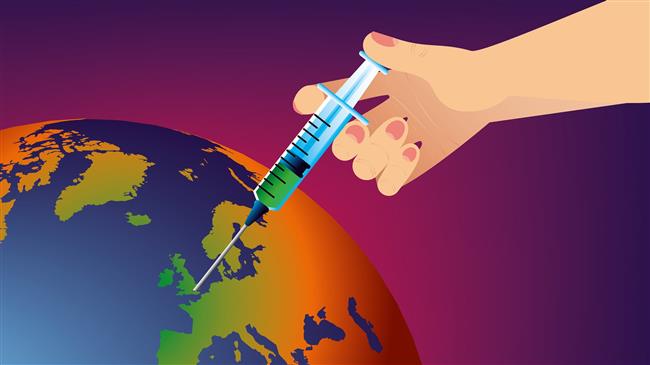
Coronavirus and the forgotten people of Sub-Saharan Africa 0
Donald Trump indicated that keeping the US death toll from the coronavirus pandemic to 100,000 would be a very good job. Prof. Stephen Powis, national medical director of NHS England stated that if the UK kept its death toll below 20,000, the country would have done very well. From these frightening figures, Cameroon Concord News Group presupposes that these men of authority possess confidential data and facts not available to us all. There are over 784,314 confirmed cases worldwide with 37,638 deaths. Spain and Italy now account for more than 51% of the global fatalities according to figures from Johns Hopkins University.
Lockdowns in many European and US towns and cities is startling but understandable as experts insist that social distancing is imperative to curbing this global killer. Cameroon Concord News Group is struggling to make sense of this new world order. Like many pandemics of previous generations and centuries, the poor, elderly and the vulnerable always bear the brunt. Covid-19 pandemic is no different. The UK government announced a £330 billion stimulus package to protect its economy, Germany followed with a stimulus package worth over 1.1 trillion euros whilst the US announced a 2 trillion dollar package for its economy. These figures and economic policies designed to protect the economies and citizens of these countries are astounding and imposing but one has to consider how the worlds vulnerable in sub-Saharan Africa would cope during this unprecedented world economic and health emergency.
In many parts of Sub-Saharan Africa, testing for the coronavirus is non-existent and the public health information is pitiable. Ravaged by government corruption, unemployment, poor public services and deprived healthcare structures, these vulnerable people are the forgotten potential victims of this pandemic. In many Sub-Saharan African countries, the people live from hand to mouth and the thought of a lockdown without government hand-outs is terrifying. Poverty and a lack of government action will be as lethal as the coronavirus to some of these people. Complacency from the governments and public health officials is the word and a risky strategy.
As the peak of this global health crisis approaches, Cameroon Concord News Group’s concern for the forgotten people of sub-Saharan Africa is candid and established. The World Bank and the IMF have announced financial packages worth $24 billion. This is a step in the right direction but these figures pale in contrast to the rest of the world. If the history of financial packages to Africa is anything to go by, it is pretty obvious that a microscopic fraction of this aid would get to the people who need it most. The vulnerable people of this region are about to face a global killer with anaemic fiscal backing. This media outlet is concerned that the true scale of this disaster in these communities might never be known. When figures of 100,000 deaths in the US and 20,000 in the UK are brandished as successful, we of this publication fear for the poor and vulnerable in Africa.
From the gargantuan stimulus packages designed to ring-fence western economies from the financial consequences of this pandemic, the evidence is overwhelming that there are enough economic resources on this planet for all its occupants to enjoy healthy, progressive and peaceful lives. Cameroon Concord News Group believes that what is lacking is the political will to accomplish that purpose. One thing remains certain, the time has come for sub-Saharan African leaders to realise that the health, education, infrastructure and corruption challenges in their countries will be resolved by them only. Western governments have made political and economic decisions for their people, Sub-Saharan African leaders must learn and emulate. Cameroon Concord News Group believes that this must be one of the lessons to take from this pandemic.
Isong Asu
London Bureau Chief