
26, November 2018
Kenya Questions Yaounde Over Shooting of Father Cosmas Ondari 0
The government has officially initiated the inquiry questioning Cameroon authorities over the death of Father Cosmas Ondari at the Mamfe Diocese in Cameroon. Kenyan authorities through the ministry of foreign affairs in a statement further advised citizens to remain vigilant in areas where security is not entirely guaranteed.
“The government of Kenya has through the High Commission in Abuja, Nigeria, has urgently and formally inquired from the government of the Republic of Cameroon about the circumstances leading to the death of Father Ondari.” the ministry announced in a statement on Saturday.
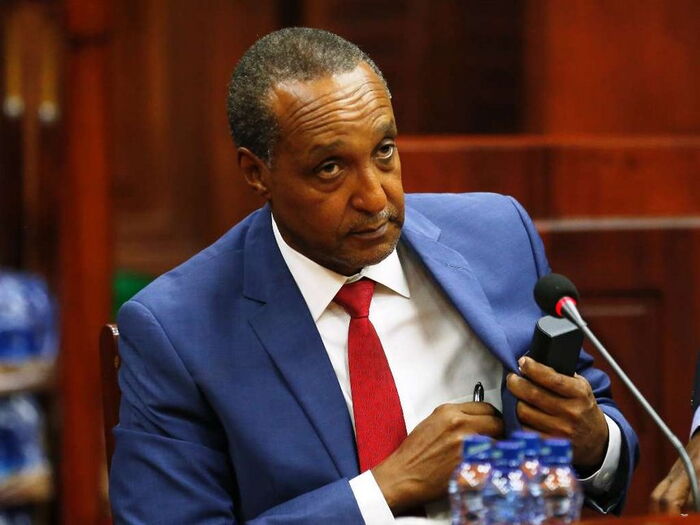
Foreign Affairs PS Macharia Kamau in the announcement affirmed the government’s commitment to safeguarding Kenyan citizens and members of the church.
Macharia indicated that the ministry was relentlessly seeking answers from the Cameroon government following the shooting of the Catholic priest.
Cameroon authorities have on their part distanced their military from the priest’s shooting.
The state’s Information Minister, Issa Bakary, in an interview with BBC Radio on Friday, held that the military was not responsible for Ondari’s death.
“The military respects the church and civilians. That’s the work of rebels. We shall do investigations and follow them to their hiding. The military is clean on this one,” the Minister claimed.
At least 21 bullet holes could be counted on the Kembong church, according to Bishop Andrew Nkea who visited the scene a few hours after the priest was killed.
At the time of the shooting, Father Ondari was with was with catechists and a few church followers doing cleaning.
Source: Kenyans.co.ke











26, November 2018
Trading bullets for ballots, former al Shabaab No. 2 tests Somalia’s democratic process 0
When al Shabaab’s deputy leader Mukhtar Robow defected from the jihadist group, it was hailed as a major step for peace hopes in Somalia. But now that he’s running for a December 5 regional election, some think it’s a step too far.
At a crowded meeting hall in the southern Somali city of Baidoa last month, Mukhtar Robow faced a gathering of local politicians and reporters squeezed into the room as a crowd of supporters and curious onlookers gathered outside the premises.
Robow, also known as Abu Mansour, is no stranger to the media spotlight. As one of the founding members of al Shabaab — the al Qaeda-linked Somali terrorist group — Robow once served as the jihadist group’s deputy leader and spokesman.
For many years, he was the public face of the organisation, appearing in al Shabaab propaganda videos, granting interviews to local journalists and addressing press conferences in the Somali wilds. As an al Shabaab military commander with battlefield experience and training in Afghanistan, Robow was considered a dangerous man. The US slapped a $5 million bounty on his head and the Treasury Department imposed sanctions on him as a “specially designated global terrorist”.
That was before he fell out with al Shabaab’s leader, Ahmed Abdi Godane, in a power struggle. In 2013, he quit the jihadist group, publicly denounced al Shabaab, and retreated to his village in southwestern Somalia, where he was protected by his militiamen and the community.
Four years later, Robow was back in the news when he surrendered to Somali forces in August 2017 in what was widely hailed as a historic defection.
A year later, Robow was pushing the envelope again.
At the October gathering in a Baidoa hotel, the charismatic former Shabaab leader officially declared he was running for regional elections originally set for November 17 and later postponed to December 5.
Source: France 24