9, February 2026
Eneo Crisis: incessant blackouts in Yaoundé 0
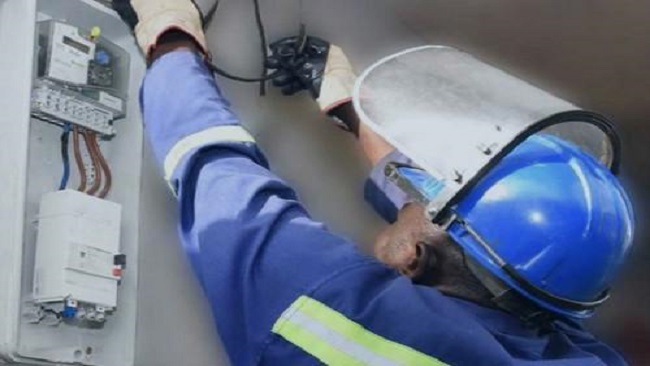
Power cuts are becoming a daily constraint in Yaoundé, with electricity distributor Eneo attributing the deterioration in supply to a surge in vandalism and theft targeting its distribution infrastructure in the capital and surrounding areas.
In a Feb. 5 statement, Eneo said that “more than a dozen electrical substations have been vandalized” in recent weeks across several neighborhoods of Yaoundé, including Golf, Ngoa-Ekellé, Messa, Mokolo, Melen, Etoug-Ebe, and Mvolyé. The company said the attacks have targeted equipment considered critical to network operations, making repairs more complex and extending restoration times.
The incidents come against a backdrop of frequent power outages and ongoing tensions between the operator and customers. The impact is spreading across the urban economy, slowing commercial activity and affecting small businesses, health facilities, and schools. Eneo said the acts “seriously undermine the continuity of public electricity service” and place additional strain on technical teams already operating under difficult field conditions.
In response, the company said it has launched an investigation with the support of the relevant authorities to “determine responsibility and identify all those involved, whether internal or external.” The statement suggests that possible internal complicity is not being ruled out, raising broader questions about internal controls and the security of field operations.
Eneo said the problem is not new. As early as April 2025, the utility warned of a rise in sabotage and fraudulent manipulation of the network. More recently, insulators were stolen from the line linking Nkolafamba to Nkolmeyang, on the outskirts of Yaoundé.
In the South region, Eneo said “more than 3,000 insulators” have been stolen since 2022 across several localities in the Dja-et-Lobo department. The financial impact is described as significant. Jean Jacques Ntock, Eneo’s technical delegate in the South, said each incident requires “lengthy, costly reconstruction work,” citing nearly CFA300 million spent on network rehabilitation in Dja-et-Lobo in 2025 alone. He said those funds could otherwise have been used to extend electricity access to new areas.
According to Eneo, stolen equipment is often reused in illegal networks, worsening technical and commercial losses. For a company undergoing renationalization by the state, such practices are presented as an avoidable cause of prolonged outages, alongside other factors such as generation shortfalls, transmission line incidents, and planned maintenance.
The situation is further complicated by financial constraints. Eneo said its debt stood at about CFA800 billion at the end of 2024, largely owed to suppliers, limiting its capacity to invest in securing and modernizing the network.
With power interruptions increasingly normalized in the capital, the utility is calling for greater protection of electricity infrastructure. “Preserving the power network is a collective responsibility, in the interest of the public good,” Eneo said, warning that without civic engagement, vigilance, and cooperation from residents, load shedding could become a lasting feature in Yaoundé.
Source: Sbbc










9, February 2026
Yaoundé: Security strains, political tensions cloud potential papal visit 0
Cameroon’s possible inclusion in the itinerary of Pope Leo XIV’s first African trip is drawing growing debate, as security concerns, political tensions and moral objections raise questions about whether the country is ready for a papal visit. While Cameroon has been rumored as a potential stop, no visit has been confirmed, even as Leo has accepted invitations to Equatorial Guinea and Angola, with Algeria being a desired stop as well.
Cameroon’s leading political scientist and expert on security, Kinang Derick, suggested that the nation is simply not yet prepared to host the pontiff safely. In a conversation with OSV News, the scholar said that the immense strain on Cameroon’s security infrastructure, following the contested Oct. 12, 2025, presidential election, could be a major stumbling block.
“Cameroon is just coming out from an electoral year in which a lot of resources have been used to ensure the security of the electoral process,” Derick told OSV News.
“The government might have not recovered sufficiently enough to still have what it takes to put the necessary resources to ensure the pope’s security,” he explained.
Leo’s first trip to Africa as pontiff has had some locations confirmed, with the of Equatorial Guinea being the latest confirmed stop. A series of recent announcements by bishops in Angola and Algeria have indicated that Leo will embark on trips to their respective countries this year.
Cardinal Jean-Paul Vesco of Algiers told journalists outside the Paul VI audience hall Jan. 8 that he discussed the possibility of a trip with the pope during the extraordinary consistory and that the visit was “on track.”
On Jan. 13, Angola was announced as another destination that Leo intends to visit this year. At a press conference in Luanda, Polish Archbishop Kryspin Witold Dubiel, apostolic nuncio to Angola, announced that the pope had accepted the invitation from Church and government officials to visit.
While Cameroon was for weeks rumoured as a possible destination, Derick told OSV News the nation’s security forces, both materially and in terms of manpower, are exhausted, compounded by ongoing instability in the two English-speaking regions, as well as Boko Haram incursions in the country’s far-northern region.
Cameroon’s two English-speaking regions have been gripped by separatist violence since 2017, when the government took a hard line following strikes by Anglophone teachers and lawyers.
The expert noted that the severe insecurity in these regions makes a papal trip “logistically and practically impossible at this time.”
He also touched on general infrastructural decay, citing poor road networks and inadequate health facilities in major cities as issues that must be addressed before Cameroon hosts the pontiff.
“You don’t certainly want the pope to move on bumpy roads, or to land on outdated airstrips,” Derick noted.
While a papal visit would certainly be good for strengthening the faiths of Cameroon’s Catholics, estimated at 38.3% of the country’s 30.1 million inhabitants, the government also views such a visit as a critical piece of diplomatic victory — one that would boost Cameroon’s battered image abroad.
The country has been the object of increasing international criticism as a result of gross human rights violations. According to Amnesty International, people critical of the regime face persecution and are threatened with restrictions on their right to freedom of movement. Journalists are intimidated by security forces.
The country’s image was further dented by the Oct. 12, 2025, presidential election. President Paul Biya, in power for 43 years, was declared the winner, extending his rule by another seven years. The main opposition leader, Issa Tchiroma, rejected the results and has since continued to claim that he is the duly elected president.
Furthermore, a prominent Cameroonian Jesuit priest and scholar has publicly urged the pontiff not to visit the West African country, warning that such a visit could be an endorsement of a regime whose legitimacy has been shattered by a recent “grave political and moral crisis.”
In an open letter addressed to the Holy Father, Fr. Ludovic Lado recalled that the latest election was “marred by massive fraud” to ensure the continued rule of 92-year-old Biya. The contested results, he argued, have triggered a painful post-electoral crisis marked by violence, deaths and severe repression.
“The dozens of victims counted were killed by bullets fired at unarmed civilians by an army that has become a militia under the control of one man,” Lado wrote in his letter to the pontiff, adding that the situation in the country is “tragically demonstrating the lack of regard for the dignity of human life in our country, especially that of the poorest.”
Lado argued that a papal visit would betray the pope’s core preference for helping the poor, and instead provide a platform for “an aging elite” — living in “comfort and luxury, almost in another world compared to ordinary people” — clinging to power.
He feared the trip would be instrumentalized by “illegitimate government seeking respectability.”
In a dramatic appeal, the Jesuit priest said, “the hands of the members of Paul Biya’s regime that You will be shaking during Your visit to Cameroon, like those of Herod and Pilate, are stained with the blood of poor Cameroonians, victims of political repression.”
He also highlighted the unresolved Anglophone crisis that killed at least 6,500 people over the last decade.
Instead of a pastoral visit, Lado suggested the Holy See could play a crucial role as a mediator for peace, proposing Vatican support for an initiative led by the Italian Community of Sant’Egidio to help the nation find a path out of its “historical impasse.”
A papal visit should only take place when Cameroon regains “a climate of justice, peace and reconciliation, with legitimate authorities,” he concluded.
Political analyst Derick, however, disagreed that the papal visit could be seen as an endorsement of the political power in the country, and he framed the pope’s potential mission as one of pastoral care and pacification.
“It will not be an endorsement of the present regime. It will be more of a visit to a suffering people, a visit to a category of faithful within the Roman Catholic Church that are in need of their spiritual father to come and tap them on the back and to make them understand all is well, that God has not forgotten Cameroonians,” he told OSV News.
He drew parallels to other international journeys carried out by late Pope Francis, when he visited crisis zones like Congo and the Central African Republic, noting that the pontiff historically travels to places of turmoil to bring hope and advocate for peace, not to validate political leadership.
If the Cameroon leg of the tour is finalized, Leo would become the third pontiff to visit the central African nation, following Pope St. John Paul II in August 1985 and Pope Benedict XVI in March 2009 — all under the same Cameroonian ruler.
Culled from National Catholic Reporter