1, August 2024
HIV/AIDS: Yaoundé launches nationwide survey to determine prevalence 0
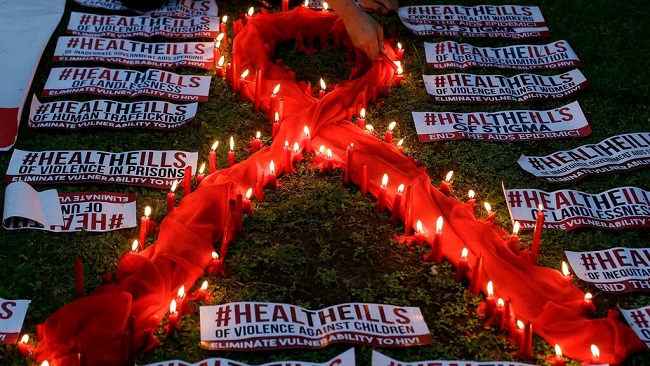
The Minister of Public Health Manaouda Malachie on Wednesday unveiled a nationwide survey to ascertain the prevalence of HIV/AIDS and the impact of preventive measures in the country.
The survey, dubbed Cameroon Population-based HIV Impact Assessment (CAMPHIA), will run from August to February 2025.
“It aims to comprehensively explore the situation of HIV infection within the population aged 15 and over based on a nationally representative sample. The primary objective of CAMPHIA 2024 is to estimate the national and regional prevalence of HIV viral suppression, while the secondary objectives are to estimate the incidence and prevalence of HIV at the national level,” Manaouda said in a statement made public Wednesday afternoon.
It is one of the largest surveys to assess HIV prevalence in the Central African nation and would aid in implementing new measures to further prevent its spread.
“Nationally, the survey will cover 512 enumeration areas from which 15,360 households will be randomly selected, for a total of approximately 28,405 people,” Manaouda added.
The first HIV survey was conducted in the country in 2017.
According to data published by the World Health Organization in 2023, Cameroon witnessed a 50 percent decrease in HIV prevalence among people aged 15 to 64 in the past 14 years.
Source: Xinhuanet

















1, August 2024
Rome: New report suggests long-term worries for Vatican finances 0
A new analysis of the Vatican’s financial situation by an Italian news outlet contains both good and bad news for papal finances, pointing to relative success in efforts to contain ballooning deficits but also seemingly irreversible long-term declines.
According to an overview of the most recent financial data published July 26 by La Repubblica, Italy’s most widely read daily newspaper, the Vatican’s annual operating deficit grew by roughly $5.4 million in 2023, a lower figure than in past years. The report suggested the result was due to the impact of both spending cuts and also efforts to generate more realistic appraisals of the value of Vatican properties.
Among the cost-cutting measures adopted in recent years include new limits on hiring and contracting, as well as efforts to increase the rents collected on some Vatican properties which are leased commercially and to put others up for sale.
The report cited a recently completed financial statement approved by the Vatican’s Council for the Economy, led by German Cardinal Reinhard Marx. According to the report, the deficit for 2023 amounted to over $90 million, with income of $1.25 billion and expenses of $1.34 billion.
Income in 2023 actually grew by $30 million, according to the financial statement, but expenses also went up by $36 million due to the impact of inflation.
The statement also indicated that the size of the 2023 deficit could still shrink somewhat depending on what the actual performance of the Vatican’s investment portfolios match projections.
The Repubblica analysis also found that income from the annual Peter’s Pence collection, which supports the works of the pope, amounted to $52.5 million in 2023, an increase over the $47.2 million collected in 2022.
Nonetheless, the net gain from the collection was offset by the fact that the fund’s reserves were once again draw upon in 2023 to support the Roman Curia, the Vatican’s chief administrative bureaucracy, to the tune of almost $98 million.
Moreover, the long-term trend in income from the fund is clearly downwards. According to the Repubblica analysis, collections dropped 23 percent overall from 2015 to 2019, and are poised for further reductions.
To some extent, those declines may be related to financial scandals, such as the aborted $400 million purchase of a former Harrods warehouse in London that resulted in the criminal convictions of nine figures for fraud, including Italian Cardinal Angelo Becciu. Given that Peter’s Pence also is sometimes viewed as a referendum on the popularity of the current pope, various controversies surrounding Franci may also have had an impact.
More basically, however, most observers believe the core factor is that much of the Peter’s Pence income derives from wealthier nations, where Catholic populations, and therefore Catholic giving, have been in decline for decades.
Declines in income are especially worrying for Vatican accountants today, given concerns about an aging workforce and unfunded pension obligations down the line. There’s also alarm that rising costs and declining income could eventually compel the Vatican to either trim its payroll or cut salaries, or both, at time when both the volume and the complexity of the workload from around the world is increasing rapidly.
The financial statement reportedly approved by the Council for the Economy concerns the Holy See, and mostly excludes both the Government of the Vatican City State, which is responsible for administration of the physical territory – including income, for example, from the Vatican Museums – and also excludes the Institute for the Works of Religion, the so-called “Vatican bank,” which for 2023 showed $33.2 million in income and a total of $5.9 billion in client assets.
However, it’s considered improbable that income from either the city state or the IOR will be sufficient in coming years to offset the Vatican’s broad deficits, leaving it unclear for the moment how the losses will be sustained.
Source: Crux