10, December 2022
Belgium makes EU parliament arrests in Qatar corruption investigation 0
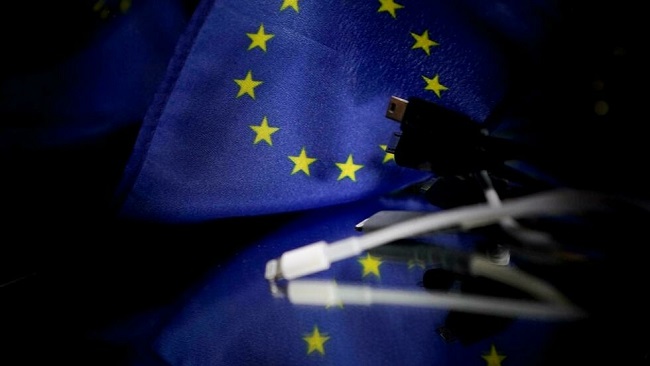
Belgian police arrested a European Parliament vice-president and four others in connection with an investigation into corruption implicating World Cup hosts Qatar, the prosecutors office said Friday.
Officers arrested Greek socialist MEP Eva Kaili hours after four other suspects had been detained for questioning. All four were either Italian citizens or originally came from Italy, a source close to the case told AFP.
Kaili is the partner of one of the four, a parliamentary assistant with the European Parliament’s Socialists and Democrats group, said the source.
Following reports of Kaili’s arrest, the president of the Greek socialists (PASOK) Nikos Androulakis announced on Twitter that she had been expelled from the party.
A statement issued earlier by Belgian prosecutors mentioned a Gulf country in connection with an investigation into corruption and money laundering, but did not name it. And while it said a former MEP was among those arrested, it did not identify him.
But Belgian press reports said the country concerned was Qatar, and named the former MEP as Italy’s Pier-Antonio Panzeri, who served as a socialist in the parliament between 2004 and 2019.
600,000 euros seized
Belgium’s federal prosecutor announced the earlier arrests after a series of raids at 16 addresses raids in the capital Brussels.
“Today’s searches have enabled investigators to recover about 600,000 euros in cash,” the prosecutors said in a statement.
“Computer equipment and mobile phones were also seized. These elements will be analysed as part of the investigations.”
Investigators “suspected a Gulf country (of influencing) the economic and political decisions of the European parliament”, the statement added.
It alleged this was done “by paying large sums of money or offering large gifts to” influential figures in the European parliament.
A source close to the case confirmed press reports that the investigation was into suspected attempts by Qatar to corrupt an Italian Socialist former MEP, who Belgian outlets Le Soir and Knack named as Panzeri.
‘Recognised and respected’
Kaili, 44, is a former television presenter and currently one of the European Parliament’s 14 vice presidents. In November, shortly before the World Cup started, she met Qatar’s Labour Minister Ali bin Samikh Al Marri.
In a video statement posted on Twitter by the Qatar News Agency she said: “I believe the World Cup for Arabs has been a great tool for… political transformation and reforms…”.
The European Parliament “recognised and respected” Qatar’s progress in labour reforms, she added.
She made similar comments during a speech at the European Parliament later in November, accusing some MEPs of “bullying” Qatar and accusing them of corruption.
Panzeri, 67, currently heads a Brussels-based human rights organisation called Fight Impunity.
According to the reports, the secretary general of the International Trade Union Confederation (ITUC), Italian Luca Visentini, was also among those arrested. The ITUC said it was “aware” of the media reports, but had no further comment to make at present.
Corruption accusations
The alleged bribery comes as World Cup host Qatar has made a major push to improve its image in the face of criticism over its record on worker protections and human rights.
Interviewed by AFP on Monday, Visentini welcomed progress made by Qatar on worker rights, but insisted “pressure” needed to be maintained once the football tournament finishes.
Migrant workers make up more than 2.5 million of Qatar’s 2.9 million population and labour conditions have been strongly criticised — particularly in the lead-up to the World Cup.
Doha has implemented reforms to its migrant labour system, but critics insist more work needs to be done to make sure the changes have an impact.
Qatar’s World Cup has also been dogged by accusations of corruption surrounding the FIFA members’ vote to award the tournament to the energy-rich Gulf state.
Belgium’s France Soir newspaper pointed out that Friday’s police raids came on the United Nations-designated International Anti-Corruption Day.
Source: AFP










11, December 2022
France eye World Cup glory as Morocco loom 0
Defending champions France on Sunday trained their sights on a World Cup semi-final against surprise package Morocco as Argentina and Lionel Messi prepare to take on Croatia.
Didier Deschamps’ men edged past England in a thrilling quarter-final in the Qatar desert to move one step closer to becoming the first team to retain the trophy in 60 years.
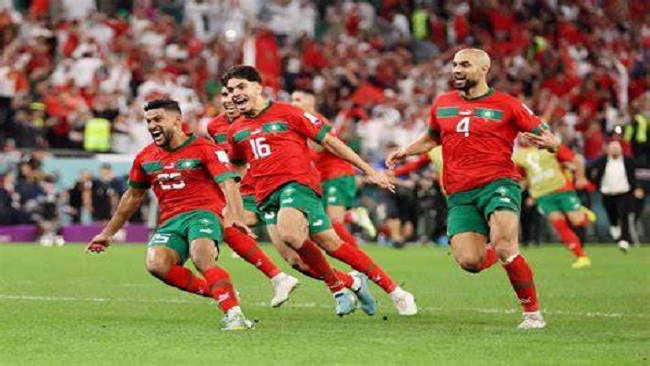
They will meet Morocco at the Al Bayt Stadium on Wednesday after the African team sent Cristiano Ronaldo’s Portugal packing to become the first African team in history to reach the last four.
France were second best for long spells against Gareth Southgate’s England on Saturday and were grateful for a late Harry Kane penalty miss as they won 2-1.
England captain Kane had earlier cancelled out Aurelien Tchouameni’s opener, firing past his Tottenham teammate Hugo Lloris from the penalty spot.
That goal put him level with Wayne Rooney as England’s all-time leading scorer.
Olivier Giroud headed France back into the lead in the 78th minute before England were handed a lifeline but this time Kane blasted over and England’s chance was gone.
Deschamps, who led France to triumph in Russia in 2018, said his side showed “hearts and guts” to defeat a youthful England team.
“There is quality in this team, but there is also a good mentality and a state of mind,” he said. “We gave them a little ammunition with two penalties, but it is with hearts and guts that we held onto this result.”
Deschamps, who also won the World Cup as a player, said France’s semi-final opponents Morocco, ranked 22nd in the world, “deserve all our respect and recognition”.
“They weren’t among the teams we were expecting there, but it’s anything but a surprise.”
Southgate said he would take his time before he makes a decision over his future as England coach as the nation’s long and painful wait for a major trophy goes on.
The 1966 World Cup winners reached the semi-finals in 2018 and the final at last year’s European Championship but have again come up short against top-class opposition.
Morocco shock
Only the most fervent Morocco fan would have bet on their side reaching the World Cup semi-finals before the tournament kicked off.
On Saturday, they beat Ronaldo and Portugal 1-0 thanks to Youssef En-Nesyri’s first-half header, to go further than any African team ever has at a World Cup.
“We’re drawing on all we have, we still have guys injured,” said Morocco coach Walid Regragui. “I told the guys before the match we had to write history for Africa. I’m very, very happy.”
As their national team made history, crowds gathered in Casablanca and chanted “Qualified! Qualified!”
There were also celebrations across the Arab world and in Europe as Morocco are also the first Arab team to reach a World Cup semi-final.
Ronaldo headed down the tunnel with tears streaming down his face after the bitter defeat, ignoring the Morocco players rushing to their fans to celebrate.
At 37, his final chance of adding the World Cup to his Euro 2016 triumph has almost certainly gone as the end of an era of global superstars looms.
Brazil’s Neymar, who has already indicated he may never pull on the Brazil shirt again, said Saturday he was “psychologically destroyed” by his side’s elimination at the hands of Croatia on penalties on Friday.
“It is definitely the defeat which has hurt me the most, which left me paralysed for ten minutes after the match, after which I burst into tears without being able to stop,” the 30-year-old said in an Instagram message.
Messi is also likely playing on the biggest stage for the final time at the age of 35 but he has a golden chance to match the achievement of Diego Maradona, who lifted the trophy for Argentina in 1986.
The South American giants will meet the beaten 2018 finalists at Lusail Stadium on Tuesday after squeezing past the Netherlands on penalties.
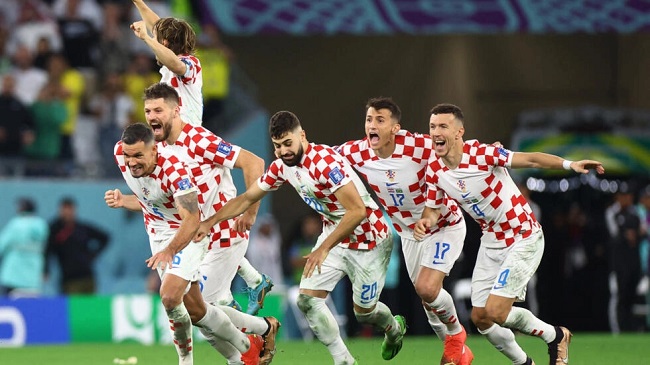
They will meet a Croatia team led and inspired by veteran Real Madrid midfielder Luka Modric, who will be aiming to go one better than they did four years ago.
Source: AFP