27, September 2025
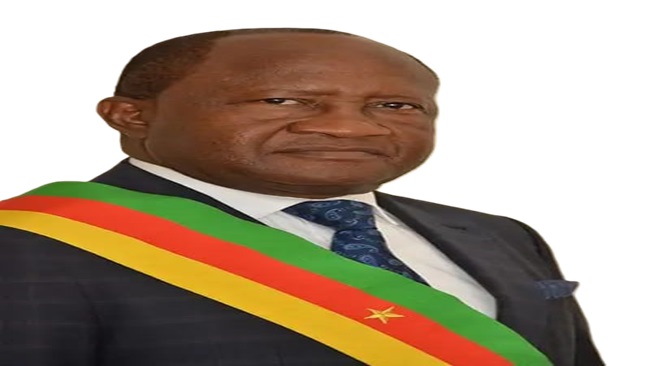
Race for Etoudi: Maurice Kamto’s neutrality, statesmanship or self interest 0
As Cameroonians brace for the high stakes presidential election on October 12, 2025, the political terrain is as fractured as ever.
Calls for a united opposition have intensified, especially among the growing number of citizens desperate for political change after decades of entrenched incumbency.
At one time, all eyes turned to Professor Maurice Kamto, the man many believed could play a pivotal king-making role. Yet in a puzzling twist, Kamto has chosen to sit on the sidelines, refusing to endorse any of the opposition candidates despite the expectations placed on him.
His neutrality is deafening and dangerous.
Kamto, the leader of the Cameroon Renaissance Movement (CRM) and arguably the most prominent opposition figure in the country since the 2018 election, has long been hailed as a beacon of hope by many Cameroonians.
His intellectual rigor, legal expertise and previous political defiance, have earned him respect and admiration. However, his recent refusal to guide voters or rally behind a consensus candidate is forcing even his most ardent supporters to ask if he truly wants change?
After being rejected from the presidential race, a controversial move that itself warrants scrutiny, Kamto found himself in a unique position. He may not be on the ballot but he still hold moral and political capital. In moments like these, true leadership reveals itself not in the pursuit of power but in how one uses influence for the common good.
Unfortunately, Kamto has refused to endorse any of the remaining opposition candidates. This decision has baffled many who saw in him a potential architect of opposition unity.
Ironically, while he criticized the two northern candidates for not consolidating their bids, he himself failed to make any unifying move. Instead of stepping up to foster dialogue, rally the fragmented opposition or point his supporters in the right direction, Kamto has opted for neutrality, a stance that now reeks of political convenience.
This raises many questions. Can a man who has refused to support any opposition candidate still claim to champion democratic change in the country?
There is a risk of fragmentation which implies a dispersion of votes, making the ruling party a winner.
The Cameroonian opposition has long been its own worse enemy. Chronic disunity, ego problems and lack of strategic coherence have repeatedly handed victory to the ruling party. In the face of growing public discontent, Prof. Kamto’s refusal to act as a unifier at such a crucial juncture only reinforces this damaging pattern.
There is no shortage of capable candidates in the current race. However, if votes will be shared among multiple opposition parties, the dying regime will once again find itself in a favorable position, not necessarily because it is strong but because the opposition is weak, divided and without the right mindset.
Kamto’s refusal to back even one of these candidates or to initiate a dialogue that could lead to a united front is not just disappointing. It is politically irresponsible.
For someone whose political brand is built on justice and national renewal, Kamto’s action sends a conflicting message. It is hard to decry the dysfunction of the opposition while refusing to take steps to fix it. It is hard to fight for the people while leaving them without guidance in their hour of need.
Supporters often cite Kamto’s legal background, his statesmanship and his vision as reasons to trust his judgment. But history judges leaders not just by what they say but what they do, especially when the stakes are high.
In months and years to come, Kamto will be forced to deal with the possibility that his legacy may be defined not by the battles he fought but by the one he chose to avoid.
This is not to say Kamto had an easy task. Endorsing a candidate in a competitive and ideologically diverse opposition carries risks. But leadership is about risk. It is about humility. It is about being able to demonstrate that even if he is not the one leading the charge against a crumbling goverment, the movement must go on.
Instead, Kamto has chosen to demonstrate a strange indifference the people’s wish while casting blame on others for failing to unite. This paints a picture of a man more interested in being the face of change than in actually triggering it.
Cameroon stands at the crossroads. This election could be a defining moment in the country’s democratic evolution. But progress will not come through rhetoric alone. It requires action, compromise and, above all, unity.
In refusing to endorse a candidate, Kamto has not just missed an opportunity to occupy a strategic position in the country’s political history, but has also proven to the people that their political interest is paramount.
He has actively undermined the opposition’s best shot at unseating a decades-old regime. His neutrality has sown confusion among voters and emboldened the very regime he claims to oppose.
Ultimately, the burden of responsibility falls on all opposition leaders but disproportionately on those with the stature to influence outcomes. Kamto had and still has a chance to help shape the future but that requires setting egos aside, abandoning the illusion of being the sole savior and stepping into the role history is offering him not necessarily as president but as a true patriot and unifier.
In a political climate where neutrality speaks louder than words, Kamto’s refusal to act is being interpreted rightly or wrongly as a betrayal of the movement he helped build. Whether this is a tactical pause or a permanent abdication of responsibility, only time will tell. As the country marches toward October 12, one truth becomes increasingly clear.
In the face of injustice neutrality is not neutrality it is complicity.
For a man of Kamto’s standing, there is a high price to pay for neutrality.
By Ntam Charles Ngeh













29, September 2025
Presidential election campaign kicks off in Cameroon 0
Cameroon’s presidential race officially began on Saturday, with 12 candidates, including one woman, vying for the country’s highest office.
The campaign will last for two weeks, culminating in the presidential election on Oct. 12.
Incumbent President Paul Biya, leader of the ruling Cameroon People’s Democratic Movement, is seeking to extend his 43-year rule by winning another seven-year mandate.
Issa Tchiroma Bakary and Bello Bouba Maigari, former ministers and ex-allies of Biya, are among the main opposition contenders.
Joshua Osih, candidate of the leading opposition Social Democratic Front, launched his campaign in Bamenda, the chief town of the English-speaking Northwest Region, which has been ravaged by an armed separatist conflict since 2017.
Separatist fighters have imposed a month-long lockdown to disrupt the election in the war-torn English-speaking regions of the Northwest and Southwest, where they are seeking to create an independent nation.
Source: Xinhuanet