19, February 2022
CPDM Crime Syndicate: Angry football crush victims’ families bury their dead without outside support 0
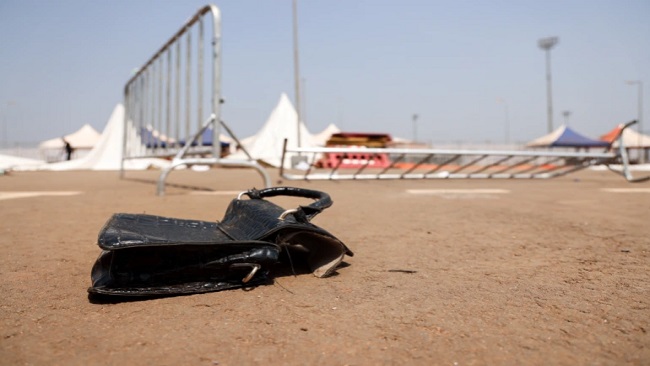
Families of eight people who died in the January football stampede at Yaounde’s 60,000-seat Olembe stadium say they are burying their dead without assistance from Cameroon’s government or the Confederation of African Football. The stampede, which also injured 38, occurred ahead of an Africa Football Cup of Nations match between Cameroon and Comoros Island.
A Roman Catholic Church choral group sang on Friday at a viewing ceremony at Mbalmayo, a commercial town about 50 kilometers to the south of Cameroon’s capital, Yaounde.
Several hundred people, including teachers, students and merchants came to pay their last respects to Veronique Djilo, a teacher and one of those killed as crowds struggled to get into the stadium to watch the Cameroon national team play against Comoros Island on January 24.
Among the mourners was Etienne Modji, Djilo’s older brother. Modji said it was not easy for him to buy a casket and transport his sister’s body to Bandjoun, a western commercial town where Djilo was born. He said he has not been able to buy enough food for the hundreds of people coming to pay their last respect to Djilo.
Modji said he has not seen the money Cameroon state radio said Cameroon’s Indomitable Lions football team contributed for the injured and families of those killed in the Olembe stadium crush. Modji said his relatives and well-wishers donated money to help his family prepare for his sister’s burial.
Veronique Djilo was a person living with disabilities. She had no lower limbs and was teaching in Mbalmayo.
Emmanuelle Tchotchom, executive president of the nongovernmental organization Inclusive Society for Persons Living with Disabilities said at least 60 people with disabilities traveled to Mbalmayo, ready to accompany Djilo’s body to Bandjoun for burial. Tchotchom said the government did not transport neither Djilo’s body nor the people with disabilities accompanying the casket to Bandjoun, as her association had requested.
Tchotchom said only 12 of the 60 people who wanted to make the trip could afford the fares to and from Bandjoun, where Djilo was buried Saturday.
Three other crush victims have been buried in Yaoundé. Their families also say they did not receive any assistance from the government or the Confederation of African Football, CAF, which organized the tournament.
CAF President Patrice Motsepe visited injured victims at the hospital on January 25 and said it was the duty of host nations to take care of the security and safety of football players, fans and match officials. Motsepe said it is the host country that takes care of injured persons and families of the bereaved.
Cameroon’s team said it donated $85,000 to injured victims of the stampede and family members of those who died.
The injured victims and family members of the dead said they do not know where the money is.
Sports and Physical Education Minister Narcisse Mouelle Kombi would not comment this week when asked about the promised assistance to crush victims. He said, though, the injured were treated free of charge as instructed by Cameroonian President Paul Biya.
Cameroon Football Federation officials did not answer reporters’ questions on the whereabouts of the money the Indomitable Lions said they donated.
Source: VOA





21, February 2022
Military-Separatists War: Education is on standby in Southern Cameroons 0
Education is on standby in Cameroon’s English-speaking South West and North West regions, where students and the education system are paying a high price for a war between separatists and the Defense and Security Forces (DSF).
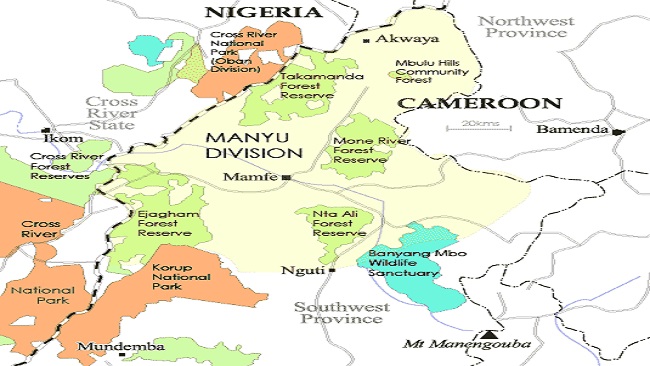
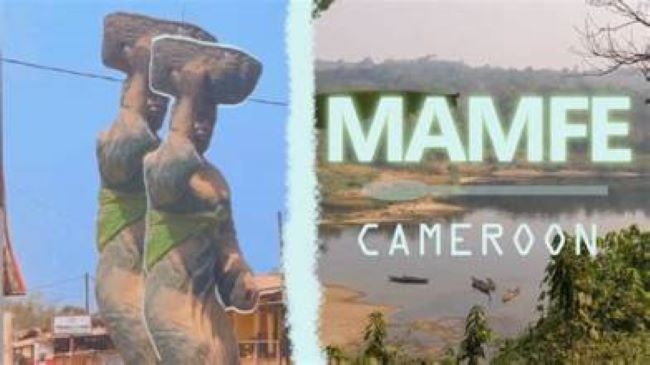
This year’s traditional Feb. 11 Youth Day parade was marked by the burning of dormitories and threats against students at Queen of the Rosary College Okoyong in Mamfe in the South West region by armed separatists the night before.
The video of the fire was posted on social media, infuriating the public and upsetting the national and international communities. The attack has renewed debate over the state of education in Cameroon’s separatist-afflicted regions, which have been ravaged by the separatists since 2016.
“Feb. 11 is not to be celebrated in the North West and South West because of the war that is going on. We are at war. We should not pretend. Sometimes we do this to get the attention of the international community because we know that they are following all the events closely. Our videos are war strategies,” ‘Daddy Boy’, leader of the Ambazonia Military Forces (AMF), a group of separatist fighters, told Anadolu Agency by phone.
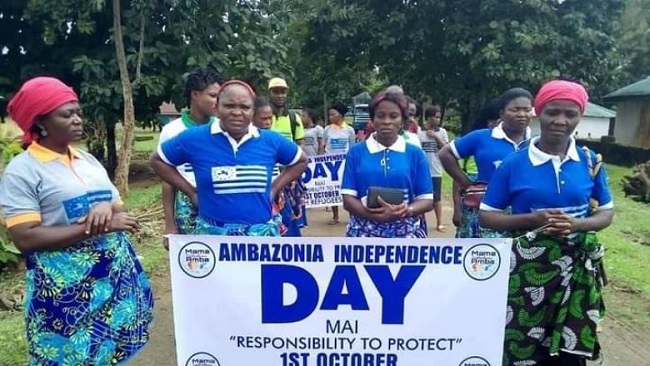
The English-speaking minority in this bilingual Central African country feels marginalized and has staged a series of protests since 2016 calling for independence.
The unresolved conflict has resulted in at least 15 attacks on schools and 268 abductions of students and education professionals, deteriorating the security situation, closing schools and depriving 700,000 students since 2017, according to Human Rights Watch (HRW).
Separatists have “attacked, intimidated or threatened thousands of students, education workers and parents in an effort to prevent children from attending school,” it said.
Local authorities and non-governmental organizations also reported school massacres in which at least 11 students and at least two teachers lost their lives between 2020 and 2021. Of these students, the Center for Human Rights and Democracy in Africa (CHRDA) and the World Organization Against Torture (OMCT) documented two killings between October and November 2021 by the DSF.
“Armed separatists bear full responsibility for these targeted attacks on education, but the response of the Cameroonian government and security forces has been inadequate and is hampered by the numerous abusive counterinsurgency operations in the Anglophone regions, which have spread deep mistrust among the civilian population victimized by these operations,” according to HRW.
Daddy Boy reported that when the struggle began in 2016, the only objective was to stop schools with the help of civil society in order to get the government’s attention.
”But things have changed on the ground and the struggle persists. We found out that at this stage, schools have no effect because we are now in a total war, so there is no point in disturbing the students from going to school,” he said.
He is convinced that the government is working on school attacks also through the military in order to incriminate the separatists and stir up international outrage.
“We are here to support and protect these children as our top priority, not to harm them in any way. I speak as a fighter on the ground. If we were killing children, then there would be no schools, and yet there are still schools open. To enter the premises of a school and mourn all the students is nothing for us because we know all the roads and the environment of our towns, but we cannot do that because we all know what we are fighting for,” he said.
Human rights lawyer Agbor Nkongho Felix Balla said that although the Cameroonian government has signed the UN Safe Schools Declaration, its military has not provided school security.
Following the Oct. 24, 2020 massacre at Mother Francisca International Bilingual Academy in Kumba in the South West region, where at least seven children aged 7 to 12 were killed by bullets and knives and a dozen injured, the Ministry of Communication said the attacked school had launched its activities without the government’s knowledge and therefore could not benefit from the same protective measures as other schools.
The secessionists’ objective was to break the momentum observed in the resumption of classes, it said, also accusing Cameroonians in the diaspora of orchestrating these despicable killings and fueling the climate of insecurity in the Anglophone regions.
The separatists denied it, calling it “false allegations” and blamed the security forces for some of the school attacks. The government has refuted the charges, saying these are intended to discredit the military.
Student soldiers
Meanwhile, Balla warned of the possibility of the uneducated generation of Anglophone youth joining criminal fighters because they lack other economic survival skills.
“Before joining the struggle, I was a student and at the same time a businessman. But after the murder of my three brothers and the way we’ve been mistreated, I decided to fight as a separatist,” said Daddy Boy.
He cited former classmates and teachers who are on the battlefield with him today “because they have definitely lost everything they owned, from their homes, businesses and personal belongings.”
“Many of our people have joined this fight not because they desire separation or a separate country, but because they are frustrated and have nowhere else to go. Some join because their family members are imprisoned,” he explained.
“For others who are dissatisfied, joining the war provides them protection from the AmbaBoys (or Ambazonians),” he added.
Despite the “pain,” he said he is ready to end the fight and return to school at any time if he has the opportunity to, and in a different atmosphere — this after the release of war prisoners, the Anglophone zones’ demilitarization, a general amnesty and after a real peaceful dialogue with “a third party mediation on neutral ground.”
The dialogue organized on Sept. 30, 2019 by Cameroon’s President Paul Biya was, according to him, “a monologue” without a real willingness to engage in dialogue because the necessary conditions were not met and separatist fighters were exposed to the possibility of being arrested or killed.
If the government and separatists could have ended the conflict, they would have, according to Arrey Elvis Ntui, a senior Cameroonian expert with the International Crisis Group (ICG).
“The government and the separatists are pursuing a military strategy, in part because of the government’s reluctance to engage in inclusive talks with these Anglophone groups. What is sorely lacking is a mediation effort that can reduce the mistrust between the parties and bring them to the negotiating table,” he said.
Source: Anadolu Agency