19, April 2021
Cardinal Tumi: Renowned Cleric going home to rest 0
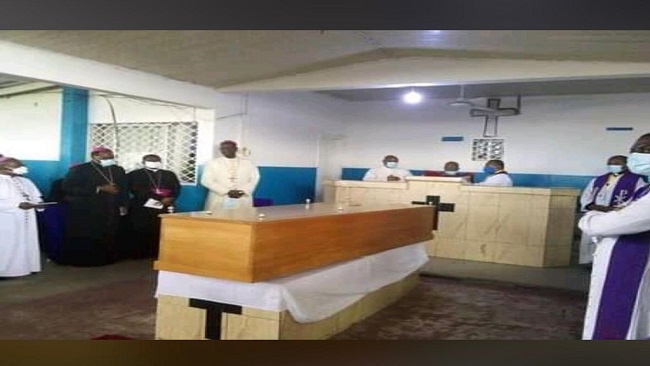
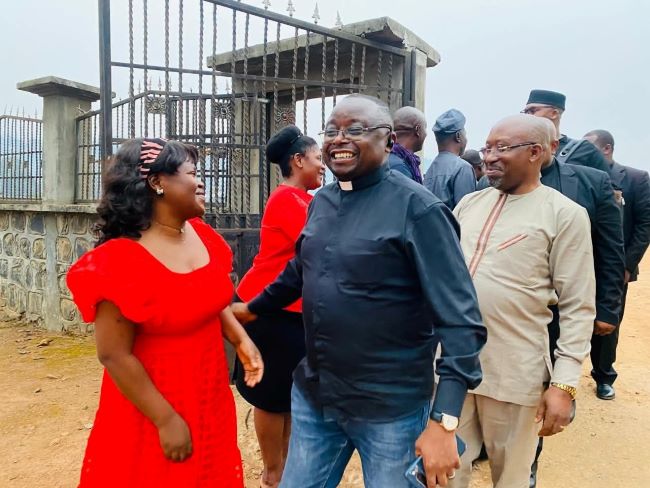
The late Archbishop Emeritus of Douala His Eminence Cardinal Christian Tumi, has embarked on his final journey home to rest. The funeral ceremony of the 91-year-old cleric, who died on Saturday, April 3, 2021 in Douala, is spread over two days.
The funeral rites started today Monday at 11am at the Douala Military Hospital in the Bonanjo district in Douala. The vigil mass will be held at 8pm at the Cathedral of Saints Paul and Peter in Bonadibong, and a Eucharistic Celebration on Tuesday 20 April 2021 at 10am.
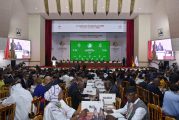
All the bishops of Cameroon have converged in Douala, after they recently met at the 46th Plenary Assembly of the National Episcopal Conference in Yaoundé.
In his opening remarks, Bishop Abraham Kome, Bishop of Bafang and President of the National Episcopal Conference of Cameroon, expressed the sorrow of the entire Church of Cameroon, following the passing to eternity of His Eminence Cardinal Christian Tumi and invited the Bishops and all Christians to continue to pray to the Risen Lord to open the gates of the Kingdom to this dedicated pastor.
By Rita Akana in Douala












19, April 2021
Jose Mourinho: from ‘Special One’ to trophy-less-one 0
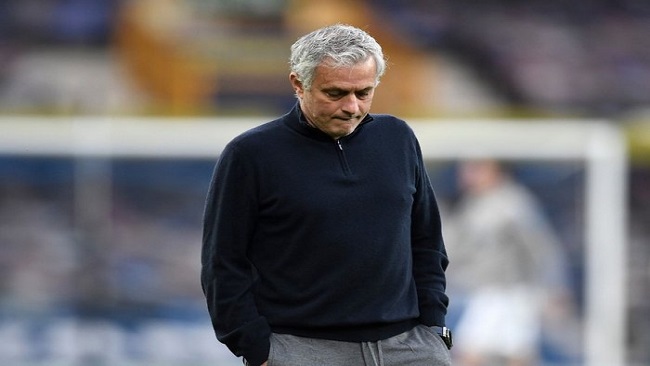
Jose Mourinho is one of Europe’s most successful club managers, but his trajectory at Tottenham Hotspur tracked a wearily familiar arc of initial promise followed by bitter recrimination.
For the first time since the early years of his managerial career in Portugal, the self-declared “Special One” leaves a club without silverware after he was sacked by Spurs on Monday.
The timing was a surprise coming less than a week before Tottenham have a chance to break their 13-year barren run, in Sunday’s League Cup final against Manchester City.
But notably, it came the day after the London club controversially set out its intent to join others in a breakaway European super league, with chairman Daniel Levy unhappy at how Spurs have become Premiership also-rans under Mourinho.
Yet again, the famously outspoken 58-year-old leaves under a shadow — at odds with senior players, with the media, and with fans.
A serial winner across Europe, Mourinho arrived at Spurs 17 months ago with a point to prove after his reputation was tarnished by a more than two-year spell in charge of Manchester United.
Tottenham’s swashbuckling credo is “to dare is to do”. But fans hungry for success swallowed their initial misgivings over the appointment of a coach who was ruthlessly pragmatic in his style of play.
“It’s not important how we play. If you have a Ferrari and I have a small car, to beat you in a race I have to break your wheel or put sugar in your tank,” he had said in 2010.
While he claimed three trophies at Old Trafford, including the 2017 Europa League, the end came with a dismal run of results and high-profile disagreements with players.
Much the same dynamic had played out in previous spells at Chelsea and Real Madrid, marked also by running feuds with opposition managers and the press, and a surly unwillingness to admit any shortcomings.
Despite brief periods of optimism this season at Tottenham, including beating United 6-1 at Old Trafford and briefly topping the Premier League table, a barren 2021 has seen the team repeatedly squander winning positions.
– ‘Don’t call me arrogant’ –
After a brief and undistinguished playing career in Portugal, Mourinho’s road to managerial success was paved by the arrival in 1992 of Englishman Bobby Robson to take charge of Sporting Lisbon.
Robson appointed the young sports science graduate as his interpreter, and Mourinho followed the former England manager to successive positions at Porto and Barcelona, becoming assistant coach.
By 2002, Mourinho had experience of the managerial hot-seat in his own right during spells at Benfica and Uniao de Leiria. But it was at Porto that his career truly took off.
In the first knockout round of the 2003-04 Champions League, Porto beat Manchester United with a last-minute goal, and Mourinho announced himself on the European stage by running dramatically from his dug-out to celebrate wildly with his players.
The Portuguese club went on to beat Monaco in the final, and Mourinho was now in the sights of Chelsea’s ambitious new owner, Russian oligarch Roman Abramovich.
Mourinho paid short shrift to any notion that he might take time acclimatising to England’s ferociously competitive footballing scene.
“Please don’t call me arrogant, but I’m European champion and I think I’m a special one,” he said after taking over as Chelsea boss.
– The ‘Happy One’ –
He put Abramovich’s billions to spectacular use to end the Arsenal-Manchester United duopoly, winning the Premier League title in his first season and repeating the feat the following year before things turned sour.
Next stop was Inter Milan, who became the first Italian side to complete the treble of league, cup and Champions League.
At Real Madrid, he tussled with Pep Guardiola’s great Barcelona side, winning the league title in 2012. But he failed to lead them to European glory, the benchmark of success for Real.
In June 2013, Chelsea appointed Mourinho — now the “Happy One” — as manager for the second time.
He won a third Premier League title in his second season in charge, before a poor start to the next campaign cost him his job.
Even though he failed to win the league title at Manchester United, he still added the Europa League and the League Cup to United’s groaning trophy cabinet, before falling out with senior squad members and the club’s directors.
And with his stormy time in North London also now cut brutally short, Mourinho is in unknown territory, a managerial failure for the first time since leaving Portugal.
Source: AFP