27, January 2021
Biya and the Atangana-Titus Edzoa affair billions 0
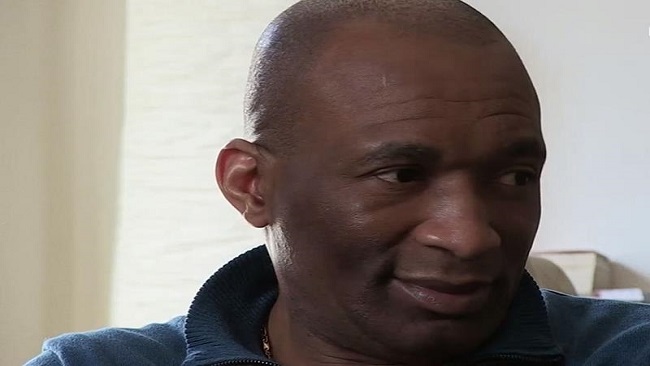
The Biya regime freed a French businessman whose 17-year imprisonment on corruption charges became a source of tension between the two countries and drew appeals from the then French President François Hollande and the UN human rights agency.
Michel Thierry Atangana was released from jail in the capital, Yaoundé and his family, lawyers and many political observers have maintained that his arrest and imprisonment were purely political.
Today, Michel Thierry Atangana, the so-called French businessman of Cameroonian origin who spent 17 years behind bars in Cameroon, is battling Yaoundé to extract 57bn CFA francs (€86m) in compensation over a decades-old financing mechanism.
Cameroon Intelligence Report understands Atangana had been working in Cameroon on a motorway development project when he was accused of embezzling 1.1 billion CFA francs (90 million euros) of public money alongside former health minister Titus Edzoa.
Before their imprisonment, Edzoa, a former adviser to President Paul Biya, resigned from his cabinet position and announced he would challenge Biya in the 1997 election. Atangana was his campaign manager and at this juncture nothing was mentioned of him being a French citizen in a country where dual nationality is not accepted.
Minister Edzoa Titus and Thierry Atangana were due to complete their initial prison terms in 2012 but new charges were brought against them and both were found guilty and sentenced to 20 years imprisonment in October 2013. The decision prompted an outcry from France, the UN rights commission and international rights groups who denounced the trial as unfair and politically motivated.
Atangana and Edzoa have always denied the allegations against them.
The release of the two came after the French government forced Biya to sign a special decree to pardon a category of prisoners – those sentenced for more than ten years on charges of embezzling public funds – as part of celebrations to mark the 50th anniversary of the reunification of British Southern Cameroons and French Cameroun.
In January 2013, French President François Hollande described Atangana’s detention as “unacceptable” and urged Biya to “push for a solution”.
Reported by Soter Agbaw-Ebai with files from Africa Intelligence and France 24

















27, January 2021
Global tally of Covid-19 cases surpasses 100 million as new strains emerge 0
More than 100 million Covid-19 cases have now been recorded worldwide, according to an AFP tally on Tuesday, as newly-inaugurated President Joe Biden pledged to ramp up the United States’s struggling vaccine program.
The number of cases, compiled from data provided by national health agencies, represents just a fraction of the real infections as the coronavirus has spread around the globe.
The United States, which passed 25 million confirmed cases last weekend, remains the country with the largest outbreak — and the largest death toll of over 420,000.
Biden is seeking to turn around the fight against the virus, which took a ferocious grip on the country during Donald Trump’s presidency when the risks were downplayed and officials gave mixed messages on mask-wearing and socialising.
Biden said vaccinating the entire US population was a daunting challenge, and the program inherited from the Trump administration “was in worse shape than we anticipated or expected.”
“This is a war-time undertaking. It’s not hyperbole,” he said, announcing the US was buying an additional 200 million doses and will have enough to vaccinate 300 million Americans — virtually the entire population — by early fall.
In another day of grim milestones, Britain surged past 100,000 Covid-19 deaths, and other European nations looked to tighten their borders, hoping to keep out new, more transmissible virus strains.
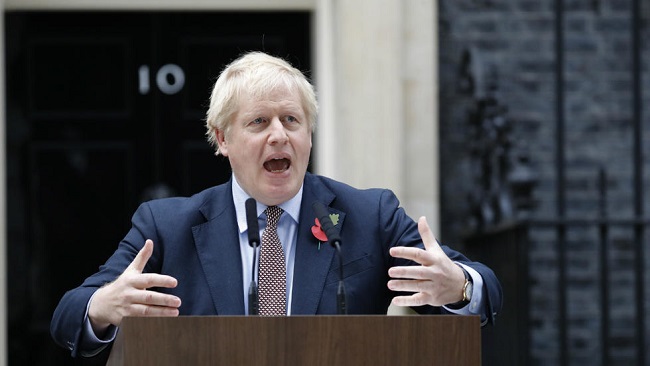
Prime Minister Boris Johnson said it was “hard to compute” the loss felt by British families after his country became the first European country to surpass 100,000 Covid-19 deaths.
But he said his government, which faced criticism over its initial response to the outbreak, “did everything that we could to minimise suffering and minimise loss of life.”
‘Drastic measures’
The UK has struggled to counter a brutal third wave blamed on a new variant that emerged there before Christmas before spreading to dozens of countries around the world.
Neighboring Ireland said Tuesday it would enact mandatory travel quarantines for the first time, as well extending its third national lockdown until March 5.
Among other European nations looking to strengthen border controls was Germany, which said it is considering almost completely halting flights into the country.
“The danger from the numerous virus mutations forces us to consider drastic measures,” Interior Minister Horst Seehofer told the Bild newspaper.
Iceland meanwhile started to issue vaccination certificates to ease travel for those who have had both required doses.
The new measures came as anger rises over grinding anti-coronavirus restrictions, with the Netherlands rocked by nightly riots since it imposed a curfew on Saturday.
More than 400 people were arrested after the worst unrest to hit the country in four decades, but the Dutch government said it would not back down.
“You don’t capitulate to people who smash shop windows,” Dutch Finance Minister Wopke Hoekstra said, calling the rioters “scum.”
Israeli police also clashed with protesters, arresting 14 people after ultra-Orthodox Jews demonstrated against lockdown measures.
With the global death toll at 2.1 million, the world has looked to vaccines to break the gloom, but bickering over access to doses has intensified.
Tensions have in particular mounted between the European Union and pharmaceutical firms over delays to deliveries.
“Europe invested billions to help develop the world’s first Covid-19 vaccines,” EU chief Ursula von der Leyen told the virtual World Economic Forum (WEF). “And now, the companies must deliver. They must honour their obligations.”
‘Vaccine nationalism’
Europe’s vaccination campaign stumbled after British-Swedish drugs company AstraZeneca warned it would not be able to meet promised targets on EU shipments — a week after US group Pfizer said it was also delaying delivery volumes.
AstraZeneca’s CEO insisted Tuesday that the company was not selling vaccines ordered by the EU to other countries at a profit.
The widening gap for vaccine supplies between rich and poor countries led both South African President Cyril Ramaphosa and World Health Organization chief Tedros Adhanom Ghebreyesus to lash out at “vaccine nationalism.”
Ramaphosa told the WEF that low- and middle-income countries were being shouldered aside by wealthier nations able to acquire “up to four times what their population needs.”
The row over access to vaccines at the WEF — normally held at the Swiss ski resort of Davos — comes as the pandemic compounds economic inequality.
Despite Lebanon being under one of the world’s strictest lockdowns, father-of-six Omar Qarhani told AFP he was still selling vegetables on the side of a road in Tripoli because he is desperate to support his family.
“I’m not scared of corona — what scares me is being in need and poverty,” he said.
Brazil banned flights from South Africa — both countries have their own new variants — while virus deaths in Mexico passed the 150,000 mark on Monday just a day after President Andres Manuel Lopez Obrador said he tested positive.
The IMF now predicts a “cumulative output loss” of $22 trillion — the equivalent of the entire US economy — over 2020-25.
Nevertheless, optimism that vaccines will bring the pandemic under control and allow economic activity to resume, coupled with stimulus in major economies, boosted the IMF’s growth forecast this year to 5.5 percent.
(AFP)