
28, August 2020
Biya regime is not learning the governance lessons offered by Covid-19 0
One might suppose the coronavirus pandemic has given African leaders an opportunity to rethink their approach to governance. This particularly holds true for Cameroon, which appears to have suffered the brunt of the virus in Central Africa, registering close to half of all 1 025 fatalities in Central Africa as of Monday. By this same date, the country had 18 762 confirmed cases, surpassing its neighbours Chad, Congo, the Central African Republic and Gabon combined.
But with the coronavirus, the more things seem to have changed, the more they seem to have remained the same. Despite the free lessons offered by the pandemic, Cameroonian officials appear not to have learned to build on public trust to better prepare for future crises like the climate crisis, which is slowly grinding, but devastating in its effects.
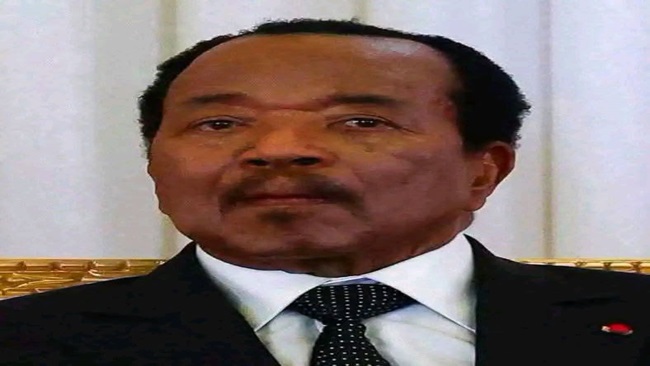
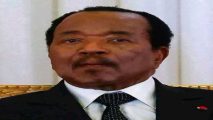
For any response to a crisis of the magnitude and complexity of the coronavirus to succeed, it will largely depend on the contribution and collaboration of the masses. President Paul Biya, 87, presumably understands this, which is why, when he managed to address his compatriots on the coronavirus for the first time on May 19, he called on them to remain united, supportive and disciplined.
“I, therefore, call on Cameroonians to have trust in public authorities,” Biya said. But Biya himself has not earned the trust he is requiring of citizens; because of that, the country’s citizens have not made “a lot of effort” to fight Covid-19, as he implored them to.
As part of measures to contain the coronavirus in Cameroon, the government made the wearing of face masks in public mandatory; limited gatherings to 50 people; and closed all land, air and sea borders. But the president has, on several occasions, appeared in public without a mask. Other public authorities, such as MPs, have flouted the restriction on gatherings, and the country’s airspace was opened to Air France to run commercial passenger flights from France — a high-risk country at the time.
Such behaviour by public authorities during a pandemic nips public trust in the bud. It means people are less likely to trust the same public officials asking them to make sacrifices by giving up certain rights and privileges for the sake of the nation.
It is, therefore, not surprising to see Cameroonians ignoring the preventive measures put in place by public authorities. Many citizens have become carefree. They no longer put on face masks in public, nor observe the hygiene and physical distancing measures set out by the government. The outcome is that the contagion keeps rising and there are no indications when the curve will flatten. Manaouda Malachie, the minister of public health, recently warned of a second wave of the coronavirus in the country if strong action is not taken.
In future, this lack of public trust is going to frustrate responses to potential crises, should the tide not be reversed. People who mistrust their leaders in ordinary times can’t trust them one bit in extraordinary times.
In addition, the government has not been proactive in shining a light on the management of resources contributed by the public to help fight the coronavirus, putting its transparency in handling the pandemic in question.
In July, some citizens took to social media to question the whereabouts of about 4 000 bags of rice that had been donated in March by Orca, a home goods retail store. It was only then that the minister of public health communicated information about the donation. Yet the minister only shifted the burden of clarification from himself to the 10 regional governors: he said the bags of rice had been dispatched to the regions for further distribution. How or whether the bags of rice got to the intended beneficiaries is still unclear.
The health minister also offered an explanation of how about 21-billion CFA francs ($38-million) of funds designated for the Covid-19 response had been spent only a few days after an opposition MP raised an alarm over suspicions of corruption. Jean-Michel Nintcheu of the Social Democratic Front had expressed concerns that the money — contributed by the public through a national solidarity fund — had been subject to corruption, citing overbilling and conflicts of interests within the public health ministry and among its officials.
Cameroon has a longstanding problem of corruption. It has emerged as the world’s most-corrupt country on two occasions, according to Transparency International’s Corruption Perception Index. Systematic corruption continues to be a problem. It would have, therefore, been surprising if the coronavirus didn’t come up against the all-pervasive corruption in the country.
The public health minister created a commission to investigate corruption in relation to the Covid-19 response, even though several anti-graft structures already exist in the country. But this doesn’t translate to a serious intent to fight corruption when a lack of transparency in the management of public funds leaves a perception of corruption in the minds of the people.
Giving room to citizens to perceive corruption in the response to a pandemic is exactly how not to handle a crisis. It will certainly affect future handling of crises. It is apparent that there is no one to compel these public officials to be transparent at all stages in their management of the current crisis — and their own consciences don’t appear to be sufficient.
Culled from mg.co.za















28, August 2020
Southern Cameroons Crisis: “Wilfred Tassang had crossed the reddest of the red lines” Dr Joachim Arrey 0
“Mr. Tassang had crossed the reddest of the red lines. He should have understood that while in prison with other people, he is supposed to work for the group’s solidarity and not to tear the group apart. He might think he is raising issues that need to be addressed, but he is also failing to understand that he is shooting the group in the foot. As a teacher, he should have understood that in the circumstances in which he finds himself, unity of purpose is a fortune in affliction,” says Dr. Joachim Arrey, a Canada-based translator and technical writer in this soul searching interview with Chi Prudence Asong
Cameroon Concord News: You recently sent a message to Mr. Wilfred Tassang which many people truly appreciated. What really prompted you to write to him?
Dr Joachim Arrey: Thank you for giving me the opportunity to explain a few things about my response to Mr. Tassang, who through his letters has been arrogating to himself the status of a saint and a speaker of the truth. His last letter to the President of Southern Cameroons, Sisisku Julius Ayuk Tabe, wherein he raised a number of issues which I found to be so trivial was one letter too many, especially in the context in which the country finds itself. I understand that when people are working together, there are bound to be differences, especially differences of opinion, but I hold that when I work with other people, there are differences that could be overlooked in the interest of the group’s unity and interest. It is hard to find a very united and well-oiled team, but that does not imply that the group’s dirty linen must be washed in public. In my view, Mr. Tassang had crossed the reddest of the red lines. He should have understood that while in prison with other people, he is supposed to work for the group’s solidarity and not to tear the group apart. He might think he is raising issues that need to be addressed, but he is also failing to understand that he is shooting the group in the foot. As a teacher, he should have understood that in the circumstances in which he finds himself, unity of purpose is a fortune in affliction. His failure to understand this simple philosophy was actually what prompted me to respond to one of his many write-ups that do not really make a lot of sense to me.
Cameroon Concord News: But some people hold that your disagreement is more ideological?
Dr Joachim Arrey: Mr. Tassang believes in the total independence of Southern Cameroons. He has a right to his opinion and there are many Southern Cameroonians who think like him and will not bulge an inch. Like the government, they are frozen in their positions and this attitude is what is feeding the rebellion and carnage that are taking place in the country’s two English-speaking regions. I respect Mr. Tassang and his view, but this does not imply that he is beyond reproach. I hold that the parties involved in the fighting back home could meet each other halfway through constructive and purposeful dialogue. I clearly stand for federalism and I think this system of government could help the country address those issues that triggered the disagreement and fighting.
What all Southern Cameroonians agree on is the fact that they have faced marginalization for more than five decades and they want it to stop so that future generations do not face the same issues. I must recall here and now that if there are more than three million Southern Cameroonians out of the country, it is because of the systemic and institutional marginalization that has robbed the people of Southern Cameroons of so many opportunities. However, this can be addressed if the government and those who are calling for total independence demonstrate exceptional flexibility. But with people like Mr. Tassang frozen in their positions, it will be hard for genuine peace to return to our own part of the country.
In his letter to President Julius Ayuk Tabe, he clearly stated that Barristers Paul Ayah and Felix Nkongho Agbor Balla were not fit to negotiate for the people of Southern Cameroons because of their moderate stance, but he fails to understand that those two barristers have much to offer because of their sound knowledge of legal justice and their involvement in the struggle. There won’t be a better negotiator than a lawyer. Furthermore, Mr. Tassang like the Yaounde government holds that victory will be obtained in the battlefield. I think he is simply oblivious of the reality on the ground. His knowledge of history is either inadequate or it is failing him. No war has ever ended without talks and negotiations. The Treaty of Versailles sanctioned the end of the First World War while the Yalta and Potsdam agreements remain in history as those negotiations that ended the Second World war.
Talking and negotiating to end a conflict are as old as man. Mandela negotiated to bring about racial parity in South Africa. Colonial Africa had to negotiate to end colonialism. Why does Mr. Tassang hold that talking with the Yaounde government is tantamount to treason? Why would he chide those who had accepted an invitation for talks with the government when he knows that without talks, the current situation in Southern Cameroons which is close to an apocalypse will linger for a long time? When a man invites you, go and listen to him. You will surely have your turn to talk and you will tell him how you feel and why you do not buy their perspective of things. If you turn down the invitation due to anger or inflexibility, then your point of view will never be known and that could be used against you. A reasonable person will not want to go down in history like someone who lacked foresight and a vision. That is where I disagree with Mr. Tassang, but we agree that we are all victims of the government’s marginalization policy.
Cameroon Concord News: But even after the informal meeting and the international community’s pressure, the killing has continued, and many people are still fleeing the region.
Dr Joachim Arrey: I am indeed unhappy about the way things are playing out in the two English-speaking regions of the country. Right from the beginning, I was against any armed conflict because such conflicts easily start but linger for a long time. The government had an opportunity to avoid such a catastrophe in our country, but it opted for violence. Southern Cameroonian fighters, for their part, felt they had a right to self-defense, and this has left the country in the grip of Kafkaesque violence that has already consumed more than 5,000 lives and reduced many villages to ashes. What the government and Southern Cameroonian fighters thought would be a walk in the park has turned out to be Sisyphean task. There is no end in sight, especially as both parties are stuck in their positions. The mindset must change, and all Cameroonians have to work and pray to bring about sustainable peace in our country. I have been seeing pictures of Southern Cameroonian fighters killing soldiers and there are also pictures of soldiers killing innocent civilians. It is even alleged that soldiers now arrest civilians just to make a fortune out of them, especially after the ministerial order banning the purchase of machetes without authorization from a senior divisional officer. I do not know how residents of those two regions will be going about life, especially as 80% of them are farmer and machetes are part and parcel of their lives. I believe that there is a better way to do things. Both parties should be open to dialogue so that the local population can go about its business without fear.
Cameroon Concord News: You have written a lot about this conflict, but we are not seeing an improvement. Do you think your writing is having any impact on the parties involved?
Dr Joachim Arrey: Thanks for acknowledging my peaceful role in efforts at seeking a lasting solution to the Southern Cameroons conflict. As a writer, my primary role is to make both parties see the mess they are creating in their country. I have always stated that fighting and destruction will not address any issues. I believe in talks and if we can talk, we will spare so many lives. This is not the time to demonstrate that we are tough. History has no respect for people who believe in destroying the lives of others. History has a good place for people who turn to seek solutions and that is why people like Mandela, Koffi Attah Annan, Bishop Desmond Tutu, etc will always be remembered. While they oppose oppression in any form, they hold that oppression, no matter how hard, could be defeated at the negotiating table. Apartheid was defeated at the negotiating table and not in the battlefield. South Sudan gained its independence at the negotiating table and not necessarily in the battlefield. Canada addressed its issues with Quebec at the negotiating table and not on the streets. Southern Cameroonians can learn from Quebecers and the Canadian government. Like Canada, we can have one country, two systems where each linguistic group uses its culture to address its problems. Federalism has never threatened Canadian unity. It has only made Canada the envy of the world. The Yaounde government and Southern Cameroonian fighters should use the Canadian example to bring peace to Cameroon.
Cameroon Concord News: I have always asked you this question and you have always been evasive. When will you return to Cameroon to put your vast experience at the service of your people?
Dr Joachim Arrey: Thanks for asking this question. As I have always said, when it comes to human resources, Cameroon has more than enough. I might be experienced, but I hold that my place is in my native Ossing where I can positively impact many lives. I would let others do the politics while I watch them from the sidelines. I could carry out an analysis of their actions and publish for the public to gain a better understanding and maybe draw its conclusion. Spectators could also influence players and I want to be that spectator who holds sway over players through writing. That is my role as a writer, and I love it. Thanks indeed for recognizing that I have the experience that can help others. I will however take it to my native Ossing where I can help the farmers to be better and encourage kids to go to school. I will certainly go back, but that is if the fighting ends.
Cameroon Concord News: Thank you for your time!