16, April 2020
Germany set to be European pioneer in partially lifting Covid-19 restrictions 0
Germany has drawn up a list of steps, including mandatory mask-wearing in public, limits on gatherings and the rapid tracing of infection chains, to help enable a phased return to normal life after its coronavirus lockdown is set to end on April 19.
Germany on Wednesday unveiled plans to lift some restrictions imposed because of the coronavirus pandemic, becoming the first major European nation to take on the delicate task of reopening without triggering a new wave of infections.
As US President Donald Trump came under increasing fire for ordering a freeze on American funding for the World Health Organization, the Group of 20 (G20) announced a one-year debt moratorium for the world’s poorest nations.
The number of COVID-19 cases around the globe soared past two million, meanwhile, according to an AFP tally, and the death toll topped 131,000.
Germany was the largest of several European countries announcing tentative steps on Wednesday to reopen their economies and societies.
Denmark began reopening schools for younger children after a month-long closure and Finland lifted a two-week rail and road blockade on the Helsinki region.
Lithuania said it would allow smaller shops to reopen from Thursday.
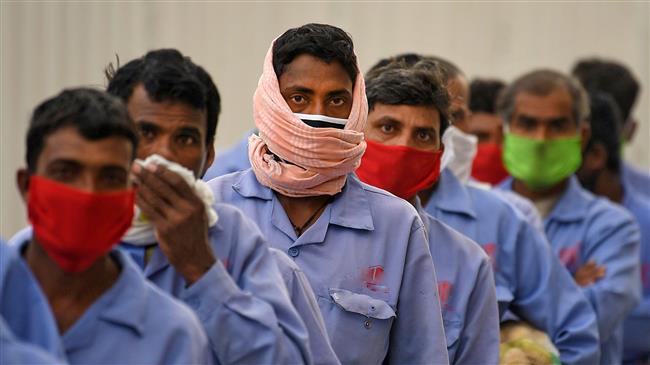
Other countries are also tweaking confinement rules, with Iran set to let some small businesses reopen and India allowing millions of rural people to return to work.
In South Korea, people went to the polls on Wednesday and delivered a strong show of support for President Moon Jae-in, commending his handling of the epidemic.
Once home to the world’s second-largest outbreak, South Korea has largely brought the virus under control through widespread testing, contact-tracing and social distancing.
Yet a full-scale return to normality still appears a long way off in most other countries.
Harvard scientists have warned that repeated periods of social distancing could be needed as far ahead as 2022 to avoid overwhelming hospitals.
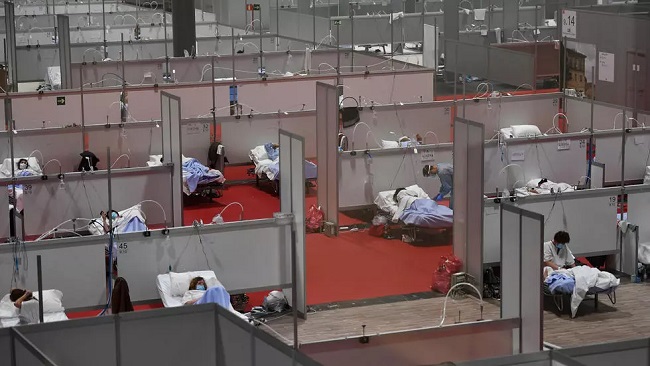
Spanish Prime Minister Pedro Sanchez, who has allowed work to restart in some factories and building sites, warned that “nothing will be the same until a vaccine is found.”
Belgium extended its stay-at-home order until at least May 3 and banned mass gatherings until the end of August.
‘Extreme caution’
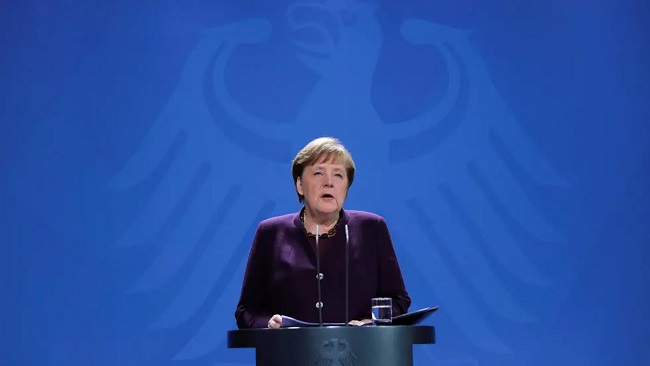
In Germany, Chancellor Angela Merkel announced first steps in undoing coronavirus restrictions that have plunged the economy into a recession.
Most shops will be allowed to open once they have “plans to maintain hygiene” although schools must stay closed until May 4 and a ban on large public events will remain in place until August 31.
“We have to proceed with extreme caution,” Merkel told reporters in Berlin.
Schools will gradually be reopened with priority given to pupils about to take leaving examinations.
And the government urged people to wear face masks when out shopping or on public transport, but stopped short of making it a requirement like in neighbouring Austria.
Offering a lifeline for the world’s poorest countries, the G20 — a group of the world’s leading economies — said it would temporarily suspend debt repayments from the most impoverished nations.
The reprieve will free up more than $20 billion for those countries to focus on the pandemic and will last at least a year, according to Saudi Finance Minister Mohammed Al-Jadaan.
But the global economic outlook remains gloomy, with Germany already in recession and US industrial output declining by 6.3 percent — its biggest fall in seven decades.
More than a third of French workers are on temporary unemployment, the government said.
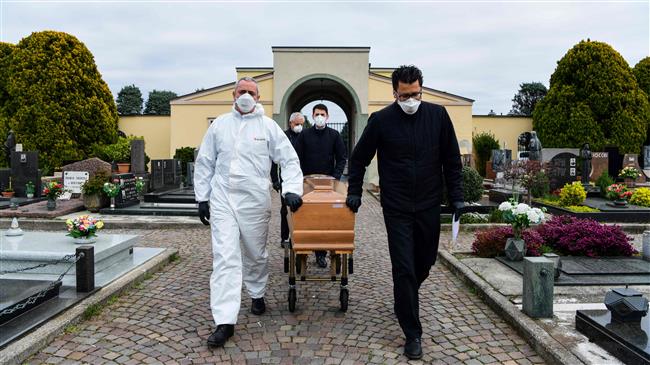
The virus death toll topped 17,000 in France but in a hopeful sign hospitalizations went down for the first time.
On the horizon looms the worst economic downturn in a century, which the IMF has said could see $9 trillion wiped from the global economy.
‘Lessons’
As the world tries to chart a way out of the crisis, Trump came in for criticism for his freeze on payments to the WHO, the UN’s health agency.
“No doubt, areas for improvement will be identified and there will be lessons for all of us to learn,” WHO chief Tedros Adhanom Ghebreyesus said.
UN chief Antonio Guterres condemned Trump’s move while billionaire Bill Gates, a major WHO contributor, tweeted that cutting funding was “as dangerous as it sounds.”
European allies were similarly disapproving and Washington’s rivals also took aim — Russia condemning the “selfish approach” of the US, and China and Iran blasting the decision.
Trump accused the WHO on Tuesday of “severely mismanaging and covering up the spread of the coronavirus” and said it could have been contained if the organisation had accurately assessed the situation in China late last year.
As European nations made tentative moves to open up, in poorer and more densely populated countries, governments are still struggling to enforce restrictions on movement that are piling misery on the needy.
Fears over hunger and possible social unrest are especially acute in parts of Africa and Latin America.
In Cape Town, clashes erupted Tuesday as police fired rubber bullets and tear gas at residents protesting access to food aid.
A similar crisis is taking hold in Ecuador, where hunger trumps fear of the virus for residents in rundown areas of the badly affected city of Guayaquil.
“The police come with a whip to send people running, but how do you say to a poor person ‘Stay home’ if you don’t have enough to eat?” said Carlos Valencia, a 35-year-old teacher.
(AFP)








16, April 2020
Son of former Cameroon army chief of staff General Pierre Semengue dies in Yaounde 0
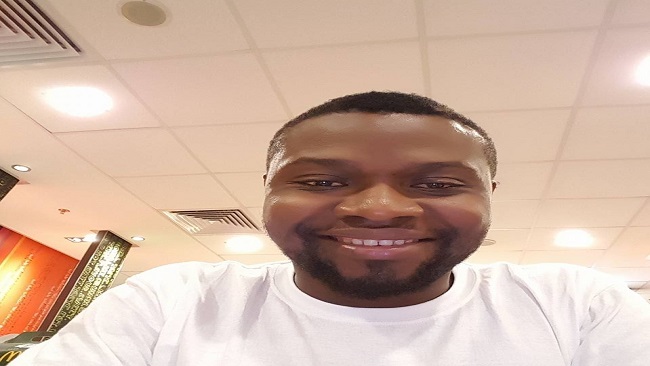
Stéphane Semengue , son of retired General Pierre Semengue has passed away today April 16, 2020 in Yaoundé, following an undisclosed illness.
The son of the controversial Cameroon top army brass General Pierre Semengue recently took ill and spent a month in a Yaoundé hospital. His condition stabilized but suddenly worsened three days ago.
Family sources say he died this morning in the French Cameroun capital of Yaounde.
Stéphane Semengue was not only known as the son of the former Cameroon army chief of staff. He was also the director of a company known as TKC SOS, a company which in recent years had problems with the associative branch of the mythical Tonnere Kalala Football club of Mvog-Ada where his dad had been chief executive.
By Rita Akana