18, January 2019
Battle for Ambazonia: Defense Secretary visits injured soldiers in Buea 0
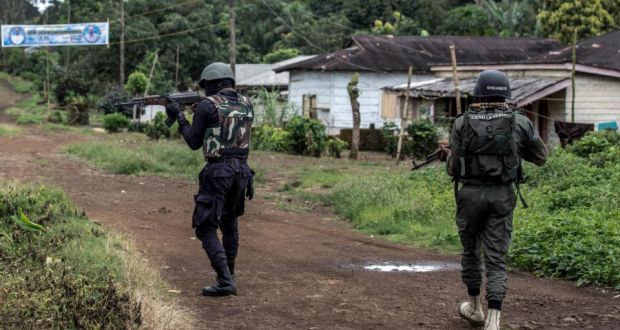
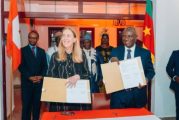
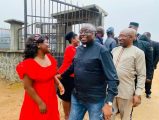
The Secretary of State in the Ministry of Defense In Charge of the National Gendarmerie, Yves Galax Landry Etoga rounded off a one day inspection visit on January 14, 2019 in Buea headquarter of the South West Region. His visit took him to the Gendarmerie Legion South West Region, Squadron No 80, Gendarmerie Post in Bonjongo, Brigade Buea and Motorised Brigade Buea. In these places, he went office by office inspecting equipment and working conditions.
At the Military Hospital Buea and the Buea General Hospital, he visited some injured military personnel and wished them a quick recovery. Following the Head of State’s end of year speech on December 31, 2018, President Paul Biya reiterated to warmongers in the North West and South West Regions of Cameroon to drop their arms. The Gendarmerie boss was therefore in the South West Region to see how effective warmongers have laid down their arms. It was also a moment for him to get first hand information on the security situation on the region.
He held in-camera meetings with administrative and military personnel certainly on how to strategies in continuing to protect civilians and their property in the face of ceaseless attacks from unknown gun men. South West Legion Commander, Colonel Tchinda Mbouzikeu Henri said that the visit of the Secre tary of State was meant to inspect their working conditions. He said it boasted the morale of South West Gendarmerie personnel. He indicated that directives were handed down to them on what hierarchy expects.
Colonel Tchinda saluted the determination of the Gendarmerie in protecting civilian and their property. The Secretary of State, Landry Etoga was accompanied to the South West Region by General Sali Mohamadou, Commander of the Second Combined Military Region and General Toungue Elias, Commander of the Second Gendarmerie Legion.
At hand to receive them in the South West Region were the Secretary General at the South West Governor Office, Dr. Mohamadou and the South West Regional Coordinator for the National Disarmament Demobilisation and Reintergration Committee, Fonju Njukang Bernard.
Source: Cameroon Tribune











18, January 2019
Responsibility to Protect accuses Biya regime of crimes against humanity 0
There is an imminent risk of mass atrocity crimes due to violence between government security forces and armed separatists in Cameroon’s Anglophone regions.
BACKGROUND
Political tensions over cultural rights and identity have been growing in Cameroon’s Anglophone regions since 2016 when English-speaking lawyers, students and teachers began protesting against their under-representation and cultural marginalization by the Francophone-dominated government. Violent repression by the security forces resulted in arbitrary arrests, sexual violence and the killing of protesters in the largely Anglophone North-West and South-West regions.
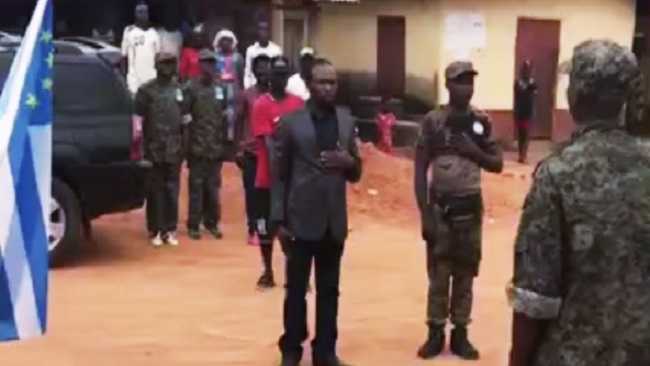
The crisis deepened after October 2017 when Anglophone separatists symbolically proclaimed independence from Cameroon, declaring a new state of “Ambazonia.”
The situation is reaching a critical threshold and the risk of mass atrocity crimes occurring in the immediate future is very high if effective preventive action is not taken.
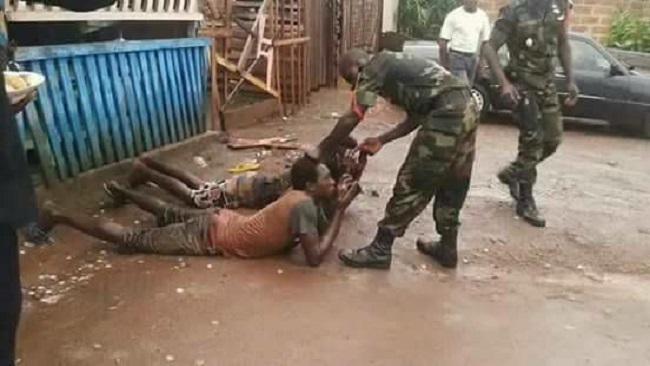
As the conflict intensified, there has been growing evidence of government security forces perpetrating extrajudicial killings and torture, as well as burning property in Anglophone villages.
Armed separatist forces have also perpetrated abuses, including killings and kidnappings. At least 40 schools in the Anglophone region have been destroyed since October 2017. Some armed separatist groups have also attacked and killed state officials and members of the security forces as part of an effort to render the Anglophone areas ungovernable.
On 12-13 November 2018 at least 30 people were killed and hundreds displaced as result of military raids on separatist strongholds. On 25 December hundreds of people fled the villages of Menkefou and Choupat in western Cameroon after suspected Anglophone separatists abducted 15 people and torched 80 houses.
The Anglophone and Francophone areas of Cameroon were unified in 1961, but there have been long-term disputes over the extent to which government resources and access to employment are controlled by the French-speaking majority. Although the Anglophone minority constitutes 20 percent of the overall population of Cameroon, they are a majority in the North-West and South-West regions.
OCHA estimates that 437,000 people have been internally displaced in the North-West and South-West regions since December 2017. As of 10 November 2018 UNHCR estimates that more than 30,000 people have also sought refuge across the border in Nigeria.
In addition to the Anglophone conflict, military operations against the armed extremist group Boko Haram also continue in the north of Cameroon, where there have been widespread allegations of security forces perpetrating extrajudicial killings.
Trade Treaty, all UN member states should immediately halt the sale of weapons to parties to the conflict who routinely violate IHL, including Saudi Arabia and the UAE.
ANALYSIS
The targeting of individuals based upon their cultural identity poses a direct threat to both Anglophone and Francophone civilians. Any further escalation of violence could result in greater internal displacement and further refugee flows. The government has failed to address the root causes of the Anglophone conflict and provide a political means for peacefully resolving it.
Cameroonian security forces appear to be committing systematic or widespread attacks on civilians, potentially amounting to crimes against humanity, particularly in the North-West and South-West regions as well as in their response to Boko Haram in the far north. Widespread allegations of extrajudicial killings have been bolstered by leaked video evidence of security forces summarily executing groups of unarmed civilians.
The government of Cameroon is failing to uphold its Responsibility to Protect the Anglophone minority and requires international assistance to mediate and end the developing armed conflict in the North-West and South-West regions.
INTERNATIONAL RESPONSE
During 2017 the UN High Commissioner for Human Rights called for the government of Cameroon to conduct impartial investigations into violence in the Anglophone regions. On 17 November 2017 six UN Special Rapporteurs issued a joint statement urging the government to engage in meaningful dialogue and halt violence in the North-West and South-West.
On 10 August the UNSC adopted a Presidential Statement on the situation in the Central African region. The statement highlighted the “worrying increase in violence in the North-West and South-West regions of Cameroon.”
Despite the government’s failure to protect populations from violations and abuses of human rights or to hold security forces accountable, on 12 October 2018 Cameroon was elected to the HRC for the 2019-2021 term.
On 21 November the UN Resident Coordinator for Cameroon called for dialogue between the government and armed Anglophone separatists.
NECESSARY ACTION
The security forces must cease the use of disproportionate and deadly force against unarmed civilians and ensure that the human rights of all Cameroonians are protected, regardless of language or cultural identity.
All persons responsible for extrajudicial killings must be held accountable. The government of Cameroon should grant OHCHR access to the North-West and South-West regions to investigate potential human rights violations and abuses.
The government of Cameroon should immediately initiate a dialogue with Anglophone community leaders and constructively.
Culled from Global Centre for the Responsibility to Protect