
16, December 2024
Biya warns of disaster for Central Africa financial stability 0
President Paul Biya warned on Monday of “disastrous consequences” for the countries of the Economic and Monetary Community of Central Africa if urgent action is not taken to address their deteriorating net external reserves.
The member countries – Cameroon, Gabon, Chad, Equatorial Guinea, Central African Republic, and the Republic of Congo – share monetary policy and a currency with a common central bank.
Between them, they have struggled to emerge from the impact of the COVID pandemic and other external global shocks, leaving them short of foreign exchange or other assets to cover import bills and debt repayments.
They are also facing challenges domestically including a decline in oil production in five of the countries, prolonged civil conflict in Central African Republic and Cameroon, and a heavy debt burden in Gabon and default in Republic of Congo.
Biya called for more substantial actions to preserve the macroeconomic and financial stability of the region.
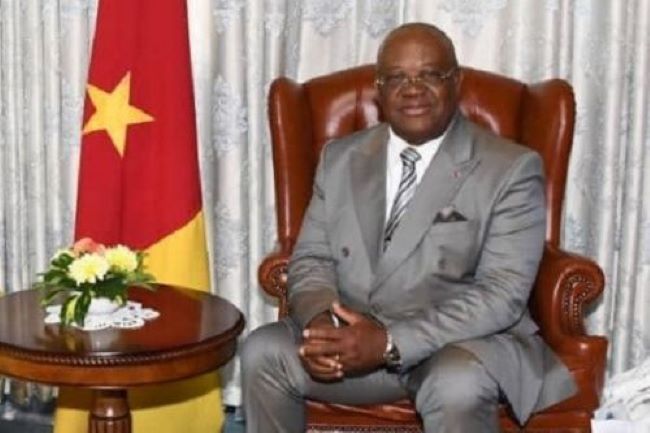
“According to recent data, our net external reserves have deteriorated considerably. This situation is preoccupying and calls for urgent action from us to inverse this trend,” Biya, said in his opening remarks at a summit of the leaders in Cameroon’s capital Yaounde.
“If nothing is done, according to various experts, we could face disastrous consequences for our countries and the subregion.”
He did not give any details of what the consequences might be or how they might be addressed, but any demands from international lenders to rein in spending by cutting subsidies or further trimming handouts could cause public discontent.
The International Monetary Fund, which is represented at the summit along with the World Bank and other partners, warned in June that the six nations needed decisive and coordinated actions to tackle fiscal and external imbalances.
The IMF cautioned that divergent economic performance and unchanged policies among the countries could threaten financial stability.
Source: Reuters






















17, December 2024
WTO commends Cameroon’s ratification of fisheries subsidy law 0
During the opening ceremony of the 5th annual session of the General Council of the World Trade Organization (WTO) on December 16, 2024, in Geneva, Cameroon officially submitted its law ratifying the Agreement on Fisheries Subsidies. The law, adopted by Cameroon’s Parliament in June, was formally handed over by Cameroon’s ambassador, Salomon Ehet, Permanent Representative to the United Nations Office, the WTO, and other international organizations in Geneva, to WTO Director-General Ngozi Okonjo-Iweala.
“I warmly welcome Cameroon’s formal acceptance of the WTO Agreement on Fisheries Subsidies, a critical step toward protecting our oceans and ensuring sustainable fishing practices,” said Okonjo-Iweala.
The WTO Director-General also emphasized the significance of this move for small-scale fishing: “As the proud host of the WTO’s 14th Ministerial Conference in 2026, Cameroon is demonstrating leadership in advancing global trade and environmental sustainability. This agreement is especially vital for artisanal fishers in Cameroon and around the world, safeguarding their livelihoods by curbing harmful subsidies and preserving marine ecosystems for future generations.”
The Cameroonian government had submitted the bill to Parliament in June 2024 to ratify the amendment to the Marrakesh Agreement establishing the WTO, which focuses on regulating fisheries subsidies. The agreement, signed on June 17, 2022, aims to combat illegal, unreported, and unregulated (IUU) fishing, a challenge for Cameroon’s coasts, often exploited by foreign fishing fleets.
By ratifying the agreement, Cameroon commits to providing detailed information on its fisheries subsidies and benefits from a two-year exemption period to comply with disciplines related to IUU fishing subsidies. Additionally, the country will receive technical assistance to strengthen its capacities and access to a voluntary WTO funding mechanism dedicated to this support.
Ambassador Salomon Ehet highlighted that Cameroon’s adoption of the law is “a compelling testament to governance that is both relevant and geared towards the protection of the environment in all its forms, while remaining committed to developing the maritime fisheries sector. This initiative, which aligns with Cameroon’s National Development Strategy (NDS-30), further stands as a strong symbol of the country’s commitment to hosting a successful Ministerial Conference (MC14) in 2026.”
The 14th WTO Ministerial Conference is scheduled to take place in Yaoundé from March 26 to 29, 2026.
Source: Business in Cameroon