29, April 2022
Southern Cameroons Crisis: Yerima criticizes Amba frontline movements for politicizing the struggle 0
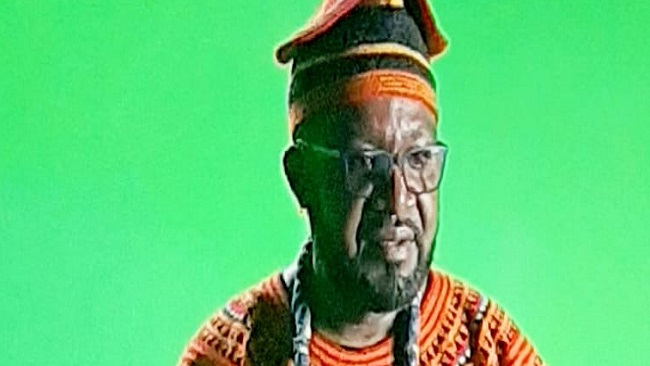
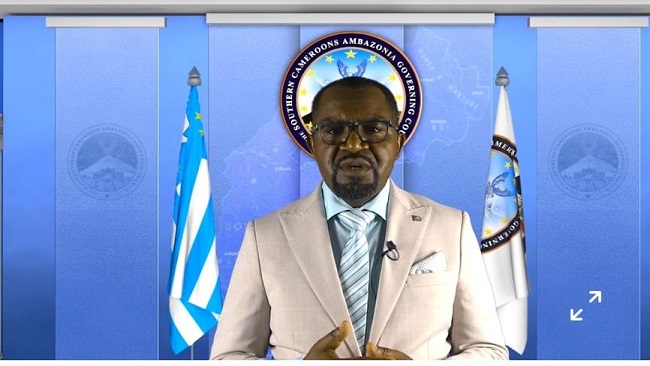
Ahead of his planned visit to Ground Zero, the Vice President of the Ambazonia Interim Government has criticized Southern Cameroons frontline movements for acting very poorly in supporting Ground Zero operations against French Cameroun occupation.
Vice President Dabney Yerima made the comments during a telephone conversation with Cameroon Concord News London Bureau Chief Isong Asu late on Thursday.
The exiled Ambazonia leader took Southern Cameroons frontline movements to task for politicizing the struggle against La Republique du Cameroun, describing the move as completely unacceptable.
“Sadly, some Ambazonia frontline movements are acting very poorly vis-à-vis the battle to liberate Southern Cameroons and are not even willing to talk to the Interim Government about Ground Zero operations. Some of them imagine that relying on tribal support is the way to help the Federal Republic of Ambazonia!! This is a big mistake,” Dabney Yerima noted.
Vice President Dabney Yerima said no county in both the Northern and Southern Zones is capable of freeing Southern Cameroons alone, expressing hope that Ambazonians will soon regain their country from the French backed French Cameroun occupation.
Yerima hailed the oppressed but powerful Southern Cameroonians in Ground Zero and in Ground One who have been preventing the Ambazonians struggle from sinking into oblivion through their resistance and sacrifices.
“My trip to Ground Zero pending clearance from our intelligence agencies will provide me and other members of your Interim Government the appropriate opportunity to express our sympathy and solidarity with all our refugee population and the oppressed people of the Federal Republic of Ambazonia,” Yerima concluded.
By Chi Prudence Asong with files from Isong Asu















29, April 2022
Four months on, an ongoing nightmare for MSF colleagues detained in Southern Cameroons 0
Four months ago today, Marguerite M. and Ashu D. plunged into a nightmare which continues. They are Médecins Sans Frontières (MSF) staff; Marguerite a nurse and Ashu an ambulance driver, in the South-West region of Cameroon. The area is impacted by violence that started almost five years ago, between separatist armed groups and state armed forces, where MSF provides access to free healthcare to people.
On the morning of 26 December 2021, Marguerite and Ashu were sent with an MSF ambulance to the Tinto area to pick up a man with a gunshot wound. While the vast majority of MSF ambulance movements are not related to the impact of the violence – most are linked to the urgent transport of children with malaria, women in labour or those injured in road accidents – taking care of victims of gunshot wounds is not unusual for MSF in the area. Yet, Marguerite and Ashu could not have imagined what awaited them this time.
The ambulance had some trouble locating the injured man, but finally found him at around eight o’clock in the morning. They stabilised him and put him in the ambulance, which then headed towards Kumba, in case the patient needed to be transferred to a higher-level hospital for complex surgery. The 27-year-old patient had no identification documents, which is not uncommon in Cameroon.
MSF communicated, as agreed with the authorities, this movement: the departure point of the ambulance, its destination, the type of patient it was transporting, whether or not the patient had an identity document, and whether or not they were accompanied by anyone. Despite this not being standard MSF practice, this procedure was vital in this context to prevent ambulances from being blocked at checkpoints for long periods of time, which could be detrimental to patients. Since October 2021, when the procedure for communicating with the authorities was formalised, 132 MSF ambulance transfers involving patients in various emergencies have taken place without any problems.
Neither Marguerite nor Ashu knew who the patient was, or what was his role within the separatist group. They only knew that he was a wounded man in need of medical emergency assistance. The ambulance set off at around nine o’clock in the morning, with Ashu driving and Marguerite in charge of the patient. She began to fill in the transfer forms on the patient that would later be handed over to the hospital in Kumba. While Marguerite was still filling in the form with the name given by the patient, they were stopped at the Nguti checkpoint.
Despite the explanations they gave, they were denied passage, ordered to turn around and escorted back to Mamfe. The two MSF colleagues were subsequently arrested and detained in Buea prison, where they remain four months later.
Culled from MSF