13, January 2022
CPDM Crime Syndicate: Another General Manager in Kondengui 0
He is accused of financial misappropriation by the so-called Special Criminal Court. The French Cameroun political elite has been held in pre-trial detention since January 5 at the Kondengui Maximum Security Prison.
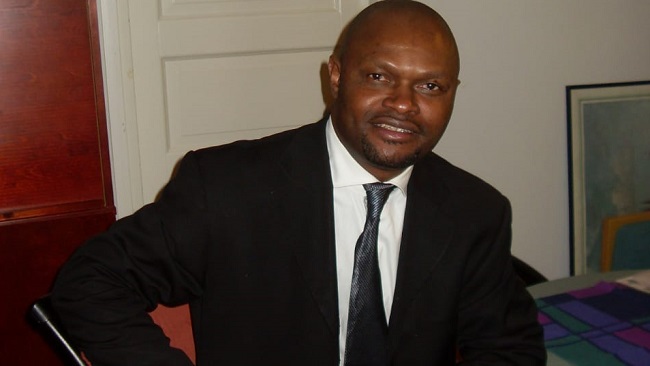
This week in Yaounde, pro Biya state prosecutors questioned Jean Claude Atanga Bikoe the general manager of a CPDM creation known as Road Fund dedicated to the financing of road maintenance and direct payment to private companies for services provided under contracts awarded after competitive bidding.
Cameroon Intelligence Report correspondent covering the Special Criminal Court reported that Jean Claude Atanga Bikoe was arrested on the basis of several damning reports which is still to reveal the exact amount stolen by the GM.
The pro Biya regime judges also accused the former GM of complicity in the misappropriation of public property, forgery and use of forgeries in public writing, in the context of the financial management of the Road Fund.
The presidential decree that created the Road Fund as a public administrative establishment in 1996 stipulates that its general manager ensures its daily management by collecting and transferring financial resources into the Fund’s bank accounts or public treasury. Hon. Jean Claude Atanga Bikoe was installed at the head of the Road Fund in 2012.
Jean Claude Atanga Bikoe’s arrest comes in the wake of the presidential speech at the end of the year. The 88-year old Paul Biya announced, among other things, the resumption of the fight against misappropriation of public funds.
Depicting the Special Criminal Court established to prosecute alleged corrupt government officials and the several Alibabas responsible for pilfering from the public treasury as President Biya’s court is no misnomer. Cameroon Concord News Group calls it the President’s court because it is one instrument of power through which Biya is reining in on perceived opponents from within his CPDM power conduit.
An attribute of a genuine court is the fairness of the trial proceedings in cases which are brought before the court for trial. It is not the number of convictions entered against accused. A court is legitimate and recognized as such because of its exercise of judicial, executive, legislative and administrative independence. A court that is independent must be accessible to all citizens after all, is equality before the law, not a constitutionally protected value? The Special Criminal Court is lacking in these attributes of impartiality, judicial independence and accessibility. It is perceived more as President Biya’s Court than a Court of Justice.
Establishing this court was President Biya’s way of saving himself the embarrassment of being humiliated during his perennial trips abroad as the President of the most corrupt country in the world. This ranking of the country as the most corrupt or one of the most corrupt countries had a potential to hamper President Biya’s personal pecuniary interests far from the borders of Cameroon. There was therefore a personal interest need to establish the court. Another personal interest need was to avail himself of a legal tool under his direct control to consolidate absolute power, blackmail potential rebels and competitors within the system and to stifle any form of institutional opposition. He perceived the court as a tool with which to whitewash his more than thirty-eight years of corrupt governance and the rape of the economy.
With the war against Boko Haram and the war in Southern Cameroons, the fight against corruption using the Special Criminal Court has afforded Paul Biya justification contest in the next institutionally flawed elections in order to eternalize power purportedly to direct the war against so-called terror and the war against corruption. True to the name the President’s Court, the President has exclusive preserve in referring cases to the Special Court and the power to terminate them. He decides who will be arrested, who will be investigated and who will serve time and who will not.
In one instance, he ordered a detained late Minister Bapes Bapes released from remand custody at Kondengui when a warrant was issued for his arrest without the presidential fiat.
By Soter Tarh Agbaw-Ebai with files from Rita Akana


14, January 2022
Burkina Faso revolutionary leader Thomas Sankara ‘shot seven times’ 0
Burkina Faso’s revolutionary leader Thomas Sankara, who was gunned down during a coup in 1987, was shot at least seven times by assassins using tracer rounds, experts have told a long-awaited trial into his killing.
Sankara was struck by “at least seven rounds” in the chest, one of which was fired from behind, anatomical specialist Robert Soudre told a military court in the capital Ouagadougou on Wednesday.
A police ballistics expert, Division Commissioner Moussa Millogo said the bullets came from tracer rounds, “because of burns on the remains of clothing” that Sankara was wearing at the time.
Tracer rounds are ammunition which ignite a burning powder that lights up. The rounds are designed for fighting at night, to help the shooter mark the target.
Several calibres of bullet were found on Sankara’s remains, including 7.62 and 9mm rounds, Millogo said.
Sankara was an army captain aged just 33 when he came to power in a coup in 1983.
A fiery Marxist-Leninist, he railed against imperialism and colonialism, often angering Western leaders but gaining followers across Africa and beyond.
Sankara and 12 of his colleagues were gunned down by a hit squad on October 15 1987 at a meeting of the ruling National Revolutionary Council.
Their assassination coincided with a coup that brought Sankara’s erstwhile comrade-in-arms, Blaise Compaore, to power.
He ruled for 27 years before being deposed by a popular uprising in 2014 and fleeing to neighbouring Ivory Coast.
Compaore is on trial in absentia, charged like his former right-hand man General Gilbert Diendere with harming state security, complicity in murder, concealing bodies and witness tampering.
Compaore has persistently denied entrenched suspicions among Burkinabe that he ordered Sankara’s killing, while Diendere has pleaded not guilty.
Diendere has been separately handed a 20-year term for his part in a 2015 plot to overthrow the post-Compaore transitional government.
The trial, and details of what happened on the day of Sankara’s assassination, are being closely followed in the landlocked West African country.
– ‘Violent death’ intended –
Sankara remains a revered figure for many and his brutal death cast a pall over the country for decades. The circumstances of his killing were taboo under Compaore’s reign.
Fourteen men, including Compaore, are on trial in the proceedings, which began on October 11.
Prosper Farama, a lawyer for the Sankara family, said Wednesday’s testimony was revealing.
“When you listen to the experts, the type of weapons were used for assault that intended to inflict a violent death,” he said.
“When you’re told that these are tracer rounds, which ignite on contact, you cannot say that these are the types of weapons which are used to carry out an arrest.”
Sankara’s body was hastily disposed of after the killing and the authorities issued a death certificate saying that he had died of “natural causes.”
In May 2015, Sankara’s presumed remains and those of his companions were exhumed in May 2015 at a cemetery in Ouagadougou.
Autopsy results released in October 2015 said that Sankara’s supposed remains were “riddled with bullets.”
Source: AFP