21, July 2021
Mali opens probe into attempted assassination of interim president 0
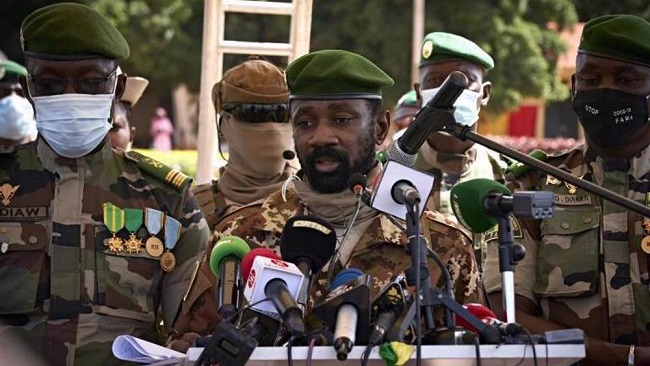
Mali on Wednesday said it had opened a probe into an attempt to assassinate military strongman Assimi Goita, the figure behind two coups in less than a year in one of Africa’s most troubled countries.
“An ill-intentioned individual tried to physically harm” Goita after prayers for Eid al-Adha at Bamako’s Grand Mosque, prosecutor Bourama Kariba Konate said in a statement.
The act “comes under the categories of harming state security and attempted murder,” he said.
An inquiry has been opened “to shed light on this event.”
Goita was whisked away after a man armed with a knife lunged at him, an AFP reporter at the scene saw.
The leader later appeared on state TV to say he was doing “very well” and downplayed the significance of the assault.
“That’s part of being a leader, there are always malcontents,” he said. “There are people who at any time may want to try things to cause instability.”
A suspect who was taken away from the mosque remained in custody on Wednesday while police interviewed witnesses, commissioner Sadio Tomoda told AFP.
His identity was not revealed, but Tomoda said late Tuesday that he was a teacher, without elaborating.
Bamako was calm after the assault, according to AFP journalists. Wednesday was a public holiday to mark the Eid Muslim festival.
– Political turmoil –
The attack capped months of political turmoil in a country that has rarely enjoyed stability since gaining independence from France in 1960.
Goita, a special forces colonel in his late thirties, headed a putsch last August that ousted elected president Ibrahim Boubacar Keita after weeks of protests over graft and a bloody jihadist insurgency.
The junta, in the face of international condemnation, handed power to a civilian-led transitional government which promised to restore civilian rule in February 2022.
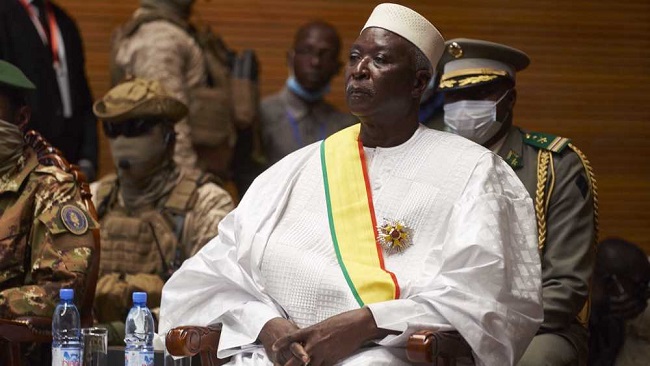
But in late May, Goita, who was vice president under the transitional government, ousted the president, Bah Ndaw, and premier Moctar Ouane, saying they had sought to “sabotage” the handover.
In June, with Goita as interim president, a new government was unveiled, with military figures in key roles.
As the African Union and the West African regional bloc ECOWAS piled on pressure, Goita vowed the government would “uphold all its commitments” and pledged to stage “credible, fair and transparent elections.”
Mali’s neighbours and allies have been viewing the crisis with disquiet, fearing the impact on efforts to stem a jihadist insurgency that is unfurling across the Sahel.
The bloody campaign erupted in the north of Mali in 2012, and has since spread to Burkina Faso, Mali and Niger. Thousands of soldiers and civilians have been killed and hundreds of thousands have fled their homes.
France, the mainstay of the anti-jihadist operation, has been especially critical of the military takeover in Mali.
It suspended military cooperation after the second coup and then announced a major drawdown of its 5,100-man Barkhane mission.
Source: AFP








24, August 2021
Tunisia political limbo: President indefinitely extends suspension of parliament 0
A state of uncertainty continues to dominate politics in Tunisia, as the country effectively remains without a government one month after President Kais Saied abruptly sacked his prime minister, with the chief executive now indefinitely extending the suspension of parliament.
Saied’s unexpected intervention last month granted him an executive power, but bitterly irked his opponents, who denounced the move as a coup.
On Monday, Saied’s office issued “a presidential decree extending the exceptional measures… regarding the suspension of Parliament and lifting of the parliamentary immunity of its MPs until further notice.”
The president is to address the nation in the coming days, the statement said, without providing further details.
He is widely anticipated to announce new measures that would reassure a highly anxious Tunisian public and allay international concerns about Tunisia entering an authoritarian era.
Saied dismissed Prime Minister Hichem Mechichi and suspended parliament for 30 days in July, following mass protests in several cities against the government’s handling of the COVID-19 pandemic.
Tunisia’s biggest political party Ennahda denounced the move as a “coup,” but Saied at the time argued that his decision was meant to save Tunisia from collapse.
He said he would assume executive authority “with the help” of a government whose new chief he would personally appoint.
Ever since, authorities have placed several officials, including former ministers, under house arrest. Several politicians, lawmakers, businessmen and judges also say they have been banned from traveling abroad.
Apart from plunging the country into a political limbo, the latest developments have exacerbated political polarization in Tunisia.
The president’s critics have denounced the measures as “arbitrary” and “unjustified.”
Many, however, have thrown their weight behind the president, defending his decision to strip lawmakers of their immunity, as per Article 80 of the constitution that allows for exceptional measures if there is an “imminent danger” to national security.
Ennahdha — the largest party in parliament — called for a national dialog. But Saeed was quick to brush aside the initiative.
Before the latest presidential decree was issued, the party also announced the dismissal of its executive committee.
Party leader and parliament speaker Rached Ghannouchi has decided to form a new board “in order to meet the demands of the current period,” the party said in a statement.
“Ennahda’s head decided to dismiss the party’s executive members and restructure it in a way that responds to the requirements of the phase,” it added.
Ghannouchi is under fire over his handling of the month-long political crisis. Prominent leaders from within his party have demanded that he quit the leadership.
Ennahda has been the most powerful party in Tunisia since the 2011 revolution that ousted former Western-backed ruler Zine El Abidine Ben Ali.
The party, however, started to lose support since the economy stagnated and public services declined, after the pandemic hit the nation last year and infection rates surged this summer.
Source: Presstv