17, December 2024
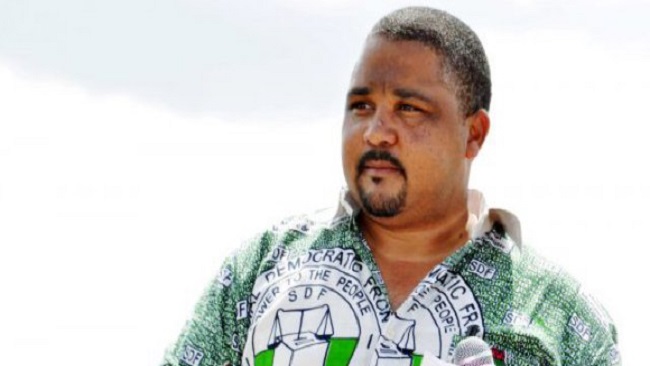
SDF leaders mobilize support for Joshua Osih ahead of 2025 presidential election 0
The leaders of the Social Democratic Front (SDF) in Cameroon’s Centre region are calling on party militants to mobilize in support of Joshua Osih’s candidacy for next year’s presidential election. During a recent meeting of the region’s Executive Committee, it was agreed that every party member should act as an “ambassador” for Osih’s campaign. Additionally, the regional leadership is aiming to expand its ranks by recruiting new sympathizers, a move also intended to prepare for the upcoming legislative and municipal elections.
The critical question now is whether these measures will be enough to strengthen the SDF’s presence in the Centre region, particularly ahead of the presidential election. To meet this challenge, the party will need to urgently revitalize its grassroots structures. According to the December 2024 edition of the SDF newsletter, the latest Executive Committee meeting found that “most of the structures across the region’s ten departments are inactive.”
A reorganization of these structures appears to be in the works. This is not the first time the SDF has attempted such an overhaul. After disappointing results in the 2020 legislative and municipal elections in Mfoundi—Yaoundé’s most significant department—the party launched efforts to revive its activities there. However, four years later, little progress has been made, as the Executive Committee acknowledges that operations in Mfoundi remain nearly stagnant.
Joshua Osih, who hopes to run for the presidency as the head of a platform comprising political parties, trade unions, and associations, faces significant challenges. In the 2018 presidential election, Osih finished in fourth place with a lackluster result, marking a major setback for the SDF, which lost its position as the leading opposition party. At the time, the party attributed its poor performance to the security crisis in the North-West and South-West regions (Noso)—traditional SDF strongholds—where many militants were unable to vote.
Source: Business in Cameroon














30, December 2024
Will Biya resign and allow Dion Ngute to be president? 0
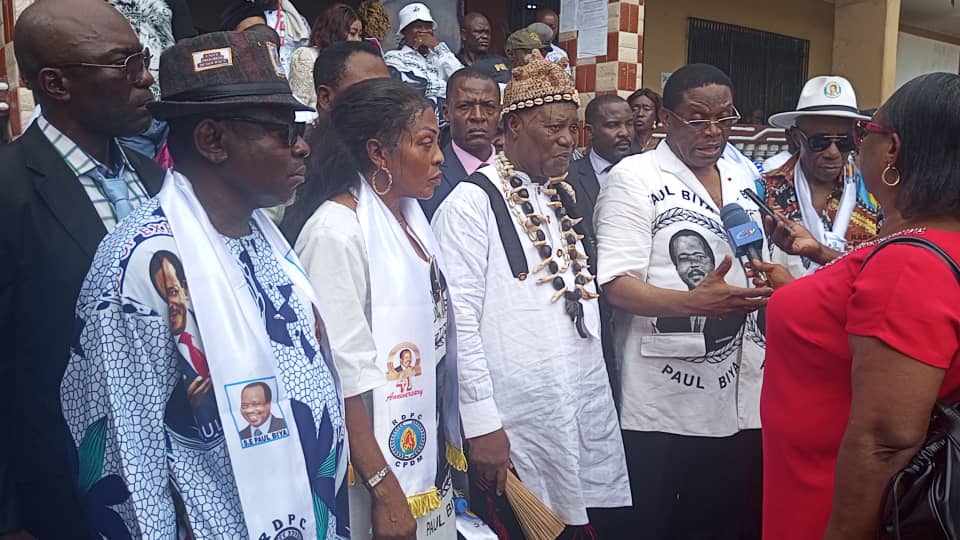
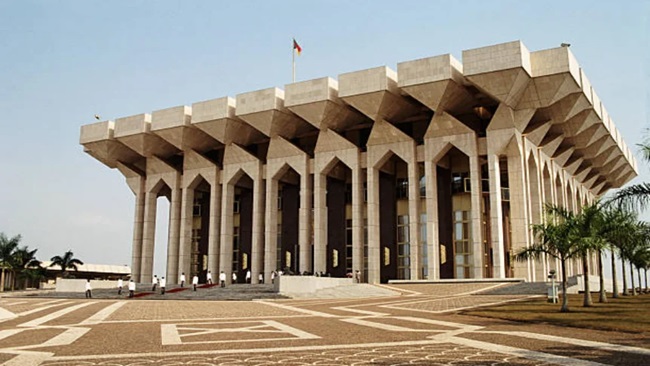
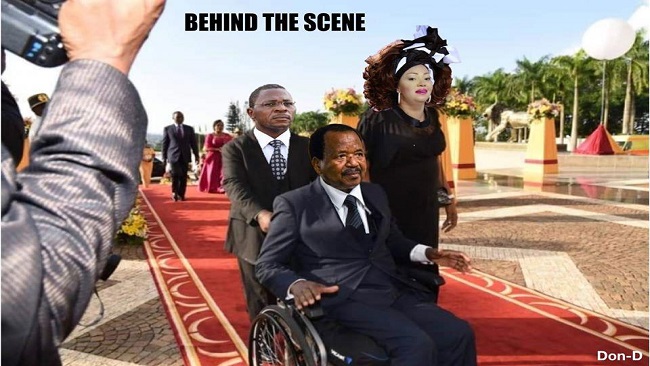
There is no proof that Unity Palace and the Star Building have considered doing this, but according to our Cameroon Intelligence Report chief correspondent in Yaoundé, Biya is contemplating to resign the presidency after New Year celebrations to make Prime Minister Dion Ngute the president of the Republic.
Rita Akana explained this move and cited a well-placed source who met President Biya recently in Yaoundé.
President Biya was painted as having a divided mind on handing over before the elections in 2025 or running as a candidate and then step down, making the way for a Dion Ngute presidency.
“From what he told an aide late last week, he now fully understands that he no longer has the energy to run state affairs. I’m not saying that he intends to resign soonest, but that’s exactly what he is planning do,” the source said.
As 2025 approaches, many Cameroonians are concerned about the future of their country. Cameroon is at a standstill both politically and economically. The country is in dire need of an overhaul and many analysts have opined that the 2025 presidential election might reshape the country’s future.
However, though the presidential election is less than ten months away, Cameroonians are not yet aware of the candidates in the race for the Unity Palace as some political parties have not yet revealed their candidates to the public and this is indeed a cause for concern.
The 2025 presidential polls cannot be discussed without mentioning the incumbent’s name. Mr. Biya who has been in power for 42 years has the benefit of incumbency. His total control of the country’s treasury gives him certain financial advantages which other parties may not have.
However, his long stay in power might be a huge disadvantage as many Cameroonians are of the opinion that he has overstayed his welcome. His age and failing health could also be some of the annoying inconveniences which might mar Mr. Biya’s campaign.
However, some analysts say he might not run as his age has diminished his mental and physical ability. The analysts hold that he might manage the transition to ensure that his successor comes from his party to ensure that his family and collaborators get the protection they need when he leaves power.
Mr. Biya has been a fixture on Cameroon’s political landscape having been thrust into power by the country’s first president, Amadou Ahidjo, who resigned in 1982. Ahidjo saw the young Biya as an asset to the country and thought that Mr. Biya was capable of steering the country to better shores.
Unfortunately, things have not turned out as planned. The country’s economy has been in shambles for more than three decades, with unemployment reaching alarming levels. Many young Cameroonians are frustrated and thousands have left the country to try their luck somewhere else. Cameroon has not been the eldorado Ahidjo thought it would become under Mr. Biya.
Nepotism and corruption have become the country’s hallmarks. The massive, dysfunctional and corrupt civil service is full of Biya loyalists and tribesmen and this is a tough challenge the next president will have to deal with.
Currently, the government is bleeding money and in a bid to raise more money, the government is instituting more annoying taxes. The 2024 finance bill has just been passed and it is not good news to struggling Cameroonians. The new taxes will trigger a further escalation of living cost and most Cameroonians who are already in the throes of a severe crisis will have to look for creative ways to survive if they must not be rolled into an early grave by high prices.
The 2025 polls are an opportunity for Cameroonians to reshape their political destiny. The lineup of candidates is impressive. Will they vote for continuity or will they design a new path by walking away from the ruling party which has made corruption a way of life?
By Miriam Metchane Ewang