17, April 2021
Southern Cameroons Crisis: The world’s most neglected conflict 0
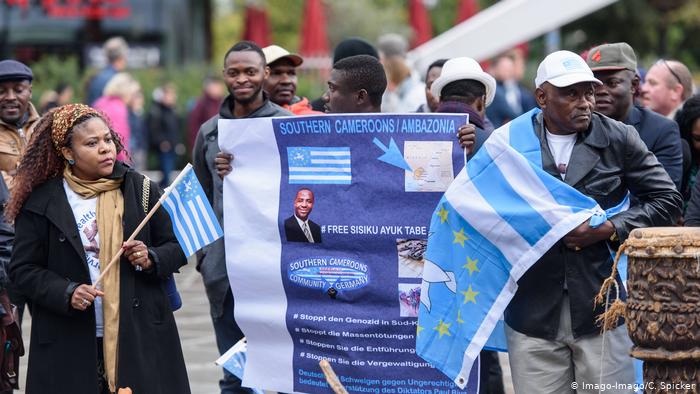
The central African nation of Cameroon is better known for football, but its bloody, under-reported conflict deserves our attention. The right of minorities to self-determination is at the heart of violence blighting the lives of millions of unarmed civilians.
The Vatican has been increasingly diplomatically engaged, encouraging the Cameroon government to participate in inclusive peace talks, mediated by a third party. A webinar, hosted by the Liberal Democrats, on 19 April 6.30 – 8pm explores these issues.
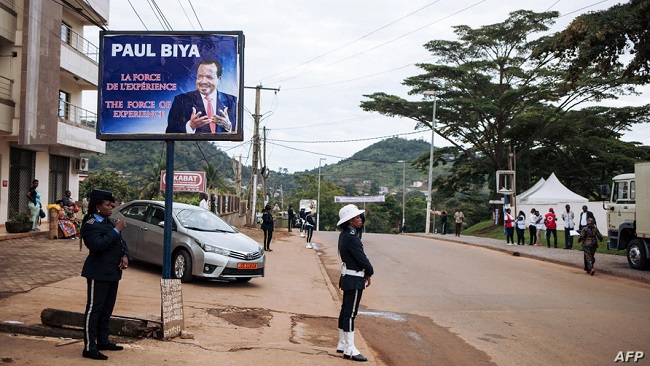
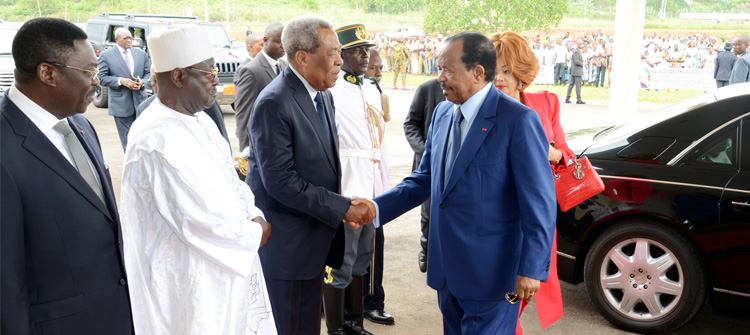
Cameroon has been ruled by President Paul Biya, age 88, since 1982. He continues to win elections that no international monitor considers free and fair, and his country is ranked among the world’s most corrupt and repressive by Transparency International and Freedom House, respectively.
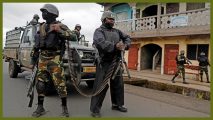
In 2016, Biya’s Francophone-dominated regime tried to impose French-speaking judges and teachers on the English-speaking regions, representing 20% of the population. Peaceful Anglophone protests were crushed with what impartial human rights groups described as disproportionate force. The UN estimates 700,000 civilians (out of six million Anglophones) have fled to the bush and beyond. UNICEF says one million children are out of school. Local civil society groups believe 5,000 people have been killed. Meanwhile, hundreds of opposition figures are imprisoned without due process.
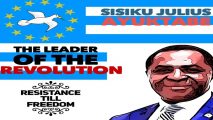
Armed militias have emerged, demanding a sovereign country called “The Federal Republic of Ambazonia,” and rights monitors believe all armed sides are behaving with impunity, with unarmed civilians caught in the middle. The former colonial powers, the UK and France, offer bland calls for the respect for international human rights law, but neither government will apply pressure on Cameroon to attend inclusive mediated peace talks offered by the Swiss and the Vatican. Cardinal Parolin, the Papal envoy, visited Cameroon in January, and rights monitors suggest that Pope Francis is the only world leader commanding the respect of President Biya.
The webinar will explore a cross section of views on the way forward. Speakers include Dr Chris Fomunyoh from the National Democratic Institute in Washington DC, and Juliette Paauwe of the Coalition for the Responsibility to Protect.
Source: Independent Catholic News










20, April 2021
Idriss Deby’s Death: Is Chad talking to Cameroon? 0
As Chad’s president, Idriss Deby, exits the political scene in uncertain circumstances, many in the world have begun thinking that Chad might be talking to Cameroon.
The Chadian president had won a landslide victory in a predetermined presidential election like his Cameroonian counterpart, Paul Biya.
The beleaguered Chadian leader was dealing with an insurgency just like his Cameroonian counterpart and had vowed to crush it.
But can the Chadian situation be a lesson to Cameroonian authorities? This will be the subject of the next editorial as things play out in Chad.
Cameroon has been touted as an oasis of peace in a desert of chaos for many decades, but for some time now, the country has gradually been ranking itself among the most dangerous, corrupt and chaotic countries to live in as descent and frustration spread across the country like wildfire.
Four years ago, the country’s president, Paul Biya, erroneously declared war on the country’s English-speaking minority which was simply demonstrating to bring its sorry plight to the attention of the government and the international community and what Mr. Biya and his collaborators thought would be wrapped up in a week has now lasted four years with more than 7,000 young Cameroonians already sent to an early grave in a war that has no raison d’etre.
As the government and militia have transformed the country into an open air killing field, the country’s economy has taken a nosedive, with millions of Cameroonians seeking employment and thousands losing their jobs in the country’s two English-speaking regions where the killings are going on unabated.
The number of internally displaced person has continued to swell, while millions have fled to neighboring Nigeria where they are living rough and waiting for the fighting to end for them to return to their country, though their homes have been razed by government soldiers who are wont to inflicting collective punishment on the population each time an army soldier is killed.
But it is not only Southern Cameroons that is going through such an apocalypse. The northern part of the country has been the theater of violent confrontations between government troops and Boko Haram fighters who have bombed many civilians into an early grave.
While the government has been active in the North hoping that it could roll back Boko Haram fighters who are believed to come from Nigeria, government forces have succeeded to alienate Northerner due to massive and bloody killings and abuse of the civilian population which now sympathizes with Boko Haram fighters who are sometimes viewed as liberators.
Noted for its corruption, the government has never really sought to address those issues that are really threatening national unity and integration. The North, like many parts of the country, has been neglected, with very little development projects being implemented in that part of the country.
Tribalism and nepotism are really tearing the country apart as most senior government positions are only occupied by the president’s tribesmen and those loyal to him and his ruling crime syndicate known as the CPDM.
However, it is not the government’s nepotism that is the issue but the results it has posted over the last four decades. Cameroonians would not be bothered if those occupying those strategic positions were really delivering desired results.
While across the country the unemployment rate is high, it is a lot higher in the northern region of the country where there are no companies, no roads, no hospitals and no social services and financial assistance that can even cushion the impact of the economic hardship.
The frustrations in the North are legion and the pain is excruciating. The North has lost almost everything it had during the Amadou Ahidjo days and this is really painful.
Northerners have grudges and they want to get their pound of flesh sooner rather than later. The Biya regime had killed thousands of Northerners, especially senior northern military officials, following a coup d’état in 1984 that led to the country’s first president, Amadou Ahidjo, fleeing to Senegal where he died and is currently lying in an unmarked grave.
This bitterness and the corruption which have robbed the northern population of many services has pushed the frustrated northern population to set up a militia which is now armed and willing to fight the Yaounde government that has never incorporated dialogue into its national development and integration strategy.
The new militia is enjoying huge support from muslim countries such as Saudi Arabia, Quatar, Egypt and the United Arab Emirates which surely have a hidden agenda that may result in the long term destabilization of the country.
Cameroon is falling apart and the way things are shaping up, if care is not taken, it might end up like Zaire, currently the Democratic Republic of Congo, where since its brutal dictator, Mobutu Seseseko, fell in 1994, the country has been unstable and the number of militia has grown by leaps and bounds and the country has become the epitome of political chaos.
The international community must stop looking the other way as Cameroon continues its unfortunate but sure descent to the bottom of the abyss of chaos and corruption.
With new armed groups cropping up on a daily basis, it is obvious that the country which is now on life support may one day implode and the consequences could linger for a very long time.
By Soter Tarh Agbaw-Ebai