31, March 2018
Pro Yaounde Southern Cameroonians left ‘skeptic’ after Atanga Nji visit 0
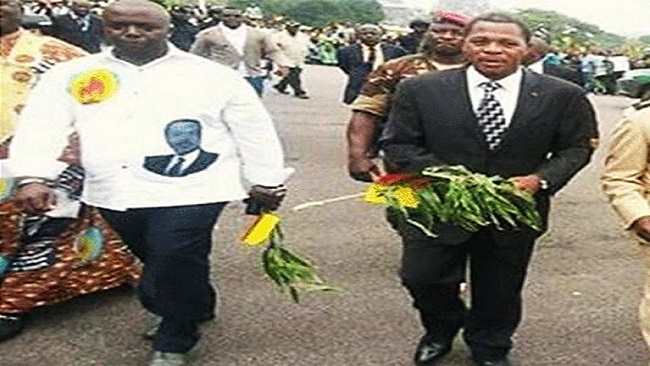
Skepticism dominates Cameroon’s English-speaking areas, even after the visit of the newly appointed Interior Minister Paul Atanga Nji. The minister visited Buea and Kumba in the South-West, as well as Bamenda and Batibo, two sub-regions in northwestern Cameroon.
The minister had said on Tuesday that he was bringing a “message of dialogue” to the restive southwest anglophone region, where the army is fighting separatists.
Atanga Nji, himself an anglophone, told state radio he was in the region to “bring a message of dialogue, a responsible dialogue, a dialogue with those who know that Cameroon is one and indivisible”.
But his visit has been met with skepticism, with some terming his mission as a ‘joke’ and an ‘illusion’ as RFI reports.
“He did not try to meet us and he talks about dialogue! But which dialogue is it,” RFI quotes an exasperated lawyer from Buea who spoke on condition of anonymity.
“He was content to see the traditional chiefs,” said a bitter teacher, who preferred to take refuge in his village because of the tension in Bamenda.
“Tension is brewing because we are approaching the presidential election and in fact, the government is doing nothing to resolve the crisis, “he continues.
The minister, the first anglophone Interior Minister, is unpopular in the English-speaking regions after declaring in early 2016 that there was “no anglophone problem” in Cameroon.
Two English-speaking regions, in the southwest and northwest, became part of the French-majority country after independence in 1960 and contain around 20 percent of the Cameroon population.
Tensions have flared since separatists proclaimed the autonomous republic of “Ambazonia” in October last year.
The country has had a tortuous colonial history that saw it pass from German rule to French and British hands, and the anglophone minority complain of having long been marginalised by the French-speaking elite.
The conflict between rebels and the army has become increasingly serious, as separatists urge the armed forces and government officials to leave the territory.
New separatist groups are emerging, while the Yaounde authorities have reduced their communications about the conflict to a minimum.
The unrest in the anglophone regions has prompted around 33,000 people to flee to neighbouring Nigeria.
Culled from Africa News














1, April 2018
Turkey says French troops in Syria would amount to invasion 0
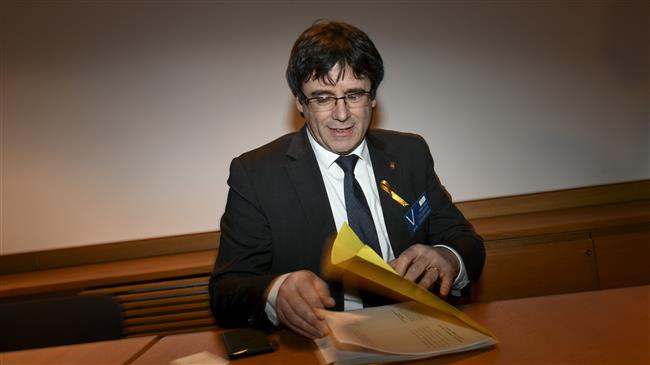
Turkey has warned France over bolstering its military presence in Syria, stressing that such a move would amount to an invasion.
“If France takes any steps regarding its military presence in northern Syria, this would be an illegitimate step that would go against international law and in fact, it would be an invasion,” said Turkish Defense Minister Nurettin Canikli on Saturday.
“Especially if they intend to support terror group elements or give direct or indirect protection with armed forces, this would be a really calamitous step,” he added.
Canikli’s remarks came in response to a Thursday pledge by French President Emmanuel Macron to further support US-backed Kurdish militants in northern Syria.
Turkey began the so-called Operation Olive Branch in Afrin on January 20 to clear the northern Syrian border of the People’s Protection Units (YPG), a US-backed Kurdish militant group which Ankara associates with the homegrown Kurdistan Workers’ Party (PKK) fighting for autonomy on Turkish soil.
Macron’s remarks also drew an angry reaction from Turkey’s Deputy Prime Minister Bekir Bozdag, who said Friday that the promise to back the Kurds amounts to support for and legitimization of terrorist groups.
Turkish President Recep Tayyip Erdogan also denounced France’s stance as “completely wrong.”
Source: Presstv