17, January 2018
Abduction of Ambazonian leaders in Abuja: The Nigerian Police Force got it all wrong 0
17, January 2018
17, January 2018
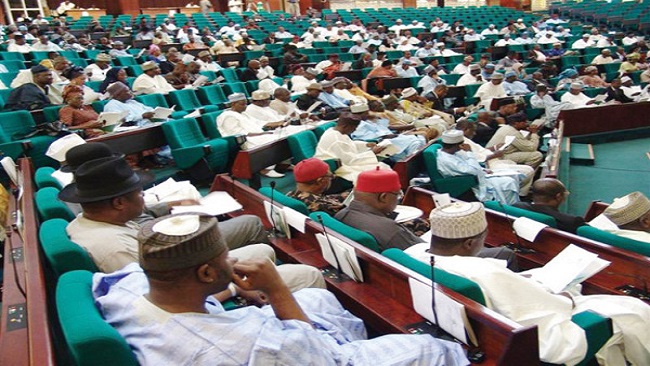
The House of Representatives on Tuesday at plenary rejected a motion urging the Federal Government to grant full protection to Cameroonian refugees and asylum seekers crossing into Nigeria. The motion by Hon. Sani Zorro also urged states and federal authorities to allow for the construction of refugee camps.
Zorro noted that there had been an influx of tens of thousands of asylum seekers and refugees fleeing Cameroon into Nigeria since the last quarter of 2017. He said that the refugees had continued to cross the Nigerian borders through Rivers, Benue and Taraba states, due to the crisis in Cameroon.
He urged the Federal Government and the United Nations High Commission for Refugees to extend full protection and assistance to the asylum seekers and refugees through timely provision of shelter, food and non-food items as well as security in their various camps.
The lawmaker further called for the prevention of alleged cross-border raids by the Cameroonian armed forces, which, he said, was inconsistent with humanitarian principles and best practices. He said in line with Section 33 of the Geneva Convention on the Treatment of Refugees, security personnel should not arrest and deport the refugees and asylum seekers.
Contributing to the motion, Hon. Nnenna Ukeje urged the house to take a critical look at the implications of granting full protection to the asylum seekers, considering relations between both countries.
She noted that Nigeria already had several security challenges and had entered into treaties with neighbouring countries to address insecurity in the country. Ukeje said that if caution was not taken in granting full protection to the fleeing secessionist Cameroonians, Nigeria could be seen to be supporting the division of Cameroon.
According to the lawmaker, Cameroon could pull out of the fight against Boko Haram in the region, adding that any action in favour of the secessionists, could sour the long standing relations between both countries.
In his remarks, Speaker Yakubu Dogara said that the security agencies, in line with the Geneva Convention, would profile the asylum seekers for proper identification. However, the legislators in the lower chamber unanimously voted against the motion when the speaker put it to a voice vote.
www.theeagleonline.com
16, January 2018
A group of political parties have named Barrister Akere Muna as their candidate for the 2018 presidential elections. In a statement released Monday, the opposition political parties revealed that the founder of the Now Movement is the only credible leader to oust the 84 year old Paul Biya from Etoudi.
The Yaoundé meeting that included representatives from the civil society was hosted at the headquarters of the Alliance of Progressive Forces (AFD). The delegates also announced the establishment of a platform for a New Republic.
Cameroon Concord News understands the decision to have the renowned Barrister Akere Muna as the unique opposition candidate has been supported by Victorin Hameni Bieleu of the UFDC. The platform aims to “gather and federate the forces capable of championing the desire for change. And also to develop efficient strategies, coordinate their implementation, and foster any action leading to victory of their chosen candidate for the presidential election in 2018.”
By Rita Akana
16, January 2018
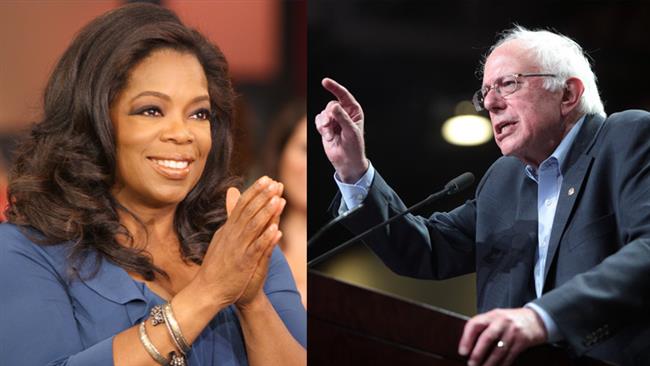
US President Donald Trump believes he could easily defeat Senator Bernie Sanders (I-Vt.) if he challenged him in 2020, according to a new report, but his allies say Trump should be more concerned about a bid from Oprah Winfrey or Joe Biden.
Politico reported Monday that Trump has been speculating with aides and other Republicans about his potential Democratic challengers for the presidency, but has dismissed Sanders as a viable candidate.
Sanders wasn’t a serious threat and would be easy to beat, Trump reportedly told a Republican with close ties to the White House.
Trump, 71, has said that Sanders, 76, will not have the energy required to run for the presidency in 2020.
Trump’s aides have told him that he should be more worried about a bid from media icon and philanthropist Winfrey or former Vice President Biden.
“What we can’t let voters do is think they can get the same policies with someone they like better, like Joe Biden — someone who would fight for them but who doesn’t have the crass edge,” one former White House staffer told Politico.
“I hope CNN has [New York Senator] Kirsten Gillibrand on every minute of every day. Love it. Bring it. She’s easy to destroy. If you’re the president, or the RNC [Republican National Committee], you’re more worried about someone who looks like Biden — someone who has more mainstream appeal, who blue-collar workers could identify with.”

According to a New York Times report, Trump has predicted that Sanders would run against him in 2020 even if the senator was “in a wheelchair.”
Sanders ran as a Democrat in 2016 but lost the Democratic Party’s nomination to Clinton.
Trump won the November 8, 2016 presidential election because Democrats rigged the system to have Clinton beat Sanders, according to WikiLeaks.
According to some polls, Sanders would have defeated Trump by a large margin if he had been the Democratic presidential nominee instead of Clinton.
Sanders could have won the election but the Democratic National Committee (DNC) stopped him from doing so by pushing him out from the primary race, the whistleblowing agency said.
WikiLeaks claimed that the Democratic Party establishment conspired to ensure Clinton win the party’s presidential nomination. In doing so it chose a weaker candidate who lost the election against Trump, the agency suggested.
Although Sanders has not decided whether or not to run for the 2020 presidential election, but his recent moves appear to represent a natural next step for running.
Meanwhile, there have been speculations of Oprah Winfrey planning to challenge Trump in 2020 following a passionate speech she gave at the Golden Globes on the subject of sexual misconduct.
“Oprah would be a problem: she’d be their best,” one GOP strategist said. “She’s ubiquitous, she’s black, she has crossover appeal and she probably clears a lot of the field out.”
A new poll from conservative-leaning pollster Rasmussen shows that Winfrey would beat Trump by 10 points in a hypothetical 2020 match-up.
Forty-eight percent of the respondents said they would vote for Winfrey, while about 38 percent said they would vote to reelect Trump, and only 14 percent were undecided, according to the poll released last week.
In November last year, Biden also indicated that he may challenge Trump in 2020. He made the remarks in an interview with NBC News while promoting his new book, Promise Me, Dad: A Year of Hope, Hardship, and Purpose.
According to a Politico/Morning Consult poll, Biden also leads Trump by 11 points in a potential 2020 matchup.
Biden is a strong critic of Trump and his leadership style. He has accused his administration of misunderstanding and misrepresenting the American values.
Biden has called Trump a “charlatan,” and accused the Republican head of state of taking advantage of frustrated middle class voters.
It seems Biden is remorseful about his decision not to run in the 2016 presidential election, and has claimed that he could have easily defeated Trump.
Biden, a favorite for the 2016 Democratic nomination, announced his decision to not run for the White House in October 2015, cementing Clinton’s standing as the front-runner.
Culled from Presstv
14, January 2018
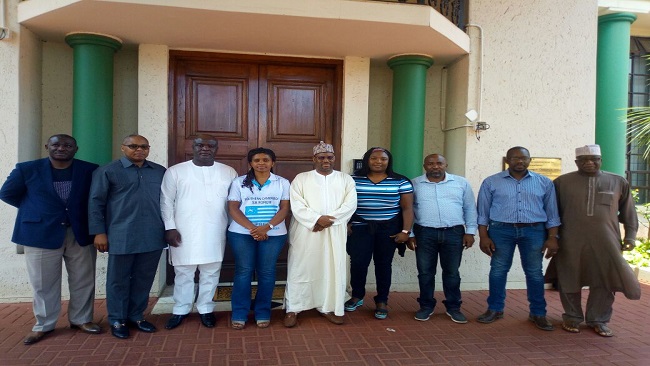
The ambassador of the Federal Republic of Ambazonia to the Republic of South Africa, Ms Jessy Itambi has handed over a strongly worded petition to the Nigerian Consulate in Pretoria on the arrest of President Ayuk Tabe including nine of his aides in Abuja. Her Excellency Jessy Itambi who also moonlights as Ambazonia’s diplomatic representative to the SADC countries led a massive demonstration attended by hundreds of Ambazonians in South Africa.
Cameroon Concord News Bloemfontein reporter said the move taken by Ambassador Jessy Itambi is keeping with directives from the Interim Government that called on all Ambazonians in Pretoria and around the world to stage peaceful protest in front of all Nigeria foreign missions.
Ambassador Itambi further called on the Buhari administration to respect the rule of law and release the Ambazonian leadership. The chief diplomat in South Africa pointed out that by not granting President Ayuk Tabe access to lawyers hired by the Interim Government, the Nigerian State Security Service (SSS) was in violation of Section 6 of the Administration of Criminal Justice Act of the Federal Republic of Nigeria.
On a lighter note, Ambassador Itambi was full of praise for the people of Nigeria and their government for helping to take care of the more than 50000 Ambazonian refugees in Nigeria. She was also grateful to the Nigerian High Commissioner to South Africa HE A.I. Musa for receiving the memo informing him that “Nigeria can change friends but cannot change its neighbours.” The Pretoria event was attended by Ambazonia’s Under Secretary for Communications, Hon. Milton Taka.
14, January 2018
The fallout from Cameroon’s Anglophone crisis is spiraling, leading to a refugee emergency, escalating tensions with neighboring nations, and threatening to put a dent in global cocoa production.
In recent weeks, more than 15,000 people have fled the English-speaking Northwest and Southwest regions to neighboring Nigeria, as the government intensifies its crackdown on a pro-independence movement. Dozens of people have also been killed by security forces, with Cameroonian troops even crossing into Nigeria in pursuit of the rebels in December. Suspected separatists have also killed more than 10 gendarmes (armed police).
The Anglophone regions of Cameroon erupted in protest in 2016, with people calling for more autonomy from the majority French-speaking government. While the origin of the crisis is based on the imposition of the French language in English courts and schools, it also has roots in economic marginalization and the allocation of resources. The government responded by shutting the internet and arresting protestors until detention facilities were overwhelmed. When separatists declared an independent state called Ambazonia in October, that prompted a military clampdown, violent attacks, and the flight of refugees from the area.
Last week, separatist activists including the leader of the movement Sisiku Ayuk Tabe were taken into custody while meeting in Nigeria. The arrest drew criticism from advocates, who worried that they risked torture and unfair trials if extradited to Cameroon. “Authorities in Nigeria should immediately disclose the activists’ whereabouts, allow them access to a lawyer, and unless they have sufficient evidence to charge them with a recognizable crime, release them immediately,” Osai Ojigho, director of Amnesty International Nigeria, said.

The simmering tensions represent the most direct threat to president Paul Biya’s 35-year rule over the Central African nation. At 84 years of age, Biya is one of the longest-serving African leaders still in power and is expected to run in the October elections this year. As the world’s fifth largest cocoa producer, the violence also portends a problem for the nation’s cocoa output. Thousands of farmers have fled the government clampdown according to Reuters, with many saying buyers are afraid to come. One agent said the cocoa was “rotting in the bush.”
As more people cross into Nigeria, the UN refugee agency said it was working to get more refugees away from border areas, create temporary camps, and help them gain access to economic opportunities. Antonio Jose Canhandula, the agency’s representative in Nigeria, said more and more refugees kept coming. “They are still coming, and they are coming daily,” he said. “It is a crisis.”
Source: Quartz Media
13, January 2018
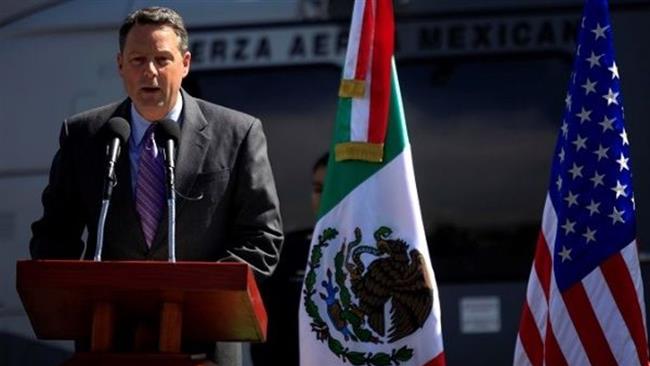
US Ambassador to Panama John Feeley has resigned, saying he no longer felt able to work for President Donald Trump.
Feeley, a former Marine Corps helicopter pilot, had informed the US State Department about his departure on December 27, US officials said.
His resignation was not a response to Trump’s alleged use of the word “shithole” to describe Haiti and African countries at a meeting on Thursday, reports said.
Feeley, among the State Department’s most senior officers and a Latin America specialists, said his decision was clearly prompted by differences with the Trump administration.
“As a junior foreign service officer, I signed an oath to serve faithfully the president and his administration in an apolitical fashion, even when I might not agree with certain policies,” Feeley said, according to an excerpt of a resignation letter.
“My instructors made clear that if I believed I could not do that, I would be honor bound to resign. That time has come.”
A State Department spokeswoman confirmed Feeley’s departure, saying he will retire on March 9 of this year.
Under Secretary of State Steve Goldstein said the ambassador was leaving for “personal reasons” and was not related to Trump’s alleged use of the vulgar term.
“Everyone has a line that they will not cross,” Goldstein told reporters at the State Department. “If the ambassador feels that he can no longer serve … then he has made the right decision for himself and we respect that.”
Much of Feeley’s long career was spent working on Latin American issues. Some of Trump’s policies have been widely regarded within the region as hostile to Central and South America.
The Trump administration has taken a tougher stance on immigration from Latin America, most notably with moves to expel hundreds of thousands of immigrants from Mexico, Honduras, Nicaragua, Haiti and El Salvador.
During the meeting at the White House on Thursday, Trump reportedly asked why “people from shithole countries come to” the United States.
His contemptuous comments, which were about immigrants from El Salvador, Haiti and African countries, have provoked sever criticism in the US and abroad.
The administration has been rocked by a series of high-profile exits — including Sean Spicer as press secretary, James Comey as FBI director, Anthony Scaramucci as communications director and Steve Bannon as chief strategist— since Trump took office.
Source: Presstv
12, January 2018
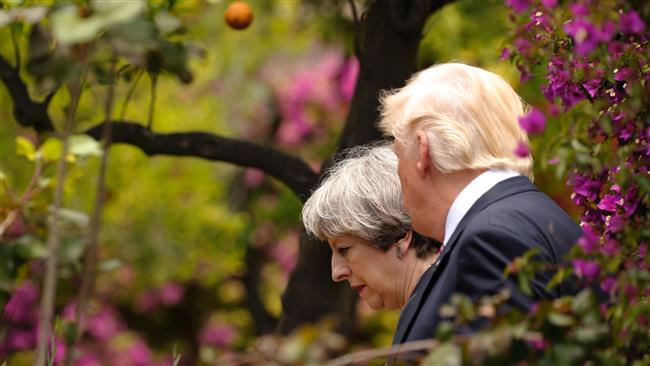
US President Donald Trump has canceled plans to visit Britain next month to attend the opening of a new US embassy in London over fears he will not be made welcome and would be greeted with mass protests, reports say.
Sky News and the Daily Mail both reported on Thursday US Secretary of State Rex Tillerson will take Trump’s place at the event scheduled for the end of next month. Trump was expected to make his first trip to the UK since entering the White House and had originally been scheduled for a full State Visit including a Royal banquet at Buckingham Palace but this was later downgraded to a “stripped-down” trip that did not involve getting the full “red-carpet” treatment from the Queen.
One senior source suggested to the Daily Mail that Trump had cancelled the trip because he was unhappy about the arrangements and the scale of the visit.
Trump had previously expressed concern about the likelihood of mass protests in a potential trip. Last year he told British Prime Minster Theresa May that he did not want to go ahead with a visit until the British public supported it.
The intention was to repeat the success of Barack Obama’s visit to Britain in 2011, but critics pointed out the convention was to wait for a President’s second term in office before being granted the honor.
The prospect of mass protests were raised last month after the Labour Party leader Jeremy Corbyn urged his followers to turn out in force if Trump visited the UK to send him a ‘clear message’. More than a million people signed a petition last year calling for the state visit to be cancelled.
Downing Street has declined to comment but reports suggest No 10 was aware the visit has been postponed.
Source: Presstv
11, January 2018
German Chancellor Angela Merkel has warned that there are still “big obstacles” in the way of forming a “grand coalition” between her conservatives and the Social Democratic Party (SPD).
Merkel said Thursday in final hours of negotiations between the SPD and her alliance of the Christian Democratic Union (CDU) and its Bavarian sister party — the Christian Social Union (CSU) — that the two top parties had yet to surmount major differences before they could declare there were common grounds to form another coalition government.
She said her alliance would “work constructively to find the necessary compromises but we are also aware that we need to execute the right policies for our country.”
SPD leader Martin Schulz also talked about “big obstacles” that remained in the way of a final deal between the two parties, although he was upbeat that such an agreement could finally come through.
Schulz said his party and the Merkel-led alliance had “broad agreement on the fundamentals of European policy,” adding that the SPD wanted to gain assurances from Merkel that a new coalition government would be committed to work for the progress of the European Union.
EU policies are among main bones of contention between Merkel and SPD leaders while the two sides also disagree on immigration, social welfare, tax and other issues.
There is also a possibility that SPD’s mid-rank members could manage to block the initiation of coalition talks with the conservatives, a scenario which would leave Merkel with her last option to form a minority government.
Merkel’s failure in reaching a coalition deal with the Greens and the Liberals following the September elections prompted the German president to call on the SPD to revise its previous decision to go into the opposition. However, opinion polls suggest Merkel’s chance of surviving a full fourth term in office is grim as the veteran leader’s approval rating is falling, mainly due to her controversial asylum policies, which many say have helped the rise of the far-right in Germany and fueled the current political limbo.
Source:Presstv
The Cameroonian army must put its conscience to the test
Who really pushed for the return of the Vice President of the Republic?
When politics fails a nation, football and the Church become the battleground
Biya has had his era; Cameroon must now be allowed to enter its next one
Biya’s hand: a source of glory and shame
4 Anglophone detainees killed in Yaounde
Chantal Biya says she will return to Cameroon if General Ivo Yenwo, Martin Belinga Eboutou and Ferdinand Ngoh Ngoh are sacked
The Anglophone Problem – When Facts don’t Lie
Anglophone Nationalism: Barrister Eyambe says “hidden plans are at work”
Largest wave of arrest by BIR in Bamenda
18, January 2018
Trump has lowest approval for any president in their first year 0
US President Donald Trump wraps up a year in office with the lowest average approval rating of any elected president in his first year.
That is according to polling by Gallup, which shows that Trump has averaged just a 39 percent approval rating since his inauguration.
The previous low was held by former President Bill Clinton, whose first-year average stood 10 points higher than Trump’s, at 49 percent.
Recent surveys show most Americans view Trump as a divisive figure and even question his fitness for office.
One relative bright spot for Trump is his handling of the economy, though even there his ratings are not as high as might be expected given a relatively strong economy.
Trump’s current approval rating in Gallup’s weekly poll is comparable to his average rating, standing at just 38 percent, with 57 percent saying they disapprove.
The persistence of Trump’s first-year blues is unprecedented for a president so early in his term. Americans usually give their new presidents the benefit of the doubt, but Trump’s “honeymoon period”, to the extent he had one, saw his approval rating only get as high as 45 percent.
Since then, Trump has spent more time under 40 percent than any other first-year president.
Presidents have recovered from periods of low popularity before. For example, Clinton’s rating fell to just 37 percent in June 1993 before quickly regaining ground, and he went on to win re-election in 1996.
Former President Harry Truman held the approval of less than 40 percent of Americans for significant chunks of his first term and was also re-elected. He went on to set Gallup’s lowest-ever approval mark, at just 22 percent in 1952.
Trump’s lowest point in Gallup’s weekly polling – 35 percent– remains higher than those of several earlier presidents. Truman, Richard Nixon and Jimmy Carter all had their ratings dip under 30 percent.
Aside from the economy, surveys have suggested few policy bright spots for Trump.
Healthcare has been a consistent low point. Seven in 10 Americans in the December AP-NORC poll said they disapproved of Trump’s handling of the issue, even as 85% called the issue very important to them personally.
In another AP-NORC poll conducted late in 2017, just 23 percent of Americans said he has kept the promises he made while running for president, while 30 percent said he has tried and failed and 45 percent said he has not done so at all. More than half said the country is worse off since Trump became president.
But it may be character more than policy that is driving negative opinions of Trump. In the January poll by Quinnipiac University, most voters said Trump is not level-headed, honest or even fit to serve as president.
And the AP-NORC poll conducted in December found that two-thirds of Americans thought the country has become even more divided as a result of Trump’s presidency.
In a July Gallup poll that asked those who disapproved of Trump for their reasons why, most cited his personality or character over issues, policies or overall job performance. That stood in stark contrast to Gallup’s polling on Obama in 2009 and George W Bush in 2001, when far fewer cited such concerns about personality or character as reasons for their negative opinions.
(Source: AP)