9, March 2023
French Cameroun: Roman Catholic Priest killed in Lékié 0
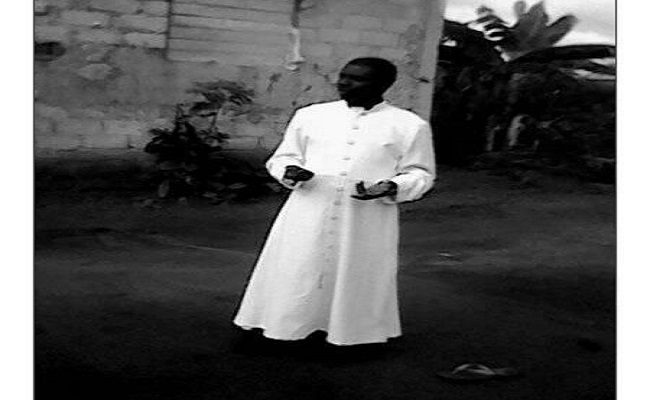
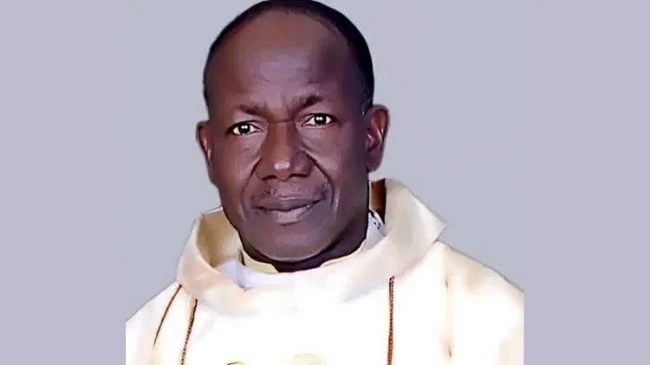
Fr. Olivier Ntsa Ebode, a Catholic priest in the Lékié region of Cameroon, has been found dead.
According to local press reports, he was murdered in the night between the 28th February and the 1st March, after being lured out of his house by men claiming that a relative of theirs was sick and wanted to see him.
Cameroonian news website 237online said that Fr Ebode was a “respected figure” in the community, known for his commitment to peace and social justice.
Instability is on the rise in Cameroon, parts of which are suffering from conflict between government forces and separatists. Around 800,000 people are estimated to have been displaced, and at least 6,000 killed.
Source: Vatican News
















12, March 2023
What difference does Jesus Christ make? 0
It is not uncommon to find persons that have been Christian for much of their life relapse from the practice of the Christian faith. Life can be very challenging, especially in the face of pain, evil, injustice, misery and death. The Second Vatican Council in Gaudium et Spes fittingly explained the reality of death as that which the human condition is most shrouded in doubt. Following the logic of Aquinas as largely captured in questions 75 – 89 of the Summa, Ia – Treatise on Human Nature, the Council rightly pointed to that seed of immortality that we bear in us, what Aquinas terms the immortal soul, as the causal agency that mitigates against human mortality. In effect, we recoil from death because we are not make for death. We are made for life. It is reasonable to fear death because of the presence or reality of the human intellect, the soul, which is what gives life to the body, and thanks to unity of body (matter) and soul (form), a human person comes into existence.
Given that Aquinas, basing his thought on Scripture rightfully characterizes the soul as a subsistent substance, the soul survives death, which is the severing of soul (form) from body (matter). And because it is in the nature of the soul to be incarnate in body, in matter, the soul awaits the resurrection of the glorified body. It is this union of soul and glorified body that, to Aquinas, contemplates the beatific vision, the essence of God, in heaven. And this is the point I wanted to drive home with this allusion to Aquinas. The goal was not to offer a brief lecture on Thomistic anthropology – though of itself is not a bad idea. At the risk of oversimplification, the intention is to draw the reader to the beatific vision as the hermeneutical key to living in the here and now, living in the present moment. As I will seek to demonstrate, the difference that Jesus Christ makes in the life of every Christian boils down to this: the establishment of a new framework for living in the here and now.
Let me forthright with the reader: Jesus Christ did not solve the problem of human suffering in the world, if by suffering we mean erasing all suffering. Every front page of a newspaper can demonstrate that. I am also not a fan of the Gospel of Prosperity that argues in large part, – again, at the risk of generalization, that if only but I had enough faith, all the good things of life would have been accorded me by God. Boethius’s The Consolation of Philosophy convincingly demonstrates the transient and fleeting nature of all creatural reality, pleasures and delights. This in no way should translate to a trivialization of the necessity of living in a dignified manner. Christianity does not disdain the body. Jesus Christ is not Plato, and Matthew, Mark, Luke and John do not portray the same anthropology as Plato’s Phaedrus or The Republic. Jesus is shown as caring for the whole person, body and soul. Jesus feeds the hungry and heals the sick. He comforts the bereaved. Hence, matter is good, from the Book of Genesis till present. We must do all in our part to help people to truly live and enjoy the goodness of creation. And it only takes one who has bread to come to the consciousness that man does not live by bread alone. That is an a posteriori, inductive claim, to use a Kantian category.
That said, the question still remains: What then does Jesus bring into my life as a Christian, given all that I face daily? Could it be that Marx was right in asserting religion as the opium of the masses? If Jesus is who he claims to be, why not turn the stones of pain, disease and hardships my life into bread that can feed me? Why not do something about my life’s challenges. Even Aquinas saw this as legitimate objection to the existence of God: If God is all good and all powerful as we understand God to be, and yet God allows me to continue to struggle so much in order to make ends meet, then either God is all good but not all powerful as we suppose God to be; or God is all powerful but not all good as we imagine or conceive God to be. Why can God in Christ Jesus not simply turn these stones into bread, so that I can live a better life?
In fact, this is the central question of the Temptations of Jesus that Catholics read at Holy Mass on the First Sunday of Lent. To me, the most trenchant and engaging analysis of the Temptations that I will recommend to the reader are Dostoevsky’s The Grand Inquisitor and Joseph Ratzinger’s Jesus of Nazareth, Volume I, with the latter engaging and building on the former. For both the Russian Dostoevsky and the Bavarian Ratzinger, the Temptations of Jesus constitute a dramatic theological debate between Satan (the enemy of human nature – to use the favorite appellation of our beloved St. Ignatius of Loyola) and Jesus (the Savior of the world). Jesus has fasted forty days and is hungry, tired, exhausted. In fact, Jesus is in the state of struggling humanity. After his fast, he is type of all human beings that struggle with life, that have nothing to live for, that have been stripped of their dignity as persons. The words of Isaiah that the Church’s liturgy places before us during Holy Week – he had in him no comely state – already appears in figure of Jesus that we find in the desert.
In comes the Tempter, the enemy of human nature, who proposes to Jesus apparently convincing arguments in terms of paths that Jesus could employ to resolve, once and for all, the problem of evil and suffering in the world. If Dostoevsky and Ratzinger are right that at the heart of the Temptations stands a theological battle between Satan and Jesus, then it is legitimate to ask: What are the disputations? Or what is the nature of this dispute between Satan and Jesus all about? It has to do with the vision of God – and here, we begin to return to where we began with Aquinas. Between Satan and Jesus, who can claim to have the true vision of God? Let’s not forget that Satan was an angel before he became Satan, meaning that Satan had beheld the essence of God in the light of heavenly glory before his rebellion, his irrevocable sin of non serviam. So, returning to the understanding of the Temptations as a theological debate about the true vision of God, the central question becomes: What must the Savior of the world do and not do? In other words, Satan challenges Jesus to prove his credentials. He wants Jesus to prove beyond all reasonable doubt that Jesus is who he claims to be, the Son of God. For, if you are the Son of God, then you should know who God is, you should be able tell us who God truly is, you should be able to demonstrate God’s power by bringing that power to bear on human suffering, pain and misery, which is captured in the very simple phrase, “he (Jesus) was hungry.”
In effect, Jesus must present to the human world of suffering and brokenness his CV that will prove to us that his claim to be the Son of God is true. In this light, Satan appears as the true spokesperson of suffering humanity, a sought of Minister of Communication of the Cabinet of the World State. Satan appears more sympathetic and understanding of human suffering and pain. Satan is interested in remedying the injustice of world. Turn these stones into bread and free the world of hunger, of pain and misery, if you are truly the Son of God! How can you claim to be the Son of God when you are unable to do something about human pain? Why are you unable to make a difference in my life, if you are truly the Son of God? Why can’t you save me from this suffering in all its modes and tenses? Why can’t you even liberate me from my inordinate attachment to sin? If you are the Son of God, do something about my human plight. Show your power. Don’t stand there indifferent to my suffering. Prove your goodness and power. Bring the power of God into the world so that heaven – the “realm” of plenty, can become our reality. Don’t only give us heavenly bread when what is most pressing now is earthly bread. Defend your CV as the Son of God! Prove that your transcript is true and not fake, and that you actually got the A’s written in that transcript from Harvard Divinity School, Satan says to Jesus. Prove that you have come from God, and that you have brought something utterly new into the world that is helpful to my life today. (To be continued).
By Maurice Agbaw-Ebai