29, June 2026
Biya regime begins implementation of €184.9m SEWASH Water Project 0
Cameroon has formally launched the operational phase of the Water Security Project (SEWASH), a €184.9 million program designed to strengthen water security, expand access to drinking water and improve sanitation services across several regions of the country.
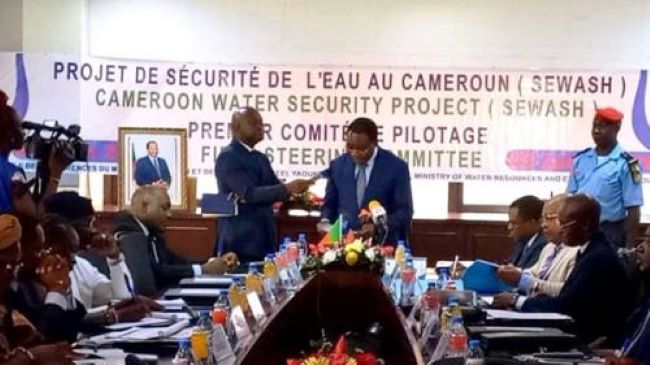
The launch was marked by the first Steering Committee meeting of the project, chaired on Monday, June 29, 2026, in Yaounde by the Minister of Water and Energy, Gaston Eloundou Essomba. According to information released by the Ministry of Water and Energy, the meeting brought together senior officials from the ministry, the General Manager of CAMWATER, Dr. Blaise Moussa, representatives of the World Bank, government administrations and technical partners involved in the program’s implementation.
The project, financed through World Bank funding under IDA Credit No. 7785-CM, represents one of the largest recent investments in Cameroon’s water and sanitation sector. Scheduled to run from 2025 to 2030 during its first phase, SEWASH aims to strengthen institutional capacity, promote integrated water resources management and improve sustainable access to drinking water and sanitation services. The program is expected to support infrastructure development while establishing planning and governance mechanisms intended to guide future investments in the sector.
Infrastructure Program targets rural service expansion
During the meeting, members of the Steering Committee reviewed and validated key implementation instruments, including the Annual Work Plan and Budget and the Procurement Plan. These documents outline priority activities, resource allocation and implementation timelines for the project’s various components.
Project coordinators from the Ministry of Water and Energy and CAMWATER presented the project framework, intervention areas, institutional arrangements and progress achieved since the beginning of the first phase. They also outlined implementation challenges and priorities for the coming months.
A significant share of the investment will be directed towards water infrastructure in the Adamawa, North and Far North regions. The project plans to construct 103 mini drinking-water supply systems powered by solar pumping technology. The facilities will include productive boreholes, water towers, distribution networks, public standpipes and connections serving community infrastructure.
The program also provides for the construction of 2,900 ecological institutional latrines in schools, health centers, markets, churches and mosques. According to the ministry, these facilities are intended to improve sanitation coverage and strengthen public hygiene conditions in beneficiary communities.
Beyond physical infrastructure, SEWASH includes a series of strategic studies aimed at guiding future sector investments. These include the preparation of a Rural Drinking Water Supply Master Plan, a Liquid Sanitation Master Plan, studies for fecal sludge treatment facilities in northern regions and additional assessments linked to hillside dams intended to improve water resource mobilization.
The Ministry of Water and Energy stated that the project is expected to contribute to stronger sector governance, enhanced climate resilience and reduced incidence of water-related diseases. The program also supports Cameroon’s efforts towards achieving Sustainable Development Goal 6 on universal access to safe water and sanitation.
Closing the Steering Committee session, Minister Gaston Eloundou Essomba called for effective coordination among stakeholders, adherence to implementation schedules and transparent management of project resources. According to the ministry, he stressed that the success of the program would depend on collective mobilization and efficient execution to ensure that communities benefit from the planned investments as quickly as possible.
Source: Business in Cameroon



























6, July 2026
Gov’t upgrades Ndop rice facilities to support import substitution 0
Cameroon is counting on Ndop to become one of the country’s leading rice-producing areas after investing more than CFA4 billion to modernize production and processing facilities at the Upper Noun Valley Development Authority (UNVDA).
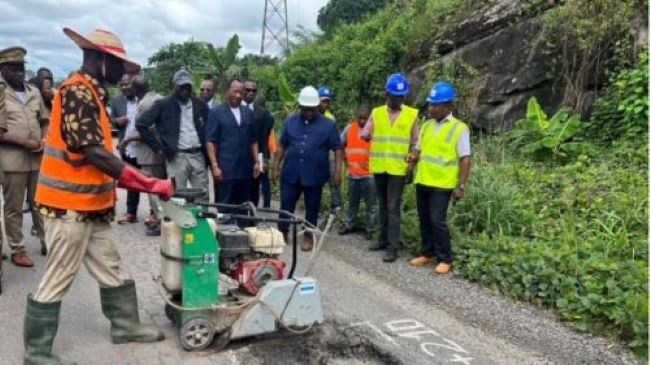
Agriculture and Rural Development Minister Gabriel Mbairobe inspected the new equipment on July 2 alongside North West Regional Council President Prof. Fru Angwafo III.
The government hopes the investment will increase UNVDA’s annual rice production from 21,000 tons to 100,000 tons, nearly a fivefold increase.
Achieving that goal, however, will require far more than new processing equipment. Expanding cultivated land, improving irrigation, ensuring access to seeds and fertilizer, strengthening farmer support, and increasing UNVDA’s capacity to purchase, process, and market paddy rice will all be critical.
Modern facilities, but production must follow
The newly installed equipment can process up to 20 tons of paddy rice per hour, replacing aging machinery that had long limited the authority’s operations. The upgrade should reduce processing bottlenecks, improve rice quality, and allow larger volumes of paddy to be handled.
But higher milling capacity does not automatically translate into higher agricultural output. UNVDA still faces challenges related to land development, irrigation, and farm productivity. Although the Ndop plains offer significant agricultural potential, only part of the available land has been developed for rice cultivation.
Unless irrigation systems, rural roads, improved seeds, fertilizers, and extension services expand alongside the processing facilities, the new plant could operate well below capacity. The government’s own assessment of the rice sector highlights these constraints. The Ministry of Agriculture cites post-harvest losses, insufficient milling capacity, outdated storage infrastructure, high input costs, shortages of improved seed varieties, limited mechanization, and inadequate irrigation among the industry’s biggest obstacles.
The Ndop investment addresses one of those challenges, but not all of them.
Reducing dependence on imported rice
The project is part of Cameroon’s broader effort to reduce its dependence on imported food. According to the National Institute of Statistics (INS), cereal imports totaled CFA466.9 billion in 2025, down 14.1% from the previous year but still accounting for 8.9% of the country’s total import bill.
Rice remained the largest imported cereal, with purchases valued at CFA268.7 billion, or 5.1% of total imports, despite declining 15.6% from 2024.
By increasing UNVDA’s processing capacity, the government hopes to expand domestic rice production, gradually replace imports, and create more value within local farming communities.
The initiative fits into Cameroon’s import substitution strategy, which aims to increase the productivity, output, and competitiveness of domestic agriculture.
Still, local rice will need to compete with lower-cost imports, particularly from Asia. That means producing enough rice of consistent quality, packaging it effectively, and keeping prices affordable for consumers.
More than equipment will determine success
Farmers have welcomed the arrival of the new facilities, saying they should shorten processing times, improve access to milling services, and increase the value of their harvests. However, producer prices, access to fertilizer and improved seeds, farm machinery, better roads, and UNVDA’s ability to purchase paddy on time will remain critical to the project’s success.
Security also remains a concern. UNVDA operates in Cameroon’s North West Region, which has been affected by the Anglophone crisis since 2017. Although the Ndop plains retain strong agricultural potential, insecurity continues to affect access to farms, the movement of farmers and inputs, and the transport of rice to markets.
Against that backdrop, the presence of the regional council president alongside the agriculture minister underscored the government’s intention to anchor the project within the region’s broader development strategy.
Ultimately, however, the success of the investment will depend less on political support than on whether it can secure the entire production chain.
The CFA4 billion investment marks an important step in modernizing UNVDA and strengthening Cameroon’s ambition to expand domestic rice production. But increasing annual output from 21,000 tons to 100,000 tons will require much more than new machinery. It will depend on whether higher processing capacity is matched by sustained gains in agricultural production and a more competitive local rice industry.
Source: Business in Cameroon