20, November 2018
Nigeria: Political class gathers as ex-president Goodluck launches book 0
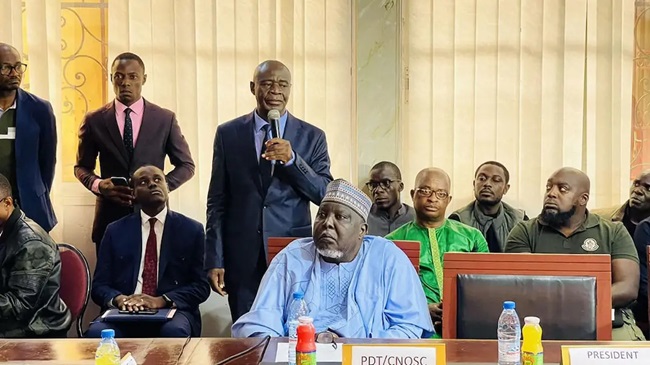
Top political players in Nigeria gathered in the capital Abuja for the launch of a book by the former president, Goodluck Ebele Jonathan. Jonathan chose his 61st birthday to launch the book, “The Transition Hours,” which detailed events leading up to his concession after he lost elections in 2015.
Chairman of the ruling All Progressives Congress, APC, and other top guns were present at the event that took place at the Transcorp Hilton Hotel in Abuja. President Buhari was advertised as attending but instead he was represented by Secretary General of the Federation, Boss Mustapha, local media portals reported.
Also in attendance were top officials of the main opposition Peoples Democratic Party, PDP. It’s candidate in next February presidential polls, Atiku Abubakar, was also present.
Nigeria’s former presidents Olusegun Obasanjo and Abdul Salam Abubakar were also present for the event. A heavy presence of former presidents across the subregion was also recorded with Ghana’s John Dramani Mahama, Benin’s Thomas Boni-Yayi and Sierra Leone’s Ernest Bai Koroma all in attendance.
‘My Transition Hours,’ chronicles how Jonathan accepted defeat in highly contested polls barely four years ago. At the time, Jonathan was seeking a final term in office as candidate of the PDP. He lost the contest to incumbent president Muhammadu Buhari.
It was the first time in Nigeria’s recent history that an opposition party had wrestled power from the ruling party? PDP had been in power for sixteen years prior to 2015.
Before the APC government, PDP had ruled eight years through Olusegun Obasanjo who handed over to Umaru Musa Yar’Adua who died in office. His then vice president Jonathan completed his term and won his substantive first term in 2011.
Culled from Africa News
President Goodluck Jonathan: Recognizing the vision and record of a great leader
Cameroon Concord News Group was pleased to announce former Nigeria President Good Luck Jonathan as their man of the year 2015. We arrived at this conclusion after a careful and anxious consideration of a wide range of candidates. We considered the contributions of the candidates to the development and improvement of the human condition within their communities, their countries and the world at large. Our choice fell on the former Nigerian president Good Luck Jonathan due to his contributions to the enthronement of a sound democratic culture and society, democratic constitutionalism, peace, security and good governance in his country the Federal Republic of Nigeria. The vision and record of Good Luck Jonathan will greatly contribute to the development of a credible democratic culture and economic emancipation of Africa.
Former Nigerian President Good Luck Jonathan maintained the integrity and unity of Nigeria which this paper regrets, Buhari is jeopardizing with his ethnic politics that undermines the federal character of his country. The resurgence of the popular clamour for the reactivation of the sovereign state of Biafra as the recent demonstration by millions of people of Eastern Nigeria origin at home and worldwide is an obvious indicator.
While in opposition President Buhari made statements that undermined the war effort against Boko Haram. He later rallied the ethnic support of Northern Nigeria and hoodwinked the gullible Yoruba power elite to return power to the North. Now in power President Buhari’s inconsistent policy of wanting to negotiate and fighting Boko Haram is an indication that he does not intend to fight them with the same intensity that Jonathan did. Jonathan an ethnic minority Ejaw from the volatile Niger Delta of Nigeria succeeded in negotiating a peaceful abatement of the armed insurgency in the Niger Delta that disrupted oil exploitation, the main stay of the Federation’s economy and international maritime traffic. That was a major achievement that merits recognition.
Jonathan has been criticized of being lax in the fight against corruption. This criticism is exaggerated considering the fact most efforts he made in the fight against corruption were indeed sabotaged by some of the very born again torn coat politicians who energized and sponsored the then opposition APC alliance to wrestle power from Jonathan. It was on Jonathan’s watch that some of the Sani Abacha loot was repatriated and fiscal and financial discipline introduced into governance. The Ngozi Okongo Eweala led nationally and internationally acclaimed economic policies identified and closed loopholes in government fiscal and financial policies, depriving corrupt politicians and business men of the impunity with which they looted public wealth. This made powerful enemies against Jonathan within and out of his own political party the PDP. Some left to join the opposition APC alliance and have since been portrayed as the saints who will wipe corruption from the face of Nigeria. Sooner or later, the true motives underpinning the born again posturing of these political torn coats will become as obvious as day follows night to all to see. Then and only then will Nigerians discover the truth that leopards do not indeed change their spots.
Jonathan’s respect of the Federal character in critical government appointments; in particular appointments into ministries and portfolios overseeing national sovereignty insured that Nigerians of all ethnicities had roles and stakes in national decision making. The national conference organized by Jonathan provides Nigerians an opportunity to chart a new future for their country and to recommit to the idea of unity in diversity. The national conference is one of the landmark attainments of Jonathan enduring legacies to his people which history has recognized and recorded for our generation and generations unborn.
Cameroon Concord News Group has always held the considered opinion that Boko Haram is a tricky adversary which is hated and loved in equal measures by gullible politicians in Nigeria and Cameroon. First it offers power thirsty politicians the opportunity to attain power. It also provides them the opportunity to retain power, siphon money meant to support the war effort.
Like President Yaradua before, President Jonathan inherited Fulani cattlemen attacks in the Middle Belt, the Niger Delta crisis and the Boko Haram insurgency in the North from the previous administration of President Obasanjo. During his reign, President Jonathan made considerable efforts in rallying sub-regional and national efforts to confront these challenges. Time has so far proved that President Buhari who criticized Jonathan’s Boko Haram strategy promising to end the insurgency if elected in a matter of months, has so far not offered any combat strategy different from that of President Jonathan to confront the armed challenges. He has also not offered any specific economic policies that defer from those put in place by President Jonathan. The slow pace of the Buhari administration may indeed be interpreted due to be a paucity of any credible economic policies that are superior to those put in place by President Jonathan.
Most significant, history will retain that President Jonathan successfully organized a free and fair election, the outcome of which he graciously accepted and respected, sparing Nigeria the risk of the bloodletting that has characterized several elections within the troubled continent of Africa.
It is sad that those who won the elections promising to bring better reforms than those put in place by Jonathan are still struggling to realize even a single promise they made to the electorate. The admitted rationale for the election of President Buhari in the last election was his proven record in combatting corruption as a military leader. President Buhari’s famed war against corruption largely succeeded then because of the dictatorial military instruments of coercion he wielded then to impose and enforce his policies. Those instruments were not available to Jonathan and absent them now a civilian president, President Buhari, facing the same adversaries may not be a hopeful of the successes he recorded in the war against corruption as a military ruler. The same forces that applauded him to power this time around will be an impediment to his corruption fighting policies and strategies due in part on human rights and rule of law considerations and potential impediments.
History will rate Jonathan fairly and may be classify him as one of the great political leaders to come out of Africa. He has demonstrated by words and deeds that he is patriotic, visionary, democratic, humane, and honest and readily one the great leaders of our generation, Africa and the democratic world. He merits our recognition.
By Soter Tarh Agbaw-Ebai














21, November 2018
Believers trapped as Biya regime wages war on two fronts 0
The stakes are high and believers are running out of places to go as Cameroon wages war on two fronts. Illia Djadi – Africa Bureau Chief at World Watch Monitor – describes a Boko Haram insurgency in northern Cameroon. “Ministers in that area are not safe,” he notes. “They had to leave the area or [be] attacked, ransacked, set on fire, destroyed by Boko Haram.
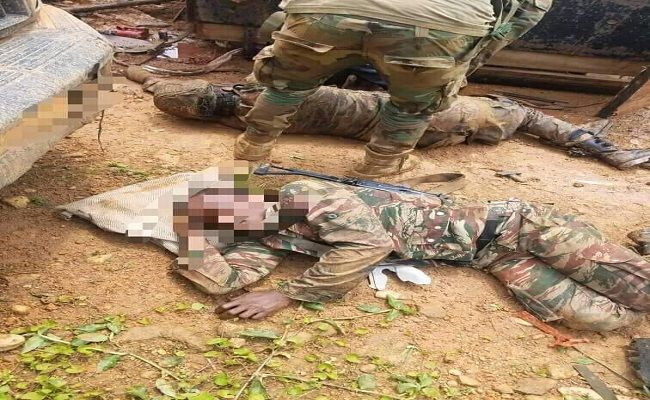
At the same time, government forces are fighting armed separatists in western Cameroon.
Fighting in the North
(Screenshot)
Boko Haram officially began expanding its operations from Nigeria into Cameroon in October 2014. However, northern Cameroon was one of the first places authorities searched six months earlier following Boko Haram’s infamous Chibok abduction. Last month, 57 Chibok captives were spotted at two Boko Haram strongholds.
On Holy Week in April 2014, Boko Haram abducted hundreds of schoolgirls from Chibok, Nigeria, sparking international outcry. Over 50 girls escaped during the initial months of their captivity, and 106 have been released so far. One hundred are still thought to be in the grasp of terrorists.
Furthermore, Boko Haram terrorists are reportedly raiding and pillaging villages throughout northern Cameroon, stealing food and destroying property. “They (Christians) had to leave,” says Djadi.
Fighting in the West
As explained in this report by BBC News, the clash between English-speaking separatists and Cameroon’s French-speaking government began last year. The conflict has killed hundreds since then, and approximately 436,000 have been displaced.
(Screenshot captured from Charles Wesco memorial video)
American missionary Charles Wesco was caught in the crossfire at the end of October. Wesco and his family moved to Cameroon from Indiana to begin missionary service 12 days before he was fatally shot.
“This American missionary has become [the] victim of an issue…but before him, other church ministers, leaders, have also been killed,” Djadi states.
The separatist conflict may seem limited to western Cameroon, Djadi adds, but it could quickly become a regional issue.
“That’s exactly what happened with Boko Haram. It first affected north-eastern Nigeria, and now…it is affecting northern Cameroon. It is affecting Chad, it’s affecting Niger.”
3 ways to pray for Cameroon
For their safety, believers are being told to leave both northern and western Cameroon. Djadi says the dilemma is more complicated than it appears.
“They have a strong sense of their calling, to go there even if it’s not safe,” he explains.
While the crisis in Cameroon is multifaceted, there are three specific ways you can pray. First, pray for peace.
“For missionaries [and] churches to run their ministries, they need peace,” notes Djadi.
Second, ask the Lord to protect His followers in Cameroon, and pray for wisdom as they make difficult choices. Third, “pray for the Cameroon authorities, political authorities, for wisdom.”
Source: Mission Network News