Cameroon Concord News
You Are What You Read
  • Home
  • News
    • Cameroon
    • Nigeria
    • Africa
    • Europe
    • World
  • Politics
    • Cameroon
    • Nigeria
    • Africa
    • Europe
    • World
  • Sports
    • Cameroon
    • Africa
    • Europe
    • World
  • Business
    • Africa
    • World
  • Life
    • Education
    • Health
    • Fashion
    • Entertainment
  • Religion
    • Cameroon
    • World
  • Contact
    • Online
    • Phone
    • Email
  • About
    • Us
    • Our Services
    • Advertising with Us

Categories

Recent Posts

  • Another 20TH May, same questions: Can Biya still steady Cameroon?
  • Cameroon marks 54th National Day with nationwide celebrations
  • Yaoundé: US Embassy travel warning underscores deepening security crisis
  • Putin, Xi jointly denounce recent US-Israeli war of aggression against Iran
  • Cameroon public debt up 6%, remains below regional threshold

Archives

  • May 2026
  • April 2026
  • March 2026
  • February 2026
  • January 2026
  • December 2025
  • November 2025
  • October 2025
  • September 2025
  • August 2025
  • July 2025
  • June 2025
  • May 2025
  • April 2025
  • March 2025
  • February 2025
  • January 2025
  • December 2024
  • November 2024
  • October 2024
  • September 2024
  • August 2024
  • July 2024
  • June 2024
  • May 2024
  • April 2024
  • March 2024
  • February 2024
  • January 2024
  • December 2023
  • November 2023
  • October 2023
  • September 2023
  • August 2023
  • July 2023
  • June 2023
  • May 2023
  • April 2023
  • March 2023
  • February 2023
  • January 2023
  • December 2022
  • November 2022
  • October 2022
  • September 2022
  • August 2022
  • July 2022
  • June 2022
  • May 2022
  • April 2022
  • March 2022
  • February 2022
  • January 2022
  • December 2021
  • November 2021
  • October 2021
  • September 2021
  • August 2021
  • July 2021
  • June 2021
  • May 2021
  • April 2021
  • March 2021
  • February 2021
  • January 2021
  • December 2020
  • November 2020
  • October 2020
  • September 2020
  • August 2020
  • July 2020
  • June 2020
  • May 2020
  • April 2020
  • March 2020
  • February 2020
  • January 2020
  • December 2019
  • November 2019
  • October 2019
  • September 2019
  • August 2019
  • July 2019
  • June 2019
  • May 2019
  • April 2019
  • March 2019
  • February 2019
  • January 2019
  • December 2018
  • November 2018
  • October 2018
  • September 2018
  • August 2018
  • July 2018
  • June 2018
  • May 2018
  • April 2018
  • March 2018
  • February 2018
  • January 2018
  • December 2017
  • November 2017
  • October 2017
  • September 2017
  • August 2017
  • July 2017
  • June 2017
  • May 2017
  • April 2017
  • March 2017
  • February 2017
  • January 2017
  • December 2016
  • November 2016
  • October 2016
  • September 2016
  • August 2016
  • July 2016
  • June 2016
Southern Cameroons War : Military says 30 Ambazonia fighters killed in fighting

15, November 2018

Southern Cameroons War : Military says 30 Ambazonia fighters killed in fighting 0

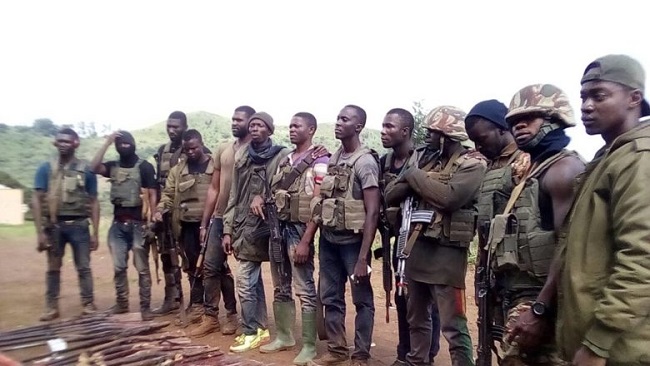
Cameroon’s military has killed at least 30 separatists in two days of intense fighting in the turbulent English-speaking North West region, a military spokesman said Wednesday.

The military freed people held by separatists during its two-day operation, military spokesman Col. Didier Badjeck said Wednesday. Fighting was intense in the Mayo Binka area near Nkambe, he said. While no soldiers have been killed, he said the death toll for armed separatists may increase, as fighters escape into the bush.

In a separate incident, the mayor of Nwa, a local council in the same region, was found dead Wednesday and he is believed to have been killed by separatists, said Emmanuel Bunyui, the mayor of the nearby town of Ndu. Many mayors in English-speaking regions have been targeted by armed separatists demanding an independent English-speaking state, which they call Ambazonia.

“When we hoist the Cameroon flag in the council premises, we are targeted by the armed men who insist that we should instead display their blue and white flag,” Bunyui said.

These incidents have highlighted the separatist unrest in Cameroon, which began in 2016, when English-speaking teachers and lawyers in the northwest and southwest staged demonstrations calling for reforms, criticizing what they called the marginalization of the Anglophone population, which accounts for about one-fifth of the country’s 25 million people.

Violence increased after factions of separatists armed themselves following a government clampdown on protests in 2017. Armed separatists have vowed to destabilize the regions and hundreds of civilians have been killed and dozens of schools have been burned and teachers threatened.

In the past year, more than 1,200 people including separatists, police, military and gendarmes have been killed in the fighting, according to military spokesman Badjeck.

Recently 79 students and three staff were kidnapped from a school by suspected separatists, and they have all now been released.

More than 100 civilians have escaped the violence and fled to the capital, Yaounde.

“I am just going to nowhere. I am afraid,” said Kenneth Kongyu, 19, who joined 75 other people who walked 60 kilometers (37 miles) for two days to escape violence in Ndu, Bunyui’s town. “When they come to the market, they shoot from every angle.”

Tatah Oscar, 17, said he is a former fighter. He said many young Cameroonians are joining the separatists because their families have been killed by military “so they don’t have somebody to count on again … I am pleading on the government to try and solve the problem so that we the youths we can go back to school.”

Col. Badjeck, however, said “Most of the time the terrorists operate and hide among civilians and the world has an impression that civilians are being killed, but our military is professional.”

In November last year, Cameroonian President Paul Biya declared the crisis a war. Biya was re-elected to his seventh term in October, although few votes were cast in war-torn Anglophone regions.

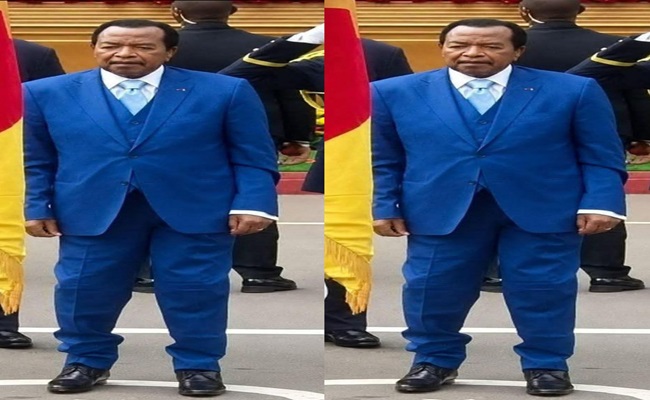
Politicians have repeatedly called on Biya to initiate dialogue to stem the violence. The 85-year-old president, who has ruled Cameroon since 1982, has repeatedly stated that Cameroon is one and indivisible and that he is not ready to negotiate.

The conflict poses a serious challenge for Cameroon, a close U.S. security ally in combating extremism and a new member of the U.N. Human Rights Council. The United Nations have condemned both the Cameroon military and separatists for using unnecessary and excessive force and Amnesty International criticized the “horrific escalation of violence” in English-speaking regions.

Nearly a quarter-million more people have fled the ongoing violence, many leaving their homes on foot with their belongings teetering on their heads.

AP


Renewed Ambazonia Fighting Displaces Hundreds of Civilians

15, November 2018

Renewed Ambazonia Fighting Displaces Hundreds of Civilians 0

Cameroon’s restive English-speaking regions are emptying out after renewed military raids on separatist strongholds left at least 30 people dead in two days. The renewed fighting comes barely a week after President Paul Biya, during his inauguration ceremony, warned rebels to drop their guns or be killed. Thousands of fleeing civilians are arriving in Yaounde.

Nso and Wimbum people, from the English-speaking northwest region of Cameroon, sing and dance to welcome some of the thousands of people who fled fighting in their villages.

Nineteen-year-old businessman Kenneth Kongyu says he fled in a group of 75 as the military clashed with Anglophone separatists who want to form an independent state they call “Ambazonia.”

“So when we arrived in Berr, we saw about 300 people there. They were even asking me, where am I going let them join me? I said I am just going to nowhere,” he said. “I am afraid, they are killing people every day, both the Ambazonia fighters and the military. When they come to the market, they shoot from every angle.”
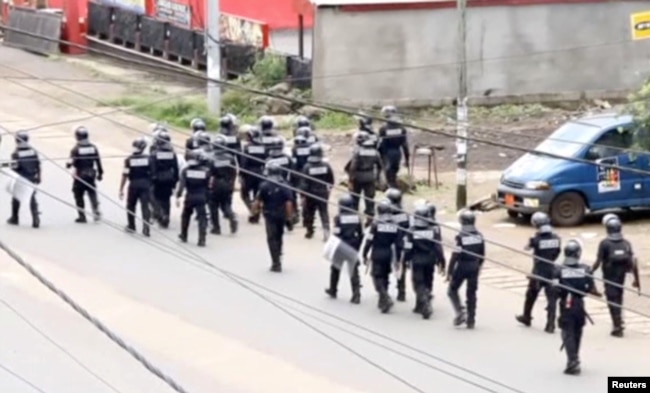
FILE - A still image taken from a video shows riot police walkin along a street in the English-speaking city of Buea, Cameroon, Oct. 1, 2017.
FILE – A still image taken from a video shows riot police walking along a street in the English-speaking city of Buea, Cameroon, Oct. 1, 2017.


Cameroon’s military spokesperson Colonel Didier Badjeck on Wednesday said the death toll from clashes the last few days had increased to more than 30, all of them separatists.

Ambazonian Defense Force spokesman Ivo Tapang told Reuters news agency only two separatist fighters died while their forces killed 13 government troops.

Seventeen-year-old Oscar Tatah says he is a former separatist fighter. He says he was nearly killed when the military attacked their training camp of 80 young fighters in Nkambe.

“Some are joining because they have killed their family members, their father, maybe their mother or their father or their brothers. So, they don’t have somebody to count on again. That is the reason why some are joining. I am pleading on the government to try and solve the problem so that we, the youths, we can go back to school,” said Tatah.

Elvis Tardze, a community leader from Nkambe, notes police often suspect displaced people of being separatist supporters and search their houses.

“People need to continuously cluster together, sensitizing each person or each member of each group or community to do the right thing and doing the right thing is to respect the law and follow the norms. They should avoid being exposed to circumstances. They should be law-abiding,” he said.

FILE - Cameroon's Incumbent President Paul Biya, of the Cameroon People's Democratic Movement party, waits to cast his vote during the Presidential elections in Yaounde, Oct. 7, 2018.
FILE – Cameroon’s Incumbent President Paul Biya, of the Cameroon People’s Democratic Movement party, waits to cast his vote during the Presidential elections in Yaounde, Oct. 7, 2018.


During his inauguration on November 6, President Paul Biya told fighters to drop their guns or be killed. He promised to pardon those who stopped fighting.

Political analyst Gabriel Suh says the rebels are showing no signs of surrendering. He says Cameroon may be in for carnage if Biya does not negotiate with the separatists, whose leaders live in exile.

“Why can the government not invite those in the diaspora to come to the negotiating table where there is no intimidation? They can talk one to one, ask them what they need, what they want and what they do not want. We should dialogue amicably,” said Suh.

Some political leaders have called on Biya to initiate dialogue with the separatists. But Biya — who has ruled Cameroon for 36 years — has refused any talks on Cameroon becoming a divided state.

Women protest holding up a poster with images of atrocities committed in an ongoing conflict between government forces and armed separatists, in Bamenda, Cameroon, Sept. 7, 2018. (M.E. Kindzeka/VOA)
Women protest holding up a poster with images of atrocities committed in an ongoing conflict between government forces and armed separatists, in Bamenda, Cameroon, Sept. 7, 2018. 


Cameroon, a former French colony, has been troubled by unrest since separatists in two English-speaking regions in 2016 said they wished to form a new country.

Biya declared war on them, calling them terrorists for attacks that killed government troops.

In January, Cameroon extradited from Nigeria the self-proclaimed leader of Ambazonia, Ayuk Tabe Julius, along with 47 of his supporters.

Since then, separatists have been attacking schools, killing and kidnapping teachers, students, and workers to make the English-speaking regions ungovernable.

Culled from the VOA

Southern Cameroons War: ‘We live in fear in Bamenda’

15, November 2018

Southern Cameroons War: ‘We live in fear in Bamenda’ 0

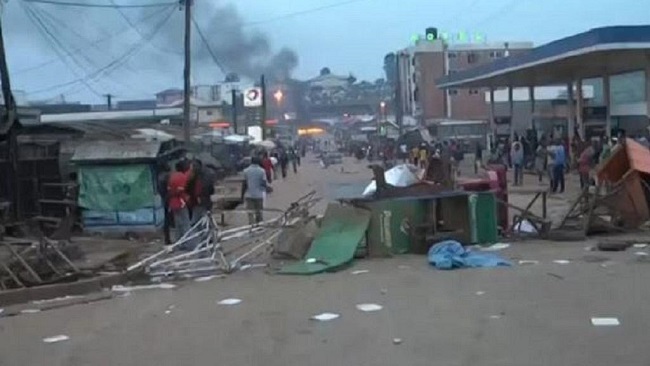
We live in fear and are traumatised by the fighting in Bamenda. This once peaceful and lively city in Cameroon has become a battleground between government forces and rebels demanding an independent state for the central African nation’s English-speaking minority.

More than half the city’s population of about 400,000 have fled their homes in the last few months, either to safer neighbourhoods or to mainly French-speaking towns and cities unaffected by the conflict.

Protests over the increasing use of French in courts and schools in Cameroon’s English-speaking heartlands, the North-West and South-West regions, morphed into violence in 2017.

A security force crackdown led to some English-speaking civilians taking up arms against the government, led by the French-speaking President Paul Biya.

‘Shot for smoking marijuana’

Now, the sound of gunfire has become familiar, even to two-year-olds, as has the sight of abandoned corpses on the streets of Bamenda, the city with the biggest English-speaking population in Cameroon.

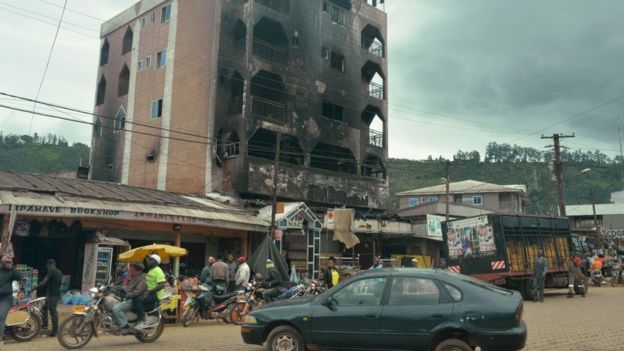
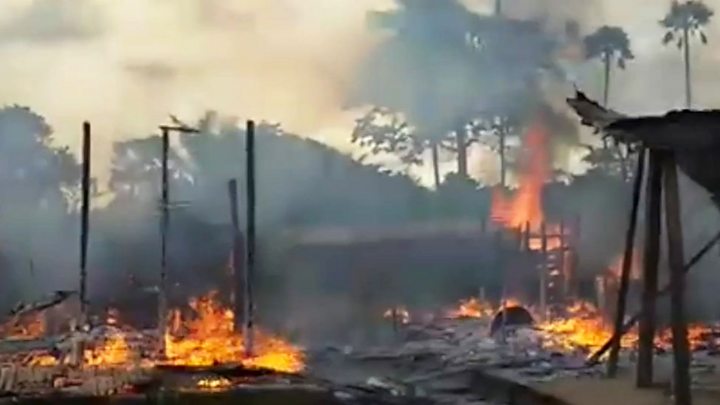
This photo taken on June 16, 2017 in Bamenda shows a hotel destroyed by a fire, allegedly attributed to a radical separatist movement demanding the independence of the Anglophone region from the rest of Francophone Cameroon.The government says the separatists are “terrorists” who are causing widespread destruction


The image of four boys shot dead by troops just 200m (656ft) from my home has stuck with me.

They were ordinary boys in my neighbourhood who, unfortunately, were caught smoking marijuana, an activity the security forces associate with separatist fighters.

‘Lots of kidnappings’

The security forces are also suspicious of teenagers with dreadlocks or those who look unkempt. It is assumed they have come to the city after receiving military training in the bush.

Even stout men like me arouse suspicion – the logic of the security forces is that if you are well-built, the chances of you being a fighter are greater.

And many parents beg their teenage sons to stop wearing red bandanas or a combination of red and black clothes because the security forces could mistake them for separatist fighters. The colours are associated with the rebels.

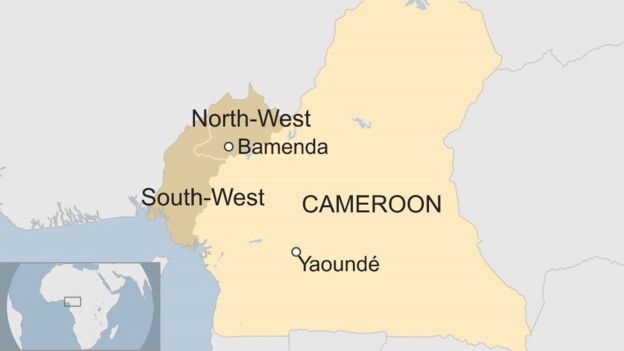
Map

Armed groups have sprouted in Bamenda and neighbouring towns. Some of them are made up of separatist fighters, while others are criminal gangs which have exploited the instability.

It is not always clear who is behind attacks, but there are lots of kidnappings of schoolchildren, politicians and other high-profile personalities who, in most cases, are released after a ransom is paid.

Students ‘sneak into schools’

In the latest kidnapping, 80 school pupils, their principal and a teacher were freed after being seized from their school about a week ago.

Separatist fighters denied involvement, but the government blamed them for the abductions.

Tens of thousands of children have been sent by their parents to schools in safer cities and towns.

Separatists have ordered the closure of all schools until the government agrees to hold a referendum on whether the mainly English-speaking regions should become independent.

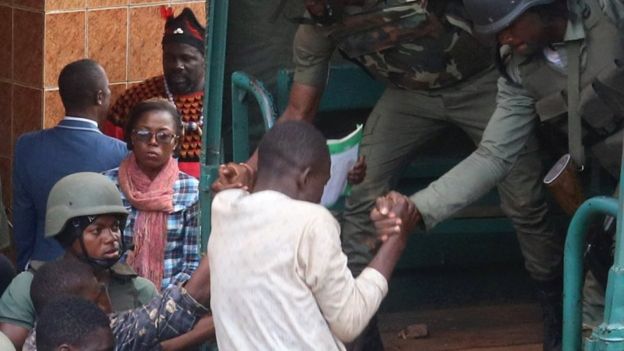
The freed students being helped into a truck by paramilitary force in BamendaThe security forces have been unable to provide security at schools


A few schools have remained open, but attendance has fallen sharply. In schools where there were around 8,000 pupils there are now 700.

The few brave children who still go to school do so surreptitiously. They do not wear uniforms, and stroll down roads as if they are going to the market before sneaking into classrooms.

Last month, an American missionary and a university professor were also killed in the space of three days in Bamenda.

The main mortuary is often full, mostly with the corpses of civilians caught up in the fighting between the separatists and the military.

No neighbourhood is safe, and I cannot remember the last time I visited my friends. It is as though we have been caged. Sometimes, we are forced to stay at home for days because of battles on the streets.

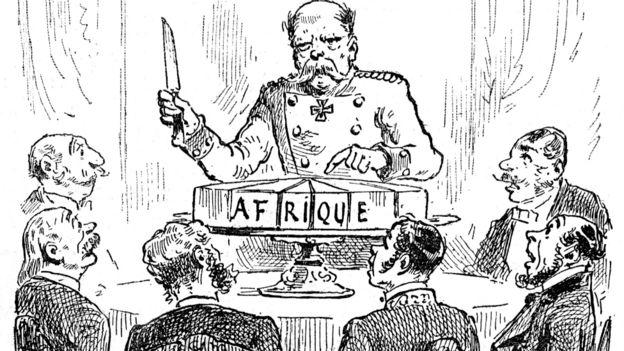
Cameroon – still divided along colonial lines:

French commentary on the Berlin Conference of 1884-1885: Otto von Bismarck, then Chancellor or Germany, is portrayed here wielding a knife over a sliced-up cake, labelled "Africa". His fellow delegates around the table look on in awe.Africa’s borders were “carved up” up by colonial powers
  • Colonised by Germany in 1884
  • British and French troops force Germans to leave in 1916
  • Cameroon is split three years later – 80% goes to the French and 20% to the British
  • French-run Cameroon becomes independent in 1960
  • Following a referendum, the (British) Southern Cameroons join Cameroon, while Northern Cameroons join English-speaking Nigeria
Presentational grey line

 Cameroon’s descent towards civil war


We are on edge all the time. I recall returning home from the gym at around 17:45 one day. People were running helter-skelter.

I was perplexed. “Probably there’s a gun battle ahead of me,” I thought, as I advanced cautiously towards the source of the disturbance.

The commotion grew as I approached Nkwen Market, a hotspot in Bamenda. There was a huge traffic jam and I could see people frantically fleeing the streets.

I knew I was taking a risk but had no option other than to go through the market to get home.

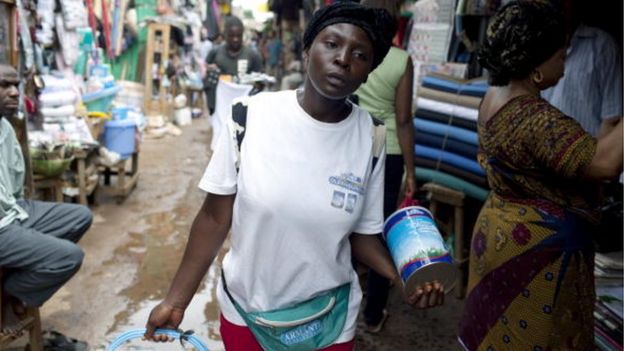
Felicity, age 20, walks in the central market selling the Oldenberger milk powder on August 8, 2009 in Bamenda, CameroonMarkets in Bamenda remain busy during the day


I learnt later that the regional governor had changed the time of the curfew. It was no longer from 21:00 to 05:00 but from 18:00 to 06:00.

There was no prior warning, so people were rushing to get home, fearing that they would be shot by the security forces if they were still on the streets at 18:00.

‘Roads cut off’

The curfew is intended to restrict the activities of separatist fighters, who take advantage of the darkness to carry out attacks on the security forces.

The conflict has destroyed Bamenda’s nightlife. Some of the city’s off-licences and nightclubs – which were famed to be among the best in Cameroon – have closed down. Others have relocated to French-speaking cities.

The insecurity is even worse in Kumbo, the largest city in the North-West after Bamenda. The two cities – about 110km (70 miles) apart – have been cut off from each other. Separatist fighters are said to have destroyed a bridge, and have also strewn the road with felled trees and large rocks.

Kumbo gets its supplies from Bamenda and my relatives there tell me that its markets have been shut for more than three weeks following fighting between the security forces and separatists.

‘Working days changed’

The separatists also impose what they call “ghost towns”. They are typically observed on Mondays when nothing functions – markets, courts and offices are shut, and vehicles remain parked.

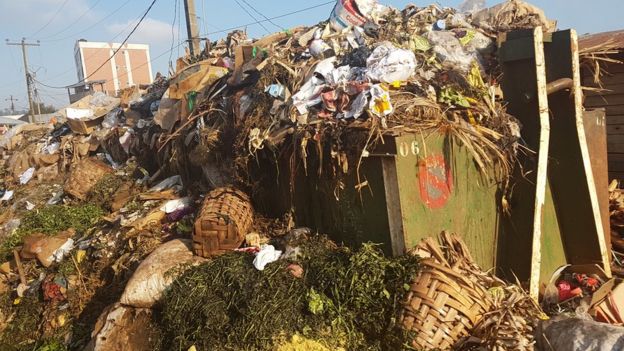
Rubbish in BamendaA road damaged by fighting in Bamenda has made it difficult for rubbish to be collected


Many companies have therefore made Saturday a working day to compensate for the lost Monday, but sometimes the separatists order a shutdown for the entire week.

The situation is even worse in small towns like Bafut, Bali, Batibo, Bambui, and Bambili where fierce battles break out, forcing civilians to escape into the bush.

Hundreds of people – civilians, separatists and soldiers – have been killed and about 436,000 have been displaced in the North-West and South-West, with fears that the number will rise as fighting escalates.

I, myself, am under pressure from my family to leave – if not for my sake then for my children’s.

I have resisted the pressure so far, hoping that the government and secessionists make a peace deal so that our lives can return to normal.

Culled from the BBC


Southern Cameroons Crisis: The killing intensifies

15, November 2018

Southern Cameroons Crisis: The killing intensifies 0

The fighting in the country’s two English-speaking regions has intensified, leading to huge casualties. Over the last two days, more than 50 people have been killed in the region, including some 15 army soldiers. In Bui Division, some 20 separatist fighters were ambushed and killed by government troops on Tuesday.

Kumbo, the capital of Bui Division, has over the last two days witnessed some bloody fighting. Pictures published online showed that there was intense fighting as heavy smoke could be seen bellowing from many houses. On Wednesday, some 10 army soldiers have been killed by separatist fighters in Ndu Sub-division where lots of fighting has been going on between government forces and separatists.

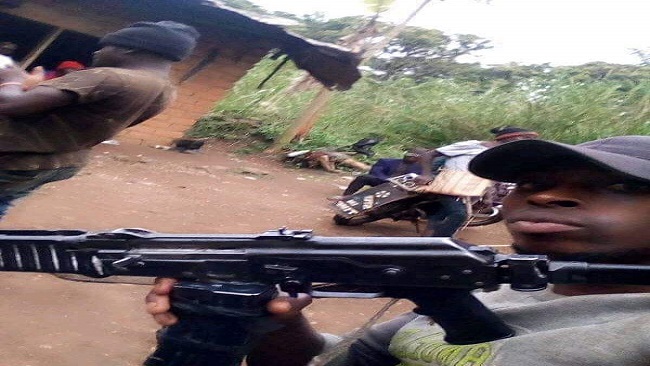
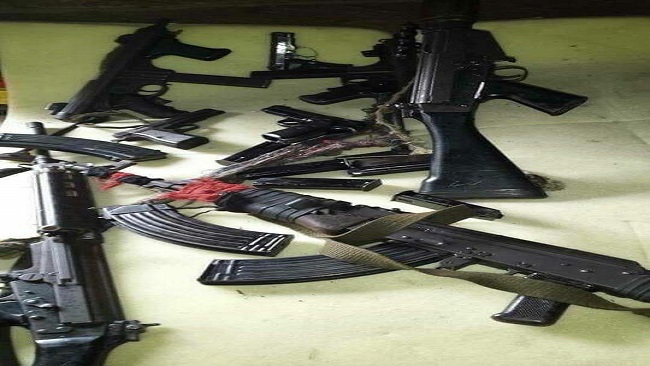
From the number of soldiers being killed by separatist fighters, it is clear that the separatists have finally taken possession of their most cherished weapon, the AK-47, which is reputed around the world for its capacity to inflict a lot of damage.

In Lebialem Division, the red dragons have been celebrating the arrival of their consignment and they have promised to give army soldiers a run for their money. The same applies to fighters in the Northwest region who are bent on spreading death and destruction among government soldiers, especially after the killing of some 20 fighters by government troops.

It is being rumored that the killing of some 20 Southern Cameroonian fighters by government troops in Bui is an act of betrayal. Separatist fighters are investigating the matter and have vowed to take their revenge on anybody who was involved in the betrayal.

It is also being reported that government troops have run amok in the region and they are arresting people for no reason and are asking for money. Many of those who have been arrested and cannot pay the money requested by government soldiers are being threatened with death.

It should be underscored that Cameroonian soldiers have been given a shoot and kill order and this has enabled them to establish a business niche in the region. Their strategy consists in accusing innocent civilians of being part of the separatists and then imposes levies on them. The levies range from CFAF 200,000 to CFAF 1,000,000.

Since there are no control mechanisms in place, the soldiers are robbing the people blind and this is further radicalizing the people. According to a civilian in Kumbo, the fighting might never come to an end as the population is very bitter and the people want to take their revenge on the soldiers who have been killing and maiming innocent civilians.

He added that the most surprising thing is the rapping of women by soldiers who are supposed to be protecting the women and children. Atrocities committed by army soldiers are actually shocking the population and many people in the region are now openly stating that they are with the separatist.

It has even been reported that government troops dropped a child in hot palm oil in Muyengue in the Southwest region when they tried, in vain, to arrest a group of women who were processing their palm oil. The women, who escaped after seeing the troops, left the child behind as they feared for their lives. After returning to the oil processing location, they only found out that the soldiers had messed up their property and dropped the innocent child in hot oil.

These types of stories are pushing many young girls and boys into the arms of the separatists who are being considered as protectors and saviors in the region. The population is now sure that with their new weapons, the separatists can change the course of things in the region.

With this new weapon, it is obvious that the fighting in Cameroon’s two English-speaking regions has entered a new phase. After more than two years, separatist fighters have finally laid their hand on their weapon of choice and this is widely expected to wreak more havoc on government forces.

The fighters, who have been using den guns, have finally received their cherished weapon, the AK-47, and they have been celebrating. The shipment, which came through Nigeria’s Niger Delta, has already brought down more than ten army soldiers in the North West region alone.

The news about the arms shipment was delivered to the Cameroon Concord News Group’s global headquarters in the United Kingdom by a member of the armed separatist group’s inner cycle in a telephone interview.

Speaking on condition of anonymity, the fighter who identified himself as Captain Destroyer said they had had been longing for these weapons and now that they have them, they would make Southern Cameroonians proud.

“We have been dreaming of this day. The government’s fire power has been superior because of the type of weapons its soldiers have. We will be reversing things now that we have got this weapon of mass destruction known around the world as AK-47. With our den guns, we have succeeded to bring down more than 1,300 army soldiers. I think they are in for real trouble. We are very happy with the efforts of our brothers in the Diaspora, especially the efforts of the Interim Government that is not relenting in his efforts to ensure that we liberate our land,” Captain Destroyer said.

“We will keep them busy. They have been working hard over the last two years just to keep us in check. With this weapon, we will tell them that we can make them bite the dust. We know they have killed many of our people. We have seen many houses being burnt. Some of our people have been roasted. But we are not giving in. We must revenge the deaths of our brothers,” he added.

“We are still looking forward to having more sophisticated weapons. The country has very porous borders and their so-called soldiers are poor and easy to corrupt. Many of them are tired and scared of dying. We will deliver them a huge surprise very soon. If we lay our hands on bombs, they will regret a lot. We have seen blood. I have seen comrades being mowed down by army soldiers and this has transformed me into a beast. I am prepared to die, after all, my fate is worse than death,” he stressed.

“In the days ahead, you will be having a huge surprise. Some of our Francophone brothers have crossed the Mungo to join us and they want to take death to their own people. We are still suspicious of them, so we have sent them to Nigeria for training,” he said, adding that “many of them want to engage in sabotage that will bring the government to its knees. The tables are slowly turning.  Mr. Biya and his people are in for trouble. They will soon be fighting a war on many fronts. Our partners from East Cameroon say their response will come in the form of a mushroom cloud and they will make sure civilian casualties are minimized,” he said.

“If Mr. Biya thinks it is all over because he has been sworn in, then he is deceiving himself. It is not Prof. Kamto who will be his nightmare, but the population. They may look docile, but when the time comes, the government will not recognize the same people who seem to have been intimidated into silence,” he stressed.

Meanwhile, the fighting has intensified in Kumbo, Bui County, with Southern Cameroonian soldiers destroying all bridges as news is spreading that army soldiers are advancing towards Kumbo. It is therefore challenging now to travel from Kumbo to Bamenda, as the number of checkpoints has increased.

Southern Cameroonian fighters have advised the population in Kumbo to head to the bushes as they prepare for a showdown with army soldiers. The fighters are excited to use their new weapons and they have promised hell to Mr. Biya’s struggling army.

Also, there have been many raids on the homes of Southern Cameroonians living in Yaounde. Many of those suspected by the soldiers have been arrested and taken to unknown destinations. Many Southern Cameroonians who had escaped to Yaounde during the election are already fleeing the capital city due to these raids and high cost of living.

The raids in Yaounde are being orchestrated by Beti soldiers and this has become their stock in trade. They have been arresting young Southern Cameroonians for cash and each person arrested is asked to pay CFAF 200,000 before he is released. Mr. Biya’s army has found a new way to make money and this trade seems to be netting the soldiers lots of cash, especially as the government is looking the other way.

Though Mr. Biya has been sworn in as the country’s president, it is clear that he is not having a good night’s sleep. Cameroon, which was once touted as a safe sanctuary for many people fleeing violence in their countries, has become a dangerous place for its own citizens, especially those who challenge Mr. Biya’s authority.

Meanwhile, pressure is still mounting on the government of Cameroon. The international community is urging the Yaounde government to negotiate a way out of the mess it has created in the two English-speaking regions of the country. Though the regime is still dragging its feet, it is becoming obvious that it will buckle under the pressure as some of its allies are insisting that the war is costing a lot and the government lacks legitimacy.

It should be recalled that Mr. Biya, the country’s president, had lost last month’s presidential election, but the constitutional council which is replete with members of his party did all it could to hand the 85-year-old dictator another 7-year term.

By Kingsley Betek in Yaounde


“I ran for President in Cameroon. Here is what I learnt”

15, November 2018

“I ran for President in Cameroon. Here is what I learnt” 0

On 6 November, Paul Biya was inaugurated for the seventh time. The 85-year-old has already been in power for the last 36 years and will now serve another seven-year term.

President Biya won disputed elections on 7 October amidst rising unrest in Cameroon. The country is divided into the Francophone area – which makes up four-fifths of territory – and the smaller Anglophone area. In the last two years, the latter region has been in a situation just short of civil war.

Over the decades since unification, the Anglophone regions have been increasingly dominated (https://bit.ly/2DDukwx) and felt resentful. This led to a movement that, in 2016, began by holding strikes and peaceful demonstrations. Activists called for the restoration of the English-speaking education and judicial system.

The government responded with furious repression and shut down any discussions about federalism. This led to a spiralling crisis. Today, the talk is about secession, while the conflict has become bloody. There are now over 300,000 internally displaced persons and more than 40,000 refugees in Nigeria. At least 90 villages have been razed, while over 400 civilians have been killed and thousands more wounded. 40% of Cameroon’s revenue derives from the Anglophone regions, but the local economy has been deeply undermined by the insecurity.

This is the context in which Cameroon’s elections were held last month. In theory, this exercise was an opportunity for citizens to shape the direction of the nation. But the reality is very different.

The body that organises Cameroon’s elections is supposedly autonomous, but all its members are appointed by the president and can be removed at will.  All electoral disputes are settled by the Constitutional Council, but all its members are also appointed by the president. The Minister of Territorial Administration, another presidential appointee, handles all other administrative issues connected with elections.

In Cameroon, the voting system is first-past-the-post and uses multiple ballots. Voters are given papers for all the candidates and then cast their vote by putting their favoured nominee into the ballot box. This means they can leave the booth with the papers of the other candidates, allowing vote-buyers the ability to check how people voted. Calls to adopt a single ballot paper system have been ignored.

For presidential hopefuls, getting onto the ballot in the first place is challenging. Nominees must pay around $60,000 to submit their candidacies. They must either be endorsed by a party with at least one elected official or, if running as an independent, produce at least 300 signatures from specific kinds of dignitaries from every region.

In the elections themselves, there are close to 25,000 polling stations. What candidate can field representatives in each of these locations? The official campaign period lasts two weeks and it is illegal to campaign before this period. How can one visit 360 districts in just 14 days? The presidential campaign team, which includes ministers and other dignitaries, travels the country at the expense of the state, meaning the playing field is nowhere near level. Meanwhile, the state media turns into the ruling party’s propaganda machine.

Despite the very high hurdles, however, I decided to run for president. I have spent the last 25 years defending good governance and fighting corruption. In 2000, at a time Cameroon was accused of being the most corrupt country in the world, I founded the national chapter of international anti-corruption NGO Transparency International. Needless to say, this earned me the ire of the establishment. I went on to work for bodies such as the African Development Bank and High Level Panel on Illicit Financial Flows from Africa.

In this time, I watched as my country steadily moved in the wrong direction. And with the worsening situation in the Anglophone regions threatening to pull apart the fabric of our nation, a sense of responsibility weighed on my soul. I knew that I had to put my experience at the service of our citizens and attack the issues at their source – the system.

In the end, though, I withdrew my candidacy and backed Maurice Kamto. There is nowhere in African where the opposition has removed a dictator like Biya without presenting a common front. In Cameroon, the remaining eight candidates held some further meetings, but never met once together as a group. This meant that there was no single opposition candidate. This fact discouraged voters who concluded it was a waste of time.

In the final tally, Biya officially won with 71.28%. Kamto came second with 14.23%. But there were reports of massive fraud. The absence of opposition officials at many polling stations allowed the stuffing of ballot boxes. An incomplete biometric system meant that certain people voted multiple times.

The legal challenge against the election results that followed exposed the Constitutional Council as political institution. This all played out on national television and many citizens, for the first time, witnessed the fraud that cripples our electoral process.

The danger that Cameroon now faces is that its elections’ lack of credibility could lead voters to question the need to participate. And if electoral justice becomes captured by politics and hence incapable of addressing issues raised by the proper, the streets will take over. Since the presidential elections, there have been demonstrations against what has been described as a faulted political process. These demonstrations have been relayed to the Diaspora in Europe and America.

Cameroon needs to design an adequate electoral system. It is essential to make reforms so that the individual controlling the process is not also a player in it. This year, Cameroons saw first-hand the effects of a lopsided system. If the electoral playing field is not evened out then the country risks being stuck in an interminable loop created by a government for the government. Cameroonians will only stand for this so long. Till then, Cameroon remains a state captured by a few oligarchs.

Barrister Akere Muna


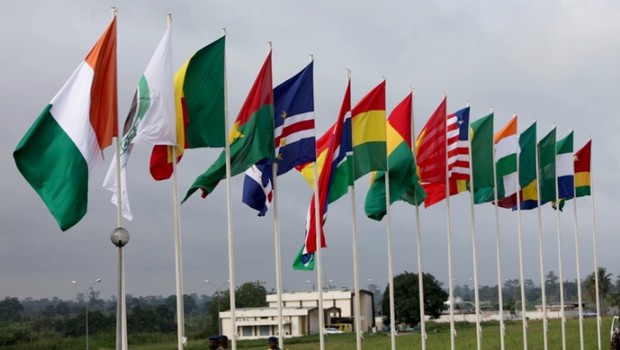
Nigerian Activist says ECOWAS must take the initiative to resolve the Ambazonia crisis

14, November 2018

Nigerian Activist says ECOWAS must take the initiative to resolve the Ambazonia crisis 0

Certainly, the kidnapping of 79 Cameroonian students by gunmen last week was a veiled message to the government that the Ambazonian separatists are indefatigable in their demand for autonomy and would make all sacrifice to achieve the goal

Though the gunmen were not immediately identified and the students have been released, it is instructive that they rejected ransom. Rather, they demanded that the school should be closed. It is not the first time students would be kidnapped but it is the first time such a large number of students were involved and ransom was not demanded.

Apparently, the demand for the closing of schools is to ensure the safety of the students. However, the kidnapping of students by insurgents to drum home their message has remained a worrisome development in the subregion. But beyond the closure of schools in the two regions, what is clear now is that Cameroon is sliding into civil war. Last week, President Biya asked the separatists to lay down their arms or face the rigour of the law and the determination of the defense and security forces. He spoke during his inauguration for the 7th term in office.

He reportedly promised to defeat terrorism in the country. Agency reports quoted him as saying that they would continue fighting terrorism until separatists in the two English-speaking regions drop their guns or are defeated. He however said “a good number of responses” will be provided “through the framework of accelerating the decentralization process which is underway,” adding that “the future of our compatriots in the Northwest and Southwest lies in the framework of our republic.”

In this report, Nigerian journalist, lawyer, activist and Special Adviser (Media and Publicity) African Bar Association, Mr Osa Director comments on the crisis and proffer solution. African Bar Association has been is a strong advocate of respect for fundamental human rights in Cameroon and other African countries.

Asked to react to the kidnapping of the 79 students, Director condemned the act, describing it as “an unfortunate development.” He said: “No sane and rationally minded human being will be happy at the incarceration or deprivation of the freedom of others.”Kidnapping is an issue that is subjected to immense physical torture. So, I felt sad and disappointed.”

With a cautious voice, Director was quick to say it is also important to identify the factor(s) that may have instigated the action of the gunmen. “However, we have to look at the root cause of such incident which I think is not unrelated to the crisis in Cameroon, where the English-speaking people are seeking independence from the dominance of the French-speaking north.

But for how long will Cameroon remain in a state of anarchy? Director said “until injustice and lopsidedness in national affairs in Cameroon is property addressed with a sense of fairness, justice and equity, we will continue to have incidence like this.” Director is aware of the implications of kidnapping of students by insurgents, either in Cameroon or in Nigeria. He pointed to the situation in Nigeria and how payment of ransom has encouraged kidnapping. “Unconfirmed source indicated that the Nigerian government always pays ransom to Boko Haram, although the government had continued to deny it. But even the international community continues to insist that certain ransom were paid.

“Those kind of attitude will embolden other kidnappers, knowing that it is now a veritable way of making money. So, it has serious implications for Nigeria in the sense that whatever happens in Cameroon can easily dovetail into the Nigerian states having borders with it . . . Akwa Ibom and Cross River.” He expressed fear that “some of these kidnappers could even be operating from the borders of Nigeria, knowing how porous our borders can be.” He suggested the tightening of Nigerian borders. “It means we have to tighten our security network and processes to ensure that the impact is not maximally felt in Nigeria as a way of causing tension and putting life at risk in these states.’

The Cameroonian crisis started with peaceful protests against the imposition of the French language on the schools and courts in the two Ambazonian regions where English is the general language used in schools and other public institutions. The thinking among observers at the time was that the crisis would be resolved, especially after international bodies like the European Union and the United Nations called for peace. So, what happened? Director believes that “in a situation like this, there must be a meeting ground.”

Since the crisis started, calls for dialogue between the government and the separatists have been made without tangible result. Director puts “the blame at the doorstep of the government.” He wondered why the government is reluctant to embrace dialogue when “the right to self determination is guaranteed under the UN charter. And if people say they want to secede, all you need do is to have discussion with them, it is possible that after the discussion, they may change or review decision.”

Describing President Biya as a tyrant and dictator, he said the president has been uncooperative, recalcitrant and reluctant to dialogue with the separatists. He wants the government of Cameroon to know that “nothing on earth can muzzle people who are determined and who are focus.” He believes that it is going to be a matter of time for the Ambazonians to realize their dream.

He dismissed claims that the separatists were giving tough conditions for dialogue with the government. “In negotiation, one of the parties should not be in a position of immense superiority. The Ambazonians are saying if we have to dialogue, the environment had to be equitable and there must be unbiased mediators in this process. So, it cannot be said that the Ambazonians are giving impossible conditions if the Cameroonian government is unwilling to have unbiased mediators in the process and in an environment that is seen to be equitable to both parties.”

Some observers have argued that Nigeria has the vigour to resolve the crisis but it is shying away even as some of its states are overwhelmed with Cameroonian refugees. Director agrees with this school of thought. “Nigeria is seen as a big brother in Africa and especially in the Economic Community of West African States (ECOWAS) but in this particular circumstance, it has played a very disappointing role,” he said.

Buttressing his argument, he said Nigeria bowed to the demand of the Cameroonian government when it “deported nine Cameroonians, seven of them are professors in Nigerian universities.” According to him, some of the deported Cameroonians are naturalized Nigerians. But even more surprising to him was that the deportation took place “in spite of the fact that some of my colleagues, Abdul Oroh and Femi Falana had gone to court to enforce the fundamental human rights of the Cameroonians. The government deported them before the application was held in court.”

Nigeria is a democratic country that has respect for fundamental human rights. It against this backdrop that Director said: “If Nigeria can connive with a dictatorial regime to deport even naturalized Nigerians, even though they were originally Cameroonians, that tells you that it has not been up and doing in trying to resolve the challenges in the Ambazonian regions. He accused Nigerian of not acting with an open mind and with a sense of transparency and fairness to all the parties involved He wants Nigeria to have a rethink on its position over the crisis.

“I will urge the Nigerian government to sit back and review its foreign policy disposition and ensure that if it wants to interfere or interface with areas of conflict in the subregion, it should be done with a sense of commitment, fairness, determination and be resolute in its decision irrespective of whose Ox is gourd, not by oppressing the weaker side and backing the government in power.”

The Cameroonian crisis came on the heels of agitation for secession by several groups in the south-south and northeast regions of Nigeria and the Federal Government has been mindful of its action in some neighbouring countries. Perhaps, it does not want to be seen as supporting secession in those countries. Director thinks differently. Hear him: “Yes, you can say that sentimentally and diplomatically, it would appear as if it is not in the interest of Nigeria to encourage secession in neighbouring countries when there are also pockets of agitations within Nigeria. “But as I said earlier, even though people are asking for self-determination, at the end of the day, all parties must sit on the round table and have discussion. And even at the end of the day, every war ultimately gets decided at the conference table.”

What exactly does Director wants Nigeria to do? His response: “If the Ambazonians say they want to secede, what I expect the Nigerian government to do is to encourage dialogue between the two parties just like we are saying in Nigeria that any region that is agitating for secession should not be crushed by military might.

“It does not necessarily mean that when a group says it wants to secede, it really meant it, it is only saying so because it believes it has been deprived of fairness, justice, equity and access to development and the enforcement of their full constitutional rights in the present set up. And if the government can guarantee those conditions, it will not secede.”

Though ECOWAS has been praised as an active subregional body in Africa, analysts say the body seems to lack the capacity to intervene in the Cameroonian crisis. They point at the speed with which the crisis is escalating without pronouncements by ECOWAS. The analysts are not alone. Director also believes ECOWAS has not lived up to expectation. He explains thus: “It is with a sense of disappointment that most of us have watched ECOWAS behaving like a lame duck, unable to resolve conflicts within its own subregion.

“ECOWAS has left much to be desired as far as this matter is concerned. And that may not be unrelated to the fact that the key drivers of ECOWAS like Nigeria are sending conflicting signals and are being lukewarm too, in confronting and trying to resolve the crisis in the Ambazonian regions. That in a way has brought out the general outlook, character and disposition of ECOWAS in the crisis in Cameroon.”

He does not agree with those who believe Africa must depend on Europe and America to resolve its problems. Referring to African leaders, he said “these are the same people when they are being rebuked by the international community, we would say we are independent nations. “But when there is crisis in another sphere, they would say what is America doing, what is UK doing and what is EU doing.” He said it must be remembered always that “you can’t approbate and reprobate. The only way the subregion can progress is by ensuring that it is able to solve its own problems in its own way, taking into consideration the historical peculiarities and nuisance of the subregion or continent.”

Culled from Sunnewsonline


Hundreds attend memorial for missionary slain in Southern Cameroons

14, November 2018

Hundreds attend memorial for missionary slain in Southern Cameroons 0

Hundreds of people filled a northern Indiana church to remember a missionary who was killed in Cameroon two weeks after arriving there with his wife and their eight children.

Charles Wesco died Oct. 30 after he was shot in the head during fighting between armed separatists and soldiers in the West African nation. The Mishawaka man was sitting with his wife, Stephanie, in a car being driven by another missionary when he was shot.

Wesco was the older brother of Republican state Rep. Tim Wesco of Osceola (o-see-O’-la).

The South Bend Tribune reports that during Monday’s memorial service at South Bend’s Community Baptist Church, fellow missionary Tom Needham told mourners that Wesco’s widow has already forgiven her husband’s killer, saying she “has no bitterness in her soul against anyone.”

Source: AP


Nkambe: 15 killed in clashes between army, amba fighters

14, November 2018

Nkambe: 15 killed in clashes between army, amba fighters 0

At least 15 people have been killed in a new bout of fighting between Cameroon army troops and separatist rebels, the two sides said on Tuesday, in a rise in violence since President Paul Biya won a seventh term in power in October.

The conflict between Anglophone separatists, who want to create an independent state called Ambazonia, and government forces has killed more than 400 people in western Cameroon since last year and has emerged as Biya’s greatest security problem in nearly four decades of rule.

The two sides often provide conflicting accounts of the fighting, but both have reported heavier casualties in recent weeks, with dozens killed.

Twenty-three separatists have been killed in clashes with government troops since Nov. 10 near the town of Nkambe in Cameroon’s English-speaking Northwest region, while another six have been killed in nearby Ndu, Army representative Didier Badjeck said.

Ivo Tapang, spokesman for the Ambazonian Defence Force, one of the main Anglophone secessionist militias, confirmed that fighting had occurred in Nkambe, but disputed Badjeck’s account.

He said ADF troops had encircled a government army truck near Nkambe after it was overturned by a roadside bomb on Saturday.

“Two of our fighters were killed and we killed 13 of them,” he said.

The fighting follows clashes on Oct. 23 that killed at least 10 and up to 30 combatants, according to differing accounts from the two sides that could not be independently verified.

Separatist militias launched an insurrection last year against the predominantly Francophone central government after authorities violently repressed peaceful protests against perceived marginalisation of the English-speaking minority.

The army has burned villages and killed unarmed civilians, residents have told Reuters, forcing thousands to flee to French-speaking regions or neighbouring Nigeria.

Threats by the separatists disrupted voting in Cameroon’s two Anglophone regions during the Oct. 7 election, which Biya won in a landslide to extend his 36-year rule.

The linguistic divide harks back to the end of World War One, when the League of Nations divided the former German colony of Kamerun between the allied French and British victors.

Source: Reuters


14, November 2018

Amba Crisis: Wife of missionary killed says faith strengthens their family 0

A memorial service was held in South Bend Monday afternoon in honor of Charles Wesco, a local missionary who was killed while serving in Cameroon.

Charles Wesco surrounded by children in Cameroon.

Wesco was caught in the crossfire during a gunfight between armed separatists and soldiers on October 30.

“I can’t explain the peace that God has given me,” said Wesco’s wife, Stephanie. “Even though my husband is gone, I will never walk alone. That’s such a comfort to know that he will never leave me nor forsake me and he will never leave my children.”

“The kids keep talking about little things that [my husband] did with them that meant so much to them,” she added. “He was a visionary, he always had a plan for our family.”

Charles Wesco felt called by God to serve as a missionary in Cameroon with his family, who shared in his vision to serve.

“He loved working with children, so he had brought tons of different Bible memory booklets and harmonicas and a chalk easel set to do chalk-talk pictures,” said Stephanie. “He would preach and our sons would draw.”

Though Wesco is gone, his love for the people of Cameroon lives on.

“For now, we’re looking at moving back and relocating here,” said Stephanie. “My heart is still in Cameroon, so I’m still praying for God to work there in a mighty way because part of us will always be there.”

As for their children, Stephanie says she plans to raise them how her husband would’ve wanted, teaching them to live by faith.

“I pray that God would send them back to Cameroon,” she said. “That each of them would have their daddy’s heart for the people there and for the people around the world.”

Stephanie says she thanks the community for their prayers, and asks that people also pray for the country of Cameroon.

Source: wndu.com


A Call For Compassion: An Open Letter To Mrs. Chantal Biya

13, November 2018

A Call For Compassion: An Open Letter To Mrs. Chantal Biya 0

Madam Chantal Biya

The First Lady of the Republic of Cameroon

The Unity Palace

Yaounde, Cameroon

Central Africa

November 13, 2018

It is with greatest concern and respect for the future of women, children and people of Southern Cameroons (Ambazonia) that I greet you in this unusual correspondence. It is my hope and certainly my trust that this letter finds you in the best of health.

I still recall the excitement and joyous day on April 23rd, 1994, when as a young woman you got married and became the First Lady of the Republic of Cameroon. I celebrated that day for two reasons; that the country had as First Lady a younger woman and with the establishment of the Chantal Biya Foundation that same year, you demonstrated your desire to attend to the sufferings of the vulnerable,underprivileged, the sick and weak in Cameroon. I knew that as a woman and a mother, the sanctity of life and the burning desire to protect it was very close to your heart and this has been demonstrated through your philanthropic and humanitarian efforts through the years.With your humanitarian credentials, there was no doubt in my mind that you would protect the best interest of the people of Cameroon as their First Lady.

However, I write to you today, forced into exile and no longer in Cameroon, nearly twenty-four years later with a heavy heart. I hold a heavy heart because of the desperate and horrific situation in Southern Cameroons

The conflict in the Southern Cameroons has taken a terrible toll on the vulnerable community and the stench of death and desolation has engulfed the villages,towns and cities. The depravity and senseless disregard of human life by the security forces of the government of Cameroon is alarming. We are seeing scenes reminiscent of the Ethiopian civil war in the 80s with dead bodies abandoned on the side of our roads, charred bodies of our elderly and vulnerable, burnt alive in their homes and entire villages incinerated from the face of the earth.

The security forces are carrying out extra-judicial killings of the population, the lives of our active young men are no longer assured today than it is tomorrow, and our young women are raped with reckless brutality by the security forces of the government of Cameroon. The trauma and scars of death on the desolate eyes of our children seeing their parents savagely bludgeoned by the security forces is leaving a painful impact characterized by nightmares in these young minds. Most of the indigenous population has been forced into the open forest and exposed to the elements. Nursing mothers and women under their period are left with no options, but to use dead vegetation for their basic hygienic needs. It is a terrible sight to behold.

Cash crops like cocoa, coffee, palm kernels have been abandoned to waste in the farms because the farmers have either been forced to flee or are too afraid to even hold their artisanal tools like cutlasses to go to the farms because that is in itself a death sentence from the security forces. Almost 300,000 IDP and about 100,000 refugees living in squalid conditions in neighboring Nigeria, thousands killed, and some buried in mass graves and thousands arrested, abducted and whisked to dangerous dungeons in Cameroon. The economy of Southern Cameroons that have been systematically abandoned for the last 57 years has been completely eviscerated and devastated by the conflict, punitive curfews and road closures that make movement and commerce between villages and towns perniciously impossible and frustrating.

My hearts bleeds for the children and women rendered orphans and widows, my heart bleeds upon the dark clouds circling above Southern Cameroons, My heart bleeds for the painful and horrific burning of elderly men and women in their homes, the pain, the anger, the complete obliteration of entire communities and cultures. I weep for the mothers and wives of the young soldiers whose lives are also being wasted in this senseless war.

It was permissible in the beginning of this crisis that you stayed silent, it was permissible that you remained indifferent, but it is no longer permissible in light of what we know now. It is no longer permissible as a mother of the nation who understands the pain of childbirth to remain indifferent to the plight of the people of Southern Cameroons. It is a travesty that the pain and suffering of mothers and young women who looked up to you, who sang, praised and celebrated you have been abandoned and treated with this level of disdain. How do you sleep at night as a mother knowing that young children have been deprived of education because of the security situation for the past two years, how do you wake up each morning not knowing what may happened to your loved ones in Southern Cameroons and how can you stay mute for this long with the unravelling refugee crisis in Southern Cameroons. What has happened to the humanity in you? Cry My Beloved Country!

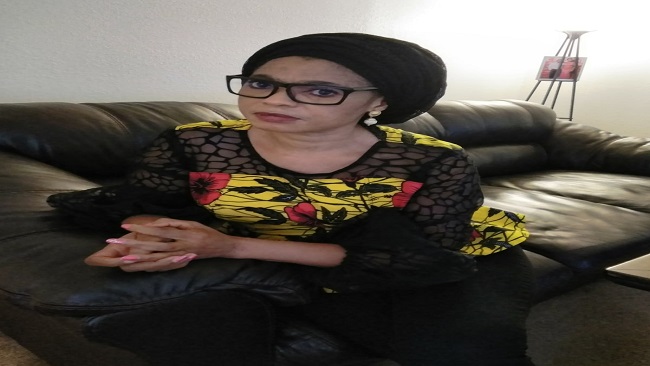
As the wife of Sissiku Julius Ayuk-Tabe (leader of Southern Cameroons), I understand the political implication of this crisis. However, there are times when humanity and government come together for a common goal. In this case, the goal is the protection of humanity; the innocent and helpless men, women and children in Southern Cameroons. They are unable to speak or defend themselves. They live in terror because they never know when they hear the sound of guns in their village, if it is their turn to be killed or taken away in the darkness of the early morning. Imagine the terror that overcomes them when they hear the deafening screams of a sister, aunt, cousin, a playmate or a mother being brutally raped. They know then that they are next. It is compared to an execution queue where men are waiting to be taken away for execution, and they hear the deadly sound of the firing squad as they queue in and wait their turn. The torture, taunts and torments are unimaginable, and you could hear grown men crying.

I realize that I may come under criticisms and accusations for writing this letter to you. I have no other motive to write this letter, other than for you to rally the mothers of Cameroon and bring pressure to bear on your husband and the government of Cameroon for an inclusive dialogue and a negotiated solution to this crisis and the immediate release of our leaders including my husband. The deafening silence from you is no longer acceptable. The lives of 8 million Southern Cameroonians and the fate of their leaders in jail is in your hands. Madam First Lady set the example for other women to follow.

It is not too late for you to send the message; that the mothers of Cameroon will no longer tolerate this war. The Southern Cameroons women will applaud you and women around the world will celebrate you.

The Lives of Southern Cameroons children, mothers and fathers also Matter and the continuing silence in the face of these killings is collusion.

I look forward to collaborating with you to look for an inclusive and negotiated solutions to this crisis.

Respectfully,

Lilian Ayuk-Tabe

Now that you are here

The Cameroon Concord News Group Board wishes to inform its faithful readers that for more than a decade, it has been providing world-class reports of the situation in Southern Cameroons.  The Board has been priding itself on its reports which have helped the world to gain a greater understanding of the crisis playing out in Southern Cameroons. It hails its reporters who have also helped the readers to have a broader perspective of the political situation in Cameroon.

The Board wishes to thank its readers who have continued to trust Southern Cameroon’s leading news platform. It is therefore using this opportunity to state that its reporters are willing to provide more quality information to the readers.    However, due to the changing global financial context, the Board is urging its readers to play a significant role in the financing of the news organization.  It is therefore calling on its faithful readers to make whatever financial contribution they can to ensure they get the latest developments in their native Southern Cameroons, in particular, and Cameroon in general.

Bank transaction: Soter Tarh Agbaw-Ebai

Banking IBAN: GB51 BARC 2049 1103 9130 15

Swift BIC BARC GB22XX

SORT CODE 20-49-11, ACCOUNT NUMBER – 03913015 Barclay PLC, UK

The Board looks forward to hearing from the readers.

Signed by the Group Chairman on behalf of the Board of Directors

Soter Tarh Agbaw-Ebai

Email: soteragbawebai@gmail.com


«< 1018 1019 1020 1021 1022 >»

Featured

  • Another 20TH May, same questions: Can Biya still steady Cameroon?Another 20TH May, same questions: Can Biya still steady Cameroon?
  • Yaoundé: US Embassy travel warning underscores deepening security crisisYaoundé: US Embassy travel warning underscores deepening security crisis
  • Killing of 4 soldiers in Muyuka: Biya must recognize that peace cannot emerge from silence and denialKilling of 4 soldiers in Muyuka: Biya must recognize that peace cannot emerge from silence and denial
  • Colonel Hamad Kalkaba Malboum: Cameroon mourns a guardian of national prideColonel Hamad Kalkaba Malboum: Cameroon mourns a guardian of national pride
  • FECAFOOT new headquarters and the CPDM ribbon-cutting republicFECAFOOT new headquarters and the CPDM ribbon-cutting republic

Most Commented Posts

  • 4 Anglophone detainees killed in Yaounde4 Anglophone detainees killed in Yaounde
    18 comments
  • Chantal Biya says she will return to Cameroon if General Ivo Yenwo, Martin Belinga Eboutou and Ferdinand Ngoh Ngoh are sackedChantal Biya says she will return to Cameroon if General Ivo Yenwo, Martin Belinga Eboutou and Ferdinand Ngoh Ngoh are sacked
    13 comments
  • The Anglophone Problem – When Facts don’t LieThe Anglophone Problem – When Facts don’t Lie
    12 comments
  • Anglophone Nationalism: Barrister Eyambe says “hidden plans are at work”Anglophone Nationalism: Barrister Eyambe says “hidden plans are at work”
    12 comments
  • Largest wave of arrest by BIR in BamendaLargest wave of arrest by BIR in Bamenda
    10 comments

Latest Tweets

→ Follow me

Featured

  • Another 20TH May, same questions: Can Biya still steady Cameroon?

    Another 20TH May, same questions: Can Biya still steady Cameroon?

  • Cameroon marks 54th National Day with nationwide celebrations

    Cameroon marks 54th National Day with nationwide celebrations

  • Yaoundé: US Embassy travel warning underscores deepening security crisis

    Yaoundé: US Embassy travel warning underscores deepening security crisis

  • Putin, Xi jointly denounce recent US-Israeli war of aggression against Iran

    Putin, Xi jointly denounce recent US-Israeli war of aggression against Iran

  • Cameroon public debt up 6%, remains below regional threshold

    Cameroon public debt up 6%, remains below regional threshold

  • Arsenal wins Premier League title after Man City stumbles at Bournemouth

    Arsenal wins Premier League title after Man City stumbles at Bournemouth

  • Football: Pep Guardiola set to leave Man City

    Football: Pep Guardiola set to leave Man City

Log In

  • Register
  • Log in
  • Entries feed
  • Comments feed
  • WordPress.org
© Cameroon Concord News 2026

We are using cookies to give you the best experience on our website.

You can find out more about which cookies we are using or switch them off in .

Powered by  GDPR Cookie Compliance
Privacy Overview

This website uses cookies so that we can provide you with the best user experience possible. Cookie information is stored in your browser and performs functions such as recognising you when you return to our website and helping our team to understand which sections of the website you find most interesting and useful.

Strictly Necessary Cookies

Strictly Necessary Cookie should be enabled at all times so that we can save your preferences for cookie settings.

3rd Party Cookies

This website uses Google Analytics to collect anonymous information such as the number of visitors to the site, and the most popular pages.

Keeping this cookie enabled helps us to improve our website.

Cookie Policy

More information about our Cookie Policy