17, May 2018
Will thousands more die to show that Biya can no longer rule over Cameroon? 0
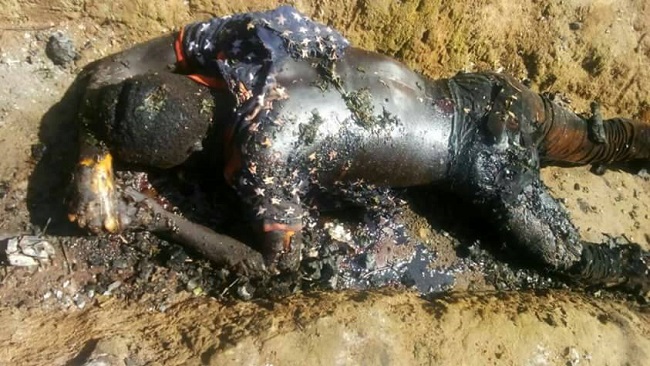
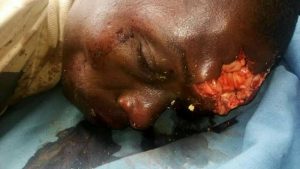
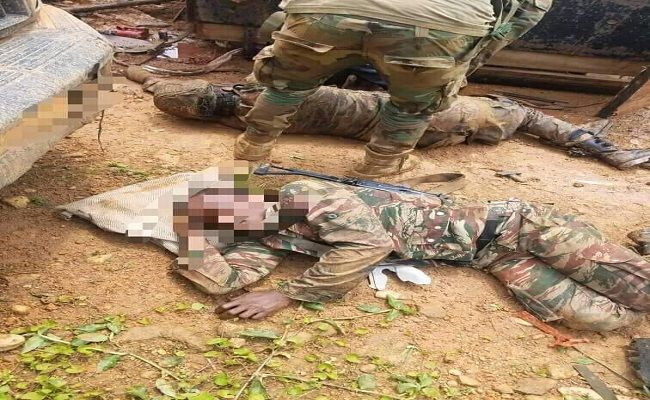
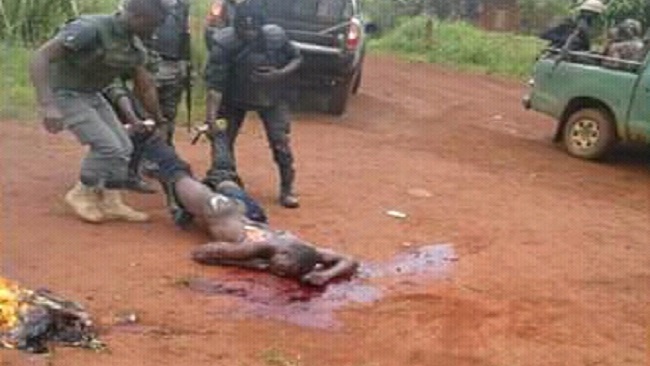
The revelation is as sobering as it is shocking-the beheading of Southern Cameroons women and children by army soldiers deployed to the region by President Paul Biya. Every Southern Cameroonian family has had firsthand experience with violence. The Manyus, Bangwas, Mettas, Balis, Nso, Orokos, Bafaws, Bakweri, Bakossi, Aghen and others are sharing similar insights, shaped in no small part by a bitter dose of realism. There are no prescribed remedies to the imploding situation in Southern Cameroons/Ambazonia. Will thousands more Southern Cameroonians die to show that Biya can no longer rule over La Republique du Cameroun?
Unlike the other East African leaders who are mindful of human suffering and have been working hard to seek an end to the conflict in South Sudan, the regional and international partners involved in Southern Cameroons have proven to be terribly insensitive and they clearly don’t care how their silence is harming ordinary Southern Cameroonians.
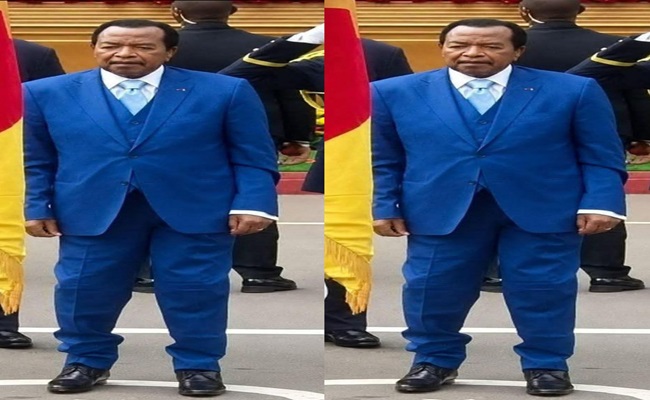
We of the Cameroon Concord News Group believe and fervently too that the choice was clear from the very beginning of the Southern Cameroons crisis two years ago: sacrifice Biya to save the so-called one and indivisible Cameroon, or sacrifice the one and indivisible Cameroon to save Biya. The Francophone regime embraced the latter to preserve itself and hundreds of Southern Cameroonians are dying in the process. No regrets, no hesitation. None whatsoever.
When the first French Cameroun military onslaught failed, an Anglophone criminal, Paul Atanga Nji was appointed Minister of Territorial Administration and was ordered to step in to save the Biya regime, and in the current process many more are dying. No worry, no sorry. None.
The Minister Atanga Nji’s effort has already failed, and the Biya regime continues to bleed. The French and the Americans have now stepped in under the same pretext: Only by saving Biya could Boko Haram and terrorism be defeated and the one and indivisible Cameroon saved, contends US Ambassador Peter Barlerin.
So, will thousands more Southern Cameroonians die to show that Biya can no longer rule over La Republique du Cameroun?
Ever since the UN Secretary General, Antonio Guterres decided to back off from the crisis in Southern Cameroons, the international community has argued, rather poorly, that it was in Cameroon’s best interest not to interfere and that outside involvement was no remedy for the country’s political problems.
But instead of putting the US’ weight behind a political solution through talks with the Interim Government of the Federal Republic of Ambazonia, the US ambassador gave Biya the license to continue killing Southern Cameroonians. The Biya Francophone regime with French government support has transformed the crisis in Southern Cameroons into a renewed so-called war on terror where Buhari of Nigeria and Chad’s Idris Deby are privileged members.
Yaoundé will discover, sooner rather than later, that it can’t succeed in this senseless military campaign. The only achievement in the process is simply that many more will die in vain. Such scenario will prove most costly to French Cameroonians too as the country continues to fall apart. If the Federal Republic of Nigeria continues to play innocent and Europeans and Americans continue to play catch up, Biya’s foul play is sure to pave the way for another bitter and bloody chapter in the history of the two Cameroons.
It’s evidently clear at this point in time that there are no good options for Biya; that the sweetest among all plausible scenarios is bitter and it is that President Biya should step aside.
Indeed, the last two years of turmoil in Southern Cameroons, like the previous 36 years of Biya’s dictatorship, have taught both French and Southern Cameroonians that the bloodier the change, the worse the outcome, and the longer the wait, the more complicated the change.
By Soter Tarh Agbaw-Ebai


17, May 2018
Officials meet to examine international risks of Ebola in Congo 0
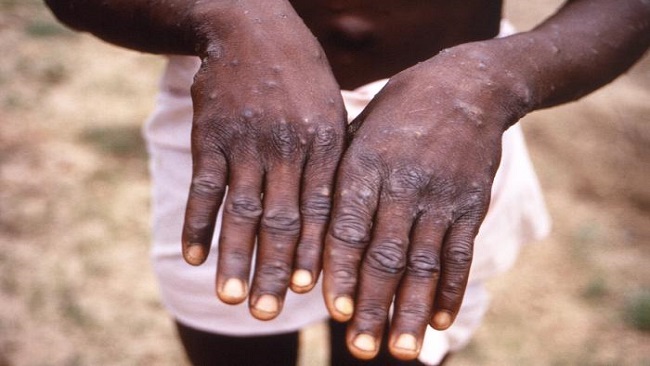
Congolese and UN officials were racing to prevent a runaway Ebola outbreak in Congo on Thursday, working out the logistics of keeping newly arrived vaccines well below freezing in a steamy region on the equator with unreliable power.
World Health Organization (WHO) spokesman Christian Lindmeier said the UN body would convene an Emergency Committee meeting on Friday to consider the international risks.
This is the Democratic Republic of Congo’s ninth epidemic since the disease was identified in the 1970s, but also its most alarming because of the risk of transmission via regular river transport to the capital Kinshasa, a city of 10 million.
An experimental but highly effective vaccine is being deployed against the virus, with health workers being vaccinated first, but it needs to be kept 80 degrees Celsius below freezing in a humid region where daytime temperatures hover around 30.
“For now, the cold chain is guaranteed at -80 degrees until Kinshasa,” Health Minister Oly Ilunga told Reuters. “There is a fridge that will be prepared (on Thursday) … in Mbandaka and that will be at -80.”
“This vaccine is no longer experimental. The effectiveness has been proven and validated,” he added. “Now that we are facing the Ebola virus we must use all the resources we have.”
The WHO expert committee will decide whether to declare a “public health emergency of international concern”, which would trigger more international involvement, mobilizing research and resources, Lindmeier said.
Emergency Committees have been set up to advise on past outbreaks such as the 2016 Zika epidemic in Latin America and the huge West African Ebola outbreak that killed at least 11,300 people in Guinea, Sierra Leone and Liberia from 2014 to 2016.
Mindful of criticism it received for being too slow during that epidemic, when it took months to convene an Emergency Committee, the WHO is moving fast on Congo’s latest outbreak.
The committee can advise WHO Director General Tedros Adhanom Ghebreyesus on actions to be taken by Congo and other countries to try to halt the international spread of disease without unduly interfering with trade or transport.
The Kinshasa government reported the outbreak on May 8, one day after two samples tested positive, and within days the WHO was sending experts, preparing a helicopter “air bridge” to the site, and planning a vaccination campaign.
There have already been 44 suspected, probable or confirmed cases of Ebola, and 23 people have died. Potentially most worrying is a confirmed case in the city of Mbandaka, which has a population of about 1 million.
“The arrival of Ebola in an urban area is very concerning and WHO and partners are working together to rapidly scale up the search for all contacts of the confirmed case in the Mbandaka area,” said WHO Regional Director for Africa Matshidiso Moeti said in a statement.
Mbandaka is also connected via the Congo River to Kinshasa, a crowded city where millions live in unsanitary slums not connected to a sewer system.
Several public boats a day head from there downstream over the river to the capital. They are so overloaded with people that they sometimes topple over, toilets are filthy and water for washing absent.
The other Ebola cases were spread across sites in remote areas where the disease might not travel quickly.
Already the WHO has warned that there is a “moderate” regional risk because the disease could travel along the river to Central African Republic and Congo Republic. But it has said the global risk is low because of the remoteness of the area and the rapid response launched so far.
Even if the logistics of the ‘fridge bridge’ prove easy enough to overcome, “the vaccine is not a magic bullet,” Peter Salama, WHO’s medical emergency program head told Reuters this week, especially since health workers have been infected.
“Having healthcare workers infected is usually a ‘canary in the mine’ for potential amplification,” he said.
(Source: Reuters)