Cameroon Concord News
You Are What You Read
  • Home
  • News
    • Cameroon
    • Nigeria
    • Africa
    • Europe
    • World
  • Politics
    • Cameroon
    • Nigeria
    • Africa
    • Europe
    • World
  • Sports
    • Cameroon
    • Africa
    • Europe
    • World
  • Business
    • Africa
    • World
  • Life
    • Education
    • Health
    • Fashion
    • Entertainment
  • Religion
    • Cameroon
    • World
  • Contact
    • Online
    • Phone
    • Email
  • About
    • Us
    • Our Services
    • Advertising with Us

Categories

Recent Posts

  • Yaoundé earns CFA15 billion from Chad Oil Pipeline transit fees in 5 months
  • Most stocks rise, oil flat following peace deal-fuelled rally
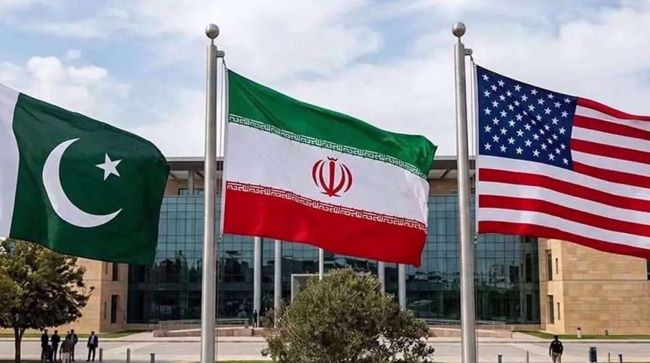
  • Iran deal: the cards are now in Tehran’s favour
  • American musician Oliver Tree killed in mid-air helicopter collision in Brazil
  • Cameroon looks to Tunisia’s textile model to develop its cotton value chain

Archives

  • June 2026
  • May 2026
  • April 2026
  • March 2026
  • February 2026
  • January 2026
  • December 2025
  • November 2025
  • October 2025
  • September 2025
  • August 2025
  • July 2025
  • June 2025
  • May 2025
  • April 2025
  • March 2025
  • February 2025
  • January 2025
  • December 2024
  • November 2024
  • October 2024
  • September 2024
  • August 2024
  • July 2024
  • June 2024
  • May 2024
  • April 2024
  • March 2024
  • February 2024
  • January 2024
  • December 2023
  • November 2023
  • October 2023
  • September 2023
  • August 2023
  • July 2023
  • June 2023
  • May 2023
  • April 2023
  • March 2023
  • February 2023
  • January 2023
  • December 2022
  • November 2022
  • October 2022
  • September 2022
  • August 2022
  • July 2022
  • June 2022
  • May 2022
  • April 2022
  • March 2022
  • February 2022
  • January 2022
  • December 2021
  • November 2021
  • October 2021
  • September 2021
  • August 2021
  • July 2021
  • June 2021
  • May 2021
  • April 2021
  • March 2021
  • February 2021
  • January 2021
  • December 2020
  • November 2020
  • October 2020
  • September 2020
  • August 2020
  • July 2020
  • June 2020
  • May 2020
  • April 2020
  • March 2020
  • February 2020
  • January 2020
  • December 2019
  • November 2019
  • October 2019
  • September 2019
  • August 2019
  • July 2019
  • June 2019
  • May 2019
  • April 2019
  • March 2019
  • February 2019
  • January 2019
  • December 2018
  • November 2018
  • October 2018
  • September 2018
  • August 2018
  • July 2018
  • June 2018
  • May 2018
  • April 2018
  • March 2018
  • February 2018
  • January 2018
  • December 2017
  • November 2017
  • October 2017
  • September 2017
  • August 2017
  • July 2017
  • June 2017
  • May 2017
  • April 2017
  • March 2017
  • February 2017
  • January 2017
  • December 2016
  • November 2016
  • October 2016
  • September 2016
  • August 2016
  • July 2016
  • June 2016
US: Biden cements election victory, Trump hints at leaving White House

14, November 2020

US: Biden cements election victory, Trump hints at leaving White House 0

U.S. President-elect Joe Biden solidified his election victory on Friday when he won the state of Georgia as President Donald Trump said “time will tell” if another administration takes office soon, the closest he has come to acknowledging that Biden could succeed him.

Edison Research, which made the Georgia call, also projected that North Carolina, the only other battleground state with an outstanding vote count, would go to Trump, finalising the electoral vote tally at 306 for Biden to 232 for Trump.

The numbers gave Biden, a Democrat, a resounding defeat over Trump in the Electoral College, equal to the 306 votes Trump, a Republican, won to defeat Hillary Clinton, a 2016 victory that Trump called a “landslide.”

At a White House event where he predicted a coronavirus vaccine would be available for the whole population by April, Trump came the closest he has yet to acknowledging that he might leave the White House in January, but said that “time will tell.”

“This administration will not be going to a lockdown. Hopefully the, uh, whatever happens in the future – who knows which administration it will be? I guess time will tell,” Trump said in his first public remarks in more than a week after losing to Biden.

Trump did not take questions after the event.

Trump, a Republican, has claimed without evidence that he was cheated by widespread election fraud and has refused to concede. State election officials report no serious irregularities, and several of his legal challenges have failed in court.

While Trump had yet to concede, Biden officials reiterated they were moving ahead with transition efforts regardless.

Although the national popular vote does not determine the election outcome, Biden was ahead by more than 5.3 million votes, or 3.4 percentage points. His share of the popular vote, at 50.8%, was slightly higher than Ronald Reagan’s share of the vote in 1980 when he defeated Jimmy Carter.

To win a second term, Trump would need to overturn Biden’s lead in at least three states, but he has so far failed to produce evidence that he could do so in any of them. States face a Dec. 8 “safe harbor” deadline to certify their elections and choose electors for the Electoral College, which will officially select the new president on Dec. 14.

Biden’s legal team in Georgia said on Friday they do not expect a hand recount of votes in the state to change the results there.

A Michigan state court rejected on Friday a request by Trump’s supporters to block the certification of votes in Detroit, which went heavily in favor of Biden. And lawyers for Trump’s campaign dropped a lawsuit in Arizona after the final vote count rendered it moot.

Federal election security officials have found no evidence that any voting system deleted or lost votes, changed votes, “or was in any way compromised,” two security groups said in a statement released on Thursday by the lead U.S. cybersecurity agency.

Trump was set on Friday afternoon to make his first public remarks since Biden was projected as the election’s winner on Nov. 7. The White House said he would address the nation on the efforts by the government and drugmakers to develop effective treatments for the coronavirus pandemic.

Transition talk

Biden officials said on Friday they would press forward with the transition, identifying legislative priorities, reviewing federal agency policies and preparing to fill thousands of jobs in the new administration.

“We’re charging ahead with the transition,” Jen Psaki, a senior adviser to Biden’s transition team, said on a conference call on Friday, while stressing that Biden still needs “real-time information” from the Trump administration to deal with the resurgent pandemic and national security threats.

Psaki urged Trump’s White House to allow Biden and Vice President-elect Kamala Harris to receive daily intelligence briefings on potential threats around the world.

“With every day that passes on, it becomes more concerning that our national security team and the president-elect and the vice president-elect don’t have access to those threat assessments, intelligence briefings, real-time information about our engagements around the world,” Psaki said. “Because, you know, you don’t know what you don’t know.”

Biden will be briefed by his own group of national-security experts next week, she said. He met with transition advisers again on Friday at his Delaware beach house where he is mapping out his approach to the pandemic and prepares to name his top appointees, including Cabinet members.

Trump’s refusal to accept defeat has stalled the official transition. The federal agency that releases funding to an incoming president-elect, the General Services Administration, has yet to recognize Biden’s victory, denying him access to federal office space and resources.

Fox News correspondent Geraldo Rivera, a Trump confidant, said he had spoken to the president by phone on Friday and that Trump had given him the impression that he would follow the U.S. Constitution and surrender his office after every vote was counted.

“He told me he’s a realist. He told me he would do the right thing,” Rivera said in an interview with Fox. “I got no impression that he was plotting the overthrow of the elected government. He just wants a fair fight.”

Source: REUTERS

Will Vice President Kamala Harris continue to advocate a military intervention in Southern Cameroons?

14, November 2020

Will Vice President Kamala Harris continue to advocate a military intervention in Southern Cameroons? 0

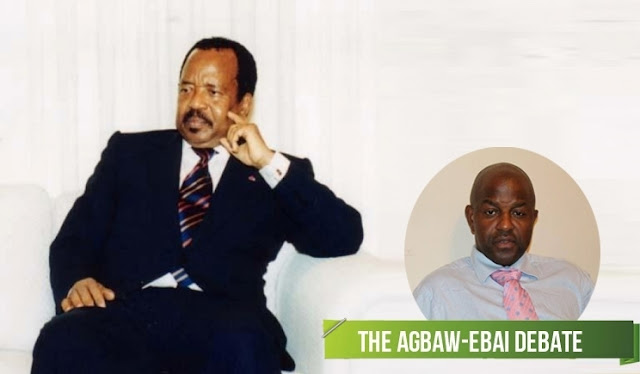
Biya regime is facing several security crises. The 87 year old and his consortium of crime syndicates have been ravaged in Southern Cameroons by an armed conflict that pits Cameroon government army soldiers against Ambazonia Restoration Forces.

The fighting in Southern Cameroons is raging. According to the UN, more than 3,000 people have been killed in the conflict and some 700,000 have had to flee their homes.

In French Cameroun’s Far North region, the Nigerian Islamic sect Boko Haram, which has now divided into two groups, is reportedly intensifying its exactions against civilians. Kamikaze attacks have multiplied in recent weeks forcing the inhabitants of border localities in Nigeria to move and the shutting down of schools in the French Cameroun side of the border.

Cameroon Concord News Group understands that more than 2.5 million people are food insecure in the two Cameroons because of these numerous conflicts. 

In Yaoundé, many political parties continue to challenge the legitimacy of the Biya regime. The SDF and the MRC, the so-called two main opposition heavyweights, are demanding an all inclusive national dialogue with the leader of the Ambazonian nation, President Sisiku Ayuk Tabe to end the crisis in Southern Cameroons and also a consensual revision of the electoral system.

Opposition demonstrations have all been banned and hundreds of MRC supporters are currently being prosecuted by the Yaoundé military court for attempted rebellion and aggravated mobbing after the demonstrations of September 22, 2020.

The situation in the two Cameroons is deteriorating at catastrophic rapidity and is being aggravated by police violence.

On November 10, 2020, police fired tear gas into a Douala courtroom at lawyers who were annoyed by the pre-trial detention of two of their colleagues.  Some were molested and violently dragged to the ground.  French Cameroun teachers who recently protested for their rights to be respected were molested. 

On the management of the Southern Cameroons-Ambazonia crisis, Biya and his ruling Beti Ewondo clan have openly disagreed with the Trump administration.

Tibor Nagy, the US Assistant Secretary for African Affairs has for sometimes been very critical of President Biya and his gang and sometimes conciliatory making the US government position to appear as being consistently inconsistent.

Unlike Tibor Nagy, Kamala Harris, the next vice-president of the United States of America, was one of the first political figures to openly speak out in favour of American military intervention in Southern Cameroons. Will she stay on this path after entering the White House?

On December 7, 2018 after the assassination of the American pastor Charles Wesco, Kamala Harris and 9 other very influential Democratic senators addressed a petition to Mike Pompeo the American Secretary of State and asked for a military intervention in Cameroon.

There is panic now deep within the ruling crime syndicate in Yaoundé with some hardliners claiming the French government will help to stop any onslaught against Yaoundé from Vice President Kamala Harris.

A senior cabinet minister who spoke to our Yaoundé correspondent late on Friday on the Biden-Harris electoral victory but sued for anonymity observed that “Once in power you don’t always behave as you did when you were in opposition. Once in the White House, Kamala Harris will calm down” he furthered.

However, many influential Democrats in the US are now mastering the Cameroon political story and Southern Cameroons quest for an independent state and are opening the doors to Southern Cameroons front line leaders. They include Senator Karen Bass who led a U.S. congressional delegation to Cameroon in July 2019.

By Soter Tarh Agbaw-Ebai
Cameroon man seeking asylum in Canada deported from the U.S.

13, November 2020

Cameroon man seeking asylum in Canada deported from the U.S. 0

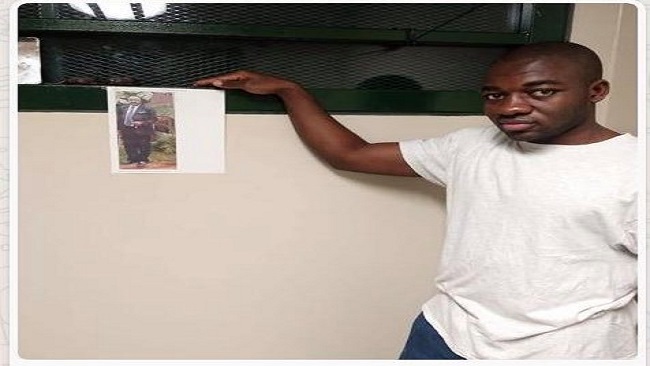
An asylum seeker hoping to make his way to Canada has been deported back to Cameroon, where he believes he could be executed over his participation in a peaceful protest in 2017.

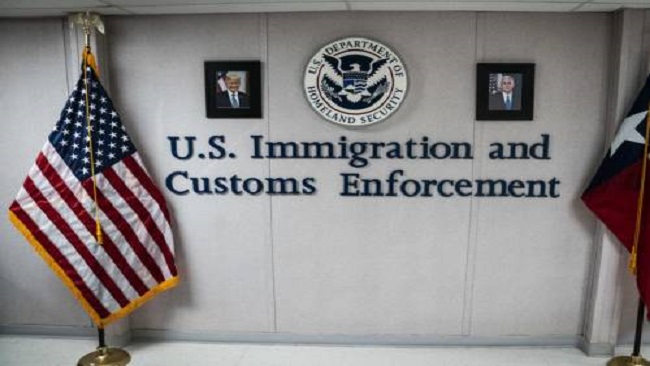
Kenneth was pulled from a plane heading from the United States to Cameroon on Oct. 13 after officials with Canada Border Services Agency agreed to a meeting on Oct. 30, but when the time came for his CBSA meeting, officials with the United States Immigration and Customs Enforcement, or ICE, chose not to release him from custody.

Global News has agreed not to use the 29-year-old’s full name to protect the identity of family members.

London Abused Women’s Centre executive director Megan Walker, who had been advocating for Kenneth, told Global News on Thursday that at 3:30 p.m. Wednesday she was sent a photo of a plane taking off from Texas on its way to Cameroon with roughly 90 passengers on board.

Source: Global News

King of Makossa Love Petit Pays pays homage to Manu Dibango, Pape Diouf on new album

13, November 2020

King of Makossa Love Petit Pays pays homage to Manu Dibango, Pape Diouf on new album 0

The King of Makossa Love Claude Adolphe Moundi aka Petit Pays has made public a new single to honour two African legends, Manu Dibango and Pape Diouf who passed away in March due to the COVID-19 pandemic.

“Les baobabs sont tombés” (The giants have fallen) is a six-minute single released over the weekend which celebrates the lives of these two African icons who distinguished themselves in music and in football.

Speaking to Cameroon Concord News Group, Petit Pays manager Eyong Eyong Ebot said Petit Pays used his trademark vocals to express regret at the tragic demise of the African heroes who departed this world in difficult circumstances.

Petit Pays Rabbi however observed that we all shall meet with these fallen icons one day at the “waiting room in heaven to meet Jehovah”.

Saxophonist Manu Dibango passed away on March 24, after succumbing to the COVID-19 in a hospital in France. Buried in typical COVID-19 fashion, family members have said honours will be paid to the fallen artiste at the appropriate time.

On the other hand, Senegalese-born Pape Diouf succumbed to the virus on March 31 in Dakar. He had made a name in the world of football, becoming the first black man to be president of a club in Europe-Olympique Marseille in France.

Just after the World War II, in 1948, a gangly youth arrived in Strasbourg, France, after a long trip from Douala in Cameroon. He had 3kg of coffee in his luggage and a burning desire to be a saxophonist like Lester Young (later he would don a Young-esque pork pie hat and blow smoke rings like the acclaimed master). His name was Manu Dibango. Sadly, this veteran musician died of complications from the Covid-19 virus. He was 86 years old.

Dibango was born in Douala, Cameroon, in 1933. He was from two different ethnic groups, Duala, his father’s group, and Yabassi, his mother’s.  He grew up playing religious music at the Protestant church he attended, learning quickly and mastering choral techniques and piano; later he would learn saxophone and vibraphone. He completed his high school education in France and began his life-long love affair with jazz, which he credited with opening up the musical world for him, so that his very eclectic taste included Western classical music, all kinds of African music, tango, salsa and hip-hop.

The world of African football was also plunged into mourning on March 31, following the news that Senegalese journalist-turned- football agent Pape Diouf, the first black chairman of a club in a major European league, had become the continent’s high-profile sporting loss to the coronavirus.

Various African football figures throughout history could reasonably be classed as pioneers, but Diouf, who was appointed Olympique de Marseille president in 2005, held a position of power, prominence and influence within the European game that no other black personality has matched before or since.

No other figure represents, more emphatically than Diouf, the bridge between the worlds of African and French sports.

Born in 1951 in Chad to Senegalese parents — his father was a member of General Charles de Gaulle’s Compagnon de Liberation — Diouf was raised in Richard-Toll, on the Senegal-Mauritania border, and in Dakar.

At 18, with independence having already swept through Africa, he was sent to Marseille to complete his studies by his father, who served in Chad while the country was still a French colony.

He arrived on April 25, 1970, and despite complaining about the wind and cold, he began a longtime and profound love affair with the Phocean City.

After prematurely curtailing his studies at Sciences Po, Diouf opted against following his father’s wishes that he join the military, and he instead embarked on a career as a sports journalist, initially as a freelancer with La Marseillaise, with the club at the heart of the city, OM, his beat.

It was here, at this junction between sport and Africa, that Diouf met the legendary Cameroon goalkeeper Joseph-Antoine Bell, who facilitated the young man’s entrance into the inner workings of French football and set him on his way to a prominent role in one of Europe’s great institutions.

Reported by the management team of Petit Pays

Germany: No return to normal by Jan. even if infections fall

13, November 2020

Germany: No return to normal by Jan. even if infections fall 0

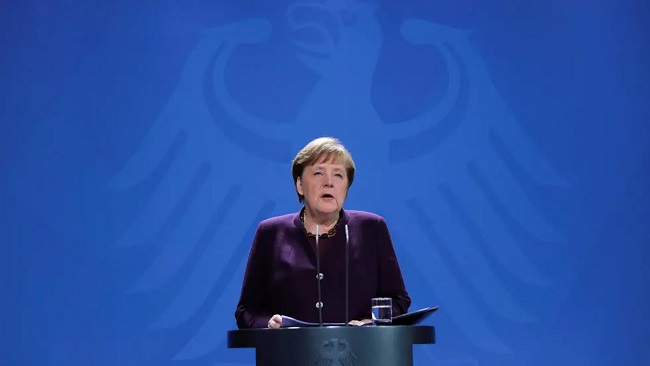
Germany’s health minister said on Thursday he expects restrictions imposed to curb the coronavirus pandemic will continue through winter, with life unlikely to get back to normal in December or January even if infections fall.

“I don’t see events with more than 10 or 15 people happening this winter,” Jens Spahn told RBB broadcaster.

Germany reported 21,866 new coronavirus cases on Thursday, bringing the total to 727,553 and jumping back above 20,000 after four days below that figure, while the death toll rose by 215 to 11,982, according to the Robert Koch Institute (RKI) for infectious diseases.

Chancellor Angela Merkel and the leaders of Germany’s states are due to meet on Monday to review whether partial lockdown measures imposed on Nov. 2 have been enough to slow a steep rise in new infections that risks overwhelming hospitals.

Merkel said on Thursday there were hopeful signals that a coronavirus vaccine could be on the horizon, but warned it would take time. She declined to say whether Germany might allow bars and restaurants to open again in December.

“We all have to be sensible, we have to get down to 50 cases per 100,000 people over 7 days,” she said in response to a question on whether the lockdown would end this month. The figure is currently 139 per 100,000.

Unlike its first lockdown earlier this year, Germany is keeping its schools and daycare centers open so that parents can go to work, limiting damage to the economy, although at least 300,000 pupils and 40,000 teachers are currently in quarantine.

A survey for broadcaster ARD showed 54% of 1,004 Germans polled believed the partial lockdown measures were appropriate. Separately, the Constitutional Court rejected an appeal to overturn the closure of restaurants, in force this month.

As the number of cases rises, the source of infection is unknown in most instances, the court reasoned. “This means that it cannot be ruled out that restaurants also contribute to the occurrence of infection,” it said in its ruling on Thursday.

RKI head Lothar Wieler said on Thursday that he expected rules to slow the spread of the pandemic in Germany to remain in place for a long while as a vaccination would take time and there was likely to be an uncontrolled spread of COVID-19 in some parts of the country.

The slowing dynamic of infections gives ground for cautious optimism, but it is not yet clear whether this is a stable development, and hospitals are still expected to reach capacity, Wieler added.

Ute Rexroth, the head of RKI’s surveillance unit, said the pandemic would have a reproduction rate, or “R,” of 3 to 4 without current measures on limiting social contact while the factor currently stands at around 1 in Germany.

She said case numbers might not be rising as steeply as in October because of the new lockdown measures, but it might also be due to testing labs reaching capacity.

Wieler noted that there was currently a high incidence of COVID-19 in those aged 10 to 19.

(Source: Reuters)

American, French and Czech peacekeepers killed in helicopter crash in Egypt

13, November 2020

American, French and Czech peacekeepers killed in helicopter crash in Egypt 0

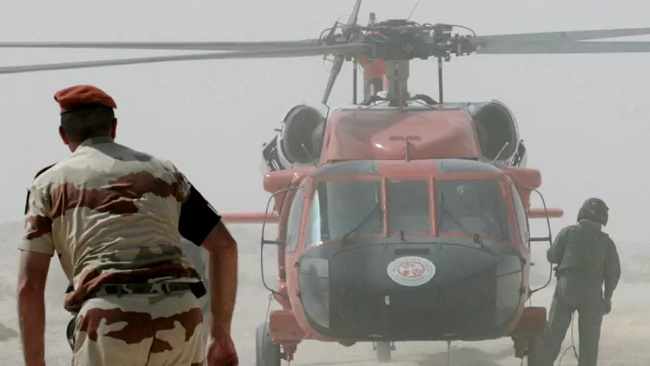
A helicopter with the U.S.-led Multinational Force and Observers (MFO) in the Egyptian Sinai crashed on Thursday near the resort town of Sharm el-Sheikh, killing seven members of the peacekeeper force, the MFO said.

Those killed were five Americans, a French national and a Czech national, all of them military service members, the MFO said in a statement. It added that one American MFO member survived and was medically evacuated.

An earlier statement had said that eight peacekeepers were killed, including six Americans.

An official briefed on the incident, who could not be identified by name or nationality, told Reuters it was an accident caused by mechanical failure.

The Czech Defence Ministry released a statement confirming a Czech army member was among those killed in the helicopter crash. The statement said the cause of the crash was a technical fault.

In a tweet, the U.S. Defence Department said its initial report of six service members was incorrect and that five U.S. service members had been killed and one hospitalised.

The Israeli military said it evacuated the injured peacekeeper to a hospital in Israel.

The MFO was installed to monitor the demilitarization of the Sinai under the 1979 Egyptian-Israeli peace accord. It has decreased in size in recent years as the neighbouring countries tightened security cooperation against Islamist-led Sinai insurgents.

However both Israel and Egypt have, in the past, opposed proposals by Washington to reduce U.S. participation in the MFO, whose website lists some 452 Americans among the force’s 1,154 military personnel.

Cairo sees the MFO as part of a relationship with Israel that, while unpopular with many Egyptians, has brought it billions of dollars in U.S. defence aid, sweetening the foreign-enforced demilitarisation of its sovereign Sinai territory.

For Israel, the MFO offers strategic reassurance in a region where allegiances can shift. In a statement of condolence, Israeli Foreign Minister Gabi Ashkenazi described the MFO as “extremely important … to maintaining security and stability”.

The MFO statement said the helicopter was on a “routine” mission when it crashed. The Israeli military said in a statement it had offered to send a rescue team to the scene.

According to its website, the MFO draws personnel from 13 countries and covers an area of more than 10,000 square kilometres (3,860 square miles) in the Sinai.

Source: REUTERS

What is Ambazonia? The Southern Cameroons independence struggle

13, November 2020

What is Ambazonia? The Southern Cameroons independence struggle 0

Paul Biya, Cameroon’s dictator of 38 years has declared war on Southern Cameroon-Ambazonia as conflict escalates in the West African country.

However, to place the fighting in context some history is required.

In the wake of the escalation of the anglophone crises in the late quarter of 2016, the majority francophone government of Cameroon was tasked with the challenge of either using dialogue to solve the problems raised by the teachers and lawyers in their various demands and memorandums or as usual use violence and force to crack down on the protests and bring the desired results of oppression and suppression.

A strategy which has been used for decades by the majority Francophone government to keep the minority English speaking Cameroonians (Southern Cameroonians) under perpetual structural and developmental marginalization. This strategy as always brought pain and misery on a people who needed their demands looked into and handled by a government that claimed to be for all the people.

The lawyers’ strikes which started in the early days of August 2016 brought all lawyers associations from the Southern Cameroons practicing under the common law judicial subsystem to table their demands to the minister of Justice who without much consideration ignored them and proceeded with the same practices the lawyers petitioned against. It was in this line that common law judicial practitioners and lawyers decided to descend on the streets to protest against the judicial marginalization. Amongst some of the points petitioned against was the transfer of civil law trained judges from Ecole normale de l’administration et Magistrature (ENAM) to Common law courts in the Northwest and Southwest regions—Southern Cameroons. These judges by constraint are forced to judge cases using the common law judicial procedures which they do not master. They are also forced to use the French language in a common law court whose cases are attended by English-speaking Cameroonians who understand little or nothing in French and subsequently English-speaking lawyers. This problem, without minimizing the other demands constituted a major focus for English-speaking lawyers who saw this as practical judicial marginalization of the Southern Cameroons people and considered it a travesty of Justice.

Note that prior to this time, the English-speaking lawyers had raised these issues on numerous occasion but the government reacted only to the translation of the OHADA law into English. OHADA is a system of business laws and implementing institutions adopted by 16 French-speaking West and Central African nations. OHADA is the French acronym for Organization pour l’Harmonisation en Afrique du Droit des Affaires, which translates into English as Organization for the Harmonization of Business Law in Africa. It was created on October 17, 1993 in Port Louis, Mauritius.

Before now, the OHADA law had been written solely in French. As such, English-speaking lawyers of the common law jurisdiction of Cameroon faced enormous difficulties in the courts as they were forced to interpret the OHADA articles in a language they did not master.

That is why English-speaking lawyers across Southern Cameroons descended on the streets to make their voices heard. As usual the government of President Paul Biya stormed the protest grounds with brutality and violence, teargassing and shooting live ammunition at protesters. Reports and videos of government brutality and several wounded lawyers went viral on social media platforms. Other videos showed forces of law and order manhandling protesting lawyers. In the town of Buea, a policeman is seen in a video dragging a lawyer on the ground in a degrading and inhumane manner. Such videos and pictures led to widespread anger and condemnation by English -speaking Cameroonians who expressed disgust at the Biya regime for treating the men and women of law in such a despicable manner. But the government maintained its position on not listening to the lawyers.

Teachers also had similar problems tabled to the Biya regime, amongst which was the transfer of French-speaking teachers to teach in English-speaking schools in the Northwest and Southwest regions—Southern Cameroons. These demands as usual had been ignored for several decades by the same regime. The various teachers trade unions in the English-speaking regions therefore announced a sit-in strike on November 21, 2016. Teachers were to stay at home until the government in Yaounde, the capital, attended to their demands.

On November 16, 2016 also, Mancho Bibixy an English-speaking radio animator and journalist in the town of Bamenda, holding a mega phone, called on the government delegate of the Bamenda city council to come and tell the people who was responsible for the deplorable state of the roads in the city. He had spent the night trying to pull out his car from a ditch along the road. Thousands of such ditches had been dug and abandoned by a Chinese company which worked on a water project awarded by  the Bamenda city council. Some of the ditches are almost 10 feet deep and they had caused several accidents. Reports of vehicular accidents or locals falling into ditches at night abound.

Mancho Bibixy, went to the commercial street in Bamenda and stood on a coffin he had punches and placed on his car and made his demand—the people must be told who was responsible for these disasters. He said he knew the reputation of the French Cameroon regime’s addiction to violence and brutality but that he was ready to die and be buried in the coffin he’d bought. He wanted the government delegate to the Bamenda city council to commit to repairing the roads within a deadline.

Thousands of English-speaking Cameroonians joined the protest. The regime reacted violently, teargassing, using water canons and shooting live bullets at protesters. At least four people were critically wounded. The government’s brutal reaction transformed what had started as a mere protest against bad roads into a movement with hundreds of thousands of youth pouring out to demand a return to the 1961 federal system of government between two states: French Cameroun and Southern Cameroons. The focus now turned to the long-time marginalization of the minority English-speaking Cameroonians by the majority French-speaking government in Yaounde. Many people were arrested while dozens were placed on government target lists for arrest.

Protests escalated over the following two weeks. The youth mounted barricades along major road junctions and streets in Bamenda and other towns across the Southern Cameroons, like Kumba and Buea, grounding all activities. The movement went viral. Southern Cameroonians were determined to get the French Cameroon regime to respond to the demands tabled by the lawyers and teachers. The alternative was return to the 1961 federal system of government. Unification was contested after an illegal United Nations organized plebiscite in April 1961.

One week later the security forces violently cracked down on student protest at the University of Buea, in the administrative capital of the English-speaking southwest region. Students wanted authorities to remove the 10,000 CFA Francs—about $20—penalty imposed for late tuition payments.

The police and military responded and ordered students off campus even as they shouted, “No violence!” Students demanded a response from the university administration. The police charged the students with batons and gun butts. Military officers chased students while police fired teargas and blasted water cannons. Students were followed to their living quarters. Reports of videos of police and military officers dragging female students in the mud, forcing other women to crawl in the mud, and beating them with batons, soon appeared online. Female students were allegedly raped. Videos of the atrocities went viral.

Two weeks after the launch of the “Coffin Revolution,” the Social Democratic Front (SDF), the main opposition party organized two rallies—December 2, and 3— and called for the ruling CPDM party to revisit the 1961 federal system of government as a means of solving the demands made by the lawyers, teachers and civil society. The attendance was massive and the majority of the Southern Cameroons people supported the call to a return to the federal system of government.

How did the authorities react to the rallies by the Social Democratic Front (SDF)? The authorities organized another political rally in Bamenda on December 8, 2016. The theme was “A Return to Peace” in the English-speaking regions. Angered by the government’s defiance by not responding to demands by teachers, lawyers and civil society, the population of Bamenda vowed to stage counter protests against the CPDM. The state securities turned a simple policing operation into an urban warfare between protesters and forces of law and order. In a disproportionate and useless outburst of violence even soldiers were called in as reinforcement.

Alleged incidents of English-speaking people burning Cameroon’s national flag during the protests were broadcast on national and private TV stations—without any video evidence or eye witness accounts. The French Cameroon government used such inflammatory concoctions to generate anger against English-speaking Cameroons. It worked. There was widespread condemnation of the protests on TV and radio stations across the country. The regime used the cover to attack peaceful protesters. At least seven people were killed and many arrested.

2016 ended with tragic violence in the North-West and South-West Regions. Rapes, torture, inhuman and degrading treatment of young girls, hunted down in the slums and student rooms in Buea. There were massacres of unarmed people in Bamenda and Kumba. Many national and international human rights organizations strongly condemned the atrocities.

In January 2017, the teachers, lawyers trade unions, merged with other civil society organizations to form the Cameroon Anglophone Civil Society Consortium (CACSC). The consortium demanded as a first step the release of more than 100 peaceful protesters and civil society activists arrested in the 2016 crackdown. When  CACSC called for no-shows in come towns on Monday January 8, 2017 the response was 100% across the Southern Cameroons.

The government agreed to enter into dialogue with members of the CACSC, led by Tassang Wilfred in Bamenda, on January 6, 2017. During the first meeting, the consortium refused to talk until the government released all detained activists. The government released some but kept behind about 30 activists in the Kondengui Central Prison, including Tsi Conrad and Ngalim Felix. The consortium insisted on the release of all the detainees, and presented a draft for a federal state with autonomy for the Anglophone regions. The consortium leadership refused to call off the teachers’ and lawyers’ rights and walked off the meeting.

The government followed with more arrests, drawing national and international condemnation. On January 17, CACSC and the Southern Cameroons National Council (SCNC) which has been on the forefront of Southern Cameroon’s Independence struggle for close to 20 years were branded as threats to the unity of Cameroon and banned by a ministerial decree signed by minister René Sadi. CACSC leaders Agbor Balla, Fontem Neba, and Penn Terence were arrested while Tassang Wilfred and others fled to Nigeria to join the Southern Cameroons factions fighting for complete Independence. Activists Mancho Bibixy of the Coffin Revolution was also arrested on January 16, 2017. These leaders and other activists in detention were charged with terrorism, secession, rebellion and other trumped up offenses and arraigned at the Yaounde Military Tribunal. The court cases started February 13, 2017. There was a void in leadership when those demanding greater autonomy were arrested. The Southern Cameroons diaspora picked up the baton. They quickly transformed the movement into a struggle for the complete Independence of the Southern Cameroons. The movement gained popular support at home and abroad.

School boycotts and ghost towns—people abandoning the town on designated days—was reinforced by the new leaders in the diaspora. They used social media activism and digital conferences to draft and implement strategies to keep the movement on track. The Cameroon government as usual responded with violent crack downs, arresting more activists and foot soldiers who were implementing school boycotts and ghosts towns. The authorities even cut the internet in the two English-speaking regions in a bid to severe ties with the diaspora leaders. Other strategies were designed for information flow. The internet block lasted four months.

Several activists were killed and some disappeared as the French Cameroon government in Yaounde attempted to crush the independence activists. Two people were shot dead and 10 injured by the Cameroon police on February 7, 2017, after a crowd gathered outside the police station in a town called Ndop. People were demanding the release of those arrested on suspicion of setting fire to a Francophone school.

In August 2017, the Cameroon government sent several inter-ministerial missions abroad to meet with the Southern Cameroons diaspora to try and find a compromise and quiet the movement. The mission failed as these meetings were disrupted by pro-independence militants and activists. In Belgium, a meeting organized by Laurent Esso, the justice minister and long-time collaborator of Paul Biya was marred by several incidents. Prior to the meeting, a video showing 12 Southern Cameroonian activists incarcerated under deplorable conditions in a bunker at the infamous Secretariat d’Etat de la Defense (SED) Yaounde went viral. On the video, the activists spoke into a phone camera and introduced themselves. They stated that they were Southern Cameroonian citizens who’d been incarcerated in the bunker for several months. There was no light, and there were no mattresses. The toilet was deplorable. They said they had been tortured and subjected to inhumane treatment.

Southern Cameroon activists in Belgium started a protest in the meeting hall. They disrupted the meeting and brought it to an abrupt halt. There was physical confrontation between the government delegates and the pro-independence activists. In South Africa, pro-independence activists almost lynched one member of a government delegation trying to conduct a meeting there. The embassy was vandalized and seized by protesters for hours. In the U.K., hundreds of Southern Cameroon activists stormed the meeting ground at the embassy and swapped the Cameroon flag with that of Southern Cameroons-Ambazonia. There were similar protests in Canada and the U.S. The government missions failed woefully. The ministers returned to Cameroon empty-handed.

National and international pressure on the Cameroon government led to the release of two main leaders, lawyers Agbor Balla and Dr. Fontem Neba, along with about 50 other activists and protesters. This followed a presidential decree which authorized a halt in the court proceedings of the cases against them in the military tribunal. About 40 other activists remain imprisoned.

The government was caught by surprise when on September 22, 2020, following a declaration of the Federal Republic of Southern Cameroons-Ambazonia, with Professor Sisiku AyukTabe as interim leader, massive crowd turned out to celebrate. (The population of Ambazonia is estimated at well over eight million and there is overwhelming support for independence). This day is called Takumbeng Day—it was led by women and girls dressed in white and red cloths tied over their chest, carrying peace plants, and chanting the Ambazonian anthem and victory songs. It was the largest such outpouring in Cameroon’s history. Anglophones had embraced the idea of full independence. The government reacted with brutality, using live bullets and helicopter gun ships. At least 70 people were killed and hundreds critically injured. Nearly 1,000 peaceful protesters were arrested and transferred to various detention centers in Yaounde, Buea, and Douala. The government declared a  de facto state of emergency.

On October 1, Sisiku AyukTabe, the interim president, declared the restoration of the independence of Southern Cameroons-Ambazonia and invited the population to celebrate all over the world. The attacks by the government continued and rape was also used as a weapon and properties destroyed by the military. Hundreds of villages were raided by the military and young men were dragged away; some were killed while others taken to unknown destinations. Some villages were burned down by soldiers.

Upon his return from an African summit in the Ivory Coast, Paul Biya, the dictator, pulled out a small piece of paper from his jacket and read out a declaration of war on all Ambazonian activists and freedom fighters calling them “terrorists.” The next day, there was a huge military deployment in southern Cameroon. In the weeks that followed, hundreds of villages were burnt down by Cameroon military forces. Thousands of people have been killed and more than one million people displaced from their homes with some fleeing abroad.

The fighting has lasted more than three years and calls for a ceasefire and negotiations continue.

Culled from Black Star News

US: Lawmakers ask immigration to halt deportation of Cameroonian and other African asylum-seekers

12, November 2020

US: Lawmakers ask immigration to halt deportation of Cameroonian and other African asylum-seekers 0

The United States House of Representatives has asked the Immigration and Customs Enforcement to stop the deportation African asylum-seekers from Cameroon and other countries on the continent.

Karen Bass, Chair of the House Foreign Affairs, Subcommittee on Africa, Bennie Thompson, Shelia Jackson-Lee, Judy Chu, Joaquin Castro and Jamie Raskin disclosed this in a joint statement issued on Tuesday.

The lawmakers said the deportation process by ICE should be put on hold until a new administration is sworn in.

The statement reads, “Our offices have been alerted that African asylum-seekers from Cameroon and other African countries, many of whom were allegedly improperly coerced by ICE to sign voluntary deportation orders, will be deported as early as tomorrow morning. Upon their arrival to their designated countries, many will be at imminent risk of death.

“Their deportation should be put on hold until the new administration is sworn in and able to carefully review these claims. Anything otherwise is outrageous and unacceptable. We plan to introduce a measure this week to condemn this deportation should it take place.

“The United States should uphold its commitment under international treaties related to refugees and asylum-seekers and halt this unjust deportation.”

The US has indicated interest to fly some Cameroonian asylum seekers back to their home country despite fears that their lives will be at risk.

Some of the deportees are activists from the country’s Anglophone minority, who face arrest warrants for their political activities from government forces with a well-documented record of extrajudicial killings.

Source: Sahara Reporters

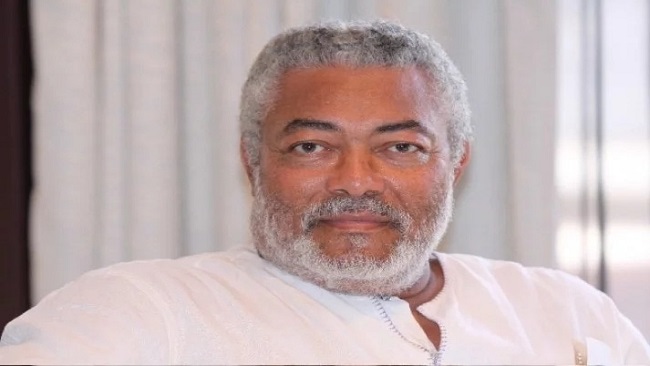
President Jerry John Rawlings: Southern Cameroons mourns a statesman

12, November 2020

President Jerry John Rawlings: Southern Cameroons mourns a statesman 0

The people of Ambazonia today join the great people of Ghana and millions of Pan-Africanists around the globe in mourning the loss of former President Jerry John Rawlings.

The former president passed on to glory today, Thursday 12 November 2020 after a brief illness in Accra, Ghana. The thoughts and prayers of the people of the Federal Republic of Ambazonia are with his immediate family at this hour of pain and sadness.

Former President Rawlings was a great friend of Ambazonia and a Pan-Africanist who articulated the plight of the Southern Cameroons with truth, passion, imagination, and conviction. He was a great visionary who advocated for an Africa free of imperialism.

President Rawlings will be engraved in the consciousness of our nation as one of its sincere and passionate friends.

On this somber day, The Interim Government is calling on all Ambazonians to observe a minute of silence and engage in prayers for the soul of this great African.

Thank you,

Dabney Yerima

Vice President

Federal Republic of Ambazonia

Accra: Former President Jerry John Rawlings dies

12, November 2020

Accra: Former President Jerry John Rawlings dies 0

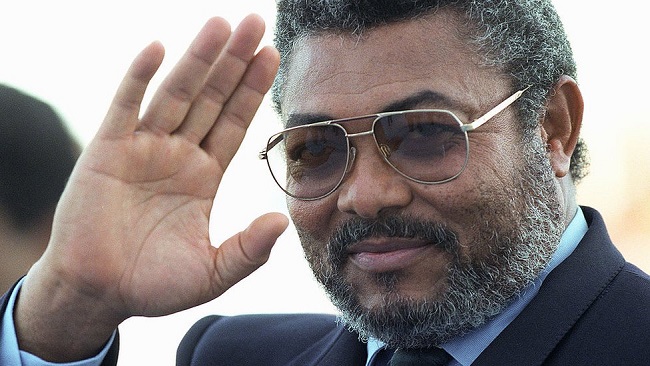
The former president of Ghana, Jerry John Rawlings, has died at the age of 73, according to media reports on Thursday.

The former leader who seized power twice via military coups was admitted to the Korle Bu Teaching Hospital in Ghana’s capital, Accra, last week after suffering from a brief illness, state-owned newspaper Daily Graphic reported on its website.

Rawlings was born in Accra in June 1947, to a Ghanaian mother and a Scottish father.

He came to global prominence in 1979 when, as an army lieutenant, he ousted General Frederick Akuffo as president.

Rawlings relinquished power soon after, handing over to civilian rule, but orchestrated another coup two years later, citing corruption and weak leadership.

From 1981 to 1993, Rawlings ruled as chairman of a joint military-civilian government. In 1992 he was elected president under a new constitution, fully assuming the role the following year before serving two terms.

John Kufour succeeded Rawlings as Ghanaian president in 2001.

Sources: jsi/msh (Reuters)

«< 606 607 608 609 610 >»

Featured

  • Iran deal: the cards are now in Tehran’s favourIran deal: the cards are now in Tehran’s favour
  • Exam leaks in CPDM Cameroon: A symptom of a deeper corruption crisisExam leaks in CPDM Cameroon: A symptom of a deeper corruption crisis
  • Biya is already in Hell as Yaoundé unravelsBiya is already in Hell as Yaoundé unravels
  • What does President Biya really want? Money, women or cigarettes?What does President Biya really want? Money, women or cigarettes?
  • Biya, how long must the nation wait for the government it was promised?Biya, how long must the nation wait for the government it was promised?

Most Commented Posts

  • 4 Anglophone detainees killed in Yaounde4 Anglophone detainees killed in Yaounde
    18 comments
  • Chantal Biya says she will return to Cameroon if General Ivo Yenwo, Martin Belinga Eboutou and Ferdinand Ngoh Ngoh are sackedChantal Biya says she will return to Cameroon if General Ivo Yenwo, Martin Belinga Eboutou and Ferdinand Ngoh Ngoh are sacked
    13 comments
  • The Anglophone Problem – When Facts don’t LieThe Anglophone Problem – When Facts don’t Lie
    12 comments
  • Anglophone Nationalism: Barrister Eyambe says “hidden plans are at work”Anglophone Nationalism: Barrister Eyambe says “hidden plans are at work”
    12 comments
  • Largest wave of arrest by BIR in BamendaLargest wave of arrest by BIR in Bamenda
    10 comments

Latest Tweets

Error: access keys missing in Themify > Settings > Twitter Settings

Featured

  • Yaoundé earns CFA15 billion from Chad Oil Pipeline transit fees in 5 months

    Yaoundé earns CFA15 billion from Chad Oil Pipeline transit fees in 5 months

  • Most stocks rise, oil flat following peace deal-fuelled rally

    Most stocks rise, oil flat following peace deal-fuelled rally

  • Iran deal: the cards are now in Tehran’s favour

    Iran deal: the cards are now in Tehran’s favour

  • American musician Oliver Tree killed in mid-air helicopter collision in Brazil

    American musician Oliver Tree killed in mid-air helicopter collision in Brazil

  • Cameroon looks to Tunisia’s textile model to develop its cotton value chain

    Cameroon looks to Tunisia’s textile model to develop its cotton value chain

  • Trump marks 80th birthday with White House UFC spectacle

    Trump marks 80th birthday with White House UFC spectacle

  • Ex-Israeli PM Ehud Barak says Netanyahu must be removed ‘with sticks and stones’

    Ex-Israeli PM Ehud Barak says Netanyahu must be removed ‘with sticks and stones’

Log In

  • Register
  • Log in
  • Entries feed
  • Comments feed
  • WordPress.org
© Cameroon Concord News 2026

We are using cookies to give you the best experience on our website.

You can find out more about which cookies we are using or switch them off in .

Powered by  GDPR Cookie Compliance
Privacy Overview

This website uses cookies so that we can provide you with the best user experience possible. Cookie information is stored in your browser and performs functions such as recognising you when you return to our website and helping our team to understand which sections of the website you find most interesting and useful.

Strictly Necessary Cookies

Strictly Necessary Cookie should be enabled at all times so that we can save your preferences for cookie settings.

3rd Party Cookies

This website uses Google Analytics to collect anonymous information such as the number of visitors to the site, and the most popular pages.

Keeping this cookie enabled helps us to improve our website.

Cookie Policy

More information about our Cookie Policy